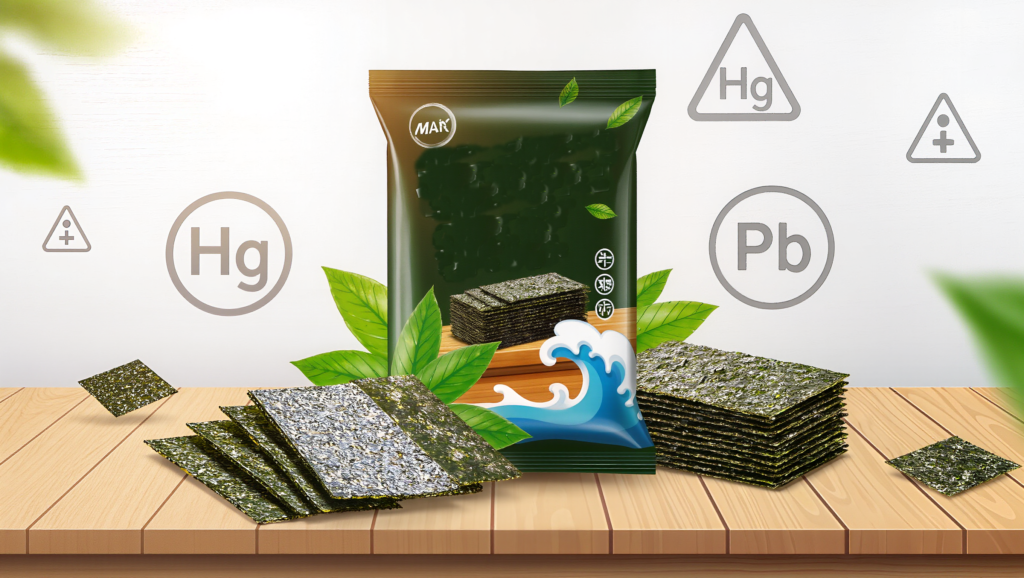












Seaweed snacks seem like the perfect “clean” food: low-calorie, mineral-rich, plant-based, and conveniently roasted into crispy sheets. But there’s a catch most glossy packaging never mentions—seaweed is naturally very good at soaking up heavy metals and excess iodine from the ocean, and those can quietly build up in your favorite “natural” seaweed snacks, especially if you eat them often. Understanding how big that risk really is (and how to snack safely) matters a lot more than many people realize, especially for kids, pregnant people, and heavy seaweed lovers.
Below is a deep dive into why seaweed can be a hidden source of heavy metals, what recent testing has found in popular snacks, and how to choose safer products without giving up seaweed entirely.
Why Seaweed Soaks Up Heavy Metals
Seaweed isn’t just another leafy green—it’s a powerful bio-accumulator. That means it draws minerals and metals out of seawater and holds onto them in concentrations far higher than the surrounding water.
Scientists have found that:
- Seaweeds can concentrate metals like arsenic, lead, cadmium, mercury, nickel, chromium, and others many times above seawater levels.
- This happens because seaweed cell walls and tissues bind metals and metalloids very efficiently, which is part of why seaweed is so mineral-dense—but also why it can be risky when oceans or coastal sediments are polluted.
- Long-lived or large seaweeds, or ones grown near industrial areas, river mouths, or contaminated sediments, tend to accumulate more metals.
A 2021 study that tested locally sourced seaweed found elevated concentrations of several metals and concluded that the carcinogenic risk from some nonessential elements (like arsenic, cadmium, and lead) exceeded U.S. EPA reference thresholds, especially with regular consumption. That doesn’t mean “never eat seaweed”—but it does mean seaweed is not automatically a low-risk snack just because it’s natural and plant-based.
What Recent Tests Have Found in Seaweed Snacks
Independent lab testing has started to put real numbers to the problem—and the results should make frequent snackers pause.
- ConsumerLab tested six popular dried/roasted seaweed snacks and found that four of them, in just a single suggested serving, exceeded tolerable upper intake levels (ULs) for iodine for children or adults and/or contained unacceptable levels of lead, cadmium, or arsenic.
- One product provided more than 16 times the adult UL for iodine and up to 90 times the limit for children, and also exceeded limits for lead and cadmium in that same serving.
- Another product contained about three times the California Prop 65 limit for cadmium, on top of iodine levels that already exceeded safe limits for children.
The ConsumerLab review noted that all tested seaweed snacks contained “substantial amounts” of iodine and, to varying degrees, lead, cadmium, and arsenic. Their medical reviewer recommended limiting seaweed snacks to no more than one serving per day, especially for children, even when choosing products that passed their quality criteria.
U.S. FDA internal reviews have raised similar concerns. In one memorandum assessing roasted organic seaweed snacks, FDA scientists concluded that cadmium exposure from the product was “likely to be a health concern” for young children at realistic upper intake levels, even if adults would be below concern thresholds.
In other words, it’s not just the odd outlier brand. Multiple evaluations show that seaweed snacks can easily push kids—and heavy adult consumers—toward levels of cadmium and iodine that regulators consider risky over time.
Iodine Overload: The Other Hidden Problem
Most people think of iodine deficiency, not iodine excess, when they think of thyroid issues. Seaweed flips that script.
- Iodine is essential for thyroid hormone production, but too much can actually impair thyroid function and trigger or worsen thyroid disease.
- Safe daily iodine intake ranges from about 200 mcg in young children up to 1,100 mcg for adults.
- Among seaweed products tested by ConsumerLab, iodine per serving ranged from about 66.5 mcg to more than 18,000 mcg.
That upper end is staggering—18,000 mcg is more than 16 times the adult UL and dramatically above safe limits for children. Repeated exposures at that level can stress the thyroid and may contribute to hypo- or hyperthyroid problems in susceptible people over time.
Several reviews on seaweed as a functional food emphasize that iodine and heavy metals are the key safety concerns, and they note that there is very limited mandatory labeling or regulation around iodine and metal content on most packaged seaweed foods worldwide. That means consumers usually have no way to tell how much they’re getting just from the nutrition facts panel.
Which Heavy Metals Show Up Most Often?
The specific metal profile depends on species and where it was grown, but across market and environmental studies a few usual suspects keep showing up in seaweed and seaweed snacks:
- Arsenic (especially inorganic arsenic, the more toxic form)
- Cadmium
- Lead
- Mercury (less often in nori sheets, more in certain brown seaweeds)
A market study on edible seaweeds in Italy that tested 20 metals found that arsenic (total and inorganic), lead, and cadmium were consistently present, with some products approaching or exceeding recommended safety thresholds depending on serving size and consumer body weight.
A broader safety review noted that “variable and potentially dangerously high concentrations” of iodine and heavy metals, including arsenic species, have been documented in certain seaweeds, and highlighted the lack of clear guidance for safe portion sizes on many products.
Because heavy metals are non‑biodegradable and can accumulate in the body over time, chronic small exposures matter more than occasional use. Metals like cadmium and lead can affect the nervous system, kidneys, blood formation, and reproductive health even at low levels over years.
Why “Natural” and “Organic” Labels Don’t Protect You
A lot of seaweed snacks are marketed as organic, non‑GMO, gluten-free, or “clean,” so it’s easy to assume they’re automatically safe. Unfortunately:
- Organic certification focuses on agricultural inputs (no synthetic pesticides, etc.), not on heavy metal levels in ocean water or sediments.
- Seaweed grown in polluted waters can be organic and still highly contaminated with metals and excess iodine.
- Brands sometimes carry Prop 65 warning labels about possible reproductive harm (usually from lead), but they rarely list actual levels of heavy metals or iodine per serving.
Some manufacturers argue that heavy metal levels in their products are comparable to those found in land vegetables and that their products are within FDA and other regulations. While it’s true that many foods contain trace metals, the crucial difference is that seaweed can concentrate certain metals and iodine to much higher levels than typical vegetables, and snacks are easy to overeat because they’re so light and crispy.
California’s Prop 65 limits are intentionally very strict—often set 1,000 times below levels thought to cause harm—but ConsumerLab’s findings show that some seaweed snacks still exceeded those thresholds for metals like cadmium or delivered iodine doses far above recommended ULs in one serving. So “within regulations” does not necessarily mean “wise to eat frequently,” especially for small children.
Who Is Most at Risk?
People who should be extra cautious with seaweed snacks include:
- Children: lower body weight means higher exposure per kg, and FDA has explicitly flagged cadmium from some seaweed snacks as a potential health concern in ages 0–6.
- Pregnant and breastfeeding people: chronic exposure to lead, cadmium, and excess iodine can affect both parent and baby, including neurodevelopment and thyroid health.
- People with thyroid disease or on thyroid medication: high-iodine seaweed can destabilize thyroid function, especially in Hashimoto’s or Graves’ disease.
- Heavy seaweed consumers: those eating multiple packs per day or combining snacks with kelp noodles, supplements, or seaweed-seasoned foods are more likely to push into risky exposure ranges.
For healthy adults eating small amounts occasionally, risk is much lower, but the key is being aware that “more is not better” with seaweed.
How to Choose Safer Seaweed Snacks
You don’t necessarily have to give up seaweed completely—but it’s smart to become a more informed snacker. Here are practical steps based on current evidence:
- Limit frequency and portion size
- Aim for no more than one serving of seaweed snacks per day, and less for young children, aligning with ConsumerLab’s cautious recommendation.
- Treat seaweed as a condiment or occasional snack, not a main vegetable serving multiple times a day.
- Prefer reputable brands that publish testing
- Look for companies that openly share third‑party lab results for heavy metals and iodine or that at least state compliance with strict internal limits, not just “meets regulations.”
- Independent reviews sometimes identify “top picks” that passed more stringent quality tests for metals and iodine—starting with those can lower risk.
- Pay attention to species and origin
- Different seaweed types accumulate different metals; some brown seaweeds (like certain kelps) have been particularly high in iodine and arsenic, while nori sheets tend to be lower but not metal‑free.
- Seaweed grown in cleaner offshore or monitored farms is generally safer than wild-harvested near industrial coasts, though you often need to check the brand’s sourcing information to know.
- Heed warning labels
- If a seaweed snack carries a Prop 65 warning, that means the manufacturer knows there is enough lead or another listed chemical to trigger California’s strict disclosure threshold.
- That doesn’t mean “never eat it,” but it’s a strong signal to keep intake modest and avoid giving those products frequently to children or during pregnancy.
- Avoid stacking iodine from multiple sources
- If you use iodine-containing supplements, iodized salt, or eat a lot of seafood, be extra cautious with high‑iodine seaweeds (especially kelp-based chips or flakes).
- People with thyroid disorders should talk with their healthcare provider before regularly adding seaweed snacks.
- Balance with a varied diet
- Metals and iodine accumulate primarily when one food is eaten heavily day after day. Rotating snacks (nuts, seeds, fruit, hummus and veg, etc.) reduces long-term exposure from any single source.
Can Cooking or Rinsing Reduce Heavy Metals?
Researchers are exploring whether certain soaking or cooking methods can lower metal levels in seaweed without stripping beneficial nutrients. Some studies suggest that blanching or soaking can reduce certain metals and inorganic arsenic, but effectiveness varies by species and element, and these methods are not standardized for packaged snacks.
Because roasted snack sheets are already processed and very thin, there’s no practical way for consumers to further decontaminate them at home. That makes brand choice, portion control, and product testing transparency even more important.
Bottom Line: Treat Seaweed Snacks Like a Potent Spice, Not a Free Food
Seaweed can absolutely be part of a healthy diet—it’s rich in minerals, fiber, and bioactive compounds. But the idea that roasted seaweed snacks are a consequence-free “natural” food you can inhale by the sleeve is misleading.
The science shows:
- Seaweed naturally concentrates heavy metals and iodine far above seawater levels.
- Independent testing has found popular snack brands that exceed safety limits for cadmium, lead, arsenic, and/or iodine in a single serving, especially for children.
- Regulatory frameworks and labeling for metals and iodine in seaweed products are still patchy, leaving consumers largely in the dark about exact exposure.
Your best move is not panic, but awareness: choose tested brands, respect serving sizes, limit how often you eat them (especially for kids or if you have a thyroid condition), and keep your overall diet varied. Think of seaweed snacks as a strong, mineral‑rich garnish from the sea—not a bottomless bowl of “guilt‑free” chips.
Sources
- https://pmc.ncbi.nlm.nih.gov/articles/PMC7916668/
- https://www.fda.gov/media/173154/download
- https://pmc.ncbi.nlm.nih.gov/articles/PMC6551690/