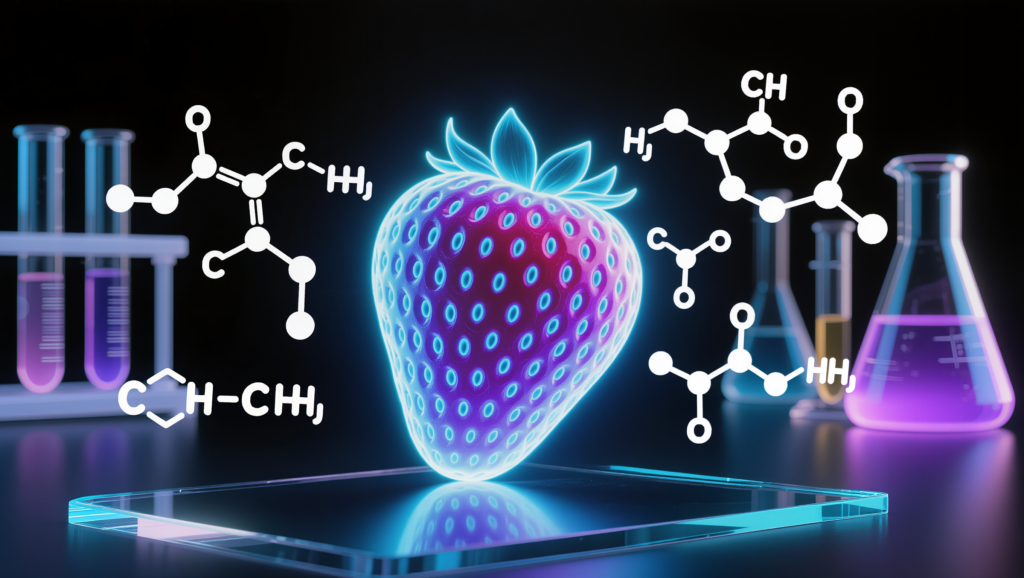












When you shine a blacklight on a bowl of fruit and suddenly some of it glows, it feels almost supernatural. But that eerie blue, green, or yellow “glow” isn’t magic or hidden chemicals—it’s physics, biochemistry, and plant biology all rolled into one. Certain fruits naturally fluoresce under ultraviolet (UV) light because of the molecules inside their skins and pulp, especially pigments and phenolic compounds that soak up invisible UV and re‑emit it as visible light.
Here’s a deep dive into why some fruits glow under UV, what’s special about bananas in particular, and what scientists think this fluorescence might mean for plants and animals—not just for party tricks in your kitchen.
UV Light, Fluorescence, And Why Fruit “Glows”
Under normal lighting, you only see the colors that pigments directly reflect—reds from anthocyanins, greens from chlorophyll, yellows and oranges from carotenoids. Under UV light, you’re forcing those pigments and other molecules to play a different game.
- UV light has shorter wavelengths and higher energy than visible light.
- Some molecules in fruit absorb that UV energy and then quickly re‑emit part of it at a longer, visible wavelength—a process called fluorescence.
- To your eyes, that looks like a faint or bright “glow,” often blue, blue‑green, or yellow‑green, depending on the compound.
Crucially, this is fluorescence, not bioluminescence. The fruit is not generating light on its own (the way a firefly does); it only glows while the UV source is shining.
In many fruits, the glow is weak. In a few, like bananas, it’s dramatic enough that you can clearly see it with an inexpensive UV flashlight.
Bananas: The Poster Child For Glowing Fruit
Bananas are the most famous example of fruit that visibly glows under UV. Ripe banana peels show a striking blue luminescence under blacklight, and the halos around brown “age spots” can shine especially bright.
Early research linked this glow to chlorophyll breakdown as the banana ripens:
- Green bananas are rich in chlorophyll, which gives them their green color.
- During ripening, chlorophyll degrades, producing temporary breakdown products called fluorescent chlorophyll catabolites (FCCs), which can fluoresce in the blue region under UV.
- In most plants, FCCs are short‑lived intermediates that quickly convert into non‑fluorescent compounds, so you don’t usually notice them.
Bananas turned out to be different. Scientists at the University of Innsbruck and Columbia University found that as bananas ripen, they accumulate unusually stable chlorophyll breakdown products in the peel. These fluorescent intermediates were long‑lived, making the peel shine bright blue under UV; the intensity correlated with ripeness, dropping only when the fruit became overripe.
Later work added an important twist. A 2018 plant science study showed that the strongest blue fluorescence in banana fruits actually comes from phenolic compounds (such as ferulic acid derivatives) bound into the cell walls in the peel and pulp, not just soluble chlorophyll catabolites. Using microscopy, the researchers found:
- Blue fluorescence is strongest in the cell wall (apoplast) and less from chlorophyll‑containing plastids.
- The white pulp of bananas glows even more intensely than the peel under UV, due to these cell‑wall‑bound phenols.
- Chlorophyll in green tissue actually “hides” fluorescence by absorbing the emitted blue light—so unripe green bananas appear non‑glowing, while yellow ripe bananas reveal the blue glow once chlorophyll is degraded.
So, in bananas, two things work together:
- Chlorophyll breakdown during ripening produces some fluorescent intermediates.
- Abundant insoluble phenolic esters in the cell walls fluoresce strongly in the blue range under UV.
The result is a blue glow that peaks around ripeness and fades with advanced senescence, especially around age spots where cells are dying and degradation products concentrate.
Other Fruits: Fluorescent Pigments and Phenolic Compounds
Bananas aren’t alone. Several other fruits show noticeable fluorescence under UV, although usually less dramatically:
- Certain berries and tropical fruits can give off faint blue or blue‑green glows, driven by combinations of phenolic compounds, flavonoids, and some breakdown products of chlorophyll.youtube
- Citrus peels can fluoresce yellow‑green due to flavonoids like hesperidin and related molecules concentrated in the rind.
- Some grapes, cherries, and dark berries contain anthocyanins and related phenolics that can fluoresce weakly or produce interesting color shifts under UV, although their strong visible pigments often overwhelm the effect to the naked eye.
In general:
- Phenolic acids (like ferulic, caffeic), flavonoids, and certain aromatic compounds in cell walls or vacuoles are common fluorescent contributors.
- Chlorophyll catabolites can play a role when chlorophyll is actively breaking down, typically during ripening or leaf senescence.
- The exact color of fluorescence depends on the molecule’s structure and environment, but blue and blue‑green emissions around 400–500 nm are especially common in plant tissues under UV.
The 2018 banana paper highlighted that in monocots like banana, maize, and sugarcane, blue fluorescence is often strongest in cell walls; in many dicots (e.g., spearmint, hibiscus), fluorescence can be more dominant in vacuoles or plastids, showing how tissue anatomy and chemistry intersect.
Fluorescence vs Natural Color: What Changes As Fruit Ripens
Even without UV, you can see fruit color changes as they ripen: green to yellow (bananas, mangoes), green to red (tomatoes), pale to deep purple (berries). These visible shifts come from interplay between three major pigment families:
- Chlorophylls: green, associated with photosynthesis, dominant in unripe fruit.
- Carotenoids: yellow, orange, red (beta‑carotene, lutein, etc.), often revealed as chlorophyll degrades.
- Anthocyanins: red, purple, blue, especially in skins of berries and cherries.youtube
Under UV light, fluorescence reveals an additional, hidden layer—the presence of specific compounds that absorb UV and emit visible light. As fruit ripens:
- Chlorophyll levels drop; its breakdown releases intermediates and exposes underlying carotenoids and phenolics.
- Some of those breakdown products and phenolic esters fluoresce, making ripe fruit glow more than unripe fruit.
For bananas, green unripe fruits show little to no glow, while yellow ripe bananas fluoresce strongly. The glow weakens again as overripe bananas turn brown and phenolics oxidize further or polymerize into non‑fluorescent forms.
Does The Glow Mean Anything Biologically?
To humans, the glow is mainly a curiosity because our eyes barely see UV and we don’t hunt fruit with blacklights. But for many animals—especially insects and some birds—UV sensitivity is normal, and the “glow” could be a real signal.
Two main hypotheses have been proposed in the banana work:
- Signaling ripeness to animals that see UV: Many fruit‑eating animals, especially some mammals and birds in the tropics, can detect UV light or near‑UV wavelengths better than humans. The blue fluorescence could serve as a visual cue that the fruit is ripe and ready to eat, helping seed dispersal.
- Protecting or stabilizing tissues: The unusual stability of certain fluorescent chlorophyll catabolites and wall‑bound phenolics may help prolong fruit viability by acting as antioxidants or UV screens, slowing damage as the fruit ripens.
In the 2008 blue‑banana paper, researchers noted that the blue luminescence might be “a distinct signal that the fruit is ripe” to UV‑seeing animals, or that the fluorophores may have a protective physiological role in the fruit. Later cell‑wall studies reinforced the idea that these fluorescent phenolics are structurally bound and possibly involved in mechanical or chemical defense while also incidentally glowing.
So while the glow may not have evolved “for” the blacklights in human kitchens, it likely isn’t completely meaningless in nature.
Everyday Uses: Why Scientists Care About Glowing Fruit
Beyond being fun to photograph, UV fluorescence in fruit has real research and practical applications:
- Ripeness indicators: Because fluorescence often correlates with ripening stages or pigment breakdown, scientists can use UV imaging as a non‑destructive way to assess internal changes in fruit quality.youtube
- Plant physiology studies: Fluorescence from chlorophyll catabolites and phenolics helps researchers map where certain reactions are happening—inside vacuoles, in cell walls, or in specific tissue layers.
- Food safety and authenticity: Some fluorescent signatures can help identify fruit varieties, detect contamination, or verify whether color or coatings are natural or artificial.
The same basic physics underlies other glowing foods—tonic water glows blue from quinine, some cooking oils glow under UV, and tonic, honey, or some cheeses can fluoresce because of riboflavin and other molecules. Fruits are simply one very photogenic example.
Can You Make Your Own “Glowing Fruit” Experiments?
If you have a safe UVA “blacklight” flashlight (typically 365–395 nm) and a dark room, you can explore fruit fluorescence yourself:
- Try bananas at different stages—green, yellow with few spots, very spotty. You should see almost no glow in green bananas, strong blue halos around spots in mid‑ripe bananas, and weaker or patchier glow in very old fruit.
- Check citrus peels (orange, lemon, lime): the outer rind may show yellow‑green fluorescence thanks to flavonoids.
- Examine grapes, cherries, or berries. You might see subtle glows or highlights in skins or pulp, especially around damaged areas where phenolics accumulate.
- Compare white banana pulp to peel: under strong UV, pulp can actually fluoresce more strongly than peel because of dense cell‑wall phenolics.
Always avoid staring directly into UV sources and stick with consumer‑grade blacklights meant for hobby use, not high‑power industrial UV.
Key Takeaways: Why Some Fruits Glow Under UV
Putting it all together:
- Fruit “glow” under blacklight is fluorescence, not self‑generated light. Molecules inside the fruit absorb UV and re‑emit visible light.
- In bananas, strong blue fluorescence arises from a mix of long‑lived chlorophyll breakdown products and, most importantly, insoluble phenolic esters bound in cell walls—especially around aging spots and in ripe pulp.
- Other fruits can fluoresce due to phenolics, flavonoids, and some pigment breakdown intermediates, though the effect is usually weaker and often masked by visible pigment colors.
- Fluorescence tends to increase as fruits ripen and chlorophyll breaks down, then change again as over‑ripening and oxidation progress.
- Biologically, the glow may signal ripeness to UV‑sensitive animals and/or help protect ripening fruit tissues via antioxidant and UV‑screening functions.
So the next time you see a banana glowing ghostly blue under a UV flashlight, you’re really seeing plant chemistry, cell‑wall phenolics, and chlorophyll breakdown made visible—a hidden language of light that fruits may be using to communicate with the animals around them.
Sourxes