











If you’re constantly popping antacids, burping up acid after meals, or feeling like food just “sits” in your stomach, Ayurveda has a very different starting point than modern reflux meds: instead of just suppressing acid, it tries to fix your digestive fire (Agni) so food actually breaks down properly and stops irritating your system. One of the simplest, most powerful tools it uses? Ordinary kitchen spices—used in very specific, time‑tested ways.
Below is a deep dive into five ancient Ayurvedic spices with some modern science behind them for indigestion, functional dyspepsia, and even reflux‑type symptoms. This isn’t a substitute for medical care if you have severe GERD or ulcers—but it can give you a toolkit you can discuss with your practitioner and gently fold into daily life.
1. Ginger (Adraka / Shunthi): The Classic Agni Booster
In Ayurveda, ginger is almost a one‑word prescription: it’s described as deepana (kindling appetite) and pachana (enhancing digestion), used fresh (adraka) or dried (shunthi) to wake up sluggish Agni without being as harsh as some hot spices.
What traditional texts say
- Stimulates digestive fire
- Reduces ama (undigested residues) that can ferment and cause gas, bloating, and acid
- Helpful in nausea, heaviness, and “cold” indigestion (Kapha‑type)
That lines up surprisingly well with modern data.
What modern science says
- Ginger has prokinetic effects—it helps the stomach empty more efficiently so food doesn’t linger and reflux as easily. An early study in functional dyspepsia found ginger enhanced gastric emptying in patients, though it didn’t fully resolve all symptoms in that small trial.
- A 12‑week randomized, double‑blind, placebo‑controlled clinical trial of a standardized steamed ginger extract (GGE03, 480 mg/day) in 80 people with mild‑moderate functional dyspepsia found significant improvements in overall gastrointestinal symptom scores, including indigestion and reflux sub‑scores, compared to placebo (p < 0.001).
- A 2024–2025 clinical trial is evaluating 540 mg ginger capsules twice daily specifically for functional dyspepsia symptoms like fullness, early satiety, epigastric pain, nausea, belching, and heartburn.
- A 2025 safety review of dietary ginger found it was generally well tolerated, although a subset of people did report mild bloating (14.9%), heartburn (12.8%), and diarrhea (10.6%), reminding us that more is not always better.
How Ayurveda uses ginger for indigestion & reflux
- Fresh ginger slice with rock salt or lime before meals to kindle Agni in sluggish digestion (but often avoided in very inflamed, high‑Pitta burning reflux).
- Ginger tea (thin, not overly concentrated) sipped warm after heavy meals to ease gas and fullness.
- Trikatu churna, a classic blend of dried ginger, black pepper, and long pepper, is given in small doses with ghee or honey for chronic Kapha‑type indigestion and low metabolic fire.
Pro tip: if your reflux is the “burning, sour, hot” Pitta‑type, Ayurveda tends to go lighter on heating ginger or pairs it with cooling herbs, rather than hammering you with strong, dry ginger daily.
2. Cumin (Jeera): The Gentle Gas‑Buster
Cumin seeds are another Ayurvedic staple. They’re considered dipana and pachana (appetizing and digestive), but much gentler than many heating spices. Jeera shows up in countless “jeera paani” and digestive blends for gas, colic, and weak digestion.
Why Ayurveda likes cumin
- Reduces gas, bloating, abdominal cramping, and a sense of heaviness after meals.
- Especially useful for Vata‑type indigestion (gassy, crampy, irregular) and post‑meal discomfort.
What modern evidence suggests
Human data on cumin alone for reflux is limited, but there is decent evidence when it’s used in mixed herbal formulations:
- A 2024 Persian trial of a multi‑seed compound (Persian‑FACT) containing ajwain, anise, cumin, and fennel demonstrated significant improvement in dyspepsia symptoms in adults with functional dyspepsia. Participants reported less fullness, pain, and discomfort, suggesting that these “carminative” seeds as a group have real clinical potential.
- Reviews on herbal medicines in functional dyspepsia highlight that many effective formulas combine motility‑modulating, spasmolytic, and secretory‑balancing herbs, and cumin‑family seeds often play a supporting role.
Simple Ayurvedic uses
- Jeera water: lightly dry‑roast ½–1 tsp cumin seeds, simmer in 1–2 cups water for 5–10 minutes, strain and sip warm. Traditionally used after heavy, oily meals to ease gas and improve digestion.
- Spice blends like Hingvastak churna often include cumin along with asafoetida, ginger, black pepper, ajwain, coriander, and rock salt to stimulate Agni and reduce gas/bloating.
For reflux, cumin is usually combined with cooler spices and not taken in very large, dry amounts.
3. Fennel (Saunf): The Cooling Antacid Seed
If ginger is the fire, fennel is the cooling, sweet antidote that Ayurveda loves for Pitta‑type digestion—burning, sour, acidic, with a tendency toward heartburn and loose stools.
Ayurvedic view
- Classified as madhura (sweet) and sheeta (cooling), fennel calms down aggravated Pitta in the stomach and small intestine.
- Traditionally used for acid belching, post‑meal burning, gas, and upper abdominal discomfort.
- Often chewed after meals in India to freshen breath and ease digestion.
Research hints
Fennel itself hasn’t been as rigorously trialed as ginger, but:
- Mixed formulations that include fennel (like the Persian‑FACT formula with ajwain, anise, cumin, and fennel) have shown significant dyspepsia relief in clinical trials.
- Reviews of herbal dyspepsia treatments highlight that carminative seeds (anise, fennel, peppermint) relax gut smooth muscle, reduce spasms, and modulate motility, all of which ease indigestion and sometimes reflux sensations.
How to use fennel Ayurvedically
- Chewing ½–1 tsp fennel seeds slowly after meals. This is especially good for people who get burning and gas together.
- Fennel tea: lightly crush 1 tsp seeds, steep in hot water 10 minutes, sip warm or room‑temperature.
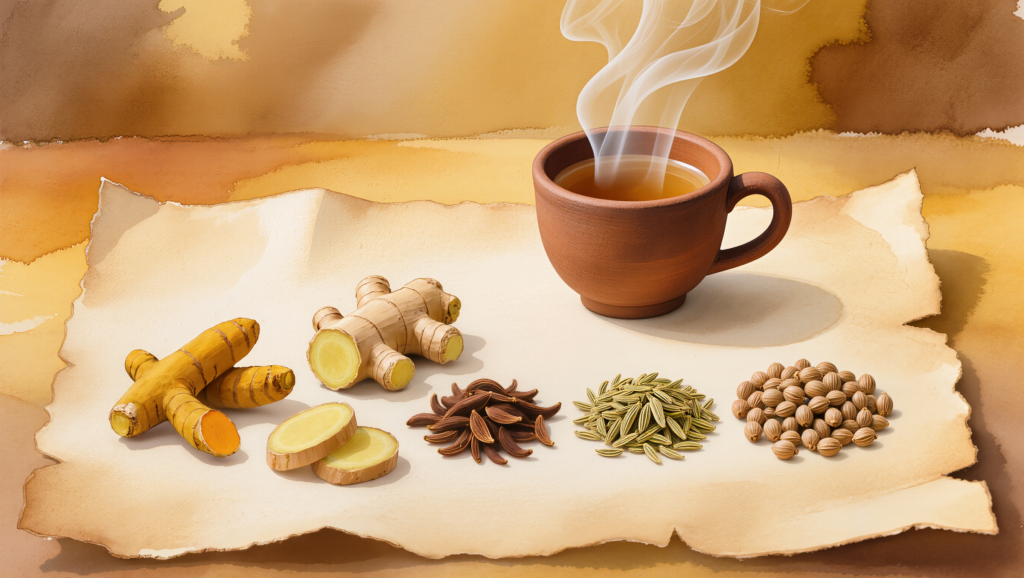
- Fennel frequently appears alongside coriander and cumin in “CCF tea,” a classic tridoshic digestive blend that is warming yet gentle and often tolerated even in Pitta conditions when not over‑concentrated.
4. Asafoetida (Hing): The Big Gun for Gas & Spasm
Asafoetida is one of Ayurveda’s most potent Vata‑pacifying spices. It’s extremely pungent (raw it smells sulfurous) but, in tiny amounts, is a powerful remedy for deep gas, spasm, and sluggish digestion.
Ayurvedic indications
- Known as “Hing”, it’s used in minuscule quantities in lentil and bean dishes to prevent the famous “dal bloat.”
- Considered deeply warming, carminative, and antispasmodic—great for crampy gas, colic, and constipation associated with Vata imbalance.
- Some practitioners even recommend a hing paste applied externally to the abdomen for infants and sensitive adults for gas relief.
Modern perspective
- Asafoetida contains volatile oils and sulfur compounds which have been shown in experimental settings to have smooth‑muscle relaxant and antispasmodic effects on the gut and may reduce intestinal gas formation.
- It appears in many classical Ayurvedic formulas for dyspepsia, including Hingvastak churna, a blend specifically designed to reduce gas, bloating, and sluggish Agni.
Using hing wisely
- In cooking, only a pinch is needed—too much can be irritating and overpowering.
- Avoid in pregnancy in medicinal doses, and be cautious if you already have intense burning reflux; Ayurveda would usually pair hing with cooling herbs and avoid giving it alone in a very inflamed Pitta picture.
5. Haritaki (and Triphala): Clearing the Backlog that Fuels Reflux
Haritaki (Terminalia chebula) is one of the three fruits in Triphala, Ayurveda’s famous bowel‑regulating tonic. It’s not a “spice” in the culinary sense, but in an Ayurvedic pharmacy it plays a similar role: gentle cleansing and resetting of digestion.
Why the bowels matter for reflux
Ayurveda sees the gut as a continuous tube: if the lower part is sluggish and backed up (constipation, incomplete evacuation), pressure and gas can push upward, aggravating indigestion and reflux. Clearing the colon is often step one in calming heartburn.
Haritaki’s role
- Classified as mildly warming and scraping, haritaki improves bowel movement, helps expel ama, and is used to support complete, regular elimination.
- Jiva Ayurveda, for instance, highlights haritaki powder as a laxative that improves bowel movement, clears the digestive tract, and helps prevent indigestion and acid reflux–related symptoms like heartburn when taken at night.
Scientific backing (indirect but relevant)
- Reviews of herbal medicines in functional dyspepsia emphasize that motility‑modulating and cytoprotective herbs often yield the best results—Triphala is one of the best‑known Ayurvedic GI motility supporters, used widely for both constipation and functional gut disorders.
- By reducing constipation and colonic pressure, bowel‑regulating herbs like haritaki may secondarily reduce reflux and upper GI discomfort, even if the main clinical endpoint in trials is bowel function.
Typical Ayurvedic use
- ¼–½ tsp haritaki powder in warm water before bed, or Triphala (haritaki + bibhitaki + amalaki) at night to gently normalize bowels.
- Always adjusted to the person’s constitution; overuse can lead to loose stools in some.
How Ayurveda Puts These Spices Together For Reflux
Ayurvedic clinicians rarely rely on a single spice. They combine them into formulas tailored to your dosha pattern (Vata, Pitta, Kapha) and specific symptom picture:
- For sluggish, gassy, heavy digestion (Vata/Kapha):
- Blends like Hingvastak churna (hing, cumin, coriander, ginger, black pepper, long pepper, ajwain, rock salt) to kindle Agni, expel gas, and improve motility.
- Gentle ginger‑cumin‑fennel teas before or after meals.
- For burning, sour reflux with loose stools (high Pitta):
- Cooling spices like fennel, coriander, cardamom, sometimes small amounts of cumin.
- Less aggressive ginger, hing, and trikatu—if used at all, it’s in very low doses and paired with cooling herbs (licorice, amla, shatavari).
- For mixed patterns:
- They may layer: Triphala at night for bowel regularity, ginger with meals for motility, and fennel after meals to cool and calm the upper GI.
Modern GI research supports this multi‑target approach: a 2020 review of herbal medicines in functional dyspepsia found that the most effective formulas tended to combine herbs affecting motility, secretion, mucosal protection, and sometimes mood, not just one single action. That is almost exactly how classical Ayurvedic spice blends are designed to work.
Practical Ways to Start Using These Spices (Safely)
Always talk to your doctor if you have significant GERD, ulcers, are pregnant, or take medications—herbs and spices can interact with drugs or aggravate conditions.
That said, here are gentle, food‑level ways most people can experiment:
- Simple ginger–fennel tea for reflux‑prone folks
- 2–3 thin slices fresh ginger
- 1 tsp lightly crushed fennel seeds
- Simmer 5–7 minutes, sip warm about 30–45 minutes after meals.
This marries ginger’s pro‑motility effects with fennel’s cooling antispasmodic qualities.
- Cumin–fennel–coriander “CCF” tea for bloating and mild acidity
- ½ tsp each of cumin, coriander, and fennel, gently simmered in 2 cups water for 10 minutes.
- Strain and sip through the day. This classic Ayurvedic blend is considered tridoshic and often well tolerated even in sensitive digestion.
- Tiny pinch of hing in lentil/bean dishes
- Add a small pinch to hot ghee or oil at the start of cooking, then add your dal or bean curry ingredients. Many people notice less gas and bloating afterwards.
- Triphala or haritaki at night if you’re constipated + refluxy
- Start with low doses (e.g., ¼ tsp Triphala powder in warm water before bed) and titrate carefully with practitioner supervision, especially if you have IBS or take medications.
- Keep expectations realistic
- Even evidence‑based herbal tools typically show modest but meaningful improvements in dyspepsia symptoms—not instant, pharmaceutical‑level suppression. Consistency over weeks, plus diet and lifestyle adjustments (meal timing, reducing very spicy/fried foods, not lying down right after eating), make a bigger difference than any single spice.
The Bottom Line
Ayurveda’s approach to indigestion and acid reflux is less about “fighting acid” and more about retraining digestion—and these five ancient spices are central to that strategy:
- Ginger to gently rev up sluggish digestion and improve gastric emptying, with growing clinical support in functional dyspepsia.
- Cumin as part of carminative blends that ease gas and fullness and showed benefits in dyspepsia trials when combined with other seeds.
- Fennel to cool, soothe, and relax spastic, burning upper GI symptoms.
- Asafoetida (hing) in tiny amounts to tackle deep gas and cramps, especially in Vata‑type bloating.
- Haritaki/Triphala to normalize bowel movements and remove the “back pressure” that can feed reflux from below.
Used intelligently—ideally under the guidance of an Ayurvedic practitioner and alongside medical advice—these spices can do more than just flavor your food. They can help re‑educate your gut, calm that chronic post‑meal discomfort, and give your digestive fire a steadier, more harmonious burn.
- https://pmc.ncbi.nlm.nih.gov/articles/PMC5802680/
- https://pubmed.ncbi.nlm.nih.gov/40474983/
- https://pmc.ncbi.nlm.nih.gov/articles/PMC7900952/