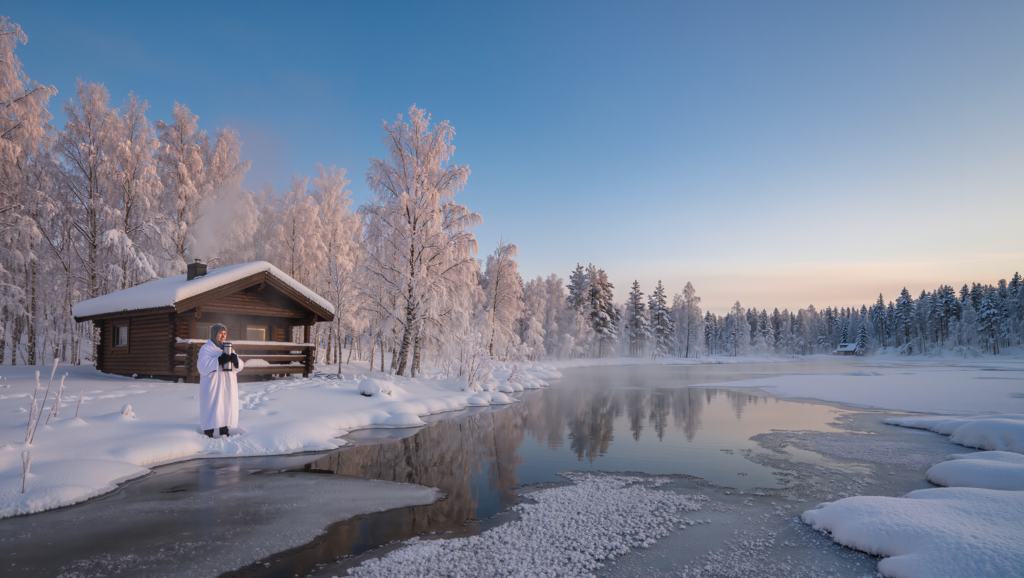












Scandinavian winters are long, dark, and brutally cold—and yet countries like Norway, Sweden, and Denmark routinely rank among the happiest and healthiest on the planet. It’s not because they’ve found a better vitamin D pill. It’s because they’ve built a winter lifestyle around light, cold, and nature that keeps their mood, metabolism, and immune system surprisingly robust when the sun disappears.
The core habit has a name: friluftsliv (pronounced FREE‑loofts‑leev). Roughly, it means “open‑air life”—a cultural commitment to being outdoors in all seasons, especially winter. Wrapped up in that is a very specific, science‑backed combo that beats popping a vitamin D capsule: daily outdoor light exposure plus regular cold‑adapted movement, often paired with sauna or cozy recovery.
Here’s how this Scandinavian winter habit works, what the science says, and how to steal it—even if you live nowhere near the Arctic Circle.
The Scandinavian Secret: Friluftsliv, Not Just Supplements
Friluftsliv isn’t a wellness trend; it’s baked into Scandinavian culture:
- People walk, ski, hike, or simply sit outside in winter light, even when it’s well below freezing.
- Children are taught to value outdoor time, with entire school programs built around friluftsliv and nature education.
- Being outdoors isn’t reserved for weekends; it’s woven into everyday life—short walks, outdoor coffee breaks, commuting on foot or bike, and playtime outside regardless of weather.
Health psychologists who study winter mindset in Norway point out that friluftsliv serves as a “natural antidepressant”: it reduces stress, boosts mood, and reframes winter from a problem to be endured into a season to be enjoyed. Norwegian experts emphasize that the benefits aren’t just cultural romance; they’re grounded in light exposure, movement, and nature contact, all of which are independently linked to better health.
Vitamin D pills can correct a lab number. This habit changes how your brain, hormones, and metabolism experience winter.
Why Winter Light Exposure Beats Vitamin D Alone
Vitamin D is important. But focusing only on a capsule misses a huge piece: bright light itself is medicine.
1. Light Is a Direct Treatment for Winter Mood and Energy
Psychiatrist and light‑therapy researcher Charles Czeisler and others have repeatedly shown that bright light is a powerful, inexpensive treatment for winter‑related mood drops, including full‑blown seasonal affective disorder (SAD).
Key findings:
- A Swedish study of office workers at 56°N found that over 50% reported seasonal dips in mood and energy, and almost 20% said it significantly impacted daily life.
- Field studies show that higher bright‑daylight exposure, especially in winter mornings, is strongly associated with better vitality and mood.[
- As little as 30 minutes of natural bright light at lunch significantly improved mood during and for an hour after exposure in lab settings.
Desan, a psychiatrist quoted in a CNN piece on winter blues, calls bright light a “powerful, inexpensive, and effective treatment” for winter‑related mood changes and emphasizes that it can come from either light boxes or simply “natural sunlight.” Even a short morning gardening session or walk can be enough for many people.
This is something vitamin D pills don’t give you:
- They don’t entrain your circadian clock.
- They don’t directly suppress melatonin in the morning or boost daytime alertness.
- They don’t increase serotonin and acute mood the way light does.
2. Morning Outdoor Light Anchors Your Circadian Rhythm
Scandinavian experts note that commuting and outdoor routines are a big part of why some people weather winter better. When remote work reduces morning outdoor light, many feel the difference: worse sleep, lower energy, and more mood volatility.
Studies show:
- A strong relationship between daily bright‑light exposure and vitality, particularly in winter mornings.
- Morning natural light has lasting alerting effects and helps align your internal clock with the day, improving sleep quality and daytime function.
Translated: that 15–30 minutes outside in daylight (even under clouds) does more for your biologic winter reset than any capsule can, because it speaks directly to your brain’s timing system.
3. Light + Nature = Synergistic Stress Relief
Friluftsliv doesn’t mean standing in a parking lot; it means being in nature as much as possible.
Research on nature exposure shows:
- Time spent in nature significantly reduces stress, lowers heart rate and cortisol, and improves mood.
- Gentle natural light in outdoor environments stimulates serotonin, associated with well‑being, not just vitamin D synthesis.
Experts in Norway describe winter friluftsliv as a way to “calm the nervous system, reducing the fight‑or‑flight response” and promoting both physical and mental health.
So the Scandinavian winter habit isn’t just “get more vitamin D.” It’s “get outside, in daylight, in nature, regularly,” which hits multiple foundational systems at once.
How Cold + Heat Works As The Scandinavian Metabolic Reset
Alongside friluftsliv, another very Nordic practice is rising in popularity: winter swimming combined with sauna. On the surface it looks like pure madness; underneath, it’s a metabolic and nervous‑system training tool.
1. Winter Swimming + Sauna Changes How Your Body Burns Energy
A Danish study in Cell Reports Medicine followed healthy Scandinavian men who regularly practiced winter swimming (cold dips) followed by sauna 2–3 times per week. Key findings:
- Winter swimmers showed higher heat production and burned more calories during cooling than controls, despite similar brown‑fat activation.
- They appeared to have a lower thermal “set point”, reflected in lower core temperature at rest and different patterns of heat loss.
- The authors suggest that regular alternation of cold water and sauna might increase energy expenditure, potentially aiding weight control if food intake doesn’t fully compensate.
A summary notes that combining cold exposure with sauna “can change your metabolism so you burn more calories at rest,” and that winter swimmers show greater cold tolerance—lower heart rate and blood pressure responses to cold—and improved heat loss adaptations.
Vitamin D supplements don’t do that. This is whole‑body physiology training.
2. Cold Exposure and Brown Fat
Cold exposure activates brown adipose tissue (BAT), which burns energy to produce heat. The Danish study showed that winter swimmers had altered brown‑fat thermoregulation and collective temperature control involving BAT, skeletal muscle, and blood flow.
Broadly, regular, moderate cold exposure can:
- enhance metabolic flexibility
- improve cold tolerance and vascular responsiveness
- potentially improve glucose metabolism and insulin sensitivity (supported by other small human cold‑exposure studies)
Again, vitamin D pills target one nutrient pathway. This habit trains your entire thermoregulatory and metabolic system.
So What Is the “Habit” That Beats Vitamin D Pills?
Put simply, it’s a Scandinavian‑style winter routine built on three pillars:
- Daily outdoor light (friluftsliv)
- Regular, moderate cold exposure
- Deliberate warmth and recovery (sauna or similar)
Together, these:
- support vitamin D naturally when the sun is out
- lock in a stronger circadian rhythm
- boost serotonin and mood
- train your metabolism and brown fat
- reduce stress and improve resilience
You can keep supplements if you need them—but this habit changes how your whole body experiences winter, something a pill can’t do.
How This Stacks Up Against Vitamin D Supplements
To be clear, in high latitudes and dark winters:
- Vitamin D supplementation is often still necessary to maintain adequate blood levels, especially above ~35–40° latitude.
- Scandinavian doctors absolutely prescribe and recommend vitamin D when needed.
But pill‑only strategies miss crucial pieces.
What vitamin D pills do:
- Help maintain serum 25(OH)D levels
- Support bone health and immune function
What they don’t do:
- Deliver bright light to photoreceptors that regulate circadian rhythm
- Increase serotonin from sunlight and nature exposure
- Lower stress via parasympathetic activation in outdoor settings
- Train thermoregulation, brown fat, and metabolic adaptation through cold/heat
Psychiatrists and chronobiologists emphasize that bright light is the primary treatment for winter mood dips; vitamin D is supportive but not a replacement. Public‑health messaging in Nordic countries increasingly focuses on using every ray of sunshine and being outside year‑round for exactly this reason.
So the science‑backed Scandinavian habit doesn’t so much “beat” vitamin D pills as do what pills simply can’t—and in many cases, make them less urgently needed by maximizing natural light exposure when it’s available.
How to inculcate the Scandinavian Winter Habit (Wherever You Live)
You don’t need a fjord or a wood‑burning sauna to apply this. You just need structure and consistency.
1. Daily “Light Walk” in the Brightest Part of the Day
Aim for 20–45 minutes outside in daylight every day, ideally:
- in the morning if possible (within 1–3 hours of your usual wake time)
- or at midday if mornings are impossible
Backed by research:
- 30 minutes of natural bright light at lunch improved mood and arousal for at least an hour afterward.
- Higher daily bright‑daylight exposure correlates with better vitality, especially in winter.
- Norwegian experts note that simply standing against a sunny wall—solveggen, “the wall of sun”—to soak up rays is a recognized practice.
Practical tips:
- Walk around your block, local park, or even sit on a balcony with your face in the light.
- Leave sunglasses off briefly if safe and comfortable (you don’t need to stare at the sun—just let daylight hit your eyes).
- Treat this as a non‑negotiable like brushing your teeth in winter.
2. Embrace “Open‑Air Life” in Micro‑Doses
You don’t have to go winter camping.
Scandinavian psychologists recommend starting small:
- Take short evening walks or morning strolls, even 10–15 minutes.
- Adapt warm‑weather hobbies: winter beach walks instead of swims, cold‑weather running gear instead of pausing your usual trails.
- Have coffee or lunch outside, under a blanket if necessary.
The goal is a mindset shift: “There is no bad weather, only bad clothing.” When you stop seeing winter as a barrier and start seeing it as a different backdrop, stress levels drop and outdoor time increases naturally.
3. Add Gentle Cold Exposure (Without Being a Hero)
You don’t need to jump in an icy fjord on day one.
Borrow from winter swimmers in a scaled‑down way:
- Finish showers with 15–60 seconds of cool or cold water, gradually lengthening as tolerated.
- Do your light walk with a bit less bundling than you think you need, allowing mild cold on your face and hands (not to the point of suffering or hypothermia).
- If you’re near safe cold water and medically cleared, try brief dips or wading (30–60 seconds) a couple of times per week, always with supervision and warm clothes ready.
The Danish winter‑swimmer study suggests that consistent mild–moderate cold exposure trains your nervous system and metabolism, leading to improved cold tolerance, different energy‑burning patterns, and possibly better weight regulation.
4. Pair Cold with Deliberate Warmth (Sauna or Hot Bath)
Scandinavians don’t just freeze; they cycle between cold and warmth.
If you have access to:
- a sauna: start with short sessions (5–15 minutes), alternating with cool showers or air, staying hydrated and respecting your cardiovascular limits.
- a hot bath: use it as a post‑walk or post‑cold‑shower ritual to relax and signal safety to your nervous system.
This hot‑cold cycling appears to:
- increase energy expenditure
- improve vascular responsiveness
- give a profound sense of relaxation and stress relief, crucial in dark months
Always talk to a doctor first if you have heart disease, uncontrolled blood pressure, or other cardiovascular risks.
When You Still Need Vitamin D Supplements
Even with perfect Scandinavian habits, many people at higher latitudes cannot maintain optimal vitamin D from sun alone in winter. In practice:
- Blood 25(OH)D can drop significantly between late fall and early spring, especially above ~35–40° latitude.
- Supplementation is often recommended to maintain levels and protect bone and immune health.
So the real formula is:
- Vitamin D supplements when needed (based on blood work, discussed with your clinician)
- Plus a Scandinavian‑style winter routine: daily daylight, outdoor movement, nature, and appropriate cold/warm exposure
The habit is what feeds your brain, circadian system, stress response, and metabolism. The pill is just one micronutrient in that bigger story.
The Bottom Line
The science‑backed Scandinavian winter wellness habit that “beats” vitamin D pills isn’t a single biohack; it’s a way of living with winter instead of against it:
- Friluftsliv—open‑air life: get outside daily, in nature if possible, regardless of temperature.
- Bright‑daylight exposure: use morning and midday light as medicine for your circadian rhythm, mood, and energy.
- Cold + heat adaptation: consider gentle cold exposure and, where safe, sauna or hot baths to train metabolism and resilience.
Vitamin D supplements still have their place—especially in dark latitudes—but they’re not the main character. The real winter superpower is a Scandinavian‑style relationship with light, cold, and nature that keeps your biology aligned with the season instead of fighting it from indoors.