











Mycotoxins are one of those topics that sound niche and technical—until you realise they quietly lurk in exactly the kinds of “clean” snacks people reach for when they’re trying to be healthy: nuts, seeds, dried fruit, protein bars, coffee, even some gluten‑free flours. You can avoid refined sugar, seed oils, and additives… and still be getting a regular micro‑dose of fungal toxins if you don’t understand how mycotoxins work and where they show up.
The uncomfortable truth: mycotoxins are natural, common, and mostly invisible, and no amount of trendy packaging will magically remove them. The good news is that food safety systems and smart shopping habits can keep your exposure low—once you know what you’re dealing with.
What Exactly Are Mycotoxins?
Mycotoxins are toxic compounds produced by certain fungi (moulds) as secondary metabolites. They aren’t living organisms; they’re chemicals that fungi make when they grow on crops and foods.
Key points:
- Produced mainly by moulds like Aspergillus, Penicillium, and Fusarium that colonise grains, nuts, dried fruits, coffee, and spices.
- Several hundred mycotoxins have been identified, but food safety regulators focus on a smaller set that are most toxic and widespread.
- They can contaminate crops before harvest (in the field) and after harvest (during drying, storage, transport, or processing).
WHO defines them succinctly:
“Mycotoxins are toxic compounds that are naturally produced by certain types of moulds (fungi). Moulds that can produce mycotoxins grow on numerous foodstuffs such as cereals, dried fruits, nuts and spices… Most mycotoxins are chemically stable and survive food processing.”
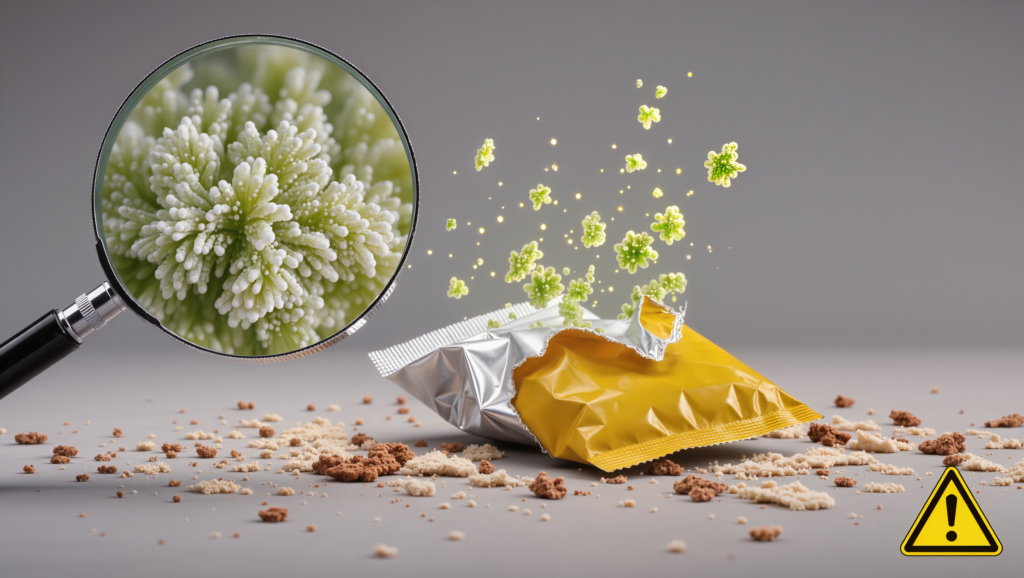
So even if your snack looks and smells normal, the toxins can still be there—heat, roasting, and baking do not reliably destroy them.
The major food‑relevant mycotoxins
Regulators and researchers mainly worry about a handful of families
- Aflatoxins – produced mostly by Aspergillus flavus and A. parasiticus. Common in peanuts, tree nuts (especially pistachios), maize, rice, and some spices, plus milk as aflatoxin M1 when animals eat contaminated feed.
- Ochratoxin A (OTA) – from Aspergillus and Penicillium. Found in cereals, coffee beans, dried vine fruits, wine, grape juice, spices, liquorice.
- Fumonisins – from Fusarium species, especially F. verticillioides and F. proliferatum. Mainly in maize and maize products, sometimes in rice and sorghum.
- Trichothecenes (e.g., deoxynivalenol / DON) – produced by various Fusarium species, common in wheat, barley, oats, maize.
- Zearalenone – another Fusarium toxin in maize, barley, wheat, sorghum, with estrogen‑like activity.
- Patulin – mainly from Penicillium in apples and apple products, and some other fruits; historically linked to mouldy apple juice and cider.
Penn State Extension notes that more than 400 mycotoxins have been described, but worldwide regulations focus on aflatoxins, ochratoxin A, patulin, fumonisins, zearalenone, and trichothecenes because these are common and toxic.
Why Mycotoxins Matter for Health
Mycotoxins don’t cause infections (they’re not bacteria or live mould), but they can cause mycotoxicosis—disease from toxin exposure.
Acute vs chronic effects
At high doses (usually in severe contamination situations), mycotoxins can cause:
- Acute poisoning – vomiting, abdominal pain, haemorrhage, liver or kidney failure, sometimes death.
- Outbreaks of aflatoxicosis have been documented when heavily contaminated maize or nuts entered food chains.
At low doses, repeated over time—more relevant to “clean snack” culture—the concerns are chronic:
- Aflatoxins – strongly associated with liver cancer; aflatoxin B1 is classified as a Group 1 human carcinogen by IARC. Chronic exposure also increases liver disease risk, especially alongside hepatitis B infection.
- Ochratoxin A – nephrotoxic (kidney damage) in animals; suspected human carcinogen; linked to chronic kidney disease in some regions.
- Fumonisins – associated with oesophageal cancer and neural tube defects; IARC classifies fumonisin B1 as possibly carcinogenic to humans.
- Trichothecenes (like DON) – cause nausea, vomiting (“vomitoxin”), immune modulation, and impaired growth in animals; in humans, chronic exposure is linked to GI discomfort and immune effects.
- Zearalenone – mimics estrogen, causing reproductive effects in livestock; long‑term significance for humans is under study.
A 2023 review calls mycotoxins “among the most toxic chemical agents found in food and feed,” noting that they pose serious risks to human and animal health worldwide. Cleveland Clinic similarly describes mycotoxins as mould‑derived products that can cause flu‑like symptoms acutely and more serious organ damage with chronic exposure.
How Mycotoxins Sneak Into “Clean” Snacks
Here’s where it gets uncomfortable: mycotoxin‑producing moulds love many of the foods marketed as wholesome, natural, or “clean.”
1. Nuts, nut butters, and “high-protein” snack bars
Aflatoxin‑producing Aspergillus species are particularly fond of peanuts and tree nuts, especially under warm, humid conditions and when storage/drying isn’t ideal.
- WHO notes that cereals, dried fruits, and nuts are major mycotoxin carriers worldwide.
- Scientific reviews highlight peanuts, pistachios, almonds, Brazil nuts, and their butters as common aflatoxin sources in human diets.
When those nuts get blended into:
- “Clean” nut butters
- Protein bars and snack bars sweetened with dates and “just nuts”
- Grain‑free granolas and keto snacks
…the mycotoxins, if present, are still there. They’re heat‑stable, so roasting or baking doesn’t reliably destroy them.
Regulators like FDA and EFSA set maximum allowable aflatoxin levels in nuts and nut products and conduct testing. But contamination can still be detected in retail products, especially imported nuts that slipped through or came from supply chains with weaker controls.
“Organic” or “natural” labels do not indicate lower mycotoxin risk; sometimes the opposite is true if less aggressive fungicides and storage treatments are used.
2. Dried fruits, “no-added-sugar” treats, and fruit leathers
Mould producers of ochratoxin A and other mycotoxins thrive on dried vine fruits and other dehydrated fruits.
WHO notes that OTA contamination occurs worldwide in:
- Cereals and cereal products
- Dry vine fruits (raisins, sultanas)
- Wine and grape juice
- Coffee
- Spices and liquorice
When raisins, dates, figs, and other dried fruits are transformed into:
- “No added sugar” snack balls and bars
- Paleo brownies and desserts
- Fruit‑and‑nut mixes and “energy bites”
…the risk of mycotoxins remains if upstream handling was poor. Again, they’re not removed by baking or blending.
3. Coffee and “clean” caffeine habits
Coffee is routinely tested for ochratoxin A, because the fungi that produce OTA frequently colonise stored coffee beans.
- WHO notes contamination of coffee beans, dry vine fruits, wine, grape juice, and cereals worldwide with OTA.
- Food safety agencies set maximum OTA limits in roasted coffee and instant coffee; some surveys still find occasional samples near or above these limits.
So your morning “clean” pour‑over or espresso can be an OTA exposure route, especially if beans come from less regulated supply chains or are improperly stored.
4. Gluten-free flours and “better-for-you” baked goods
Mycotoxins are very comfortable in:
- Maize (corn) – fumonisins, aflatoxins, DON, zearalenone.
- Rice – aflatoxins and other mould toxins.
- Sorghum and millet – various Fusarium toxins.
These grains are staples in gluten‑free flours and tortillas, crackers, breakfast cereals, and “healthy” baked products. Reviews highlight that multi‑mycotoxin contamination (more than one toxin at once) is “the norm, not the exception” in grain crops.
So a gluten‑free muffin made with rice and corn flour, plus raisins and nuts, checks several mycotoxin risk boxes—even if it’s organic, sugar‑free, and baked at home.
5. Spices, superfood powders, and “functional” add-ins
Mycotoxin‑producing molds also colonise spices (paprika, chilli, black pepper) and dried herbs, especially when dried and stored under warm, humid conditions.
If you’re sprinkling spices and powders into:
- Hummus and dips
- Smoothies loaded with cacao, coffee, adaptogens
- “Superfood” snack mixes and savoury blends
…you’re adding small potential mycotoxin sources, particularly if products are poorly stored or come from low‑quality suppliers.
Why “Clean”, “Natural” or “Organic” Don’t Equal Mycotoxin-Free
It’s tempting to assume that natural, organic, or minimally processed snacks are safer. Unfortunately, mycotoxins don’t care about branding.
Key realities:
- Mycotoxins are natural products of mould. Organic or pesticide‑free crops can still be colonised if conditions favour fungal growth.
- Synthetic fungicides can reduce mould growth in the field or storage; organic systems that avoid these fungicides rely more on drying, storage hygiene, and biological controls—which may be excellent or not, depending on the producer.
- “No preservatives” can mean shorter shelf life and higher spoilage risk if storage and turnover are not carefully managed.
International agencies like WHO and FAO emphasise that mycotoxin risk depends on temperature, humidity, crop practices, drying methods, and storage, not marketing claims. Good‑looking, organic, small‑batch nuts can still be mouldy at the microscopic level.
So the right question is not “Is this product organic?” but “Does this supply chain take mycotoxin control and testing seriously?”
How Regulators Manage Mycotoxins (and Why It’s Important)
It’s easy to panic at this point, but remember: mycotoxins have been part of human diets for millennia, and modern food systems work hard to keep levels low.
Regulatory frameworks (FDA, EFSA, Codex, etc.):
- Set maximum allowable levels of specific mycotoxins in high‑risk foods (e.g., aflatoxins in nuts and maize, OTA in cereals and coffee, patulin in apple juice).
- Require or encourage routine testing of imports and domestically produced batches, especially in vulnerable commodities.
- Monitor and recall products where levels exceed safety limits, and update guidance as new data emerge.
A 2023 review stresses that while mycotoxins are ubiquitous, regulation, monitoring, and good agricultural and storage practices can keep exposures within tolerable daily intakes for most consumers.
This doesn’t mean risk is zero; it means the goal is to keep chronic exposure low enough that population‑level health impacts are minimized.
Practical Ways to Reduce Your Mycotoxin Load
You can’t and don’t need to eliminate mycotoxins completely. But you can make your “clean” snack habits smarter.
1. Buy from reputable brands with strong quality control
Larger or specialty producers that mention:
- Testing for aflatoxins or OTA
- Strict sourcing and storage protocols
- Certifications or audits related to food safety
…are generally safer bets than anonymous bulk imports with no transparency.
Hidden hint: companies selling into baby foods, medical nutrition, or export markets often have tighter mycotoxin controls than bargain brands, because regulatory scrutiny is higher.
2. Treat high-risk foods with extra respect
For nuts, nut butters, dried fruit, coffee, and gluten‑free flours:
- Prefer whole, undamaged nuts and grains over broken, dusty, or heavily processed fragments (damage favours mould growth).
- Avoid products that smell musty, moldy, or “off”; that’s a sensory red flag.
- Store these foods in cool, dry conditions, ideally in airtight containers; consider refrigerating nuts and flours if you buy in bulk.
- Rotate stock—don’t keep the same opened bag of nuts in the cupboard for a year.
3. Moderate—not eliminate—your exposure
Diversity is your friend:
- Rotate your snack choices (nuts, fruit, yoghurt, veg + hummus) rather than relying heavily on one high‑risk category every day.
- Mix up cereals and grains instead of eating large amounts of one potentially contaminated staple.
- Don’t chase “superfood” powders as cure‑alls; stick to a varied, mostly whole‑food diet.
Because mycotoxin risk is dose and duration dependent, lowering the amount and frequency of exposure from any one source helps.
4. Remember that visible mould = bin it
Visible mould on bread, nuts, dried fruit, or leftovers is a hard stop:
- Mycotoxins can diffuse beyond the visible mould spot, so cutting off the bad patch does not reliably make food safe.
- For high‑risk items (nuts, grains, soft fruits), the safest move is to discard the whole item or batch.
Cleveland Clinic and food safety extensions are clear: if you suspect mould and you’re not dealing with a hard cheese or fully cured product with specific guidance, throw it out.
Should You Be Worried About Mycotoxins ?
Mycotoxins deserve respect, not panic.
On the one hand:
- They are widespread in global food systems.
- Certain toxins (aflatoxins, fumonisins, OTA) have strong links to cancer, organ damage, and animal disease.
- Climate change and global trade may increase contamination risks in some regions as temperatures and humidity rise.
On the other hand:
- Food safety authorities actively monitor and regulate mycotoxins.
- Good agricultural and storage practices can substantially reduce contamination.
- For most people in regulated markets, dietary exposure is usually below safety thresholds, especially with a varied diet.
The real “hidden role” of mycotoxins in clean snacks is this:
- They remind you that natural ≠ automatically safe, and that invisible risks can ride along even with organic or whole‑food products.
- They highlight how much your health depends not just on what you eat, but on how that food was grown, dried, stored, and tested long before it hit the shelf.
If your definition of “clean” evolves to include supply‑chain hygiene and mycotoxin controls, not just short ingredient lists, you’ll be much closer to genuinely safe, nourishing snacks—and further from the silent mould chemistry that nature sometimes sneaks into your trail mix.
https://pmc.ncbi.nlm.nih.gov/articles/PMC10563570 https://www.fda.gov/food/natural-toxins-food/mycotoxins https://pmc.ncbi.nlm.nih.gov/articles/PMC10563570/