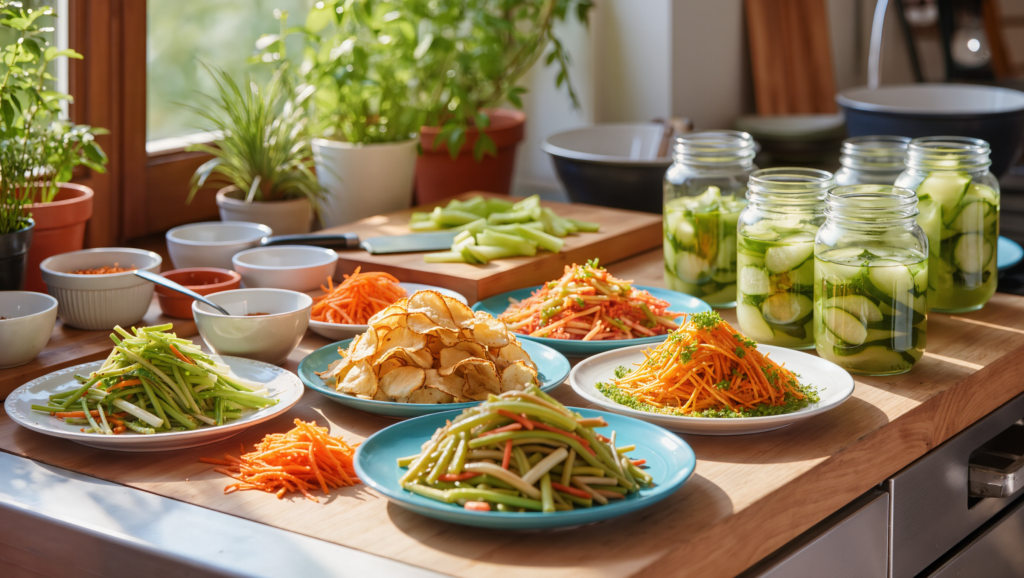












If you cook at home and care even a little about sustainability, you’re probably already saving leftovers, reusing jars, and shopping your pantry before running to the store. But the real zero‑waste magic happens one step earlier—when you stop throwing away some of the most flavourful, nutrient‑dense parts of your food: the stems, skins, seeds, cores, and leaves you usually send straight to the bin.
Root‑to‑stem (or leaf‑to‑root) cooking is the plant‑based cousin of nose‑to‑tail: you use as much of the plant as safely and deliciously possible. Done right, it cuts your food waste, saves money, boosts nutrition, and makes you a more creative cook—all without feeling like you’re chewing on compost.
Let’s turn those “scraps” into dinner.
Why Bother About The Concerns for Root-to-Stem Cooking?
Food waste and climate impact
Globally, about one‑third of all food produced is lost or wasted, and a surprising chunk of that happens in home kitchens. Root‑to‑stem cooking tackles the most obvious household waste: the parts you habitually trim off
Guides to waste‑free cooking list the core benefits:
- Less waste: Using stems, leaves, peels, and seeds means less ends up in the trash or compost.
- Lower climate footprint: Every gram you eat instead of binning uses the water, land, and energy that went into growing it more efficiently.
- More flavour: Many “scraps” have distinctive flavours and textures that can deepen broths, brighten sauces, and add crunch or aroma.
- More nutrition: Skins and peels often contain higher levels of fibre, vitamins, and polyphenols than the inner flesh.
A 2024 root‑to‑stem primer sums it up: using the whole plant “reduces waste, saves money, enhances flavour, and preserves valuable nutrients often lost when we discard skins, stems, and tops.”
The nutrition you’re throwing away
A 2022 review on fruit and vegetable peel‑enriched foods is very clear: peels are nutritional gold.
Highlights from that review:
- Citrus peels contain more polyphenols than the edible pulp; they’re especially rich in flavonoids with antioxidant properties.
- The peels of pears, peaches, and apples had roughly double the total phenolic content of the peeled fruits.
- Mango peel showed the highest total phenolic and flavonoid content among several fruit peels studied.
- Banana peel held about 25% of the fruit’s phenolics.
- Potato peel contained 61–125 g/kg crude fibre (dry matter) and is rich in pectin and cellulose.
- Lemon peel had about 14 g/100 g dietary fibre—almost double that of peeled lemon.
In short: the outer “waste” layers often carry more fibre and phytochemicals than the parts we prize.
A practical guide to using peels and stems notes that while not every scrap is worth daily effort, “citrus peel, potato skins, and many leafy tops offer enough nutrition and flavour to justify regular use when washed and handled properly.”
Ground Rules: Safety First, Then Creativity
Before you start throwing every stem and peel into your pan, a few non‑negotiables.
1. Wash like you mean it
Zero‑waste guides emphasise:****
- Scrub or wash produce thoroughly under running water.
- For thicker peels (citrus, potatoes, carrots, beets), use a vegetable brush.
- Trim off mouldy, slimy, or badly damaged parts—those still belong in the bin or compost.
- Keep scraps separate from raw meat and other high‑risk items to avoid cross‑contamination.
If you’re planning to eat the peel (especially citrus) frequently, going organic where possible helps minimise pesticide residues.
2. Know the exceptions
Some parts remain off‑limits or need special handling:
- Stone fruit pits (apricots, cherries, peaches) contain cyanogenic compounds—do not grind or eat them.
- Green potato skins or heavily sprouted potatoes can contain high solanine levels—discard those.
- Rhubarb leaves are toxic and should never be eaten.
- Mouldy scraps are unsafe; mycotoxins can penetrate beyond visible mould.
When in doubt, check a reliable reference before experimenting.
3. Use your freezer as a staging area
You don’t need to reinvent dinner every night. Most zero‑waste chefs keep a few “scrap bags” in the freezer
- One for stock scraps (onion skins, garlic skins, carrot ends, parsley stems, leek greens, mushroom stems).
- Optional extras for smoothie peels (banana, citrus zest, apple skins) and roasting seeds (squash, pumpkin).
When the bag is full, you batch‑cook broth or toppings.
Stems: Crunch, Aroma, and Hidden Flavour
Broccoli & cauliflower stems and cores
Guides consistently flag broccoli and cauliflower stems as prime zero‑waste material:
- Peel the tough outer layer with a knife or peeler.
- Slice into coins or matchsticks.
- Use in stir‑fries, slaws, soups, or quick pickles.
Broccoli stems taste mild and slightly sweet; they hold up well to high‑heat cooking and absorb sauces beautifully. Cauliflower cores can be sliced into planks and roasted alongside florets, or chopped into “rice” with the rest.
Leafy stems: kale, chard, collards
Leaf‑to‑root advocates emphasise that stems from leafy greens are more fibrous but still packed with nutrients:
- Thinly slice kale or collard stems and sauté them a few minutes before adding leaves.
- Turn Swiss chard stems into quick pickles with vinegar, garlic, and spices.
- Chop stems into small pieces and add to soups, stews, or grain salads for crunch.
Think of stems as a vegetable in their own right; they just need a little more cooking time.
Herb stems: flavour concentrates
Soft herb stems (parsley, cilantro, dill, basil) carry much of the plant’s aroma:
- Blitz them into pesto, chimichurri, and salsa verde alongside leaves.
- Toss them into stocks or braises for extra flavour, then strain.
- Finely mince and add to dressings or compound butters.
Carrot tops, often discarded, make a sharp, parsley‑like pesto or chimichurri that many zero‑waste recipes now highlight.
Skins & Peels: Fibre, Polyphenols, and Serious Flavour
Root vegetable skins (carrots, potatoes, beets, parsnips)
After a good scrub, many root veg skins are not only edible—they’re delicious:
- Roast “peel chips”: Toss clean carrot, potato, or parsnip peels with a bit of oil, salt, and spices; roast until crisp.
- Leave skins on for mashed potatoes, roasted roots, and fries for extra fibre.
- Use beet skins in stocks or braises (they stain, but add beautiful colour and minerals).
Potato and carrot peels are rich in fibre and pectin; one analysis found potato peel fibre running 61–125 g/kg of dry matter. That’s not trivial if you’re trying to boost gut‑friendly fibre.
Onion and garlic skins
You don’t eat these directly, but they’re stock gold:
- Save onion skins, garlic skins, and leek tops for homemade vegetable or bone broths.
- They add colour, mild onion flavour, and flavonoids like quercetin that infuse into the liquid.
Strain them out before serving; they’ve done their job.
Citrus peels
Citrus waste (rind + pith) is about 50% of the whole fruit by weight, and it’s a polyphenol and fibre bomb.
Studies show:
- Citrus peels contain higher polyphenol levels than the juicy flesh.
- Grapefruit peel, for example, showed some of the highest antioxidant capacities among tested peels.
- Lemon peel’s fibre content (~14 g/100 g) is nearly double that of peeled lemon.
Easy uses:
- Zest (the coloured outer layer) into dressings, marinades, batters, and sautés.
- Make candied citrus peel for snacking or baking.
- Dry strips of peel (pith trimmed) and grind into citrus powder for seasoning.
- Infuse peels in vinegar or olive oil for cleaning sprays or flavoured oils.
One popular nutrition article even notes that regular citrus peel consumption was associated in one study with lower risk of certain skin cancers, likely via flavonoids—though that’s early, observational data.
Always thoroughly wash citrus and prioritise organic if you’ll be eating the peel frequently, to reduce pesticide and wax exposure.
Apple and pear skins
The 2022 peel review found that apple, pear, and peach peels had about twice the phenolic content of the peeled fruit. Simple wins:
- Don’t peel apples and pears for crisps, cakes, or sauces; just chop finely.
- Dry apple skins into chewy snack strips or add to tea blends.
- Add peels to homemade vinegar or kombucha brews for sugar and flavour.
Seeds: Built-In Superfoods You Already Own
Squash and pumpkin seeds
Almost every zero‑waste guide says the same thing: don’t toss your squash seeds.
Basic method:
- Rinse seeds to remove most pulp.
- Toss with oil, salt, and spices (smoked paprika, cumin, garlic powder).
- Roast at 150–170°C (300–340°F) until dry and crisp.
Pumpkin and other Cucurbita seeds are rich in:
- Healthy fats and plant protein
- Minerals like magnesium and zinc
- Phytosterols that may support cholesterol and prostate health
Watermelon and other “odd” seeds
Watermelon seeds are traditionally eaten in many cuisines when roasted and salted; they’re another source of fats, protein, and minerals. Just be sure to roast thoroughly and chew well.
Tomato cores and seeds
Tomato seeds and jelly contain umami and acidity:
- Blend whole tomatoes, seeds and all, into sauces and soups.
- Simmer “discarded” cores in stock, then strain for a tomato‑rich broth base.
How to Build a Zero-Waste Root-to-Stem Kitchen Routine
1. Reframe “scraps” as ingredients in the making
Adopting a zero‑waste chef mindset means every time you pick up a knife, you ask:
- “What part am I using today?”
- “What part can I use tomorrow or in another dish?”
Practical systems from zero‑waste kitchen guides include:
- A labelled freezer bag or box for stock scraps.
- A jar for citrus peels destined for candying, powder, or vinegar.
- A small container for seeds you’ll roast at the end of the week.
2. Start with a few high-impact habits
You don’t need to use everything at once. Start with the easiest, most rewarding changes:
- Stop peeling carrots and potatoes unless you truly need a smooth puree.
- Always save broccoli and cauliflower stems, peel them, and cook them.
- Roast squash seeds instead of binning them.
- Zest lemons and oranges before juicing.
- Keep a stock bag and make broth every couple of weeks.
These alone will noticeably shrink your bin and expand your recipe repertoire.
3. Use “scraps” to stretch more expensive ingredients
Root‑to‑stem articles point out that using scraps can stretch premium items:
- Add chopped stems and peels to bulk up soups and stews.
- Use carrot tops, parsley stems, and herb stalks to make flavourful sauces that make simple grains or beans feel special.
- Add vegetable peel chips and roasted seeds as crunchy toppings instead of buying croutons or packaged snacks.
Your grocery budget will breathe a little easier.
When Zero-Waste Cooking Meets Common Sense
A realistic, sustainable zero‑waste approach is not about guilt; it’s about better default habits.
It’s fine to:
- Compost some scraps if you’re saturated on broth and pickles.
- Skip using peels that are too blemished or if you can’t source them in a way you’re comfortable eating.
- Treat some root‑to‑stem ideas as sometimes habits (like candied citrus peel) rather than daily requirements.
A recent practical guide emphasises that “not all edible parts are worth daily attention”—but that citrus peels, potato skins, leafy tops, and sturdy stems are good everyday candidates because the nutritional and flavour payoff justifies the effort.
The Payoffs Of Cooking Like a Zero-Waste Chef
Once you start using stems, skins, and seeds, your cooking shifts in subtle but powerful ways:
- You taste more of the plant—its bitterness, sweetness, aroma, and texture layers.
- You think less in terms of recipes and more in terms of systems: stocks, sauces, pickles, toppings.
- Your bin fills more slowly, your pantry stretches further, and your meals quietly get more fibre, phytonutrients, and character
Root‑to‑stem cooking doesn’t require a chef’s kitchen or hours of extra work. It just asks you to look at what’s already in your hands—the peel you’re about to strip off, the stem you’re trimming—and ask, “What else could you be?” Most of the time, the answer is: stock, pesto, pickles, chips, and crunch—not trash.