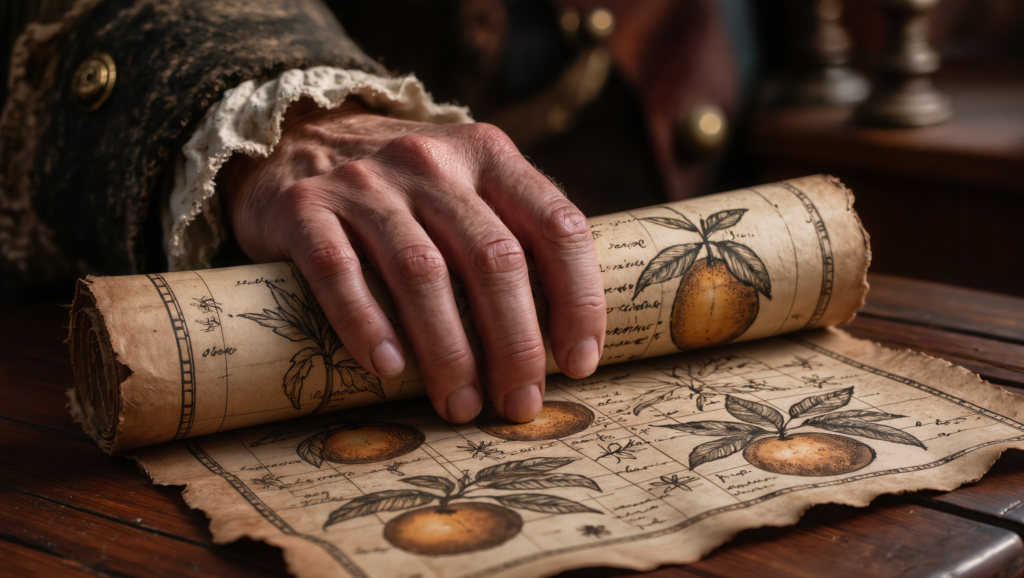












Pirates were terrified of scurvy for a reason: it could wipe out half a crew before they ever saw battle. Yet long before “vitamin C” was even a concept, sailors, explorers, and coastal peoples had already stumbled onto something close to a secret cure—fresh plant foods, especially citrus and certain tree infusions—that could bring dying men back to life in a matter of days.
Modern medicine later reframed all this as a simple vitamin deficiency problem, but in doing so it flattened a much older, richer story of shipboard ingenuity, indigenous knowledge and sheer trial‑and‑error at sea. The “forgotten wisdom” isn’t that citrus works—that part is famous. It’s how often sailors knew roughly what worked, then ignored, lost, or mis‑used it for centuries.
Let’s dive into how scurvy actually devastated pirates and sailors, what they tried, what really worked, and why it took so ridiculously long for the medical world to take the high‑seas cure seriously.
Scurvy: The Slow, Horrific Killer of the High Seas
Before we talk about cures, it’s worth remembering how brutal scurvy actually was.
Scurvy is caused by a deficiency of vitamin C, which humans can’t make themselves. After a couple of months at sea without fresh produce, sailors started showing a ghastly sequence of symptoms:
- Profound fatigue, apathy, and weakness.
- Muscle and joint pain, swollen legs and arms.
- Easy bruising and skin hemorrhages, especially on the legs.
- Swollen, bleeding gums, teeth loosening and falling out; old scars reopening.
- Eventually, infections, heart failure, and death.
One historian estimates that more than two million sailors died from scurvy during the Age of Sail, and shipowners often “counted on a 50 percent death rate” from scurvy on long voyages. It killed more men than storms, shipwrecks, and battles combined.
For pirates operating in the same oceans as navies and merchant fleets, scurvy was just as real a threat—long periods at sea, poor provisions, and limited access to fresh fruits and vegetables made it nearly inevitable on extended cruises.
Early Clues: Indigenous Remedies and “Green Stuff” That Worked
Long before vitamin C was discovered, different cultures had already stumbled on plant‑based ways to stop scurvy.
Cedar tea and the St. Lawrence “miracle”
In 1535–36, French explorer Jacques Cartier’s crew was trapped in winter ice along the St. Lawrence River, ravaged by scurvy. Local St. Lawrence Iroquoians shared a remedy: a decoction made by boiling needles and bark of a tree called “aneda,” almost certainly eastern white cedar.
Cartier described how his men drank the brew and used the dregs on their skin; within days they began to recover dramatically. Later analysis showed that cedar needles can contain around 50 mg of vitamin C per 100 g, more than enough to reverse scurvy.
This was, effectively, an early indigenous vitamin C therapy—and it worked so well that it saved his expedition from collapse.
Yet this knowledge was not systematically preserved or adopted by European navies. One National Park Service review notes bluntly that “unfortunately, this knowledge was not passed on, and for centuries many sailors would continue to succumb to scurvy.
Sea kale, ginger, spruce beer and sauerkraut
Other scattered practices also hinted at the real cure: fresh plant matter.
- Roman writer Pliny the Elder mentioned sailors eating sea kale to prevent scurvy‑like symptoms.
- A Chinese monk, Faxian, wrote in 406 AD that Chinese ships carried ginger to prevent scurvy.
- Inspired partly by Cartier’s cedar success, later Europeans tried spruce beer (conifer‑based brews) as an anti‑scorbutic; these likely contributed some vitamin C too.
- In the 18th century, Captain Cook used sauerkraut and fresh vegetables whenever possible, which helped delay or prevent scurvy on his long Pacific voyages—even before he fully understood why.
All of these essentially shared the same hidden principle: fresh plant foods contain something life‑saving that dry biscuits and salted meat don’t.
Pirates, Ship’s Surgeons and the Wrong “Cures”
During the Golden Age of Piracy (roughly 1680–1725), the true cause and cure of scurvy were still not understood in a scientific way. Many ship’s surgeons—and pirates didn’t exactly get the best of them—came armed with humoral theories and fashionable remedies instead of citrus.
Typical “treatments” in the 17th–18th centuries included.
- Vinegar (a few ounces daily).
- Elixir of vitriol – dilute sulfuric acid mixed with alcohol.
- Strong patent medicines like Ward’s Drop and Pill, potent purgatives and diuretics.
- Bloodletting (phlebotomy) to remove “bad humours.”
- Barley water with tamarinds and periodic laxatives.
- Even bizarre folk ideas like putting a piece of turf over the patient’s mouth to counter “bad sea air.”
One historical review describes how the East India Company in the 1630s prescribed tamarinds and oil of vitriol as scurvy remedies and balked at the cost of lemon juice. Another notes that Anson’s circumnavigation was stocked with vinegar, elixir of vitriol and Ward’s Drops, none of which “did a thing to prevent scurvy.”
In pirate circles, the situation was no better. Contemporary accounts show scurvy being treated with knife cuts to release “bad blood,” bloodletting, purging, and crude topical measures—all useless against a vitamin deficiency.
So while a few captains and explorers experimented with fresh foods, the average pirate or seaman in this era did not have a reliable, systematic cure—only scattered, folk‑like “secrets” that some crews used when they happened to be near fresh supplies.
The Not‑So‑Secret Secret: Citrus and the First Clinical Trial at Sea
The part of the story most people know is James Lind’s experiment. But even that “secret” was sitting in plain sight long before.
Early citrus trials
In 1601, English commander Sir James Lancaster carried bottles of lemon juice on four ships on a voyage to the East Indies. On one ship, he gave crew members 3 spoonfuls of lemon juice daily; on the others, nothing. The lemon‑juice crew stayed largely free of scurvy, while the others were decimated.
Despite this striking demonstration, citrus juice remained a rare, expensive, and inconsistently used remedy. The East India Company considered it too costly to provide lemon juice preventively for all sailors, especially when scurvy hadn’t yet appeared.
James Lind’s trial: pirates would have loved this
In 1747, naval surgeon James Lind conducted what is now celebrated as one of the earliest controlled clinical trials, aboard HMS Salisbury.
He took 12 sailors with scurvy, divided them into pairs, and gave each pair the same basic diet plus one of six different treatments:
- Cider.
- Elixir of vitriol (dilute sulfuric acid).
- Vinegar.
- Seawater.
- A paste of various herbal extracts.
- Two oranges and one lemon per day.
The results were dramatic:
- The pair given citrus fruit recovered so rapidly that one was fit to return to duty in less than a week.
- The other treatments showed little to no benefit.
Lind later wrote his Treatise of the Scurvy (1753), arguing clearly that fresh citrus was effective. Even so, the Royal Navy didn’t fully mandate citrus until 1795—more than 40 years later.
When it finally did, thanks largely to physician Gilbert Blane, the effect was astonishing: issuing roughly three‑quarters of an ounce of lemon juice per sailor per day essentially banished scurvy from the Royal Navy.
The navy later switched to lime juice from Caribbean colonies (cheaper and closer), giving rise to the nickname “limeys” for British sailors.
For pirates, who often operated near tropical coasts or raided citrus‑rich islands, the “secret cure” was literally hanging on trees around them—if only it had been recognised and systematised earlier.
What Was the Real “Pirate Cure” for Scurvy?
Strictly speaking, pirates didn’t have a unique, esoteric remedy; they existed in the same medical culture as other seafarers. But they did sometimes benefit from practices that, in hindsight, were exactly what modern medicine would prescribe: fresh, vitamin‑C‑rich plant foods whenever they could get them.
That included:
- Citrus fruits (oranges, lemons, limes) taken on board from tropical ports.
- Fresh fruits and vegetables from coastal raids or trading stops—whatever they could steal or buy.
- Occasional use of local indigenous remedies (like tree infusions or wild greens) in regions where coastal peoples knew how to treat “land sickness” or “sea disease.”
The true “secret cure” pirates could have used—had they fully recognised it—was:
Any consistent, daily intake of fresh plant foods rich in vitamin C.
Citrus was the most practical and concentrated version at sea, which is why it became the flagship solution, but cedar tea, sea kale, certain wild greens, and fermented vegetables all worked on the same biochemical principle.
What Modern Medicine Got Right—and What It Forgot
Modern medicine eventually nailed the puzzle:
- Scurvy is caused by deficiency of ascorbic acid (vitamin C).
- Humans, unlike many animals, cannot synthesise vitamin C and must obtain it from diet.
- Preventing scurvy is as simple as regularly eating vitamin‑C‑rich foods or taking supplements.
However, in streamlining the story into “vitamin C deficiency,” we lost some of the older nuances and practical wisdom.
Forgotten insights from the high seas
- The form and freshness of the cure matter.
Early naval experiments sometimes failed because juice was stored for months or over‑heated, destroying vitamin C. Historical accounts note that if ships did carry lemon juice, it was often issued in amounts “never enough to combat a full case of scurvy” or degraded by time and treatment. Modern takeaway: it’s not just about “having oranges on the manifest,” it’s about stable, bioavailable vitamin C in adequate doses. - Indigenous knowledge was often right—and often ignored.
The Iroquoian cedar remedy literally saved Cartier’s men, yet European medicine did not integrate this knowledge widely. Similarly, Chinese and other maritime cultures carried ginger and specific greens without waiting for Western validation. Modern takeaway: traditional and local practices often hold pragmatic solutions long before mechanistic explanations exist. - Systems and logistics can matter more than discovery.
Lind showed citrus worked in 1747; the navy didn’t implement it universally until the 1790s. Lancaster’s lemon trial was in 1601—almost two centuries before reliable adoption. In the meantime, pirates and sailors kept dying of a problem their societies kind of already knew how to solve.bbc+3 Modern takeaway: knowing a cure doesn’t help if you don’t apply it consistently or at scale. - “One‑nutrient thinking” can blind us.
Today we often reduce scurvy to “take a vitamin C pill,” but historical solutions included whole foods and ferments—sauerkraut, fresh greens, fruits, and tree infusions—that brought along fibre, phytochemicals, and other nutrients that supported overall resilience.sciencehistory+2 Modern takeaway: focusing only on the identified molecule can cause us to under‑value the broader benefits of whole, fresh, diverse plant foods.
What We Can Learn From the Pirate Era Today
Even though it’s unlikely you’ll get full‑blown scurvy in the modern world if you eat any fruits or vegetables at all, the history still holds some useful reminders:
- Fresh, minimally processed plant foods are non‑negotiable.
Scurvy is the extreme end of a spectrum; milder, chronic vitamin C inadequacy can still impact collagen synthesis, wound healing, oxidative stress and fatigue. - Stored, ultra‑processed, and refined foods can look “adequate” on paper but fail in real life.
The navy’s ship biscuits and salted meats were calorically dense but nutritionally disastrous. Many modern ultra‑processed diets aren’t so different in principle. - Tiny daily habits can prevent massive long‑term damage.
Three‑quarters of an ounce of lemon or lime juice a day virtually eliminated scurvy in the Royal Navy. Small, consistent intakes of fruit and veg still give disproportionate protective effects today. - We’re still capable of ignoring simple fixes.
It took centuries for institutions to accept citrus; today, we have equally strong evidence for diets rich in whole plants reducing chronic disease, but implementation still lags.
The “Forgotten” Cure, Reframed
So what was the ancient pirate’s secret cure for scurvy that modern medicine “forgot”?
It wasn’t mystical at all. It was this:
- Trust fresh plants over potions.
Amid bloodletting, acid tonics, and bizarre treatments, the only things that really worked were simple: citrus, greens, fermented vegetables, tree teas. - Use them early and consistently, not as a last resort.
Pirates and sailors who waited until their gums rotted and legs swelled were often too far gone. Regular, preventative intake is what saved the Royal Navy. - Listen to the people who live with the land and sea.
Indigenous cedar brews, sea kale along coasts, ginger on Chinese ships—these were all field‑tested “clinical trials” long before Lind.
Modern medicine didn’t really forget this wisdom so much as substitute it with the shorthand “vitamin C” and then move on. The biochemical explanation is invaluable, but the broader insight from the high seas is still quietly radical:
If you’re going to push the human body to the edge—on an ocean, in a stressful job, or just in modern life—you can’t do it on shelf‑stable calories alone. You need something living and green in the mix, or the whole system eventually starts to come apart at the seams.
The pirates and sailors who survived longest weren’t the ones with the fanciest tonics. They were the ones whose captains, by luck or by learning, kept a little bit of the world’s fresh light—stored as vitamin C in plants—on board.