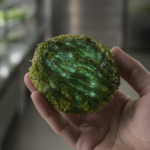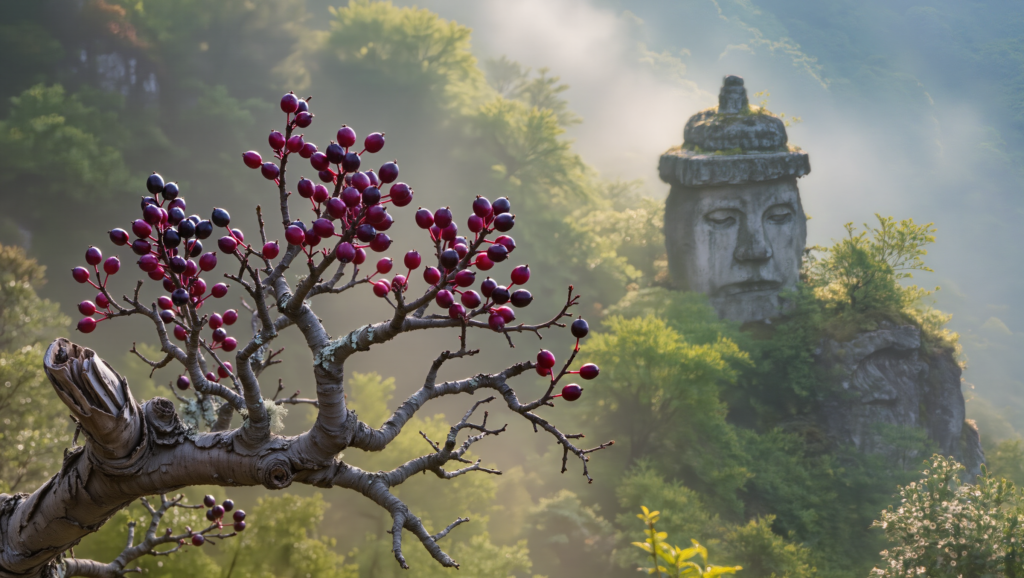












The Yunnan hackberry sounds like a tree out of a Taoist alchemy manual: tough enough to survive brutal conditions, quietly cleaning the air, and producing small fruits and gums that local people have used for centuries as food and medicine. It’s not on Western superfood lists (yet), but if you care about longevity, resilience, and genuinely “functional” foods, this unassuming Chinese tree is worth a very close look.
Right now, we don’t have human clinical trials saying “eat Yunnan hackberry and live to 120.” What we do have are three powerful strands of evidence that make it a serious longevity candidate: (1) its role in traditional mountain diets and medicine in Yunnan, (2) modern phytochemical data showing hackberry fruits are loaded with anti‑aging compounds like phenolics, flavonoids, and minerals, and (3) broader anti‑aging research on similar plant antioxidants (especially flavonoids and anthocyanins) that already extend lifespan in lab models and protect aging tissues.
Let’s unpack how those threads come together—and why the “forbidden fruit” image is not that far off.
Meet the Yunnan Hackberry: A Tree Built for Hard Times
The Yunnan hackberry (a Celtis species native to China’s Yunnan region) is described as a resilient, drought‑resistant tree that thrives in poor soil and harsh conditions, making it a kind of botanical symbol of endurance. It’s part of a wider hackberry clan; one close relative, Celtis australis, has fruits that have already been chemically profiled as remarkably nutrient‑dense.
Key traits of Yunnan hackberry highlighted in recent summaries:
- It tolerates drought, poor soils and harsh climates, yet still produces fruit.
- It plays an ecological role—sequestering carbon, improving air quality, stabilising soils, and supporting local biodiversity.
- In traditional Chinese practice, various parts of the tree (fruit, bark, leaves, gum) have been used for anti‑inflammatory and antioxidant effects.
That ecological toughness matters for longevity in a literal sense (the tree lives long), but it also hints at something else: plants that survive harsh environments often synthesize more protective phytochemicals, many of which double as powerful antioxidants and stress‑response modulators in humans.
Traditional Wisdom: A Quiet “Medicinal Food” in Mountain Cultures
The Yi people of Yunnan—one of the region’s largest ethnic groups—have a rich tradition of using local plants as “medicinal dietary” items, meaning foods that are eaten regularly to treat or prevent chronic conditions. In a 2020 ethnobotanical survey of Yi communities in Mile, Yunnan, researchers documented numerous wild and cultivated plants used this way, emphasising that diet and medicine are deeply intertwined in their view of health and longevity.
While that paper focuses on species like goji berries (Lycium), wild greens and other fruits, it underscores a pattern: mountain peoples in Yunnan deliberately integrate antioxidant‑rich, stress‑adaptive plants into daily meals to “treat and protect against diseases.” The Yunnan hackberry is mentioned in modern sources as part of this larger tradition: its fruits and other parts are used locally for anti‑inflammatory and antioxidant benefits, echoing the way other Chinese “longevity fruits” such as goji berries are used.
In Chinese herbal culture, fruits that:
- Tonify the body over time,
- Are safe enough for daily use, and
- Are used specifically for “deficiency” patterns (fatigue, aging, weakness)
are classic longevity foods—think goji (Lycium), mulberry, jujube. Yunnan hackberry sits in that same conceptual slot: not a harsh drug, but a food‑like plant traditionally believed to support health span rather than just suppress symptoms.
Why Lab Says Hackberry Fruit Is a Phytochemical Powerhouse
We don’t yet have a full chemical profile published specifically for Yunnan hackberry fruit, but we do have a detailed 2023 analysis of its close cousin, hackberry (Celtis australis) fruits, and the results are eye‑opening.
Researchers evaluated C. australis fruits as a source of “nutraceutical ingredients” and found:
- High total phenolic content – phenolics are a major class of antioxidant compounds linked to lower risk of cardiovascular disease and neurodegeneration.
- Significant levels of flavonoids, a subclass of polyphenols with potent anti‑inflammatory and cell‑protective effects.
- Notable amounts of minerals and other micronutrients, making the fruits nutritionally dense beyond just sugar and fibre.
Previous studies referenced in that paper also showed hackberry fruits contain a variety of bioactive phytochemicals with antioxidant activity. The authors conclude that hackberry fruits are a “rich source of phytochemicals such as phenolic compounds, flavonoids, and minerals” and that they have potential as functional food ingredients.
Given that Yunnan hackberry is biologically similar and used traditionally for antioxidant and anti‑inflammatory purposes, it’s reasonable to see it as part of this same “small fruit, big phytochemical load” category.
Why Those Compounds Matter for Longevity
Calling any single fruit an “ultimate longevity superfruit” is marketing language—not science. But there is solid science saying that the dominant compounds in hackberry‑type fruits (phenolics, flavonoids, anthocyanins, etc.) have anti‑aging actions in multiple models.
Flavonoids as lifespan modulators
A 2022 paper on flavonoids from Lycium barbarum (goji) leaves is a good example of how plant flavonoids behave in aging biology:
- Flavonoid extracts rich in rutin and kaempferol protected human endothelial cells from oxidative‑stress‑induced death, reducing ROS and lipid peroxidation while boosting antioxidant enzymes (SOD, glutathione peroxidase, catalase).
- In Caenorhabditis elegans (a standard longevity model), these extracts extended mean lifespan by about 15%, improved mid‑life mobility, and upregulated antioxidant and longevity genes such as sod‑2, gcs‑1, daf‑16 and skn‑1.
- Mechanistically, they worked via redox modulation and MAPK pathway signalling, classic anti‑aging routes.
The authors note that flavonoid‑rich plant extracts often outperform single isolated compounds in extending lifespan, due to synergistic effects. That’s exactly the pattern we expect from a complex fruit matrix like hackberry.
Anthocyanins and “purple longevity”
Another 2025 review focuses on anthocyanins, the pigments that give many berries their red, purple or blue hues. It concludes that anthocyanins:
- Have potent antioxidant and anti‑inflammatory properties, reducing oxidative damage and modulating immune responses.
- Promote healthy autophagy, protect the gut barrier, and improve vascular function.
- Show benefits in preclinical models of neurodegeneration, osteoporosis, cardiovascular disease, cancer and other age‑related conditions.
A pilot human study cited in that review found that elderly adults who consumed wild blueberry powder rich in anthocyanins for 12 weeks saw improved endothelial function and lower 24‑hour systolic blood pressure—markers directly linked to cardiovascular and longevity risk.
Hackberry fruits (including C. australis) do contain polyphenols and, in some varieties, pigments that overlap with these anthocyanin‑rich profiles. Yunnan hackberry likely shares part of that “colored, antioxidant‑rich small fruit” chemical signature.
The bigger anti‑aging picture
A 2022 overview of dietary supplements and natural products in aging emphasises that polyphenols and flavonoids consistently emerge as longevity‑supportive compounds, acting through:
- Reduction of oxidative stress and chronic inflammation.
- Modulation of mitochondrial function, autophagy and stress‑response pathways.
- Support of vascular health, metabolic fitness, and neuroprotection.
When you see a traditional “longevity fruit” that is proven to be rich in these families of compounds—like hackberries—you’re looking at a plausible everyday food‑based way to nudge those same pathways, rather than a high‑dose, single‑molecule supplement.
Why Yunnan Hackberry Is Especially Interesting for Longevity
Plenty of fruits contain polyphenols. What makes a tree like the Yunnan hackberry particularly compelling?
1. Stress‑adaptive chemistry
Plants that thrive in drought, poor soils and climatic stress often upregulate their own antioxidant and protective systems, accumulating more secondary metabolites like phenolics and flavonoids to survive.
The same compounds that protect the plant from UV, drought and pathogens often act as xenohormetic signals in humans—mild stressors that trigger our own cellular defence pathways (Nrf2, sirtuins, etc.). This is already suggested in mechanistic flavonoid studies such as the Lycium flavonoid work.
In other words, the Yunnan hackberry’s survival chemistry may be exactly what makes its fruit interesting as a resilience and longevity food.
2. Integration into daily mountain diets
The Yi and other Yunnan groups don’t use plants like hackberry as rare “cures”; they fold them into regular, long‑term dietary patterns to “treat and protect against diseases.” That’s the same logic you see in blue zones worldwide: longevity isn’t built on one magic supplement, but on habitual, low‑dose exposure to beneficial compounds in everyday foods.
A fruit eaten regularly over decades—especially one rich in phenolics and minerals—can shape:
- Vascular health
- Glycaemic control
- Inflammatory tone
- Microbiome composition
all of which are now recognised as foundational to healthy aging.
3. Potential synergy with other “longevity plants”
Yunnan hackberry doesn’t sit alone; it shares ecosystems and diets with:
- Goji (Lycium barbarum) – well‑studied for antioxidant and neuroprotective effects.
- Mulberry, wild greens, medicinal teas – many of which carry their own anti‑aging phytochemicals.
This makes the hackberry fruit a part of a synergistic longevity pattern: multiple moderate sources of flavonoids, anthocyanins, polysaccharides and minerals feeding into the same redox and immune pathways.
From a Western perspective, we tend to isolate one “hero” fruit and ignore the dietary context; traditional Yunnan diets instead weave hackberry into a web of mutually reinforcing foods.
The “Forbidden Fruit” Angle: Why You Haven’t Heard About Yunnan Hackberry
If hackberry fruits are so promising, why aren’t they in every health store?
A few reasons:
- Geographic niche – The Yunnan hackberry is regionally common but globally obscure. It simply hasn’t been commercialised or branded the way goji or ginseng have.
- Research gap – We have good phytochemical data for Celtis australis and some modern notes about Yunnan hackberry’s traditional uses, but almost no large‑scale human trials yet.
- Supply chain and farming inertia – Turning a wild or local fruit into a global commodity requires agronomy, logistics and marketing work that hasn’t happened yet for hackberry.
That’s why it feels “forbidden” or secret: the tree has been quietly supporting local ecosystems and mountain communities, but no global marketing machine has turned it into the next açai—yet.
Given the growing interest in new functional fruits and the constant search for robust, climate‑resilient crops, it’s not hard to imagine that hackberries—Yunnan included—could be next in line for serious cultivation and product development, especially now that C. australis has been flagged as a promising nutraceutical fruit.
How to Think About Yunnan Hackberry as a Longevity Food (Without the Hype)
Until we see human intervention trials, it’s more honest to call the Yunnan hackberry a high‑potential longevity candidate rather than a proven superfruit. But you can still use the available science to position it intelligently:
- Its traditional use in Yunnan, including for anti‑inflammatory and tonic purposes, aligns with how many other anti‑aging plants were used long before modern science confirmed them.
- The phytochemical profile of closely related hackberry fruits (rich in phenolics, flavonoids, minerals) fits the pattern of documented anti‑aging foods and extracts in current literature.
- The mechanisms involved (antioxidant defence, redox modulation, anti‑inflammatory signalling, vascular support) are precisely the ones targeted in modern longevity research.
If and when Yunnan hackberry fruits are more widely available, a longevity‑oriented way to use them would likely be:
- As a regular, moderate addition to a diet already rich in diverse fruits and vegetables.
- In synergy with other proven longevity foods (berries, leafy greens, nuts, legumes).
- Potentially as part of standardised extracts once specific bioactive profiles are characterised, similar to what’s being done with goji leaves and berries.
The Bottom Line
The “forbidden fruit of ancient China” is less about exotic magic and more about quiet, robust biology:
- A tree that survives hardship by producing potent protective compounds.
- A fruit that local cultures have woven into their medicinal diets for generations.
- A phytochemical signature (phenolics, flavonoids, minerals) that modern science is already linking—through parallel plants—to longer health span, better vascular and brain function, and improved resilience to oxidative stress.
If longevity is about stacking small, daily advantages over decades, the Yunnan hackberry fits the pattern perfectly. It may never get the global hype of goji or blueberries, but as more labs turn their attention to resilient, under‑studied fruits, don’t be surprised if this humble mountain tree quietly steps into the spotlight as one of the most interesting “new old” allies in the science of staying young longer.
Sources
- https://pmc.ncbi.nlm.nih.gov/articles/PMC7456026/
- https://pmc.ncbi.nlm.nih.gov/articles/PMC10382517/
- https://pmc.ncbi.nlm.nih.gov/articles/PMC12231369/