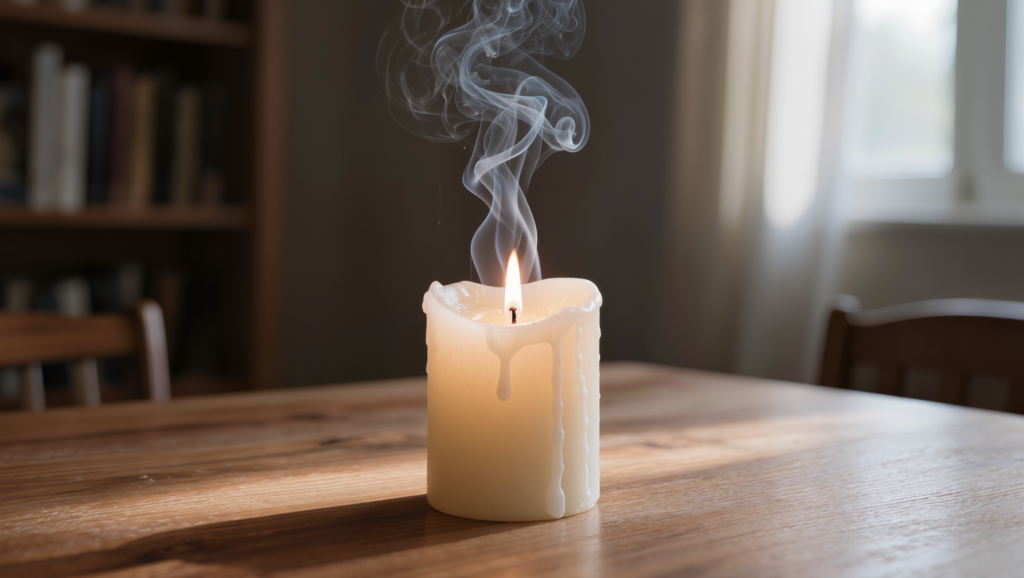












That cozy evening glow from a vanilla-scented candle might feel like self-care, but there is an invisible trade-off happening in your lungs every time you light up. Scented candles release a complex mix of ultrafine particles, volatile organic compounds (VOCs) like formaldehyde, and fragrance chemicals that can irritate your airways, worsen asthma, and increase bronchial reactivity—especially in poorly ventilated spaces.
For most healthy people, occasional candle use in a well-ventilated room is unlikely to cause serious harm. But for those with asthma, allergies, or sensitive airways, scented candles can be a significant trigger. And emerging research suggests that even in people without diagnosed lung disease, frequent exposure to candle emissions may subtly increase bronchial hyperreactivity—the tendency of your airways to overreact to irritants.
Here is what the science says about how scented candles affect your lungs, the link to bronchial reactivity, and how to minimize risk if you love burning candles at home.
What Are Scented Candles Actually Releasing Into Your Air?
When you light a candle, you are not just releasing fragrance. You are creating a small combustion engine in your living room. The burning process generates:
- Particulate matter (PM): Including fine (PM₂.₅) and ultrafine particles that can penetrate deep into the lungs and even enter the bloodstream.
- Volatile organic compounds (VOCs): Such as benzene, toluene, formaldehyde, acetaldehyde, acetone, and various terpenes from fragrances. Many of these are known irritants or carcinogens at high exposures.
- Polycyclic aromatic hydrocarbons (PAHs): Formed during incomplete combustion of wax and fragrance additives; some PAHs are carcinogenic.
- Carbonyls and aldehydes: Including formaldehyde and acrolein, which are potent respiratory irritants.
- Fragrance chemicals and phthalates: Used to stabilize and enhance scents; these can act as allergens or endocrine disruptors and contribute to oxidative stress in lung tissue.
One study using gas chromatography–mass spectrometry (GC–MS) found 20 VOCs in unscented candles but 60 VOCs in scented candles, highlighting how much more chemically complex scented options are.
Another analysis detected trace amounts of benzene, toluene, and formaldehyde above burning wicks, with concentrations higher near breathing level in poorly ventilated rooms.
While individual emissions may be low, the cumulative effect in enclosed spaces—especially with multiple candles, frequent use, or limited ventilation—can meaningfully degrade indoor air quality.
How Candle Missions Affect The Lungs
Once inhaled, candle pollutants can impact your respiratory system in several ways:
1. Direct irritation of the airways
VOCs like formaldehyde, acrolein, and certain terpenes are known to irritate the mucous membranes of the eyes, nose, throat, and lungs. Symptoms can include:
- Coughing, throat clearing, or hoarseness.
- Nasal congestion or runny nose.
- Chest tightness or wheezing.
- Eye irritation and headaches.
In animal studies, chronic exposure to scented candle fumes in poorly ventilated conditions caused:
- Elevated inflammatory markers (TNF-α, IL-6) in serum and lung tissue.
- Increased oxidative stress (higher MDA, lower antioxidant enzymes like CAT and SOD).
- Histological signs of lung injury and inflammation.
This suggests that even below “toxic” thresholds, repeated exposure can provoke low-grade inflammation and oxidative damage in the lungs.
2. Particulate matter deposition in the lungs
Candle soot and ultrafine particles are small enough to reach the alveoli (the tiny air sacs where gas exchange occurs). Once deposited, they can:
- Trigger local inflammation.
- Impair lung function over time.
- Contribute to cardiovascular and respiratory disease, especially in susceptible individuals.
High levels of indoor particulate matter may negatively affect both the pulmonary and cardiovascular systems, and candle-derived PM is part of that burden.
3. Exacerbation of asthma and allergic conditions
For people with asthma or allergic rhinitis, scented candles are a well-recognized trigger:
- Fragrance products (including candles) are reported to elicit eye and airway symptoms in about 42% of adults in one population-based study.
- Bronchial hyperreactivity (BHR)—an exaggerated narrowing of the airways in response to stimuli—was independently associated with fragrance-induced mucosal symptoms (adjusted odds ratio 2.3).
- Clinical reports describe direct temporal relationships between candle smoke exposure and asthma exacerbations, with symptoms like wheezing, dyspnea (shortness of breath), and chest tightness.
Importantly, these reactions do not always involve classic IgE-mediated allergy. Many fragrance-related symptoms appear to be irritant or non-allergic in nature, driven by chemical sensitivity and bronchial reactivity rather than true allergy.
The Bronchial Reactivity Connection To Scented Candles: Why Some People React More Strongly
Bronchial reactivity (or bronchial hyperreactivity, BHR) refers to how easily your airways narrow in response to triggers like cold air, exercise, smoke, or chemical irritants. People with asthma typically have high BHR, but it can also be present in those without diagnosed asthma.
A study investigated mucosal symptoms from fragrance products (including candles, air fresheners, and perfumes) and their relationship to BHR, atopy (allergic sensitization), and asthma.
Findings:
- 42% of participants reported eye or airway symptoms from fragrance products.
- BHR was a significant and independent predictor of these symptoms (adjusted OR 2.3).
- There was no significant association with atopy, FEV₁ (a measure of lung function), or serum eosinophil markers, suggesting that IgE-mediated allergy was not the main driver.
In other words, people with more reactive airways were more than twice as likely to experience symptoms from fragrances, regardless of whether they had classic allergies. This supports the idea that fragrance chemicals act primarily as irritants that exploit underlying bronchial hyperreactivity, rather than as traditional allergens.
For candle users, this means:
- If you already have asthma, COPD, or sensitive airways, scented candles are more likely to trigger symptoms.
- Even without diagnosed lung disease, high BHR (which can be influenced by genetics, past infections, pollution exposure, etc.) may make you more susceptible to fragrance-induced irritation.
Are Scented Candles “Toxic” Or Just Irritating?
This is where expert opinions diverge.
The “low risk” perspective
Some pulmonologists and toxicologists emphasize that:
- Emissions from candles under normal home use are generally below occupational exposure limits and WHO guidelines for compounds like formaldehyde and benzene.
- A 2014 study found that while small amounts of formaldehyde and toluene were detected from scented candles, levels were well below safe exposure standards.
- For the average healthy person, occasional candle use in a ventilated space is unlikely to pose a significant health risk.
From this view, scented candles are more of an irritant than a toxin for most people, with risk concentrated in those with pre-existing respiratory conditions or heavy, chronic exposure in poorly ventilated environments.
The “caution advised” perspective
Other researchers and clinicians highlight that:
- Indoor air pollution from candles can accumulate, especially in small, sealed rooms, leading to higher personal exposure than outdoor air standards would suggest.
- Scented candles emit more VOCs and certain gaseous pollutants than unscented ones, and emission profiles vary widely depending on fragrance composition and wick type.
- Chronic exposure to VOCs, PAHs, and ultrafine particles—even at “low” levels—may contribute to oxidative stress, inflammation, and long-term respiratory and cardiovascular risk, particularly in vulnerable groups (children, elderly, those with heart or lung disease).
One review concluded that there is adequate evidence to suggest burning candles indoors could pose health risks and might be worth reconsidering as one of many daily pollutant exposures, especially for sensitive individuals.
The reality likely lies in between: scented candles are not acutely toxic for most people under typical use, but they are a meaningful source of indoor air pollution that can aggravate sensitive lungs and contribute to cumulative exposure over time.
Who Is Most At Risk From Scented Candles?
Certain groups should be especially cautious:
- People with asthma or COPD: More likely to experience bronchospasm, wheezing, and exacerbations triggered by fragrance and particulate exposure.
- Those with allergic rhinitis or chemical sensitivities: May develop eye, nose, and throat symptoms even without classic allergy.
- Children and infants: Have smaller airways, higher breathing rates relative to body size, and developing lungs, making them more vulnerable to indoor pollutants.
- People with cardiovascular disease: Fine and ultrafine particles from candles can contribute to systemic inflammation and cardiovascular stress.
- Individuals in poorly ventilated homes or small spaces: Pollutants accumulate more easily, increasing personal exposure.
If you fall into any of these categories, minimizing or avoiding scented candles may be a prudent choice.
How To Reduce Health Risk When Using Scented Candles
You do not necessarily have to give up candles entirely, but you can significantly reduce potential harm with a few adjustments:
1. Prioritize ventilation
- Open windows or use exhaust fans when burning candles, especially for more than 30 minutes.
- Avoid burning multiple candles in small, enclosed rooms without airflow.
2. Limit duration and frequency
- Keep burning sessions short (e.g., 1–2 hours max).
- Avoid daily or near-daily use, particularly in bedrooms or living areas where you spend a lot of time.
3. Choose cleaner options
- Opt for candles made from soy, beeswax, or other plant-based waxes, which tend to produce less soot than paraffin.
- Look for products with simple, transparent ingredient lists and minimal synthetic fragrance.
- Avoid candles with added phthalates or vague “fragrance” listings if you are sensitive.
4. Maintain the candle properly
- Trim wicks to about ¼ inch before each use to reduce soot and uneven burning.
- Avoid letting candles burn all the way down; stop when about ½ inch of wax remains.
- Clean soot buildup from candle holders and surrounding surfaces regularly.
5. Consider alternatives
- Use flameless LED candles for ambiance without combustion.
- Try essential oil diffusers (with caution, as some oils can also irritate sensitive airways).
- Use unscented or lightly scented options if you notice symptoms with strong fragrances.
6. Pay attention to your body
If you notice:
- Coughing, wheezing, or chest tightness when candles are burning.
- Eye irritation, headaches, or nasal symptoms that improve when candles are extinguished.
- Increased use of rescue inhalers or worsening asthma control.
…consider reducing or eliminating scented candle use and discuss with your healthcare provider.
Bottom line
Scented candles are more than just a pleasant aroma; they are a source of indoor air pollution that can affect your lungs, especially if you have sensitive or reactive airways. Burning candles releases ultrafine particles, VOCs, PAHs, and fragrance chemicals that can irritate the respiratory tract, worsen asthma, and increase bronchial reactivity.
For most healthy people, occasional candle use in a well-ventilated space is unlikely to cause serious harm. But for those with asthma, allergies, COPD, or high bronchial reactivity, scented candles can be a meaningful trigger of symptoms and exacerbations. Even in people without diagnosed lung disease, frequent exposure in poorly ventilated environments may contribute to low-grade inflammation and oxidative stress over time.
If you enjoy candles, you can reduce risk by:
- Ensuring good ventilation.
- Limiting duration and frequency of use.
- Choosing cleaner wax types and simpler fragrances.
- Being attentive to any respiratory or irritant symptoms.
The cozy glow may be worth it for some, but your lungs will thank you for treating scented candles as an occasional indulgence rather than a daily staple—especially if you already know your airways are on the sensitive side.
Sources:
- https://pmc.ncbi.nlm.nih.gov/articles/PMC12488666/
- https://pmc.ncbi.nlm.nih.gov/articles/PMC13176265/
- https://pubmed.ncbi.nlm.nih.gov/15649270/
- https://pmc.ncbi.nlm.nih.gov/articles/PMC9832800/