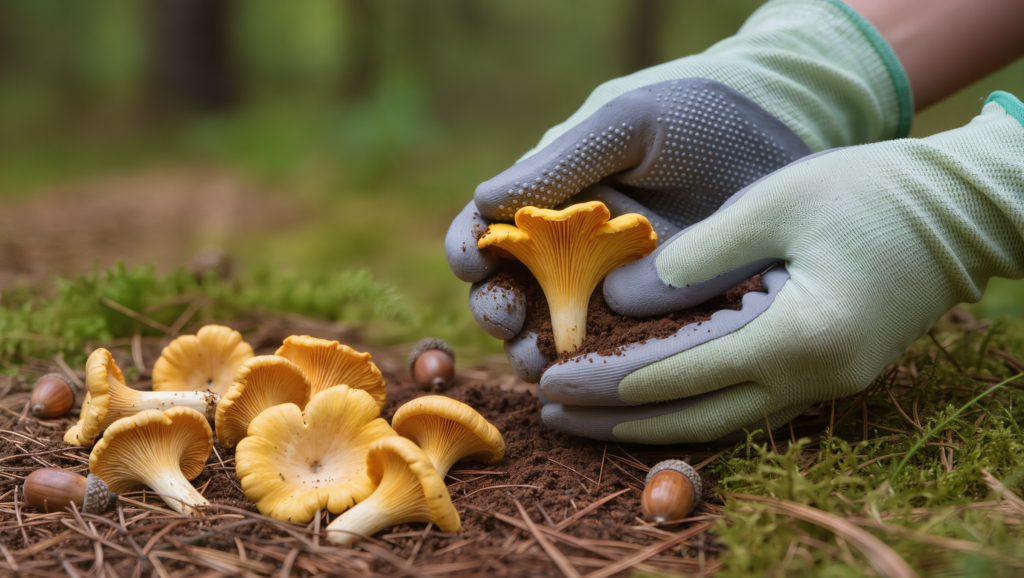












Using any forest as your “personal nutrient farm” sounds wildly appealing—but it also comes with real responsibilities and risks. Wild mushrooming and foraging can absolutely upgrade your diet with dense nutrition and deep connection to place, yet misidentification, overharvesting, and habitat damage can turn that dream sour fast.
This guide walks through the mindset, safety basics, nutrition, and practical steps you need to start treating your local woods as a living pantry—without poisoning yourself, wrecking the ecosystem, or running afoul of local rules.
Safety and Legality Come Before Recipes When Mushrooming And Foraging
Before you think about nutrient density or Instagram baskets, three questions matter: Is it legal? Is it safe? Is it ethical?
Know the rules of the forest
Access and foraging laws vary a lot:
- Some public lands allow “reasonable personal foraging” of mushrooms, berries, and greens; others ban it entirely or require permits.
- National parks in many countries often prohibit collecting plants and fungi; many state or regional parks set strict limits on species, quantity, and tools.
- On private land, you must have the landowner’s permission, even if the forest looks wild and unused.
Conservation agencies repeatedly stress that uncontrolled foraging can damage rare species and sensitive habitats, especially for slow‑growing fungi and understory plants. Always check the specific rules for your region and land type before picking anything.
The golden rule: never eat a mushroom you haven’t 100% identified
Medical case reports are blunt: misidentified mushrooms are a recurring cause of severe poisoning and death. The dangerous part:
- Many deadly Amanita species (like Amanita phalloides, the death cap) look deceptively like innocuous “little brown mushrooms” to beginners.
- Some toxic species cause no immediate symptoms; life‑threatening liver and kidney damage can show up days later.
- Phone apps and quick photos sent to strangers are not safe identification tools; mycology guides recommend in‑person verification and learning key diagnostic features.
Health authorities emphasize that if you feel ill after eating wild mushrooms—vomiting, diarrhea, cramps, confusion—you should seek emergency care immediately and bring a sample if possible.
Treat every mushroom like a complex organic puzzle: unless you can confidently solve that puzzle using proper keys and multiple sources, it does not go in your pan.
The Nutrient Logic of Foraging
If grocery stores are full of “superfoods,” why tromp through the woods?
1. Micronutrient‑dense foods that rarely show up in stores
Several studies on wild foods point out that wild edible plants and fungi often contain higher levels of certain micronutrients and phytochemicals than cultivated equivalents.
Examples from research and ethnobotany:
- Wild leafy greens can carry higher concentrations of minerals and polyphenols than farmed salad mixes.
- Many mushrooms provide B‑vitamins, selenium, potassium, copper, and fibre, plus unique compounds like beta‑glucans and ergothioneine linked to immune and antioxidant support.
- Some mushrooms, notably when exposed to UV light, can be excellent sources of vitamin D2, which is rare in plant foods.
Reviews of edible fungi nutrition highlight that mushrooms can modulate the immune system, aid in glycaemic control, and contribute to cardiovascular health via fibre and bioactive compounds. In short: they’re not just “meat replacements”; they’re their own nutrient category.
2. Dietary diversity and microbiome resilience
Ecology and nutrition research agree that dietary diversity supports a more diverse, resilient gut microbiome. Wild foraged foods:
- Introduce new fibres, polyphenols, and microbial exposures that are absent from industrial food systems.
- Encourage seasonal eating, which naturally rotates what you feed your microbiome.
More plant and fungal diversity on the plate often translates into more microbial diversity in the gut, which is associated with lower inflammation and better metabolic health.
3. Psychological and social benefits
Beyond nutrients, studies show that time in nature improves mood, reduces stress biomarkers, and can enhance cognitive function. Foraging layers:
- Purpose and curiosity onto your forest time.
- A meditative, slow pace that many people find stabilising.
- A chance to build local knowledge and community if you join a club.
In other words, mushrooming and foraging nourish nervous system and identity, not just your plate.
Start with the Ecosystem, Not the Basket
If the goal is to turn a forest into a long‑term nutrient “farm”, you need to think like an ecologist, not a raider.
Learning your forest’s “biome personality”
Different forests yield different nutrient opportunities:
- Mixed hardwoods (oak, beech, maple): classic morel and chanterelle habitats, plus nuts (acorns, beech nuts), herbs, and leafy greens.
- Coniferous stands (pine, spruce): chanterelles, some boletes, spruce tips, and resinous medicinal species.
- Riparian and floodplain areas: edible shoots, wild alliums, sometimes morels and lush greens.
Field guides and local mycology clubs emphasise “tree association” as key for mushrooms: many prized fungi are mycorrhizal, forming symbiotic relationships with specific tree species. Learning to recognise those trees is often more useful than scanning the ground randomly.
Observe before you harvest
Adopt a simple protocol:
- Spend a full season or two mostly observing: what fruits when, what blooms when, which logs have mushrooms in which weather.
- Note population density: a large flush over a wide area can handle modest, careful harvest; a single rare patch probably should be left alone.
- Watch for signs of stress (erosion, trampling, invasive plants); these are not places to add more pressure.
Conservation‑oriented foraging guides stress that sustainable harvesting starts with knowing whether a species is common, rare, or protected in your region. That often means digging into local flora/fauna red lists or asking expert groups.
Mushrooming Beyond the Morel: A Tiered Learning Path
Morels are famous because they’re delicious and relatively distinctive, but relying on one “easy” mushroom is not a foraging strategy. A safer way to “expand the nutrient farm” is to learn in tiers.
Tier 1: “No deadly lookalikes” species
Mycology educators often recommend starting with a few very distinctive, low‑risk species that have no close deadly doubles.
These differ by region, but often include:
- Some bracket fungi used medicinally (not for beginners unless guided).
- Region‑specific choice edibles that experts agree are hard to confuse when properly learned.
The key is working with:
- A good regional field guide with clear keys and spore print info.
- A local mycology club or foray group where experienced foragers can confirm IDs in person.
Online mushroom communities and extension services repeatedly caution against relying on generic “edible lists” without regional context.
Tier 2: Common culinary mushrooms with careful study
Once you’re comfortable with basic morphology (gills vs pores, spore prints, habitat, host trees), you can move to:
- Regionally common, widely eaten mushrooms that do have lookalikes but can be separated reliably with multiple traits.
The rule here:
- Never rely on one feature (“white gills” or “ring on stem”).
- Learn full profiles: cap, gills/pores, stem, smell, bruising reaction, spore colour, habitat, time of year.
Treat this like learning a language; fluency comes with repetition and exposure, not from one weekend workshop.
Tier 3: Medicinal and niche species
Only after time and guidance does it make sense to dive into:
- Specific medicinal polypores or less common edibles.
- Complex groups with significant toxicity risk.
By then, your goal isn’t just “calories” but targeted functional nutrition and medicine, which calls for even more rigour.
Foraging Plants: Greens, Fruits, and Beyond
Your “nutrient farm forest” should never be mushrooms alone. Wild plants can offer minerals, fibre, and phytochemicals with far less acute toxicity risk—though there are poisonous plants too, so ID still matters.
Focus on common, easily verified species
Research on wild edible plants repeatedly stresses that a small number of common, abundant species can meet much of your foraging potential.
Examples (vary by region):
- Wild garlic / ramps (where not overharvested)
- Nettles, lamb’s quarters, chickweed
- Dandelion greens and roots
- Berries like blackberry, raspberry, blueberry
- Rosehips, hawthorn, elderberries (with proper processing and plant part knowledge)
Wild vegetable studies show that such plants often contain substantial amounts of vitamin C, carotenoids, calcium, iron, and polyphenols, often higher than their cultivated counterparts.
Again, sustainability and legality:
- Some popular plants (like ramps in certain areas) have been overharvested, leading to local declines; agencies may advise against or regulate harvests.
- Take small amounts from large stands, leave bulbs and roots when required, and avoid vulnerable populations.
Turning the Forest into a “Nutrient Farm” Without Wrecking It
To truly farm nutrients from the wild, your relationship has to be regenerative, not extractive.
Adopt a harvest code
Ethical foraging frameworks and some public land guidelines suggest principles such as:
- Take less than 10–20% of a given patch or tree’s yield; leave the rest for wildlife, reproduction, and other people.
- Spread harvest over multiple patches, not destroying a single “hotspot.”
- Avoid uprooting whole plants when leaves or fruits suffice.
- Stay on existing trails where possible to minimise trampling and soil compaction.
Several conservation bodies highlight that for fungi, the underground mycelium is the true organism; cutting mushrooms at the base or gently twisting them out does not “kill” the mycelium, but repeated disturbance and soil damage can.
Consider “stewardship foraging”
Advanced foragers often move from just taking to actively improving habitat:
- Removing invasive species that compete with key wild foods.
- Spreading spores or seeds (e.g., placing mature mushrooms cap‑side down in prime habitat, or scattering berries after eating).
- Participating in citizen science—recording species and fruitings to help monitor ecosystem health.
Some permaculture and agroforestry practitioners go further, integrating forest gardening principles at forest edges or on private land: planting nut trees, berry bushes, and edible perennials that blur the line between wild and cultivated while preserving core wild forest interior.
Gear, Hygiene and Post-Forage Handling
If you’re going to treat your forest like a nutrient farm, you also need to handle the “harvest” like a farmer would.
Gear basics
- Basket or mesh bag for mushrooms (helps disperse spores as you walk).
- Paper bags, not plastic, to separate species and avoid sweating/rot.
- Knife for cutting stems and roots cleanly.
- Field notebook/app for recording habitat, tree associations, GPS if allowed.
Cleaning and processing
Food safety guidance for wild foods emphasises:
- Cleaning off soil and debris promptly; soil can carry pathogens and off flavours.
- Cooking most wild mushrooms thoroughly—many that are “edible” raw in small amounts are safer and more digestible when cooked, and some only safe when heated.
- Dehydrating or freezing surplus quickly to prevent mold growth and nutrient loss.
Mushroom safety resources note that even edible species can cause GI upset in some people, especially when eaten in large amounts or undercooked, so it’s wise to:
- Try a small portion first.
- Avoid alcohol with species known to interact negatively.
- Keep a record of what you ate, when, and any reaction.
When Not to Treat a Forest Like Your Pantry
A final truth: not every forest should become your “nutrient farm.”
You should step back or abstain from foraging when:
- The area is clearly marked as protected or no‑take.
- You’re in a fragile habitat (alpine meadows, dunes, restoration zones).
- You notice a rare species or very limited population of a plant/fungus, even if it’s technically edible.
- Your identification confidence isn’t rock‑solid and you don’t have access to expert confirmation.
In those places, the “nutrient” you’re harvesting is knowledge, awe, and ecological literacy—not dinner. That’s still worth the trip.
Bringing It All Together
Turning a forest into your “personal nutrient farm” isn’t about hauling home as much free food as possible; it’s about:
- Learning how wild fungi and plants concentrate unique nutrients and bioactives that complement (not replace) cultivated foods.
- Building identification skills and safety habits so you never gamble with your liver or kidneys for a plate of sautéed caps.
- Harvesting in ways that support the ecosystem, wildlife, and future foragers, not strip them.
Done well, mushrooming and foraging transform you from a passive consumer into an active participant in your local food web. The forest stops being scenery and becomes a living, breathing, ever‑changing pantry—one you’re helping to tend, not just raid.