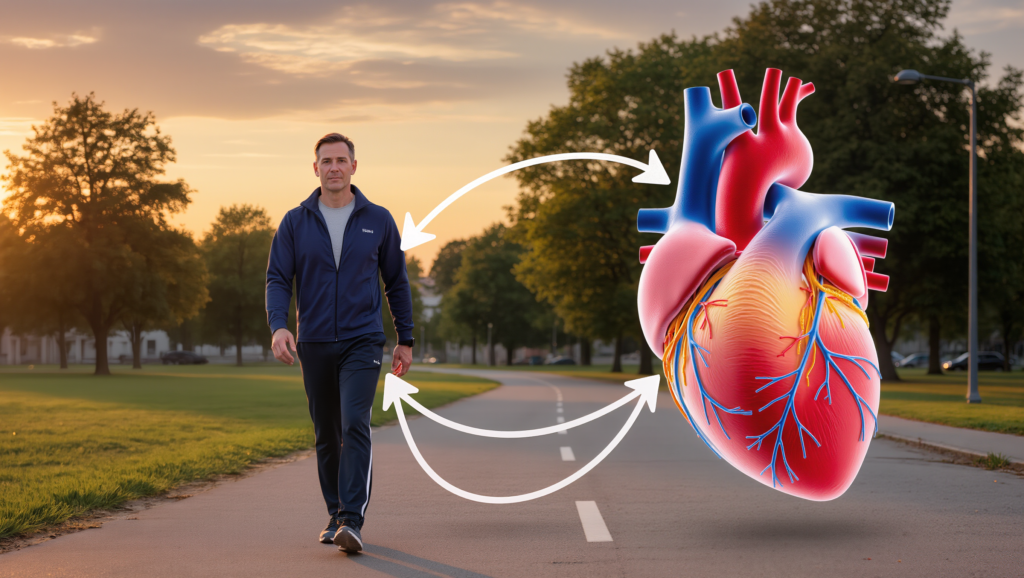












If you’ve ever tried to “fix” your blood sugar with more cardio, you know the drill: long, sweaty sessions, complicated schedules, and a willpower budget that runs out by Wednesday. Meanwhile, there’s a completely different strategy that barely feels like exercise and consistently outperforms traditional workouts for keeping your glucose in check: short walks right after you eat.
A growing stack of studies shows that 10–15 minutes of light to brisk walking after meals can blunt your post‑meal glucose spikes as much as—or sometimes more than—an hour of cardio done at another time of day. Add in the research on breaking up sitting with tiny walking breaks, and you get a simple, sustainable pattern: move your body a little bit, right when it matters most, and your blood sugar, insulin, and long‑term cardiometabolic risk all shift in a favourable direction.
Let’s unpack why those short post‑meal walks are so effective, how they compare to classic gym workouts, and how to design a “walk after you eat” routine that quietly does more for your health than most people’s treadmill marathons.
Why Blood Sugar Spikes Matter (And Why Timing Is Everything)
After you eat, especially a carb‑heavy meal, your blood sugar naturally rises. In a healthy system:
- Glucose goes up.
- The pancreas secretes insulin.
- Cells take in glucose for energy or storage.
- Blood sugar gently returns to baseline.
In insulin resistance, prediabetes, or diabetes, that system is blunted. Peaks are higher and last longer, and the pancreas may pump out more insulin to compensate. Those repeated spikes and high insulin levels are linked to:
- Higher cardiovascular risk.
- Faster progression from prediabetes to type 2 diabetes.
- Increased inflammation and oxidative stress.
Postprandial (post‑meal) glucose has been shown to be a particularly important predictor of cardiovascular outcomes, sometimes more so than fasting glucose.
The key insight: glucose usually peaks between 30–60 minutes after a meal. If you sit still through that window, you ride the full spike. If you get your muscles contracting during that same window, they start pulling glucose out of the blood directly, independent of insulin, flattening the curve.
So it’s not just “exercise is good”—it’s exercise at the right moment that really moves the needle.
10 Minutes vs 30 Minutes Walk: The Power of Post‑Meal Timing
A 2025 trial in Scientific Reports directly compared two scenarios:
- 10‑minute walk immediately after glucose intake.
- 30‑minute walk starting 30 minutes after intake.
Key findings:
- Both walks reduced overall postprandial glucose exposure (AUC) vs just sitting.
- The 10‑minute walk done immediately after intake was uniquely effective at reducing peak glucose levels, beating the longer, delayed walk.
- The effect size for peak reduction with the immediate 10‑minute walk was large (d = 0.731), a magnitude considered clinically meaningful for cardiovascular risk management.
The authors concluded that even a very brief 10‑minute walk immediately after a meal can be a more effective and feasible strategy to suppress glucose spikes than the previously recommended longer sessions done later.
This lines up with earlier work showing that:
- A 30‑minute walk immediately after a meal can be more effective at reducing post‑meal glucose than the same walk done 30 minutes later.
- In other words, for post‑prandial control, when you move can matter more than how long you move.
Three 15‑Minute Walks vs One 45‑Minute Walk: A Head‑to‑Head
One of the most elegant trials on this topic looked at older adults with impaired glucose tolerance (prediabetes). Researchers compared:
- Three 15‑minute moderate walks after each main meal (breakfast, lunch, dinner).
- One 45‑minute continuous walk in the morning.
- A control day with no structured exercise.
Using continuous glucose monitoring, they found:
- Both exercise patterns significantly reduced 24‑hour average glucose vs control (10% reduction for post‑meal walking, 8% for morning sustained walking).
- Crucially, the three 15‑minute post‑meal walks were significantly more effective than the single 45‑minute session in lowering 3‑hour post‑dinner glucose.
- Post‑meal walking essentially halted the usual evening glucose surge, leading to a flatter, healthier profile.
So in real numbers:
- 45 minutes of continuous walking once per day is good.
- Three short 15‑minute sessions tied to meals are as good—or better—for 24‑hour glucose profile, and clearly superior for controlling the dangerous post‑dinner spikes.
From a life‑design perspective, that’s huge: you can break up an hour into small, realistic chunks and get better metabolic payoff.
Breaking Up Sitting: Why Tiny Walks Beat Big Workouts
Most of us don’t just lack workouts; we sit too much. And chronic sitting has its own independent effects on glucose and insulin.
A 2025 network meta‑analysis pooled 15 randomised trials (180 participants) on interrupting prolonged sitting with brief activity: standing, light walking, or moderate walking.
Key results:
- Compared to uninterrupted sitting, any interruption significantly reduced postprandial glucose.
- Moderate walking breaks had the largest effect on lowering post‑meal glucose (SMD = −1.00) and insulin (SMD = −0.85).
- Light walking and even just standing also helped, but less so; walking won by a clear margin.
A classic 2012 trial showed that in overweight adults, interrupting sitting every 20 minutes with 2‑minute bouts of light or moderate walking significantly reduced postprandial glucose and insulin compared to remaining seated.
Taken together:
- You don’t have to choose between “gym or nothing.”
- Short, frequent walking breaks—especially around meals—can dramatically improve glucose and insulin responses even if you never set foot on a treadmill.
Why Post‑Meal Walking Works So Well
- Muscles act like a second pancreas.
- When you walk, contracting muscles take up glucose directly, through insulin‑independent pathways (GLUT‑4 translocation). This means you lower blood sugar without relying entirely on insulin.
- You flatten the spike at its source.
- Glucose spikes 30–60 minutes after you start eating. If you’re walking during that window, you blunt the peak and reduce the total “area under the curve” (AUC).
- Improved insulin sensitivity in real time.
- Post‑meal movement improves how responsive your tissues are to insulin for several hours, meaning your pancreas doesn’t have to overshoot to clear the same amount of glucose.
- Better blood flow to muscles and gut.
- Walking increases circulation, which helps deliver insulin and glucose efficiently and may aid digestion and gastric emptying in a smoother way.
The result is a kind of metabolic judo: instead of fighting post‑meal spikes with more medication or fasting, you use very small doses of movement at precisely the right time.
Does a Post‑Meal Walk Really “Beat” an Hour of Cardio?
It depends what you mean by “beat,” but for post‑meal blood sugar control and 24‑hour glucose profile, the evidence strongly suggests:
- Yes, short post‑meal walks can outperform or match long workouts done at other times.
We’ve already seen that:
- Three 15‑minute post‑meal walks were more effective than one 45‑minute session at reducing post‑dinner glucose in older adults with prediabetes.
- A 10‑minute walk immediately after glucose intake beat a 30‑minute walk done 30 minutes later for peak glucose reduction, despite being one‑third the duration.
And when you layer on the sitting‑break data:
- Multiple small walking interruptions throughout the day produce bigger improvements in postprandial glucose and insulin than just doing a single workout and then sitting the rest of the time.
That doesn’t mean cardio is useless—far from it. Longer, more intense exercise:
- Boosts VO₂max.
- Improves cardiovascular fitness, mental health, and many other outcomes.
But if the specific goal is keeping blood sugar flatter with minimal friction, the science is clear: short, well‑timed walks punch way above their weight.
How to Design a “Walk After You Eat” Routine
You don’t need a Fitbit obsession or perfect schedule. Think in simple blocks:
1. Anchor walks to meals
Borrow the structure from the DiPietro trial:
- Breakfast: 10–15 minutes of easy to brisk walking starting within 10–20 minutes after you finish.
- Lunch: Same—especially important if it’s a carb‑heavy or work‑day meal.
- Dinner: Non‑negotiable if you struggle with evening spikes or post‑dinner crashes.
If three walks is unrealistic every day, start with just after dinner—it’s the most consistently beneficial window for glucose control.
2. Aim for intensity you can talk through
Most studies use light to moderate walking:
- You’re slightly warm, breathing a bit deeper, but can easily hold a conversation.
- Think 3–4.5 km/h on flat ground for most people.
You’re not trying to set a 5K PR; you’re trying to keep muscles active while glucose is entering the blood.
3. Make it frictionless
- Walk around the block, up and down your street, in your building corridors, or on a treadmill if weather is bad.
- If you’re out at a restaurant, do a few loops around the block before driving home.
- If you work at a desk, build in 2–3 minute breaks every 20–30 minutes where you walk briskly to another floor, get water, or do a lap of the office.
4. Mix in micro‑breaks on heavy sitting days
On days when you’re glued to a chair:
- Use the “every 20–30 minutes” rule: stand and walk for 2–3 minutes.
- Even light walking significantly improves glucose and insulin responses compared to continuous sitting.
5. Pair walks with existing habits
- Walk while listening to a podcast after dinner.
- Make it a family “post‑meal stroll.”
- Turn calls into “walk and talk” time where possible.
The easier it is to remember and the more pleasant it feels, the more likely you’ll keep doing it.
Who Benefits the Most?
The research shows clear benefits for:
- People with prediabetes or impaired glucose tolerance.
- Those with type 2 diabetes, where post‑meal walking has been shown to lower postprandial glucose excursions with different carb contents.
- Anyone who sits a lot—office workers, drivers, etc.—where walking breaks improve post‑meal glucose and insulin vs uninterrupted sitting.
But even if your glucose is currently “normal,” this habit is one of the most protective, future‑proof things you can do, especially if you have a family history of diabetes or cardiovascular disease.
A Few Practical Caveats
- If you’re on insulin or glucose‑lowering medications, especially with type 1 diabetes or intensive therapy, post‑meal exercise can increase the risk of hypoglycaemia; you need to coordinate with your healthcare provider and monitor levels.
- Very intense exercise immediately after a large meal can cause GI discomfort for some people; stick to walking, not sprinting, in the post‑meal window.
- If you have mobility or joint issues, even standing or very light walking breaks are better than nothing and still showed benefits, though moderate walking had the largest effect.
The Big Picture
We’ve built a fitness culture that glorifies the 1‑hour workout and ignores the other 23 hours. The data on post‑meal walking flips that script:
- Three 15‑minute walks tied to meals can beat a single 45‑minute session for controlling evening glucose.
- A 10‑minute walk immediately after eating can reduce peak glucose more than a 30‑minute walk done half an hour later.
- Short, frequent walking breaks during long sitting periods significantly lower post‑meal glucose and insulin compared to continuous sitting.
So if your goal is better blood sugar, more stable energy, and lower long‑term risk—not just a bigger calorie burn number on a watch—forget chasing the perfect gym routine and start with this: eat, then walk. Ten to fifteen minutes, at a pace you can talk at, as often as your life allows. Your glucose curve—and your future self—will thank you.
Sources