











Indian fig fruit looks like something you’d avoid hugging: spiny, armored, and built for desert survival. But inside that tough exterior sits a surprisingly potent pharmacy. Traditional systems from Ayurveda to folk desert medicine have long used parts of the Indian fig tree (cluster fig, Ficus racemosa / related figs) for ulcers, skin disease, and stubborn wounds, hinting that this plant family might be doing far more for tissue repair than we’ve appreciated.
Modern lab and animal studies are now catching up, showing that fig fruits and leaves (mainly Ficus carica and black fig, but with strong overlap in phytochemicals) can speed wound closure, calm inflammation, fight microbes, and boost collagen and new blood vessel growth. That doesn’t mean you should throw out your antibiotic ointment yet—but it does mean this spiny desert fruit family may hold ingredients that, in controlled form, could one day sit alongside or even inside the next generation of wound‑healing creams.
Below, we’ll unpack the science, the limitations, and what this actually means for real‑world cuts and scrapes.
What Exactly Is “Indian Fig”?
“Indian fig” is used for a few different plants, which can be confusing:
- Cluster fig / Indian fig tree – Ficus racemosa (syn. Ficus glomerata)
Widely used in Ayurveda for ulcers, skin diseases, wounds, and inflammatory conditions. - Common fig – Ficus carica
The familiar Mediterranean fig; its fruit and leaves have been studied extensively for wound healing and anti‑inflammatory effects. - “Indian fig” cactus / prickly pear – Opuntia ficus‑indica
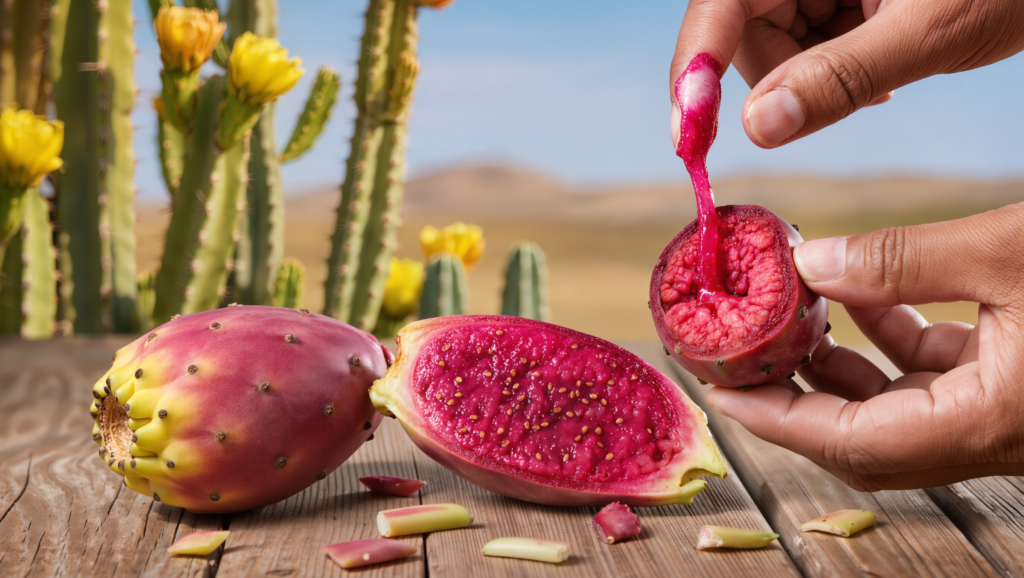
A spiny desert cactus with edible fruit; also used traditionally for wound and burn healing, though not in the fig (Ficus) family.
Many modern experimental studies have focused on common fig (Ficus carica) fruit and leaves and black fig leaf extract, but the phytochemical themes are similar across these figs and the Ayurvedic Indian fig tree: polyphenols, flavonoids, tannins, steroids, and coumarins with antioxidant, anti‑inflammatory, antimicrobial and pro‑healing actions.
So when we talk about “Indian fig fruit” as a wound‑healer, we’re effectively talking about the fig family’s toolkit—which science is now beginning to map.
What the Research Actually Shows on Fig and Wound Healing
1. Fig fruit extract: faster closure in animal wounds
One experimental study evaluated the effect of aqueous fig fruit extract on standardized skin wounds in animals.
Key findings:
- Wounds treated with fig fruit extract showed a significantly smaller wound area throughout the observation period, with reductions of less than 5% remaining by the end compared with controls (no fig).
- Histological (microscopic) analysis showed:
- Reduced inflammation
- More mature granulation tissue
- Better fibroblast maturation and collagen fiber arrangement
- Enhanced vascularization and more organized re‑epithelialization (new skin).
The authors concluded that fig fruit extract improved both the speed and quality of wound healing, which they attributed to active compounds like polyphenols, tannins, coumarins, glycosides, and alpha‑linolenic acid with antioxidant and anti‑inflammatory activity.
In plain language: wounds closed faster, looked better under the microscope, and ran through the classic healing stages more efficiently with fig fruit extract than without it.
2. Black fig leaf cream: turning down inflammatory genes, turning up repair
A 2025 study went deeper into mechanisms using a 5% black fig (Ficus carica) leaf cream on standardized skin wounds in rats.
Design and key outcomes:
- Animals were divided into:
- Control (no treatment)
- Cold cream (base only)
- 5% black fig leaf cream (FCC).
- Molecular and histological analysis showed that the fig leaf cream group had:
- Lower expression (gene and protein) of key pro‑inflammatory cytokines IL‑1β, IL‑6, and TNF‑α, compared with controls.
- Increased collagen production (type I and III)
- Enhanced angiogenesis (more new blood vessels; elevated VEGF expression)
- More rapid and complete re‑epithelialization of the wound surface.
- Fewer inflammatory cells and hemorrhagic areas at day 3 and day 7 compared to untreated groups.
The authors concluded that 5% black fig leaf cream has a strong anti‑inflammatory effect and accelerates dermal regeneration, likely through rich phytochemicals that suppress pro‑inflammatory signaling and promote collagen deposition and vascular growth.
In simple terms: fig leaf cream helped the wound step out of the inflammatory phase sooner and move into repair mode faster and more efficiently.
3. Fig leaf extracts and collagen / oxidative stress
Additional reviews and experimental papers on fig leaf extract report that:
- Fig leaves contain polyphenols, steroids, and other phytochemicals with strong antioxidant and anti‑inflammatory properties.
- Aqueous fig leaf extracts can promote collagen production, reduce oxidative stress, and increase cell proliferation in wound models, all of which are crucial to tissue repair.
- Previous work with 10% fig leaf ointment in rat wounds showed reduction in edema and inflammatory exudate, again pointing to a robust anti‑inflammatory and pro‑healing effect.
4. Traditional use of Indian fig / cluster fig for skin and wounds
Ethnobotanical summaries for Indian fig tree / cluster fig (Ficus racemosa) highlight a long list of traditional uses:
- Bark, fruit, and latex used for ulcers, psoriasis, skin infections, wounds, hemorrhoids, and bleeding disorders.
- Described as anti‑inflammatory, antimicrobial, antioxidant, purgative, diuretic, and mild sedative, among others.
- Folk preparations include pastes, decoctions, and washes applied topically on wounds and skin eruptions.
While these aren’t controlled clinical trials, they map well onto the in vitro and animal evidence we have for the fig family: antimicrobial, anti‑inflammatory, and pro‑healing properties.
How Could Fig Fruit Compete With (or Complement) Antibiotic Ointment?
It’s a big claim to ask whether a plant could “heal cuts better than antibiotic ointment,” so let’s separate what we actually know from what’s still speculative.
What antibiotic ointments do
Topical antibiotic ointments (like bacitracin or triple antibiotic blends) are designed to:
- Reduce bacterial load at the wound surface.
- Prevent local infection (especially in minor cuts and abrasions).
- Indirectly support healing by keeping infection at bay.
They usually do not actively modulate collagen, angiogenesis, or inflammatory signaling beyond controlling microbes.
What fig extracts appear to do (in animals and test tubes)
From the studies above, fig fruit and leaf extracts in experimental models:
- Provide antimicrobial activity against bacteria and fungi relevant to skin infections.
- Show strong antioxidant effects, reducing oxidative damage at the wound site.
- Exhibit anti‑inflammatory actions, particularly:
- Down‑regulating IL‑1β, IL‑6, TNF‑α (pro‑inflammatory cytokines).
- Shortening the inflammatory phase and reducing edema and exudate.
- Promote collagen deposition (type I and III), angiogenesis (VEGF up‑regulation), and re‑epithelialization, leading to faster and more orderly tissue regeneration.
So while antibiotics act primarily against bacteria, fig extracts act on a wider range of healing processes:
- Calm excessive inflammation.
- Combat oxidative stress.
- Support the structural rebuild of the wound (collagen + vessels).
- Offer some antimicrobial support.
In several animal models, this translates into faster wound closure and better histological healing compared to untreated or base‑cream controls.
Do we have direct comparisons Of Indian Fig to antibiotic ointments?
Here’s the critical piece:
- So far, the published studies are mostly fig vs control (no active drug, or inert cream), not fig vs standard antibiotic ointment in humans.
- Some herbal studies compare various botanicals to each other or to general positive controls, but high‑quality, head‑to‑head trials against topical antibiotics in human wounds are still lacking.
So scientifically, we can say:
- Fig fruit and leaf extracts clearly show wound‑healing benefits in animals and mechanistic studies.
- They appear to address more aspects of healing than antibiotics alone (which mainly address infection).
- However, we do not yet have definitive human trials proving that fig preparations outperform standard antibiotic ointments across typical cuts and scrapes.
That means the honest answer is:
Indian fig / fig extracts look highly promising as adjunct or future alternatives in wound‑care formulations, but they have not yet replaced antibiotic ointments as a standard of care.
Why Fig Might Be So Good at Healing: The Phytochemical Toolkit
Fig fruit and leaves are rich in:
- Polyphenols and flavonoids – powerful antioxidants that neutralise free radicals, protect cell membranes and DNA, and reduce oxidative stress that can stall healing.
- Tannins – astringent compounds that can help tighten tissues, reduce minor bleeding and exudation, and provide mild antimicrobial effects.
- Steroids and coumarins – contribute to anti‑inflammatory and possibly vasomodulatory actions.
- Organic acids and fatty acids (including alpha‑linolenic acid) – may support membrane repair and local metabolism.
Mechanistically, these compounds seem to:
- Modulate the inflammatory phase – shifting from high IL‑1β/IL‑6/TNF‑α (destructive inflammation) toward a more pro‑resolution, M2 macrophage‑dominated environment that supports tissue rebuilding.
- Enhance fibroblast activity – cells that lay down collagen, crucial for wound strength.
- Stimulate angiogenesis – via increased VEGF expression, creating a better blood supply for new tissue.
- Offer antimicrobial protection – reducing bacterial burden enough to help healing progress.
This multi‑modal action is exactly what you want in hard‑to‑heal wounds, which often stall due to chronic low‑grade inflammation, oxidative stress, and poor microcirculation, not just infection.
Traditional Wisdom vs Modern Evidence: Where They Meet
In traditional Ayurveda and folk medicine, the Indian fig tree and related figs are used for:
- Wounds, sores, and ulcers (pastes of bark, leaves, or fruit).
- Chronic skin conditions (psoriasis, eczema, vitiligo).
- Internal ulcers and inflammatory conditions.
Modern studies on fig fruit and black fig leaf are now validating key aspects of that use:
- Demonstrated anti‑inflammatory, antioxidant, and antimicrobial properties.
-Faster closure and better histological quality of skin wounds in animal models.
So the “story” that this spiny, figgy clan is good for wounds is no longer just anecdotal—but we’re in the early, pre‑clinical phase of translation.
Should You Rub Indian Fig on Your Next Cut?
This is where caution matters.
What the research supports (so far):
- Standardised, prepared fig extracts (creams/ointments) in controlled doses show promising wound‑healing effects in animals and lab models.
- These formulations could, in future, become part of integrated wound‑care products, especially for chronic or slow‑healing wounds.
What we don’t have yet:
- Robust human clinical trials comparing fig‑based preparations directly with antibiotic ointments or modern advanced dressings.
- Safety data for DIY application of raw fruit, sap, or leaves on open wounds (which can bring risks of irritation, allergy, or contamination).
Practical, safety‑first takeaways:
- For now, do not skip proven first aid:
- Clean the wound thoroughly with water/antiseptic.
- Use standard topical treatments (as guided by a healthcare provider), especially in deeper or contaminated wounds.
- Seek medical care for serious injuries, bites, burns, or signs of infection.
- Fig‑based products, when they eventually reach pharmacy shelves as tested formulations, may realistically serve as:
- Adjuncts in chronic wound care (diabetic ulcers, venous leg ulcers).
- Components of multifunctional creams that combine antimicrobial + anti‑inflammatory + pro‑healing actions.
Until then, the most science‑consistent way to “use” Indian fig fruit for wound healing is indirect: eating figs (where appropriate in your diet) for their systemic anti‑inflammatory and antioxidant benefits, while keeping topical experiments to standard, regulated products.
The Bottom Line
- Fig fruits and leaves (including black fig and Indian fig relatives) show clear wound‑healing potential in experimental models. They reduce inflammation, boost collagen and vessel formation, and speed closure in animal wounds.
- These effects go beyond what a typical antibiotic ointment does, because they target the entire healing cascade, not just bacteria.
- However, we do not yet have strong human trials proving that fig‑based creams outperform standard antibiotic ointments in typical cuts and scrapes. So claiming that Indian fig “heals cuts better” than antibiotic ointment is plausible in theory, promising in pre‑clinical data, but not yet proven in humans.
Think of Indian fig fruit and its relatives as one of the most interesting plant candidates in the wound‑healing pipeline: backed by tradition, supported by early science, and highly likely to show up in future advanced creams and dressings. For now, it’s a powerful “watch this space”—and a reminder that sometimes the fiercest looking desert plants are hiding some of the gentlest healing chemistry.