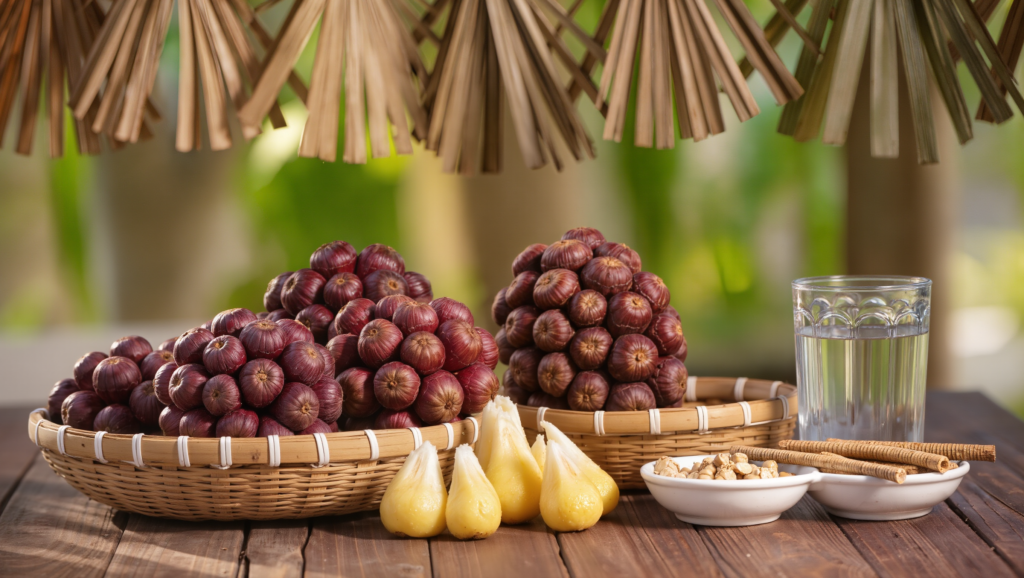












Bali has no shortage of wellness “secrets,” but one of the most underrated might be the humble salak—better known as snake fruit thanks to its reddish‑brown, scaly skin. Under that reptilian shell is a crisp, sweet‑tart flesh that locals snack on like we’d eat apples… and traditional medicine has quietly used it for generations to soothe upset stomachs, firm up loose stools, and keep digestion moving smoothly. Modern nutrition analysis is now backing up a lot of that folk wisdom: salak is fibre‑rich, tannin‑rich, and loaded with gut‑active phytochemicals that can genuinely support digestive health when you eat it regularly.
Let’s unpack what makes salak such an interesting digestive ally—how its fibre, tannins, and antioxidants work, what types of gut issues it may help with (and when it might not be ideal), and how to actually eat it (beyond “crunch and hope for the best”).
Meet Salak: Snake Fruit 101
Salak (Salacca zalacca and related varieties) is a palm fruit native to Indonesia and widely grown in Bali, Java, and parts of Thailand. Popular cultivars include salak pondoh, salak Bali, salak gula pasir, and salak Bali merah, each with slightly different sweetness and aroma.
Nutritionally, 100 g of fresh salak provides roughly:
- ~77–82 kcal
- About 2.6 g of dietary fibre
- Carbohydrates from natural sugars (mainly fructose)
- Vitamins: vitamin C, beta‑carotene (pro‑vitamin A), some vitamin E and B vitamins
- Minerals: potassium, calcium (~28 mg), phosphorus (~18 mg), iron (up to 4.2 mg / ~32% DRI)
It also contains a cocktail of bioactive compounds: tannins, flavonoids, polyphenols, carotenoids, and saponins—all of which have roles in gut health, antioxidant defence, and inflammation.
So from the start, this isn’t just a random tropical fruit; it’s a fibre‑plus‑phytochemical package tuned for digestion.
How Salak Helps Your Digestion
1. Fibre: the basic but powerful gut regulator
Let’s start with the obvious: fibre.
Multiple sources highlight that salak is rich in dietary fibre, usually listing about 2.6 g per 100 g serving, with additional pectin and other polysaccharides in the flesh.
That matters because:
- Fibre adds bulk to stool and helps normalise transit—preventing both constipation and, in some cases, loose stools.nutrition-
- It slows gastric emptying and carbohydrate absorption, which can stabilise blood sugar spikes and reduce reactive hunger.
- It provides substrate for beneficial gut bacteria in the colon, potentially supporting a healthier microbiota over time.
WebMD notes that the flesh of snake fruit is rich in dietary fibre and pectin, making it helpful for digestion, cutting down on cramping, constipation, and bloating, and potentially acting as an “immunostimulatory aid” through its polysaccharides—though human data are still limited.
A 100‑gram portion of salak doesn’t hit your entire daily 30 g fibre target, but as a snack fruit, it’s above average—especially compared to many ultra‑processed snacks that give you nearly zero.
2. Tannins: nature’s gentle anti‑diarrhoeal
Here’s where salak gets interesting. It isn’t just fibre; it’s notably high in tannins, along with saponins and flavonoids.
Tannins are polyphenolic compounds that have astringent (tissue‑tightening) and anti‑diarrhoeal properties:
- Times of India’s nutrition overview notes that salak’s tannins, flavonoids, and saponins help “soothe the gut,” and that tannins in particular have anti‑diarrhoeal properties that may relieve upset stomach and reduce inflammation in the GI tract.
- Netmeds describes salak as helpful for digestive disorders, emphasising that tannins have anti‑diarrhoeal benefits and help cure diarrhoea, and that the combination of tannin, saponin, and flavonoids helps with “chronic stomach woes.”
- Another health blog points out that salak’s mild astringent effect can reduce symptoms of indigestion.
Practically, this means:
- If you’re dealing with loose stools, mild diarrhoea, or “sensitive bowels” that tip toward too soft, moderate salak intake can help “firm things up” while still giving you fibre.
- Tannins can reduce excessive secretions in the gut and mildly tighten mucosal tissue, which is why tannin‑rich foods and teas (like black tea) are traditional diarrhoea remedies.
Caveat: too much tannin‑rich food + not enough water + low fibre elsewhere can contribute to constipation, so balance and moderation matter.
3. Anti‑inflammatory and antioxidant support
Many digestive complaints are inflammatory at root—even when they show up as bloating, discomfort, or Irritable Bowel Symdrome (IBS)‑like symptoms. Salak’s polyphenols have documented antioxidant and anti‑inflammatory properties:
- Analyses show salak pulp contains phenolic compounds and flavonoids, functioning as antioxidants that neutralise free radicals and reduce oxidative stress.
- Health summaries note that these compounds help reduce inflammation, which can support conditions ranging from mild indigestion to more chronic inflammatory states.
From a gut perspective, antioxidants and anti‑inflammatory agents:
- Help protect the intestinal lining from oxidative damage.
- May reduce low‑grade inflammation that contributes to IBS‑like symptoms, leaky gut, or discomfort (though direct clinical trials in these areas are limited).
- Support overall mucosal integrity, which is crucial for proper digestion and nutrient absorption.
4. Salak, “memory fruit,” and the gut–brain link
Indonesian traditional medicine often calls salak the “memory fruit”, claiming benefits for brain and cognition.
Nutritionally, salak contains:
- Potassium – important for nerve function and fluid balance.
- Pectin and other fibres – which may influence gut bacteria that produce neuroactive compounds.
- Beta‑carotene and vitamin C – antioxidants that can reduce oxidative stress in both gut and brain.
Articles point out that the combination of potassium, pectin, and beta‑carotene supports brain perfusion, memory retention, and concentration, and that salak is used traditionally to improve cognition, especially in students and older adults.
The modern gut–brain axis model suggests that:
- A healthier gut environment and more stable digestion can directly influence mood, clarity, and cognition via microbial metabolites and vagus nerve signalling.
- So salak’s digestive benefits (fibre, tannins, anti‑inflammatory action) and its antioxidant, potassium‑rich profile may be two sides of the same coin—supporting both gut and mind.
Is that fully proven in RCTs? Not yet. But the mechanistic and traditional evidence line up in an interesting way.
5. Glycemic response and metabolic digestion
A 2025 clinical study looked at snake fruit jelly and found that acute ingestion improved glycemic response, enhanced endurance performance, boosted antioxidant defences, and reduced oxidative stress markers during exercise.
Why that matters for digestion:
- Gentler post‑meal glucose curves tend to reduce reactive hypoglycaemia, which can drive cravings, fatigue, and stress responses that impact motility.
- Better oxidative status supports mitochondrial function in gut tissue and can indirectly support motility and barrier function.
Combined with its fibre and low‑to‑moderate calorie load (~77–82 kcal per 100 g), salak fits into a metabolically friendly dessert/snack that doesn’t hit your gut with a huge sugar shock.
Digestive Issues Salak May Help With (And Where to Be Cautious)
May be helpful for:
- Mild diarrhoea and loose stools
- Thanks to tannins’ anti‑diarrhoeal and astringent effects, plus fibre.
- Functional indigestion and bloating (mild)
- Fibre improves motility and stool form; mild astringency may calm irritation.
- Constipation (in moderation)
- Fibre helps bulk up and move stool; several sources specifically mention salak supporting proper bowel movement and preventing constipation.
- Weight‑linked gut issues
- As a low‑calorie (≈82 kcal/100 g), high‑fibre snack, salak promotes satiety and may help reduce overeating, indirectly easing digestive load.
Netmeds and other health sites explicitly emphasise salak for digestive disorders, chronic stomach complaints, and weight management, noting its role in both diarrhoea management and gut regularity.
Where to be cautious:
- Chronic severe constipation
- While fibre is good, the tannin content and astringent nature could potentially worsen very slow bowels if you eat a lot, especially with low fluid intake. Balance with water and other fibre types.
- Active inflammatory bowel disease (flare)
- Tannins can be irritating for some when mucosa is acutely inflamed; there’s no direct trial data, so this is more of a “go slowly and see” situation.
- Food allergies or sensitivities
- While rare, any fruit can trigger reactions in sensitive individuals.
As always, if you have significant GI disease (IBD, severe IBS, ulcers, etc.), it’s smart to treat salak as a test food: start with small amounts and track your reaction.
How to Eat Salak for Digestive Benefits
1. Fresh, whole fruit (traditional way)
A typical Balinese or Indonesian snack serving would be:
- 2–3 fruits, peeled and eaten out of hand.
- This gives you a decent bump of fibre, vitamin C, and antioxidants with relatively modest calories.nutrition-and-you+3
To prepare:
- Gently pinch or cut the “tip” of the fruit to break the skin.
- Peel off the scaly shell; inside are 2–3 crisp lobes.
- Remove the hard seed from each lobe before eating.
Eat it between meals or as a dessert instead of ultra‑processed sweets to get fibre and polyphenols instead of empty sugar.
2. In fruit salads and rujak
Salak’s crunchy, slightly astringent texture makes it ideal in fruit salads or Indonesian rujak (fruit with spicy, tangy sauce).
From a gut perspective:
- Pairing salak with other fibre‑rich, lower‑sugar fruits (papaya, guava, melon) can create a mixed‑fibre matrix that’s more beneficial than just one fruit alone.
- Just watch the added sugar in sauces if you’re also managing blood sugar.
3. Salak tea and preserves
Some regions brew salak tea from dried peel/flesh or use it in jellies and jams, partly for digestive and weight‑management purposes.
- Tea made from dried salak skins may deliver tannins and antioxidants with minimal calories—potentially useful in mild diarrhoea or as an astringent digestive tonic.
- Jelly and jam are more of a treat; a 2025 study suggests that snake fruit jelly can improve glycemic response and antioxidant defence in the short term, but these products still contain added sugars, so treat them as occasional add‑ons.
4. With probiotic foods
There’s no direct study on salak + probiotics, but a practical, gut‑friendly habit could be:
- Plain yogurt or kefir + chopped salak
- The live cultures contribute beneficial bacteria.
- Salak’s fibre and polyphenols act as fuel for those microbes and provide direct gut soothing.
This stacks prebiotic‑like effects + probiotics, which is generally supportive for digestive health.
How Much Salak Is Too Much?
There’s no official RDA for salak, but given its fibre and tannin content, a reasonable starting range for digestive support is:
- 1–3 small fruits (roughly 50–150 g) once daily or a few times a week.
This gives you:
- A few grams of fibre, plus polyphenols and vitamin C.
- Enough tannins to notice the gut‑soothing effect without overdoing astringency.
If your digestion is sensitive, start at the lower end (half a fruit in a mixed salad) and slowly build up.
Salak vs Other “Gut Fruits”: Why It Stands Out
Compared to more familiar fruits, salak offers a distinct digestive profile:
- More tannins and astringency than apples or bananas, making it more directly useful for loose stools and “weak gut” states.
- Fibre + pectin + polyphenols in a moderate calorie package, combining bulking, soothing, and antioxidant effects.
- Beta‑carotene and iron levels that are unusually high for a fruit (one source notes beta‑carotene up to five times higher than watermelon, mango, or guava), supporting both eye health and potentially correcting deficiency‑linked fatigue that often co‑exists with gut issues.
That combination of gut regulation, gut soothing, and systemic antioxidant support is probably why traditional healers in Indonesia and Bali have leaned on salak for both digestion and general vitality for so long.
Practical Tips to Make Salak Part of a Gut‑Friendly Routine
- Swap one processed snack per day (cookies, chips, candy) for fresh salak with nuts.
- Use chopped salak in morning yogurt, chia pudding, or overnight oats for extra fibre and crunch.
- If you’re dealing with temporary diarrhoea (e.g., mild traveller’s stomach), pair a simple bland diet (rice, banana) with modest amounts of salak and plenty of fluids—similar to using bananas or applesauce, but with a tannin kick.
- If you trend toward constipation, balance salak with plenty of water and other fibre sources (vegetables, oats, legumes if tolerated), and avoid eating large amounts without hydration.
And, as always: if your digestive symptoms are severe, persistent, or accompanied by red flags (weight loss, blood in stool, fever), get medical evaluation—no fruit, however magical, is a substitute for proper diagnosis.
Salak won’t single‑handedly heal a heavily damaged gut, but as a daily, real‑food ally, it’s impressive: fibre to keep things moving, tannins to steady things when they move too much, and a suite of antioxidants and minerals that support the gut lining and the wider system around it. For a scaly little fruit sold by the roadside in Bali, that’s a pretty serious digestive résumé.
Sources: