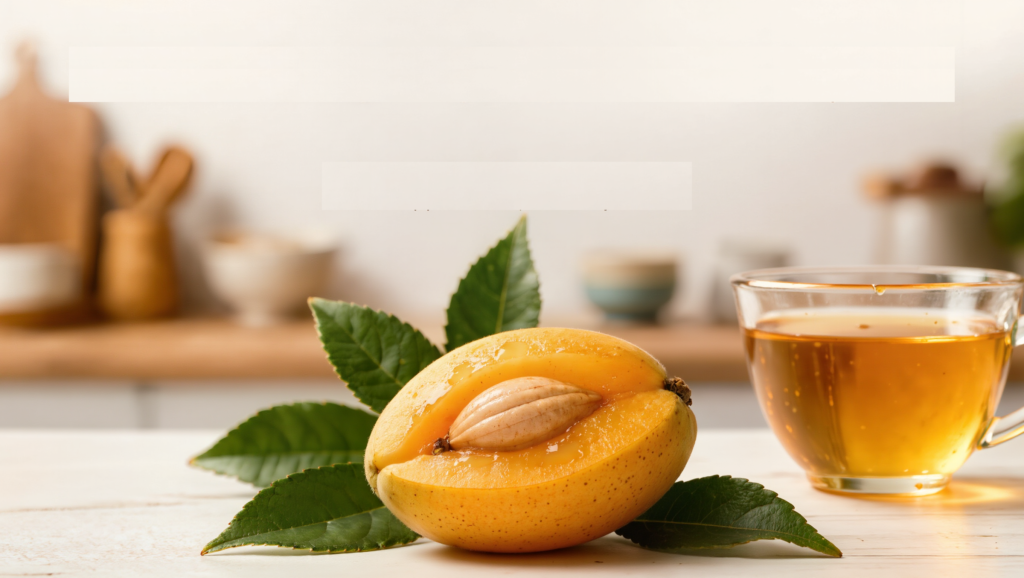












Loquat is one of those old-school medicinal fruits that sounds almost too good to be true: sweet, fragrant, and long used to calm coughs and phlegm. The science is not magic, but it does show that loquat leaves and fruit contain compounds with antitussive, expectorant, anti-inflammatory, and antioxidant activity, especially in preclinical studies.
Why loquat keeps showing up in cough remedies
Loquat (Eriobotrya japonica) has deep roots in traditional Chinese medicine, where the dried leaves, called Folium Eriobotryae, have been used for cough with phlegm for centuries. A major review notes that loquat has historically been used for cough, chronic bronchitis, asthma, inflammation, diabetes, and other conditions, with leaf extracts drawing the most attention for respiratory uses.
That traditional reputation is not just folklore sitting in a jar on a shelf. In a mouse study, both aqueous and ethanol extracts of loquat leaves showed antitussive and expectorant activity, and the authors specifically linked those effects to flavonoids and triterpenoid acids in the plant. Another review of loquat bioactivities also highlights pulmonary protection as one of the recurring themes across loquat research.
What makes loquat interesting
Loquat is not a single-compound story. Different parts of the plant contain different bioactive compounds, which matters because leaves, fruit, seeds, and flowers are not interchangeable. The 2016 review describes loquat leaf and flower as rich in phenolics and triterpenes, while the fruit contains sugars, organic acids, carotenoids, flavonoids, phenolic acids, and vitamins.
For respiratory health, the leaf is the star. In the loquat cough study, aqueous extracts of growing leaves had higher flavonoid content and stronger expectorant activity, while ethanol extracts of fallen leaves had more triterpenoid acids and stronger antitussive activity. That split is useful because it suggests loquat’s cough-relief effect may come from both loosening mucus and reducing the urge to cough rather than doing one thing only.
How loquat may help your lungs
The big respiratory idea behind loquat is pretty simple: irritated airways cough more, inflamed airways cough more, and mucus-heavy airways are harder to clear. Loquat appears to act on all three of those pain points in lab and animal models.
The loquat review explains that leaf extracts can reduce inflammatory signaling such as NF-kB and MAPK pathways, which are central to airway inflammation. In chronic bronchitis rat models, loquat leaf triterpene acids reduced inflammatory markers and oxidative stress, suggesting a plausible mechanism for why loquat is used in cough and phlegm formulas.
That matters because many coughs are not just a “throat problem.” They often involve irritated airways, excess secretions, and inflammatory signaling that keeps the cough reflex overly sensitive. Loquat’s appeal is that it seems to address the whole irritation loop rather than just numbing the throat.
The evidence behind Loquat’s cough relief
Here’s the honest version: the evidence is promising, but uneven. The strongest support comes from laboratory studies and animal models, not from large modern human trials.
The 2018 study on growing and fallen loquat leaves found both antitussive and expectorant activity in mice using standard cough and mucus models. The same paper linked the expectorant effect to flavonoids and the cough-suppressing effect to triterpenoids, which is a nice example of how one plant can have more than one pharmacological “lane.”
The broader review also notes that loquat leaf extracts have shown anti-inflammatory effects in chronic bronchitis and related models, which gives additional support to the idea that loquat may help when cough is driven by airway inflammation. Still, because these are mostly preclinical findings, loquat should be seen as a supportive remedy, not a replacement for proper evaluation when a cough is persistent, severe, or associated with red flags.
Loquat fruit versus loquat leaf
People usually think of eating the fruit, but most of the respiratory interest is actually in the leaves. The fruit is still nutritionally useful, though it is not the main “cough medicine” part of the plant.
Loquat fruit contains antioxidants and plant compounds that may support general health, and the review notes that fruit is rich in sugars, organic acids, carotenoids, flavonoids, phenolic acids, and vitamins. But the leaf has the stronger medicinal reputation for cough, with studies specifically pointing to triterpenoid acids and flavonoids as the likely active players in airway support.
So if you’re looking at loquat from a respiratory angle, think of the fruit as a healthy food and the leaf as the traditional medicinal ingredient. That distinction matters, especially because some products marketed as loquat cough syrups are mostly leaf-based formulas with honey and other herbs mixed in.
What the compounds are doing
The chemistry is where loquat gets really interesting. The loquat review identifies triterpenoids such as ursolic acid, corosolic acid, maslinic acid, oleanolic acid, and euscaphic acid as recurring active compounds in the leaves. These compounds have been associated with anti-inflammatory and antioxidant activity, which fits the respiratory use case.
Flavonoids are the other big group, and they are often linked to antioxidant and anti-inflammatory effects. In the cough study, the higher-flavonoid aqueous leaf extract had stronger expectorant activity, while the higher-triterpenoid ethanol extract had stronger antitussive activity. That suggests the plant’s benefits are not vague wellness claims; they are at least partly tied to measurable phytochemicals.
This also helps explain why different loquat preparations may not work the same way. A syrup, tea, infusion, or concentrated extract can each pull out different compounds depending on the solvent and processing method.s
About real-world Loquat syrups?
Commercial loquat syrups and loquat-based formulas are popular in East Asia as throat-soothing remedies. Traditional formulas are often used for sore throat, dry irritation, and cough with phlegm, and a honey-loquat syrup style product is commonly marketed for that purpose.
That said, the evidence for the combined syrup is weaker than the traditional reputation suggests. The syrup is partly plausible because honey itself is soothing and demulcent, while loquat contributes the plant chemistry, but the available evidence is still not the same thing as a large, modern clinical trial.
So the product may make sense as a comforting, traditional option, but it should not be oversold as a proven cure. That distinction matters a lot in SEO land and in real life.
Safety and smart use
Loquat fruit is generally eaten as food, but the leaves and seeds need a little more caution. The fruit itself is usually the safe, snackable part, while the seeds have been reported to contain cyanogenic glycosides that can release toxic hydrogen cyanide.
That means:
- Eat the fruit, not the seeds.
- Don’t treat homemade seed preparations as a wellness hack.
- Be careful with concentrated leaf extracts if you are pregnant, nursing, taking medications, or managing a chronic condition.
The loquat review also notes that researchers are still studying bioavailability and potential toxicity, which is another clue that “natural” does not automatically mean risk-free. For everyday use, loquat fruit as food is one thing; medicinal use of leaf extracts is another.
Who might find loquat useful
Loquat seems most interesting for people with coughs that come with mucus, throat irritation, or a lingering inflamed-airway feel. The traditional use pattern and the mouse data both point toward help with phlegm-heavy cough rather than a one-size-fits-all fix for every cough type.
It may also fit into a broader respiratory-support routine that includes hydration, rest, and avoiding irritants. Think of it less like a pharmaceutical cough suppressant and more like a traditional botanical that may help calm, moisten, and loosen the airway environment.
People with persistent cough, wheezing, shortness of breath, fever, chest pain, or blood in sputum should not self-treat for long with loquat or any syrup. Those symptoms need proper medical evaluation, because cough can be a sign of asthma, infection, reflux, or something more serious.
Why the Loquat hype should stay grounded
The reason loquat is compelling is not that it is a miracle fruit. It is that multiple lines of evidence point in the same direction: traditional use, phytochemistry, animal cough models, anti-inflammatory signaling, and airway-related pharmacology all line up reasonably well.
But there is still a gap between promising biology and proven human therapy. The 2018 cough study is in mice, and the major review is clear that further work is needed on bioavailability, metabolism, toxicity, and real-world clinical effects. That means loquat deserves curiosity, not blind faith.
If you like evidence-based herbalism, loquat is a good example of how traditional knowledge can point researchers toward a plant worth studying. The likely future here is not “loquat replaces medicine,” but “loquat becomes one ingredient among many in better-designed respiratory-support formulas.
Final take
Loquat deserves its reputation as a natural cough-friendly plant, especially the leaves, which show antitussive, expectorant, anti-inflammatory, and antioxidant activity in preclinical studies. The fruit is nutritious and pleasant, but the leaf is where the respiratory story really lives.
The big takeaway is simple: loquat may genuinely soothe coughs and support respiratory comfort, but the strongest evidence still comes from traditional use and lab research, not large human trials. In other words, it’s an intriguing natural option with real pharmacological logic behind it, just not a miracle cure.
Sources: