











Longan is one of those fruits that looks almost too simple to be special—small, beige-brown, “dragon eye” flesh inside—yet in traditional Chinese medicine it’s been treated for centuries as a beauty and spirit tonic: something you take to nourish the blood, calm the mind, brighten the skin, and help you sleep more deeply. Modern lab work is finally catching up, and it paints a picture that actually fits that old reputation surprisingly well. Longan is rich in vitamin C, polyphenols, and unique plant compounds that can protect skin, modulate inflammation, support collagen, and even influence mood and sleep‑related pathways.
Let’s unpack how this little fruit might legitimately help your skin and your sleep, where the evidence is strongest, and how to use it realistically as part of a beauty‑from‑within routine (without expecting a magic pill).
Meet Longan: The “Dragon Eye” Tonic Fruit
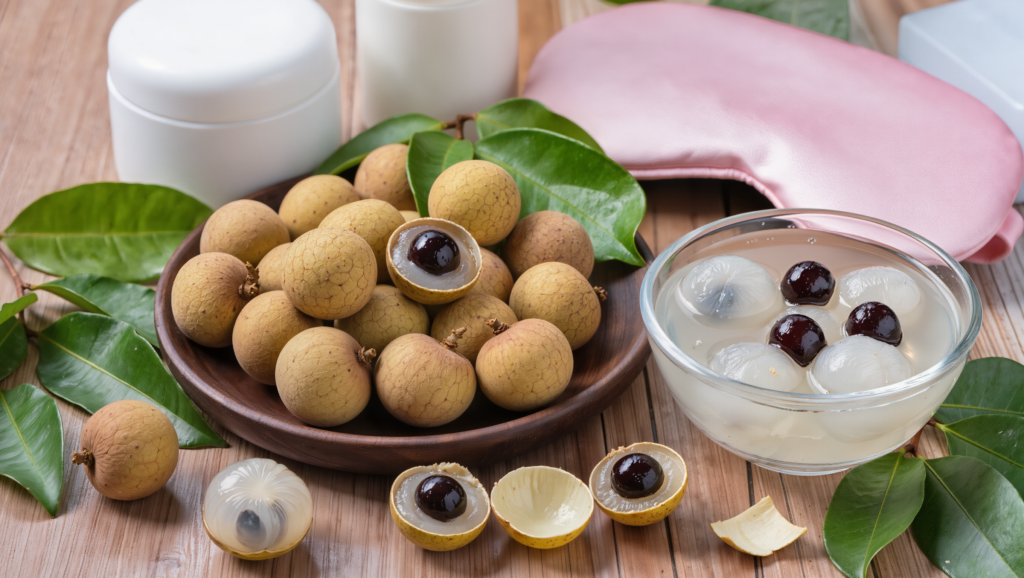
Longan (Dimocarpus longan Lour.) is a tropical fruit from the Sapindaceae family, native to China and widely eaten across East and Southeast Asia. Fresh longan has a thin brown shell (pericarp), translucent sweet flesh (aril), and a shiny dark seed—hence its nickname “dragon eye.”
Traditional uses: beauty, blood, and better sleep
Classical Chinese and folk medicine texts describe longan fruit as:
- A blood and qi tonic – “nourishing the blood,” which in TCM is associated with skin glow, hair quality, and menstrual health.
- A shen‑calming fruit – used to soothe nerves, relieve anxiety, and treat insomnia.
- A general vitality booster – enhancing memory, promoting “blood metabolism,” and preventing amnesia, with anti‑aging connotations.
A 2023 review of longan as a natural remedy notes that it has “tremendous nutraceutical values” and has long been used to soothe nerves, relieve insomnia and increase blood metabolism, while the pericarp is prized for antioxidant and anti‑aging properties.
In other words, longan sits in the same “beauty and calm” category as better‑known goji berry and jujube.
Longan’s Skin Benefits: More Than Just Vitamin C
If you’re thinking “OK, every fruit has antioxidants,” you’re not wrong. But longan’s skin‑supporting profile is unusually dense—especially in the peel and seed.
1. Antioxidant power that rivals medicinal plants
A 2023 study on longan pericarp polyphenol extracts (LPPE) found:
- Longan byproduct extracts (mainly peel) are rich in phenolic compounds, including phlorizin, proanthocyanidins, gallic acid, and epicatechin.
- The antioxidant activity of these extracts was very high—greater than several medicinal plant samples such as ginger, ginkgo, and guava when extraction rates were considered.
Why this matters for skin: oxidative stress is a major driver of skin aging (wrinkles, loss of elasticity, uneven tone). High‑power antioxidants from diet and topical products help neutralize free radicals generated by UV, pollution, and metabolic stress, protecting collagen and lipids in the skin barrier.
Another study on longan pericarp water extract (WLP) confirmed strong:
- Radical‑scavenging capacity.
- Reducing activity (ability to donate electrons and stop oxidative chain reactions).
- Protection of liposome membranes from peroxidation (a cell‑membrane model).
The authors concluded that longan pericarp “might serve as a natural antioxidant and inflammatory inhibitor.”
2. Anti‑inflammatory and anti‑“inflammaging” actions
Chronic low‑grade inflammation (“inflammaging”) accelerates wrinkle formation, pigmentation issues, and barrier problems. Longan extracts show notable anti‑inflammatory activity:
- In macrophage cell models, longan pericarp extract reduced nitric oxide (NO) production and suppressed TNF‑α after LPS stimulation, while boosting antioxidant enzymes like catalase, superoxide dismutase, and glutathione peroxidase.
- A 2021 Scientific Reports study on dried and “black” longan (thermally aged longan) found that black longan aril extract significantly inhibited inflammatory cytokines IL‑6 and TNF‑α, both key players in age‑related inflammatory processes.
Less inflammatory signalling translates into less collagen breakdown and a calmer skin environment over time.
3. Anti‑hyaluronidase and anti‑aging potential
Hyaluronidase is an enzyme that breaks down hyaluronic acid, a key molecule responsible for skin hydration and plumpness. Excess hyaluronidase activity can mean drier, less elastic skin.
In the same 2021 study:
- Black longan seed extract was the most potent anti‑hyaluronidase extract tested (18.4 ± 2.0% inhibition), significantly stronger than regular dried longan seed.
- Black longan seed also showed the strongest antioxidant and free‑radical scavenging activities.
The authors explicitly propose black longan seed extract as a cosmeceutical active ingredient for anti‑skin aging, due to its combined antioxidant and anti‑hyaluronidase activity.
They note that because oxidative stress and hyaluronic acid degradation are central to wrinkles and moisture loss, longan seed extract could help preserve skin hydration and structure—especially in topical formulations.
4. Tyrosinase inhibition and pigmentation
Tyrosinase is an enzyme involved in melanin synthesis. Overactivity can lead to hyperpigmentation and dark spots.
Longan shell/pericarp contains compounds like gallic acid and ellagic acid, which have documented anti‑tyrosinase and antiglycation activities. A pharmacology review summarises that longan pericarp extracts show tyrosinase inhibitory activity, alongside antioxidant and anti‑glycation effects, which may help in skin lightening and preventing age spots.
In short: longan doesn’t just bring generic antioxidants—it brings a cluster of specific skin‑relevant activities: antioxidant, anti‑inflammatory, anti‑hyaluronidase, and anti‑tyrosinase.
How Longan Helps You Sleep?
This is where traditional use and modern mechanistic hints intersect.
Traditional “calm shen” and insomnia relief
Multiple ethnobotanical and pharmacological surveys note that longan pulp has been used to:
- Relieve insomnia.
- Fight anxiety and soothe nerves.
- Improve memory and support neuroprotection.
A 2019 overview lists insomnia, anxiety, and “blood‑tonic / nerve‑calming” uses among the “most important benefits” of longan, alongside anti‑aging and skin care.
While traditional descriptions talk in terms of “blood” and “spirit,” modern work is starting to unpack plausible mechanisms.
Possible mechanisms for mood and sleep support
Research on longan as a “functional food” highlights several bioactives:
- Polysaccharides and polysaccharide–protein complexes with immunomodulatory and neuroprotective actions.
- Polyphenols and flavonoids with antioxidant and anti‑inflammatory effects in brain tissue models.
- GABA and ACE‑inhibiting peptides in certain longan products, which may help with relaxation, blood pressure, and stress responses.
A 2024 review specifically mentions that high‑value products from the whole longan fruit—including GABA and polyphenols—may help maintain intestinal homeostasis, support skin health, and prevent chronic disease, hinting at a gut–brain–skin axis involvement.
While direct human clinical trials on longan for insomnia are still limited, the combination of:
- Traditional, long‑term use for sleep and anxiety, and
- The presence of GABA, anti‑inflammatory and antioxidant compounds with neuroprotective potential
makes it reasonable to see longan as a gentle, food‑based support for calmer nights rather than a pharmaceutical‑style sedative.
Extra Perks: Tissue Healing, Collagen, and “Beauty From Within”
Beyond antioxidants and specific enzyme effects, longan carries some classic skin‑supporting nutrients.
Vitamin C for collagen and wound healing
Longan flesh is a notable source of vitamin C (ascorbic acid).
WebMD notes that longan’s vitamin C content contributes to:
- Tissue health and wound healing – vitamin C is essential for collagen synthesis and repairing cuts and micro‑damage.
- Maintaining collagen in muscles, cartilage, skin, bones, teeth, and gums.
- Acting as a potent antioxidant alongside longan’s polyphenols.
Good vitamin C status supports:
- Collagen cross‑linking (firmness).
- Stronger capillaries (less redness and broken vessels).
- Faster skin recovery from daily micro‑damage and acne lesions.
Lipid metabolism and anti‑obesity hints
The 2023 polyphenol study also explored hypolipidemic effects of longan pericarp extracts in mice: LPPE modulated lipid metabolism and improved serum lipid profiles in high‑fat‑diet models.
Coupled with other work suggesting longan extracts have anti‑obesity, anti‑hyperglycaemic, and metabolic benefits, this situates longan as a potential metabolic‑beauty food—supporting healthier blood lipids and glycaemic control, which indirectly reflect in skin quality over time.
How to Use Longan for Skin and Sleep
1. Eat it as a regular “beauty snack,” not a miracle cure
Options:
- Fresh longan – best for vitamin C and hydration.
- Dried longan – more concentrated, traditional in tonics and teas.
- Black longan (thermally aged) – higher in certain phenolics; black seed and aril extracts showed the strongest antioxidant, anti‑inflammatory and anti‑hyaluronidase activities in vitro.
A 2021 study suggested black longan seed for topical antioxidant/anti‑aging uses and black longan aril as a natural edible anti‑inflammatory ingredient.
Practically, a handful of fresh longans or a small serving of dried longan in tea or porridge a few times a week is a reasonable, food‑level dose—think of it like adding berries or goji, not like taking a drug.
2. Evening longan tea for calm and ritual
A classic TCM‑style use:
- Steep a small handful of dried longan pulp (sometimes combined with jujube and goji) in hot water for 10–15 minutes.
- Sip in the evening as part of a wind‑down routine.
You’re getting:
- Mild natural sugars + polyphenols.
- Traditional “shen‑calming” ritual.
- Potential GABA and neuroactive compounds, depending on preparation.
Again, evidence here is more traditional and mechanistic than large RCTs, so treat it as gentle support layered into good sleep hygiene (dark room, consistent schedule, screen curfew).
3. Look for longan in cosmeceuticals
Given the strong lab data, you’ll increasingly see longan extracts in skincare:
- Seed/pericarp extracts for antioxidant and anti‑hyaluronidase effects.
- Formulas targeting anti‑aging, brightening, or barrier support.
A 2021 study explicitly recommended black longan seed extract as a natural antioxidant for cosmetic products, and black longan aril for anti‑inflammatory use.
As with any botanical, actual product efficacy will depend heavily on concentration, extraction method, and formula stability—but the raw ingredient has genuine potential.
Caveats and Safety Concerns Of Longan Fruit
- For most people, eating longan in typical food amounts is safe.
- Those with diabetes or needing tight glucose control should account for the natural sugar content, especially in dried form.
- Allergies to related fruits (like lychee) may warrant caution.
For supplements or high‑dose extracts, especially if you’re pregnant, on medications, or managing chronic illness, it’s wise to discuss with a healthcare professional—human clinical data, while promising in animals and cells, are still emerging.
The Bottom Line: An Old‑School Beauty Fruit With Modern Science Behind It
When you put all the data next to the old stories, longan starts to look like a classic “beauty and serenity” food that just happened to be ahead of its time:
- Its pericarp and seeds are loaded with polyphenols and show powerful antioxidant and anti‑inflammatory effects—on par with or exceeding several medicinal plants.
- Black longan seed extracts inhibit hyaluronidase and boost antioxidant capacity, making them strong candidates for anti‑wrinkle and skin‑moisture support in cosmeceuticals.
- Traditional use for insomnia, anxiety, and memory now has mechanistic support in the form of neuroprotective polysaccharides, polyphenols, and GABA‑linked functional ingredients.
- Its vitamin C and tissue‑healing support round out the “beauty from within” picture—supporting collagen, wound healing, and overall tissue structure.
Is longan going to replace your retinoid or a clinically‑dosed sleep medication? No. But as a regular part of your diet and self‑care rituals—especially in the evening—it genuinely fits the bill of an ancient beauty secret: a sweet, gentle fruit that quietly feeds your skin, calms your system, and nudges your body a little closer to the restful, resilient state it was designed for.