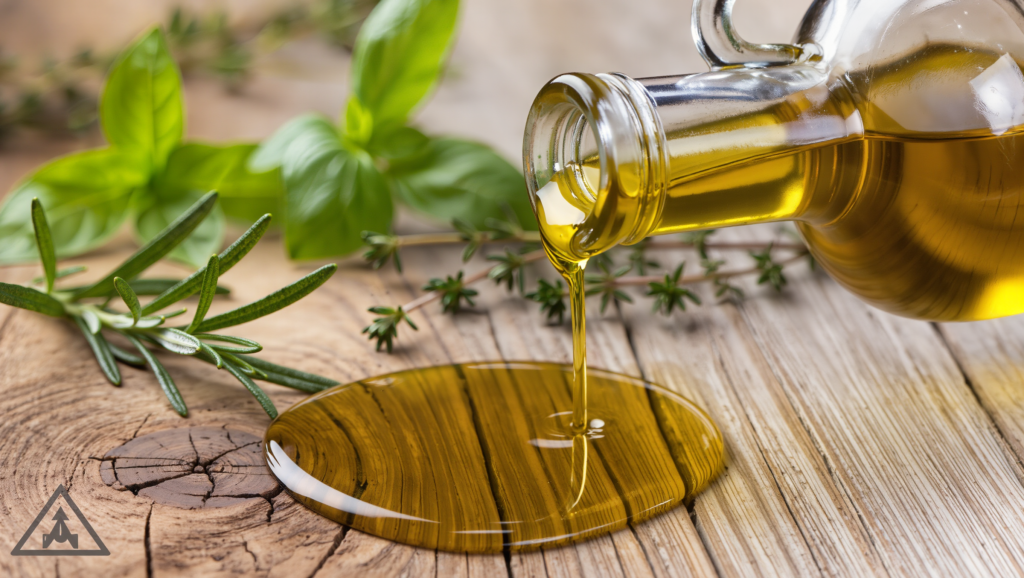












Olive oil—especially organic extra virgin—deserves its “healthy fat” reputation, but it’s quietly becoming the new wellness multivitamin people are tempted to take by the shot glass. That’s where problems begin. Even the best extra virgin olive oil (EVOO) has real downsides when you treat it like a health tonic instead of what it actually is: a very calorie-dense, highly processed fat extract. Used wisely, it can support heart and metabolic health; overused, it can contribute to weight gain, gut issues, and possibly higher LDL cholesterol and liver stress in some people.
This isn’t an “olive oil is bad” post—but it is a reality check on the hidden risks of too much, even if it’s organic, cold-pressed, and beautifully packaged. In our previous deep dive on Olive Oil we got into all the positives, in this article we will be exploring it’s downsides
Olive Oil Is Healthy But It’s Still Liquid Calories.
EVOO is mostly monounsaturated fat (oleic acid), plus vitamin E, vitamin K, and a cocktail of polyphenols like oleocanthal and oleuropein that fight oxidation and inflammation. That profile underpins its benefits in Mediterranean-style diets and is linked to lower rates of cardiovascular disease and improved risk factors like blood pressure and inflammation.
But here’s the catch:
- 1 tablespoon of olive oil ≈ 120 calories and 14 g of fat.
- Those calories arrive with no fiber, no protein, and almost no satiety structure unless paired with real food.
Dietitians now report seeing clients “drinking” ¼–1 cup of olive oil daily because they heard it was heart-protective—only to watch their weight, LDL cholesterol, and triglycerides climb.
In other words: yes, EVOO is healthier than seed oils or butter in most contexts, but it still counts.
Hidden Risk #1: Weight Gain and Stalled Fat Loss
Calorie density is the most obvious, and most overlooked, risk.
- A teaspoon has ~40 calories; a “generous pour” over salad can easily hit 3–4 tablespoons (360–480+ calories) before you add cheese, nuts, or avocado.
- One case shared by a preventive cardiology dietitian involved a client who drank a cup of olive oil daily “for health”—his weight loss stalled and LDL cholesterol rose, largely due to the sheer number of added calories and saturated fat he was unknowingly consuming.
Even though several meta-analyses show that moderate olive oil intake within a Mediterranean pattern is compatible with weight loss or better weight control, that benefit depends on substituting it for other calories—not stacking it on top of them. If you add EVOO to an already energy-dense Western diet, it can quietly tip you into a surplus that prevents fat loss or slowly drives weight gain.
Hidden Risk #2: LDL Cholesterol and Liver Load in “Olive Oil Megadosers”
Most large cohort and intervention studies find that replacing saturated fat or refined carbs with moderate EVOO improves the lipid profile: lower LDL oxidation, higher HDL, better triglycerides. But newer work suggests the “more is always better” mindset may backfire in some people.
- A 2024 report highlighted that in certain contexts, higher EVOO intake was associated with increased LDL cholesterol, potentially because the small but real saturated fraction of the oil interacts with how the liver processes LDL particles.
- The authors suggested that reducing heavy EVOO intake in those individuals may actually improve LDL lowering.
Clinically, dietitians are now warning that “chugging” olive oil can overload both the liver and lipid system, especially in people who are sedentary, insulin resistant, or already struggling with dyslipidemia.
The takeaway: EVOO improves lipids when it replaces less healthy fats and refined carbs in reasonable amounts, not when it’s layered on as a liquid supplement.
Hidden Risk #3: Gut Upset and Microbiome Misfires
Olive oil is often praised for its mild laxative effect—but that’s a double-edged sword.
- EVOO can trigger nausea, cramping, or diarrhea when consumed in large boluses (shots or big spoons on an empty stomach), particularly in people not used to high fat loads.
- Rapid delivery of pure fat to the small intestine stimulates bile and gut motility in a way that may feel like “detox,” but often is just irritation and malabsorption.
Emerging evidence raises another subtle concern: overdoing isolated fats (even “healthy” ones) at the expense of whole plant foods can starve fiber-loving microbes and favor bile-tolerant microbial species more commonly seen in Western diets. While EVOO polyphenols appear to have some microbiome benefits, they cannot compensate for a lack of diverse fiber if oil is displacing beans, nuts, seeds, and vegetables.pritikin
Hidden Risk #4: “Health Halo” That Crowds Out Better Foods
One of the biggest indirect risks of olive oil—especially the organic, extra-virgin, high‑polyphenol kind—is the halo effect.
If you:
- drown salads in EVOO
- cook every dish in generous pours
- snack on bread and oil instead of nuts or hummus
…you may be unintentionally reducing your intake of whole-food fats and nutrient sources that bring fiber, protein, and minerals along for the ride.
Research on Mediterranean dietary patterns suggests that the health benefits come from a synergy of vegetables, legumes, whole grains, modest wine, fish, and lifestyle—not olive oil alone. When EVOO is treated as the star rather than a supporting actor, people can end up with a high‑fat, low‑fiber version of “Mediterranean” that misses many of the original’s protective elements.
Hidden Risk #5: Misusing Olive Oil with High-Heat Cooking
Olive oil is more stable under heat than high‑PUFA oils like sunflower or corn oil, primarily because it’s rich in monounsaturated fat and antioxidants. That said, all oils produce some oxidation products and aldehydes when repeatedly heated or used for prolonged deep‑frying.
- A detailed NMR study of culinary oils found that all tested oils, including olive oil, generated toxic aldehydes under long, sustained high‑heat conditions.
- However, PUFA‑rich oils produced these aldehydes more quickly and at higher levels than monounsaturated‑rich oils like olive oil; olive oil was still the least bad option for frying among common oils tested.
Practical implication:
- Occasional sautéing or pan-frying with fresh EVOO is fine.
- Repeated deep‑frying, reusing oil, or pushing it to its smoke point (especially in commercial or home deep fryers) increases your intake of potentially harmful lipid oxidation products—even with high‑quality organic EVOO.
Hidden Risk #6: Overconfidence in Heart “Protection”
Some wellness messaging implies that if your fat is mostly olive oil, you’re insulated against heart attacks. Reality is more nuanced.
- A critical review from a preventive cardiology center pointed out that olive oil intake alone did not reverse coronary atherosclerosis in animal models and may not be sufficient to halt plaque progression in humans, especially when total fat remains high and other risk factors are uncontrolled.
- In a primate study, monkeys fed a monounsaturated‑rich diet (similar to olive oil’s profile) still developed significant atherosclerotic plaque over years when overall diet quality and lifestyle were poor.
The healthiest Mediterranean cohorts don’t just “add olive oil”—they also:
- Walk a lot
- Eat tons of vegetables, legumes, and whole grains
- Have relatively low intake of added sugars and ultra‑processed foods
Olive oil is best thought of as one supportive piece, not a cardiology insurance policy.
Hidden Risk #7: Individual Variability (Not Everyone Responds the Same)
Genetics, microbiome composition, metabolic health, and overall diet pattern shape how your body handles high‑fat foods—even “good” fats.
Some people may notice:
- Jumps in LDL or non‑HDL cholesterol when olive oil intake climbs but exercise and fiber remain low.
- Worsening reflux or gallbladder symptoms with high‑fat meals.
- Blood sugar swings if oil displaces protein and complex carbs, leading to less stable meals.
Emerging personalized nutrition research suggests that individuals with insulin resistance or NAFLD (fatty liver) may need to be particularly mindful of total added fat—even from EVOO—until metabolic control improves.
How Much Olive Oil Is “Too Much”?
There is no single universal cutoff, but we can use Mediterranean diet and trial data as a rough guide:
- Many Mediterranean cohorts and intervention studies associate benefits with about 1–4 tablespoons (15–60 ml) of olive oil per day, usually eaten with vegetables, legumes, and whole grains.
- Problems tend to show up when people start drinking oil or routinely exceeding that level without reducing other calorie sources—think ¼ cup+ per day on top of a modern Western diet.
A simple rule of thumb:
- Use enough to coat vegetables, cook lean proteins, and make dressings enjoyable—but not so much that the oil becomes the main ingredient.
- Track a few days realistically—many are shocked at how fast tablespoons add up.
Smart, Science-Based Ways to Use Olive Oil
To keep extra virgin olive oil as a friend, not a frenemy:
- Prioritize quality over quantity. Choose fresh, certified organic EVOO, high in polyphenols—then use it modestly rather than dousing everything.
- Pair it with plants. Use it to help absorb fat‑soluble nutrients from vegetables, not to “rescue” ultra‑processed foods.
- Let it replace, not add. Swap EVOO in for butter, margarine, and refined seed oils instead of stacking it on top of existing fats.
- Respect the heat. Sauté or pan‑fry at moderate temperatures; avoid repeated deep‑frying or reusing oil.
- Watch your spoon and your waist. If progress stalls (weight, lipids, or glucose), audit total added oil—including olive oil—before blaming everything else.
Bottom Line: A Powerful Tool, Not a Magic Elixir
Organic extra virgin olive oil is still among the best fats you can use—rich in monounsaturated fats, antioxidants, and backed by robust Mediterranean diet research. But when wellness culture turns it into a “drinkable” superfood, its hidden risks show up: calorie overload, lipid imbalances in some people, gut upset, and a slow crowding‑out of the whole foods that actually drive long‑term health.
Treat EVOO like what it really is: a flavorful, functional condiment and cooking fat—not a supplement. Your heart, gut, and waistline will thank you.
Did you find this article helpful? Support us by following us on our social media for more content on natural health and wellness:: Youtube, Instagram, Facebook, Pinterest, Twitter (X)
Sources