











Rambutan is not a heavyweight iron food like lentils or red meat, and that’s worth saying up front. But it can still be a smart, underrated helper for better blood because it brings a useful mix of a little iron plus plenty of vitamin C, and vitamin C helps your body absorb non-heme iron from plant foods much more effectively.
That’s the real story here: rambutan is less of an iron bomb and more of an iron-support fruit. If you pair it with beans, seeds, leafy greens, or fortified foods, it can help nudge your overall iron intake in the right direction while also giving you hydration, antioxidants, and a nice sweet snack that doesn’t feel like “diet food.”
What Is Rambutan?
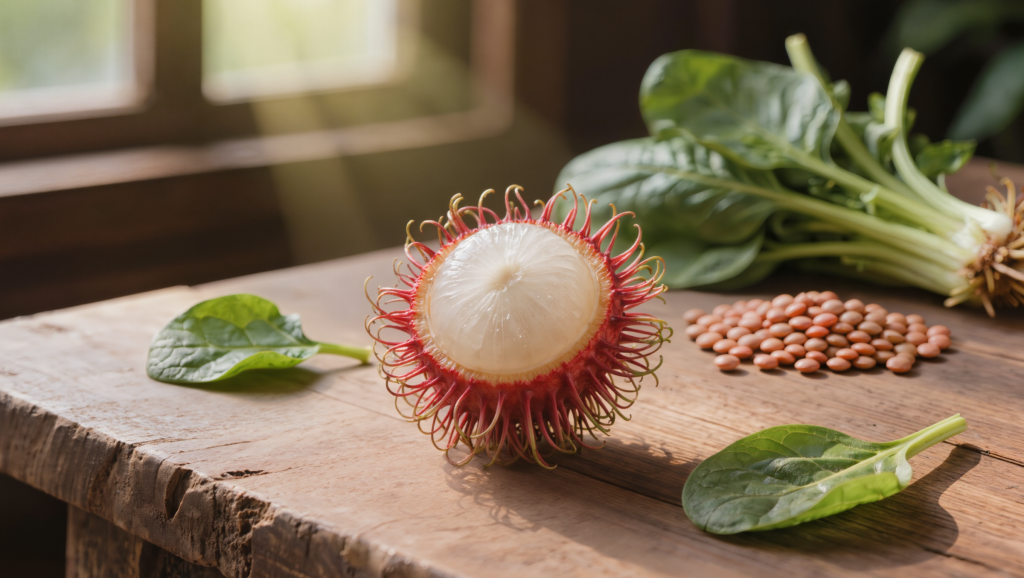
Rambutan is a tropical fruit in the same general family conversation as lychee, longan, and other Southeast Asian fruits people tend to discover once they’ve been on a vacation, a specialty market run, or a very curious grocery trip. It has a red or yellow spiky shell, juicy translucent flesh, and a mildly sweet flavor that lands somewhere between grape, lychee, and pear. It’s fun to eat, which already gives it a huge advantage over boring nutrition advice.
Nutritionally, rambutan is best known for being:
- Hydrating.
- Low in fat.
- A source of vitamin C.
- A modest source of iron and other minerals.
Per 100 g, one nutrition reference lists rambutan at about 0.35 mg of iron, along with calcium, magnesium, and phosphorus. That is not a huge amount of iron, but it is not zero either. And the more important thing is that rambutan also contains vitamin C, which can help your body absorb iron from the rest of your meal.
Why Iron Matters More Than People Think
Iron is one of those nutrients people don’t think about until they feel exhausted, foggy, short of breath, or unusually cold. That’s because iron is a key component of hemoglobin, the protein in red blood cells that carries oxygen around the body. If iron is too low, oxygen delivery suffers, and a person can feel tired, weak, and mentally flat.
Iron deficiency is especially common in:
- Menstruating women.
- Pregnant people.
- Vegans and vegetarians who don’t plan iron intake carefully.
- People with low-calorie diets.
- People with digestive issues that affect nutrient absorption.
The tricky part is that not all iron is absorbed equally well. Iron from animal foods is generally more bioavailable, while iron from plants is more sensitive to what else is on the plate. That’s where rambutan becomes interesting.
Rambutan’s Secret Weapon: Vitamin C
Vitamin C is the real reason rambutan deserves a spot in an iron conversation. Several sources note that rambutan is rich in vitamin C, and vitamin C is well known to improve the absorption of non-heme iron, the kind found in plant foods.
That means rambutan can help in a very specific way:
- It may not provide a massive amount of iron itself.
- But it can make the iron in other foods more usable.
- That can matter a lot if most of your diet is plant-based.
Think of rambutan as the friend who doesn’t bring a ton of money to the table but does know how to help everyone else split the bill efficiently. The fruit’s vitamin C helps turn a decent plant-based meal into a better iron-absorbing meal.
Rambutan vs. Other Better-Known Iron Foods
Here’s the honest comparison: rambutan is not competing with lentils, beans, tofu, pumpkin seeds, or red meat on iron quantity. Those foods are the heavy hitters. For example, common plant iron sources like tofu, lentils, soybeans, pumpkin seeds, sesame seeds, and cashews provide several milligrams per serving, far more than the roughly 0.35 mg per 100 g listed for rambutan.
So why even bother with rambutan?
Because nutrition is not only about raw nutrient numbers. It’s also about:
- Absorption.
- Food combinations.
- Meal quality.
- Consistency.
A fruit that helps you absorb iron better can absolutely matter more than a fruit that technically has a little more iron but no vitamin C to support uptake.
How Rambutan Supports “Better Blood”
When people say “better blood,” they usually mean better iron status, healthier red blood cell production, and less fatigue tied to low iron. Rambutan supports that in a few indirect but useful ways.
1) It supports iron absorption
Vitamin C improves the absorption of non-heme iron from foods like beans, lentils, spinach, and seeds. If you eat rambutan alongside those foods, it can help your body get more out of the iron already on your plate.
2) It adds a little iron itself
Rambutan does contain iron, even if the amount is modest. That means it contributes to the overall daily total, especially if you eat fruit regularly.
3) It helps with meal quality
People who eat more fruit often end up with better overall dietary patterns, and rambutan is an easy, pleasant way to increase fruit intake without loading up on junk food. It’s sweet enough to feel like a treat but still brings fiber, water, and micronutrients.
Who Might Benefit Most From Eating Rambutan
Rambutan is probably most useful for people who are already trying to improve their iron intake through plant-based foods. That includes:
- Vegetarians and vegans.
- People with borderline low iron.
- People who eat a lot of beans, grains, nuts, and seeds.
- Anyone trying to improve nutrient density without overhauling every meal.
It can also be useful for people who struggle to eat enough fruit. Because rambutan is fun, portable, and naturally sweet, it may be easier to actually include in the diet than yet another “healthy” snack that nobody wants to finish.
That said, if someone has confirmed iron-deficiency anemia, rambutan alone will not fix it. In that case, dietary changes, iron-rich foods, and sometimes medical treatment are needed. Rambutan is a helper, not a rescue plan.
The Best Way to Eat Rambutan for Iron Support
If you want rambutan to actually do something meaningful for iron intake, pair it intentionally.
Good combinations include:
- Rambutan + lentil salad.
- Rambutan + chickpeas.
- Rambutan + tofu bowl.
- Rambutan + pumpkin seeds.
- Rambutan + black beans.
- Rambutan + fortified cereal or oatmeal.
The goal is to use the vitamin C in rambutan to support the iron in the rest of the meal. That’s where the fruit really earns its keep.
A practical example:
- Breakfast: oatmeal with pumpkin seeds and rambutan on the side.
- Lunch: chickpea salad with rambutan chunks mixed into fruit or greens.
- Snack: fresh rambutan with nuts or seeds.
- Dinner: tofu or bean stir-fry followed by rambutan for dessert.
That’s a much better strategy than eating rambutan in isolation and expecting it to magically reverse low iron.
Other Nutrients and Benefits Of Rambutan
Rambutan brings more to the table than iron support. It also contains:
- Water, which helps hydration.
- Fiber, which supports digestion.
- Antioxidants, including flavonoids and polyphenols, according to consumer nutrition summaries.
- Small amounts of minerals like calcium, magnesium, phosphorus, and potassium.
That means it can be part of a broader pattern of healthy eating, especially if your diet is a little low in fresh produce. It’s not a superfood in the miracle sense, but it is a genuinely useful fruit.
What Rambutan Is Not
It’s important not to oversell this fruit.
Rambutan is not:
- A replacement for iron-rich foods.
- A substitute for iron supplements if they’re medically needed.
- A cure for anemia.
- A high-iron fruit in the same league as beans, meats, or seeds.
The strongest claim you can make is that rambutan is a supportive fruit for iron status because of its vitamin C content and its modest iron contribution. That’s still useful, just not magical.
How to Tell if Your Iron Intake Needs Help
If you’re wondering whether a food strategy like rambutan makes sense, common signs of low iron can include:
- Fatigue.
- Weakness.
- Pale skin.
- Shortness of breath during exertion.
- Dizziness.
- Brittle nails.
- Poor concentration.
Those symptoms can have other causes too, so they are not proof of iron deficiency. But if they show up often, getting iron status checked is smarter than guessing. Food helps most when it’s part of a broader plan.
The Bottom Line
Rambutan is not the iron king of the fruit world, and it shouldn’t be marketed that way. But it does have a real role in supporting healthier blood because it provides vitamin C for iron absorption and a modest amount of iron itself.
If you’re trying to improve iron status naturally, the smartest move is to pair rambutan with true iron-rich foods like beans, lentils, tofu, seeds, and leafy greens. That’s where the spiky little fruit becomes genuinely useful: not as a miracle cure, but as a smart, flavorful helper that makes your body better at using the iron you already eat.