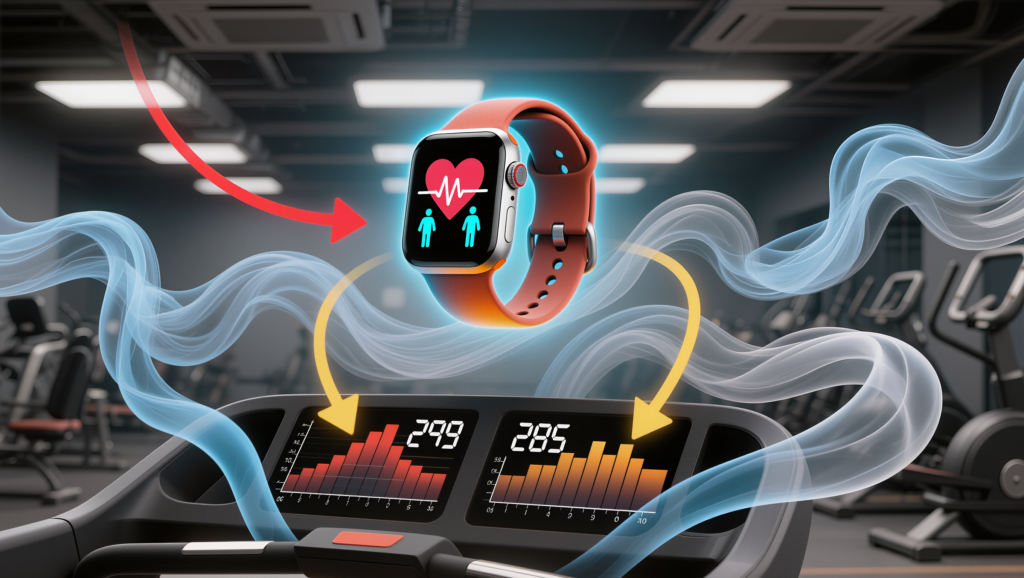












Ever finished a killer workout with your FitWatch or favorite fitness tracker, only to see a sky-high calorie burn and think, “Am I secretly an athlete?” Turns out, the truth behind those numbers is a bit more complicated—fitness trackers are notorious for misreporting calories burned, often by a wide margin. If you’re counting on your wearables to keep your fitness, weight goals, or food intake truly dialed in, it’s time for a reality check.
Below, we’ll break down how FitWatch and similar devices estimate calories, why their promises don’t always match reality, and what that means for your real-world results (spoiler alert: don’t plan your cheat day based on your tracker’s numbers alone!). Let’s get into the quirks, science, and strategies to use your wearable in smarter, healthier ways.
Why FitWatch and Fitness Trackers Get Calories Burned Wrong
The Fancy Algorithms Behind the Scenes
Most wearables—whether you’re repping Apple, Fitbit, Garmin, or a more affordable brand—calculate calories burned using a mix of your age, gender, weight, step count, heart rate, motion sensors, and sometimes sophisticated algorithms. These formulas are adapted from equations like the Mifflin-St. Jeor (for Basal Metabolic Rate) and estimate your Total Daily Energy Expenditure (TDEE) by layering in your basic body data and movement.
But here’s the catch: the “magic” formula doesn’t know you personally. It doesn’t account for genetic differences, metabolism quirks, or the hidden complexities of actual human energy expenditure.
Scientific Reality Check: The Numbers Can Be Wildly Off
A landmark study from Stanford University put seven popular wearables to the test. It found that while most were good at tracking heart rate (within about 5% error), they were all over the map for calories burned—even the “best” was off by an average of 27%, while the worst missed by 93%, sometimes underestimating, sometimes overestimating.
Recent research shows that calorie errors can swing from 20–30% up to a dizzying 80% depending on device, activity, user profile, and even skin tone. In other words: the number at the end of your workout could easily be off by hundreds of calories.
Why the Mistakes? Main Causes of Calorie Estimation Errors
1. Everybody Burns Calories Differently
- Your “real” calorie burn depends on factors like muscle mass, genetics, body composition, thyroid function, training status, and more. No two bodies burn fuel precisely the same way—even if they “look” the same on paper.
- Most algorithms lump people into broad categories based on your height, weight, gender, and age, ignoring what makes you unique.
2. Heart Rate Monitor Shortcomings
- Wearables often combine step data with heart rate (via optical sensors, not ECG-grade data), but heart rate can spike for reasons unrelated to calorie burn (stress, heat, dehydration), or it can lag behind actual effort.
- These wrist-based monitors can be less accurate in activities like weight lifting, cycling, or HIIT compared to steady-state running or walking.
3. Misreading the Type and Intensity of Movement
- FitWatch and friends are typically better at estimating calories for rhythmic, repetitive activities (like running or walking) than for weight training, yoga, rowing, or non-step-based motion.
- Errors explode when you venture outside these “standard” movements, as tracker sensors simply can’t figure out intensity and muscle recruitment the same way a lab can.
4. Skin Tone, Wrist Placement, and Sweat
- Research shows optical heart rate sensors (PPG) often struggle on people with darker skin tones or tattoos, and are less accurate when a device is worn loosely or when sweat disrupts readings.
- These sensor issues can cascade into calorie-counting errors.
5. Not All Activities Are Tracked
- Many wearable devices miss calories burned in activities like cycling, weight lifting, or even day-to-day chores unless users manually log them.
- NEAT (Non-Exercise Activity Thermogenesis)—all the calories you burn just living your life—is hard to track, but it significantly impacts your daily total.
Real-World Proof: Why Users Notice Something’s Off
Runners and gym-goers have noticed “impossible” calorie numbers: walks that claim to torch hundreds extra, or strength sessions that barely register. For walkers, for example, your device could show nearly double what you actually burn, simply because the tracker miscalculates pace, stride length, or calories per step.
Users experimenting with different devices report calorie estimates varying by several hundred per day, while some have even noted that sleeping or standing “burns” suspicious amounts on their watches, driving up the total.
What Wearables Are Good For (And How to Use Calorie Data Smarter)
Despite their flaws, fitness trackers can still:
- Provide motivational data and feedback on general activity levels.
- Help identify trends—if your calorie “burn” is consistent, you can use it as a relative measure to increase or decrease activity week-to-week.
- Give reasonably accurate step counts and heart-rate trends, especially for moderate-intensity activities and cardio.
The trick is to use these devices for trends, not absolutes—your daily numbers may be off, but over weeks or months, improvements are still meaningful.
How to Get More Accurate Calorie Estimates
- Input all your data accurately. Update weight frequently, and use manual exercise logs for activities trackers miss.
- Use chest-strap heart-rate monitors (more precise than wrist models) if your device can pair with them.
- Rely on perceived exertion: Listen to your body and use the tracker for motivation, not as a calorie “bank account.”
- Calibrate your stride and activity settings if your device allows it.
- Compare several days or weeks—watch for trends rather than fixating on one daily number.
Remember: Only indirect calorimetry in an exercise testing lab (treadmill mask, etc.) can measure exact calorie burn. Everything else, including fancy trackers, is just a guess—sometimes a wild one.
Should You Still Use Your FitWatch?
Absolutely! But use it to motivate steps, activity streaks, or heart-health—not as your primary guide for eating or cheat meals. If you’re using trackers for weight loss, make sure to watch actual changes in your body rather than just following the digital “calories burned” readout. Treat those numbers as rough markers, not gospel truth, and you’ll get all the benefits with none of the surprises.
Did you find this article helpful? Support us by following us on our social media for more content on natural health and wellness:: Youtube, Instagram, Facebook, Pinterest, Twitter (X)
Sources
- https://med.stanford.edu/news/all-news/2017/05/fitness-trackers-accurately-measure-heart-rate-but-not-calories-burned.html
- https://pubmed.ncbi.nlm.nih.gov/35060915/