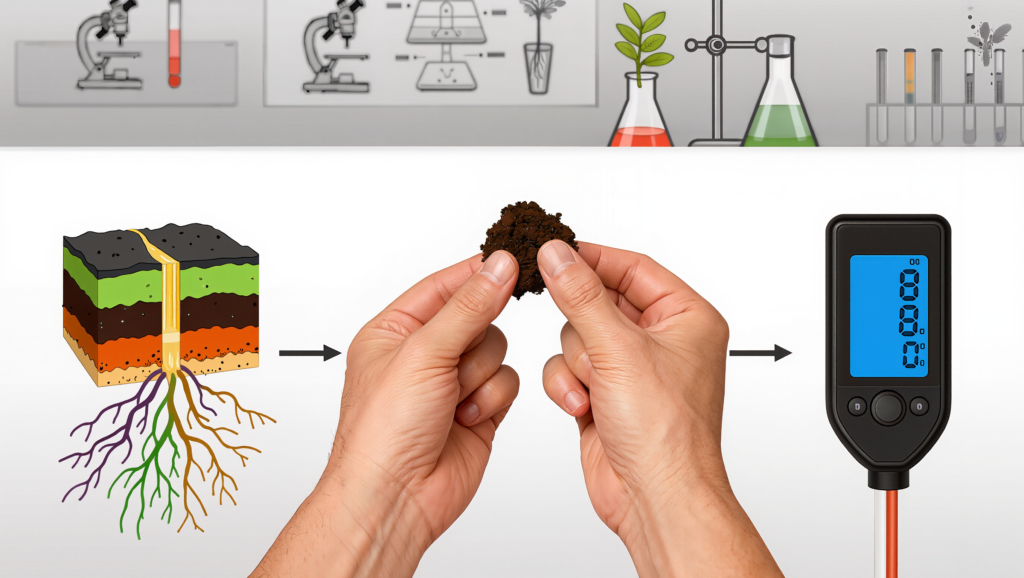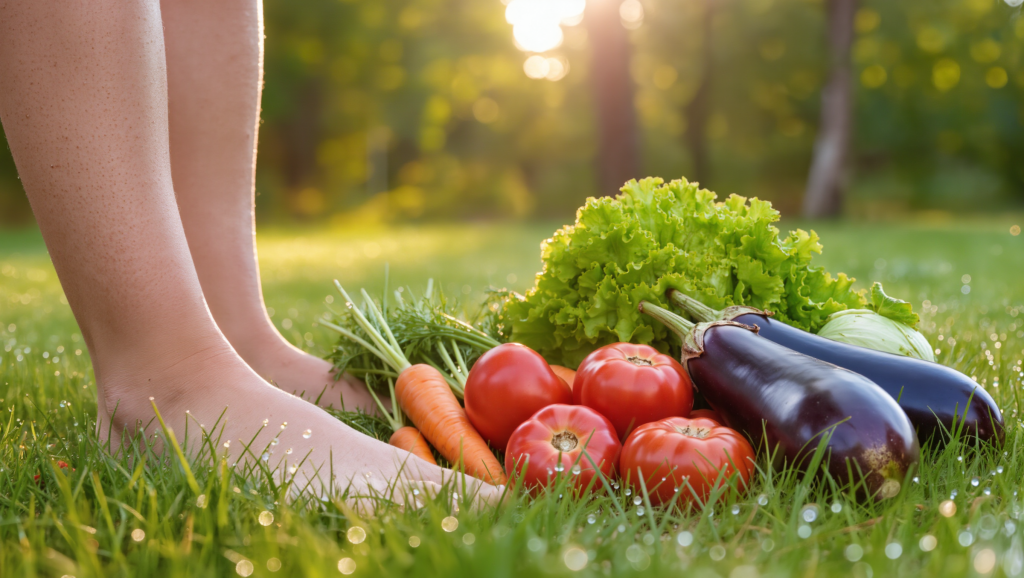












Most people think of “earthing” as something you do with your bare feet on wet grass. But there’s another half of that circuit most wellness content skips over: the electrons and antioxidants you take in through food, especially organically grown plants. When you put the two together—grounding from below and organic nutrients from within—you’re essentially wiring yourself back into the natural electrical network you evolved in, instead of living as an isolated, inflamed, overcharged system.
That sounds poetic, but there’s hard physiology behind it. Grounding research suggests that direct contact with the Earth can reduce inflammation, thin the blood, and normalise cortisol rhythms, likely by allowing free electrons from the ground to neutralise excess free radicals. At the same time, nutrition science shows that antioxidants from plant foods literally work by donating electrons to oxidants and free radicals, stabilising them and protecting cells from oxidative stress. Organic crops often carry higher levels of these antioxidant phytochemicals compared with conventional ones.
Put those together, and you have a pretty elegant idea: earthing + organic food intake = completing your body’s natural redox circuit.
Let’s unpack the science behind that, without losing the slightly mystical joy of knowing the ground under your feet and the food on your plate are quietly rewiring you.
Your Body Is an Electrical System (Whether You Like It or Not)
Every thought, heartbeat, and muscle contraction in your body is an electrical event. On a deeper level:
- Cells constantly run oxidation‑reduction (redox) reactions, where electrons are shuffled between molecules.pmc.ncbi.nlm.nih+1
- Electron donors (reduced molecules) and electron acceptors (oxidised molecules) maintain a redox balance; tipping that balance towards oxidation leads to oxidative stress and tissue damage.
- Free radicals and other reactive oxygen species (ROS) are just molecules missing electrons and looking to steal them from DNA, proteins, or membranes, damaging them in the process.
A 2019 systems‑biology review describes redox balance as a network of electron flows, with hubs like glutathione (GSH), thioredoxin, NADH/NADPH and cysteine controlling how oxidative or reducing different compartments of the cell are at any moment. When this system is stressed—by pollution, poor diet, chronic stress, sleep loss—you get chronic oxidative and inflammatory signalling, which is implicated in cardiovascular disease, neurodegeneration, diabetes, and more.
So when we talk about “completing a circuit,” we’re really talking about ensuring your body has steady access to electrons and supports the molecules that donate them where needed, instead of running in a constantly over‑oxidised, inflamed state.
Two major sources feed that system:
- Contact with the Earth (earthing or grounding).
- Diet—especially antioxidant‑rich plant foods.
Part 1: The Hidden Current Under Your Feet – What “Earthing” Actually Does
Earthing (grounding) is simply direct physical contact with the Earth’s surface—bare feet in grass or soil, skin on sand, or via a conductive mat connected to ground.
The basic claim from researchers is that the Earth’s surface is a vast reservoir of free electrons; when you connect to it, electrons flow into your body, helping neutralise positively charged free radicals and reduce chronic
The evidence so far (small but intriguing)
The research base is still relatively small and often involves modest sample sizes, but several studies and reviews have found consistent patterns:
- A 2012 review in the Journal of Environmental and Public Health reported that grounding:
- Reduced pain and altered white blood cell counts and inflammatory markers in clinical and pilot studies.
- Improved sleep and normalised cortisol rhythms in subjects sleeping on grounded mats.
- Changed blood chemistry in one night of grounding—affecting serum electrolytes and reducing urinary excretion of calcium and phosphorus, suggesting a possible protective effect on bone metabolism.
- Infrared imaging and blood tests in these studies documented reduced inflammation and improved perfusion (blood flow) in grounded subjects vs controls.
- A 2022 review of practical applications noted that grounding appears to improve heart rate variability (HRV), tissue perfusion, blood viscosity, and overall cardiovascular function, suggesting a systemic “healing state” when connected to Earth.
- A 2020 report cited by WebMD suggested grounding might help counter chronic conditions linked with inflammation—cardiovascular, respiratory, neurodegenerative, autoimmune diseases, type 2 diabetes, even cancer—though these claims still require larger, rigorous trials.
Mechanistically, the authors argue that flow of electrons from Earth into the body has been documented and provides a plausible explanation for the observed anti‑inflammatory and antioxidant effects.
How that translates into redox language
If you translate grounding into biochemical terms:
- The Earth acts as a giant electron donor.
- Your body, often carrying excess positive charge and reactive species, can accept those electrons.
- Those electrons then stabilise free radicals, reducing oxidative stress and the chronic low‑grade inflammation that goes with it.
Researchers explicitly suggest that “negatively charged antioxidant electrons from the Earth” neutralise positively charged free radicals at sites of inflammation.
Is this the whole story? Probably not. But it aligns neatly with what we know about redox balance and the fact that no molecule can lose an electron without an acceptor—you always need a circuit.
Part 2: Organic Foods as Internal Grounding – Feeding the Redox Network
If the ground is one half of your electron pipeline, food is the other. Nutrition science is crystal‑clear: antioxidants protect tissues by donating electrons to oxidants, preventing them from stealing electrons from your cells.
How food functions as an electron supply
A 2019 review on redox systems biology makes three key points:
- Diet contributes to both harmful oxidative processes and protective antioxidant systems.
- Endogenous buffers like glutathione (GSH) and thioredoxin act as central nodes, donating electrons to neutralise oxidants like hydrogen peroxide and other non‑radical species.
- Dietary antioxidants and phytochemicals support these systems by providing additional electron donors and modulating redox‑active metals, often binding them to prevent harmful reactions.pmc.ncbi.nlm.nih+1
A 2025 review on oxidative stress and the gut microbiome emphasises that exogenous antioxidants from diet (vitamins, polyphenols) counter oxidants by electron donation, working alongside internal systems to maintain redox balance.
In simple terms: every time you eat colourful plant foods, you’re sending in molecules that say, “We’ll take the hit—here, have an electron instead of stealing one from your DNA or membranes.”
Where organic foods come in
Organic vs conventional farming is less about vitamin C in isolation and more about the phytochemical profile—polyphenols, flavonoids, carotenoids, sulfur compounds—many of which are potent antioxidants.
A 2022 Scientific Reports study comparing organic and conventional Allium vegetables (onions, garlic) found that:
- Organically grown vegetables had significantly higher total polyphenol content (p < 0.05).
- Organic red and yellow onions had about twice the antioxidant capacity (FRAP assay) of conventional ones.
- Organic crops also had higher levels of several minerals and antioxidant compounds overall, though some macronutrients were lower.
An executive summary from The Organic Center reported that across multiple comparative studies, organic foods showed antioxidant levels averaging about one‑third higher than conventional, with some cases showing up to three‑fold increases depending on crop and compound.
A 2016 review of human organic‑diet interventions found mixed results overall, but:
- In three crossover studies, switching to organic diets produced significant improvements in markers of antioxidant capacity (total plasma antioxidant capacity, carotenoids, flavonols) and reductions in some inflammatory and oxidative stress biomarkers (TNF‑α, IL‑6, IL‑1, protein oxidation).
The authors concluded the evidence wasn’t yet robust enough for sweeping claims, but these results support the idea that an organic diet can modestly enhance the body’s antioxidant capacity and reduce oxidative stress in certain contexts.
Combine that with redox theory, and you get a clear picture: organic plant foods are likely to deliver more electron‑donating phytochemicals per bite, feeding into your antioxidant networks.
Completing the Circuit: Ground Below, Organic Food Within
Now connect the dots:
- Grounding appears to supply a flow of electrons from Earth into your body, which can neutralise free radicals and modulate inflammation and blood properties.
- Organic plant foods provide higher levels of antioxidants and phytochemicals in many cases, and these compounds act as electron donors that support glutathione and other redox systems.
- Redox balance depends on having enough reducing equivalents (electron donors) available across your tissues to counter oxidative challenges from metabolism, pollution, stress, and disease processes.
The “natural circuit” metaphor is helpful here:
- Think of your body as an open electrical system designed to be in constant exchange with its environment—ground below, plants and microbes within.
- Modern living isolates you: insulated shoes, high‑rise living, hyper‑processed food, chronic indoor lighting. You’re functionally “floating”—electrically and nutritionally—compared with how humans lived for most of history.
- Earthing gives you a direct current (DC) connection to the Earth’s electron pool, while organic foods give you a slow, sustained trickle of electron‑donating molecules feeding your intracellular redox buffers.
Is every detail worked out? No. But the conceptual match between grounding research (electron flow from Earth) and nutrition redox science (antioxidant electron donation) is striking.
How to “Wire In” Your Day: Practical Ways to Combine Earthing and Organic Eating
You don’t need to move to a hut in the forest. Small, consistent habits can link the system back up.
1. Start your day grounded (literally) with organic plants
- Morning grounding: Stand or sit barefoot on grass, soil, or stone for 20–30 minutes while you drink tea or do breathing/meditation. Even short sessions in grounding studies altered cortisol patterns and improved sleep and pain over time.
- Organic breakfast: Pair that with organic fruit, oats, or a veg‑heavy breakfast—think berries, apples, or citrus with oats, or organic eggs and sautéed organic greens and onions. The Allium study suggests organic onions and garlic have significantly higher antioxidant capacity.
In redox terms, you’re combining direct electron intake from Earth with dietary antioxidant intake, before your daily oxidative stressors ramp up.
2. Make your main plant foods organic when you can
Given budget realities, you can prioritise:
- Organic versions of high‑antioxidant produce (berries, dark leafy greens, onions, garlic, herbs) where evidence suggests bigger phytochemical differences.
- Organic whole grains, beans, and seeds if accessible, adding a wider spectrum of redox‑active nutrients.
Even if evidence on “health outcomes” is still developing, you’re stacking the deck with a richer electron‑donor profile per calorie.
3. Use grounding strategically around stress and inflammation
Grounding studies report improvements in pain, stiffness, and inflammatory conditions when people were grounded during sleep or for regular periods.
You can experiment with:
- Grounding after intense workouts, when oxidative stress and inflammation are temporarily elevated.
- Grounding during flare‑ups of joint pain, migraines, or high‑stress days (alongside conventional care).
- Sleeping on a properly designed grounded sheet (for some people this improves sleep and morning pain), ideally combined with an evening meal rich in organic veg and anti‑inflammatory fats.
This is not a replacement for medical treatment, but a layer that synergises with how your redox biology already works.
What the Science Does Not Say (Yet)
It’s important not to over‑claim:
- Earthing studies are promising but mostly small, short, and sometimes from groups strongly invested in the practice, which means results need replication in larger, independent trials.droracle+2
- Organic diet studies in humans are still relatively few and heterogeneous, and while some biomarkers improve, we don’t yet have giant RCTs proving hard outcomes like reduced mortality.
So far, the evidence supports a plausible and increasingly documented story:
- Grounding can measurably influence inflammation, blood properties, and stress physiology through electron transfer and autonomic shifts.
- Organic foods often carry higher antioxidant and mineral levels, and these compounds clearly participate in redox balance and oxidative‑stress protection.
The “hidden current” idea is a metaphor—but it’s a metaphor that sits squarely on top of known physics and biochemistry.
The Bottom Line: You’re Designed to Be Plugged In
Your body’s natural circuit isn’t just nerves and heartbeat; it’s the continuous flow of electrons and redox reactions that keep every cell alive.
Modern life tends to:
- Disconnect you from the Earth’s surface.
- Flood you with oxidative stress.
- Underserve you on diverse, plant‑based antioxidants—especially from richer, organic sources.
Rebuilding that circuit doesn’t require mystical thinking, only reconnecting the basics:
- Grounding your body to share electrons with the planet.
- Feeding yourself with antioxidant‑dense organic foods that donate electrons inside your cells and support your redox network.
Do both consistently, and you’re not just “being healthy”—you’re returning to the electrical and nutritional context your biology evolved for: plugged into the Earth below, nourished by plants above, and running a smoother, quieter current through every system in between.
Sources