











There are a few yoga poses that feel like someone quietly pressed a reset button on your nervous system—and two of the most powerful, time‑tested options are Shavasana (Corpse Pose) and Makarasana (Crocodile Pose). Practiced properly, they don’t just help you “chill out”; they shift your body into deep parasympathetic dominance, calm cardiovascular parameters, and release layers of muscular and mental tension that even a long night’s sleep often doesn’t touch.
In classical yoga and Ayurveda‑influenced practice, these are not lazy poses; they are conscious rest. Shavasana and Makarasana are specifically designed to relax the nervous system, reset breathing patterns, and support the organs that do long‑term repair—heart, lungs, digestion, spine, and brain. When you understand the mechanics behind them, it becomes clear why 15–20 minutes here can sometimes leave you more refreshed than a fragmented eight hours in bed.
Why “Conscious Rest” Can Go Deeper Than Sleep
Modern life keeps many of us stuck in sympathetic overdrive—the fight‑or‑flight mode that tightens muscles, shortens breath, increases heart rate, and keeps the mind buzzing. Even in sleep, your body can stay tense and your nervous system half‑on, especially if you fall asleep scrolling or carrying stress to bed.
Relaxation asanas like Shavasana and Makarasana deliberately reverse this:
- They switch dominance to the parasympathetic system (“rest and digest”), lowering heart rate, blood pressure, and muscle tone.
- They promote diaphragmatic breathing, which improves oxygenation, massages abdominal organs, and sends powerful “all clear” signals to the brain.
- They use posture + awareness to release unconscious tension—the low‑level clenching in jaw, shoulders, back and hips that simple sleep doesn’t always undo.
A 2025 study that directly compared Shavasana and Makarasana found that holding each pose for 15 minutes produced significant reductions in systolic and diastolic blood pressure and mean arterial pressure over three days of practice. Heart rate also tended to decrease, though changes weren’t always statistically significant. That’s textbook parasympathetic activation—measurable, not just “it feels relaxing.”
So when people say these practices feel “deeper than sleep,” what they’re really sensing is this full‑system downshift: muscles unwinding, heart softening, breath dropping into the belly, and thoughts losing their grip.
Shavasana: The Art of Total Letting Go
Shava means “corpse,” and in Shavasana you practice becoming utterly still and effortless, as if the body were a shell you’ve gently set down. It’s often taught as the final pose of a yoga session and as the base position for yoga nidra (yogic sleep).
How Shavasana works on your system
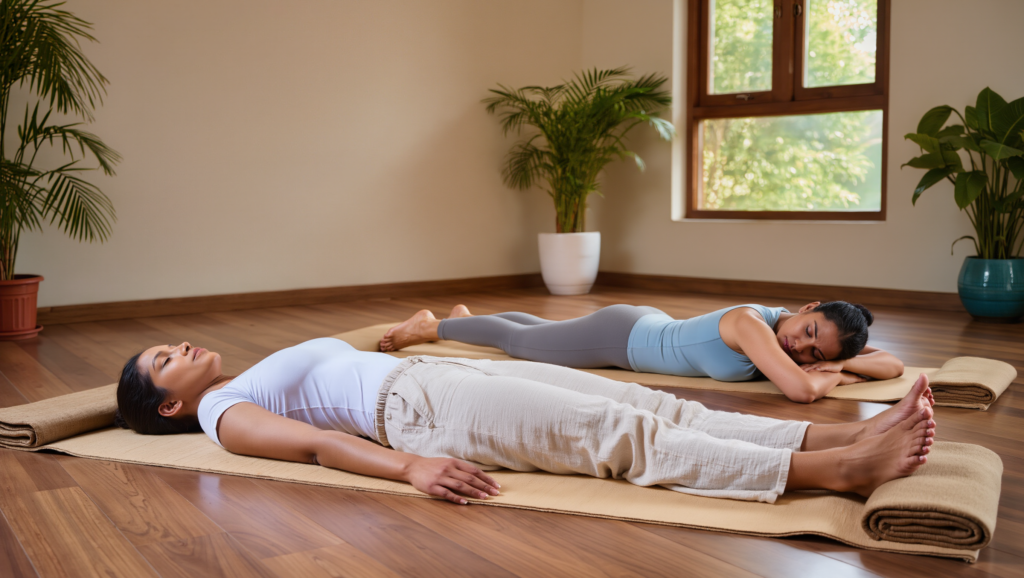
A typical Shavasana looks simple—lie on your back, arms and legs relaxed—but the details matter:
- You lie flat on the back, feet slightly apart, arms a little away from the body, palms facing upward or comfortably resting.
- The head, neck and spine are aligned; supports (blanket/bolster) can be used under the knees or head to remove strain.
- Eyes are closed; attention moves systematically through the body, releasing tension from toes to face, while breath stays natural.
When practiced this way, Shavasana:
- Calms the central nervous system, which indirectly supports digestive, immune and endocrine systems.
- Reduces stress, fatigue, anxiety and headache by relaxing skeletal muscles and down‑regulating stress pathways.
- Lowers blood pressure and slows heart rate, as confirmed in short‑term cardiovascular studies.
- Enhances mental clarity and emotional balance, making it a powerful bridge into meditation or yoga nidra.
Traditional teachers emphasise that the goal is awareness, not sleep. If you drift off, you still get some benefit, but you lose the “re‑wiring” effect that comes from consciously noticing and releasing tension patterns.
Why it can feel “deeper” than a nap
In ordinary sleep, especially when you’re stressed, your body may retain muscular guarding—tight jaw, hunched shoulders, tucked pelvis. Shavasana deliberately:
- Unhooks gross muscular tension (you consciously soften jaw, neck, diaphragm, lower back, hips).
- Lets the brain practice resting while awake, breaking the link between wakefulness and constant thinking.
- Provides a period of pure parasympathetic dominance without dream activity or emotional processing, which is different from REM sleep.
From a practical standpoint, people often report that 15–20 minutes of well‑guided Shavasana or yoga nidra leaves them clearer and more refreshed than a groggy 30‑minute nap—and controlled reductions in blood pressure and subjective stress scores back this up.
Makarasana: Crocodile Pose and the Power of Prone Rest
Makarasana, the Crocodile Pose, is a restorative posture done lying on the belly. It’s especially loved in Ayurveda‑informed yoga for people with back pain, respiratory issues, anxiety and insomnia.
While there are slight variations, the classical setup usually involves:
- Lying prone (on the stomach).
- Either stacking the forearms and resting the forehead on them, or forming a “V” with the elbows and resting the chin or face in the hands, with chest slightly lifted and lower body heavy.
- Legs relaxed, heels falling outward, pelvis and abdomen gently pressing into the floor.
Physiological benefits of Makarasana
Makarasana is deceptively powerful because it combines spinal decompression, diaphragmatic breathing, and nervous system relaxation:
According to modern summaries and traditional teaching:
- It relieves tension from the spine, especially the lumbar region, by allowing back muscles to soften and lengthen.
- It emphasises contraction/relaxation around the sacrum, improving blood flow around the lower spine and hips.
- The prone belly contact encourages deep diaphragmatic breathing; each inhale gently massages abdominal organs (intestines, spleen, urinary bladder), supporting digestion and organ function.
- By lowering the demand for oxygen in the limbs and redistributing circulation, it relaxes the respiratory and circulatory systems.
- Consistent practice has been reported to heal anxiety and insomnia, as attention is guided to the breath and the pose turns on the parasympathetic system.
Practitioners and teachers often recommend Makarasana for:
- Lower back pain, sciatica and spinal tension.
- Posture issues from long hours at a desk—opening the chest and shoulders while relaxing the neck.
- Breathing disorders like mild asthma and reduced lung capacity, because it trains slow, belly‑led breath and opens the back of the lungs.
- Recovery from intense practices or cardio, to normalise heart rate and blood pressure.
The same cardiovascular study that measured Shavasana found that 15 minutes of Makarasana also led to significant drops in systolic and diastolic blood pressure and mean arterial pressure, across three days of practice. In some comparisons, Makarasana slightly edged out Shavasana in lowering systolic pressure, though both were effective.
Deeper rest in a different way
If Shavasana feels like dissolving into the ground, Makarasana feels like being held by the earth from the front:
- The gentle pressure on the abdomen and chest naturally slows breath and can quiet an agitated mind.
- The posture supports people who struggle with lying on the back (e.g., certain back issues or anxiety) by offering a grounded, protected feeling.
- That combination (pressure, warmth, belly breathing) is very similar to what calms babies: think “weighted blanket plus full‑body hug.”
Many practitioners report that a few minutes of Makarasana before bed dramatically improves sleep onset and quality—anecdotal, but consistent with its strong parasympathetic and respiratory effects.
Differences Between Shavasana vs Makarasana: Same Destination, Different Routes
Both poses are classified as relaxation asanas and are frequently taught together in therapeutic and restorative sequences. They share core benefits:
- Activate the parasympathetic nervous system.
- Reduce blood pressure and heart rate.
- Help release deep muscular tension and mental fatigue.
- Support sleep, anxiety reduction, and emotional balance
But their emphases are slightly different:
| Aspect | Shavasana (Corpse Pose) | Makarasana (Crocodile Pose) |
|---|---|---|
| Body position | Supine (on back), limbs spread comfortably | Prone (on belly), forehead or chin on arms/hands |
| Main focus | Global relaxation, mental stillness, integration; often used for yoga nidra & meditation prep | Spine, sacrum, lungs, and nervous system relaxation; strong emphasis on breath and back relief |
| Best for | Full‑body reset after practice, stress, emotional overload, and spiritual/meditative | Back pain, poor posture, respiratory issues, insomnia, high stress, and post‑exercise cool‑down |
| Cardiovascular effect | Lowers BP and mean arterial pressure significantly over repeated sessions | Also lowers BP and MAP; some data show strong systolic BP reductions |
| Subjective feel | Open, expansive, vulnerable yet dissolving | Grounded, cocooned, gently compressed and contained |
In practice, many teachers sequence them: Shavasana → prone relaxation series → back to Shavasana for final integration.
How to Practice Shavasana and Makarasana Safely and Deeply
Shavasana: keys to “deeper than sleep” rest
- Set up for zero strain
- Use a folded blanket under the head or knees if your lower back or neck feels tight.
- Make sure you’re warm enough; cooling down too much can create subtle tension.
- Scan and release systematically
- Move awareness from toes to head, deliberately relaxing each area.
- Let the breath stay natural; resist the urge to “do” anything with it at first.
- Stay aware, not asleep
- You’re aiming for yogic rest—mind aware, body heavy and still.
- If you nod off occasionally, that’s okay, but aim over time to hover in that quiet in‑between state.
- Give yourself enough time
- 10–15 minutes is a good minimum after a practice; many studies use 15 minutes to capture clear cardiovascular shifts.
- If you’re exhausted, even 5 minutes is better than none.
Makarasana: making the most of a prone reset
- Find your comfortable variation
- Classic: lie on your stomach, legs relaxed, forearms folded, forehead on stacked backs of hands.
- Alternate: elbows slightly forward, hands supporting chin/cheeks, chest gently lifted with no strain in the neck.
- Let the belly breathe
- Feel the abdomen pressing gently into the floor on inhales and receding on exhales.
- This diaphragmatic breath is central to its benefits for lungs, digestion, and anxiety.
- Soften the spine and sacrum
- Consciously release the lower back and hips; imagine weight pouring into the floor around the sacrum.
- Timing and context
- Practice 3–5 minutes after backbends, vigorous flows, or any time you feel wired.
- Before bed, even 5–10 minutes can prepare the nervous system for sleep; some practitioners build up to 5+ minutes as a nightly ritual.
When to Use Which (And When to Combine)
- Overstimulated mind, emotional stress, or after a full practice:
Start and end with Shavasana; add Makarasana in the middle if your back or breath needs attention. - Back pain, long desk days, or breathing issues:
Prioritise Makarasana and other prone relaxations; finish with a few minutes of Shavasana for integration. - Insomnia and anxiety:
- Evening: a short sequence of gentle stretches → Makarasana (5–10 minutes) → Shavasana or yoga nidra (10–20 minutes).
- Both poses have been linked to reduced anxiety and better sleep by calming nerves and lowering cardiovascular load.
Over time, these two asanas teach your nervous system a new default: rest doesn’t only happen in sleep. It’s a skill you can practice on the mat and carry into daily life—slower breath, softer muscles, quicker recovery from stress.
If you’d like, I can help you turn this into a specific 20–30 minute nightly “deep rest” ritual using Shavasana, Makarasana, and 1–2 simple breathing techniques, tailored to whether you struggle more with back tension, anxiety, or trouble falling asleep.