











Protein is entering its weird era, and honestly, it’s kind of exciting. The latest wave of food innovation is moving beyond the old “meat vs. plants” argument and into a hybrid future where foods can combine animal cells, plant structures, and novel processing to make proteins that are cheaper, more sustainable, and hopefully more appealing to eat.
The specific “lettuce and muscle” idea sounds futuristic because it is. But the broader trend is already here: researchers are building hybrid foods that mix cultivated animal cells with plant-based matrices, and plant technologies like lettuce-based recombinant protein expression are helping make this future more feasible.
What Does “Hybrid Protein” Mean
Hybrid protein foods are not just a random mashup of ingredients. They are intentionally designed products that combine the strengths of different protein sources, such as plant proteins, cultivated animal cells, mycelium, insects, or microbial fermentation. The goal is usually to improve taste, texture, nutrition, affordability, and sustainability at the same time.
A useful way to think about hybrid protein is this: plant ingredients bring scale and cost advantages, while animal cells can contribute meat-like flavor, juiciness, and familiar texture. The trick is combining them so the final product behaves more like real food and less like a compromise.
Why Lettuce Is in the Conversation
Lettuce may sound like the least dramatic plant imaginable, but it has an interesting role in protein tech. One recent study reported that lettuce was used as a host plant for recombinant protein expression, and suppressing certain RNA interference-related genes led to more than a twofold increase in protein expression.
That matters because it suggests lettuce could become more than a salad base. In controlled production systems, it might serve as a platform for producing proteins at scale. That does not mean your Caesar salad is secretly steak, but it does mean lettuce may someday be part of the infrastructure that helps produce protein ingredients more efficiently.
Where the Muscle Comes From
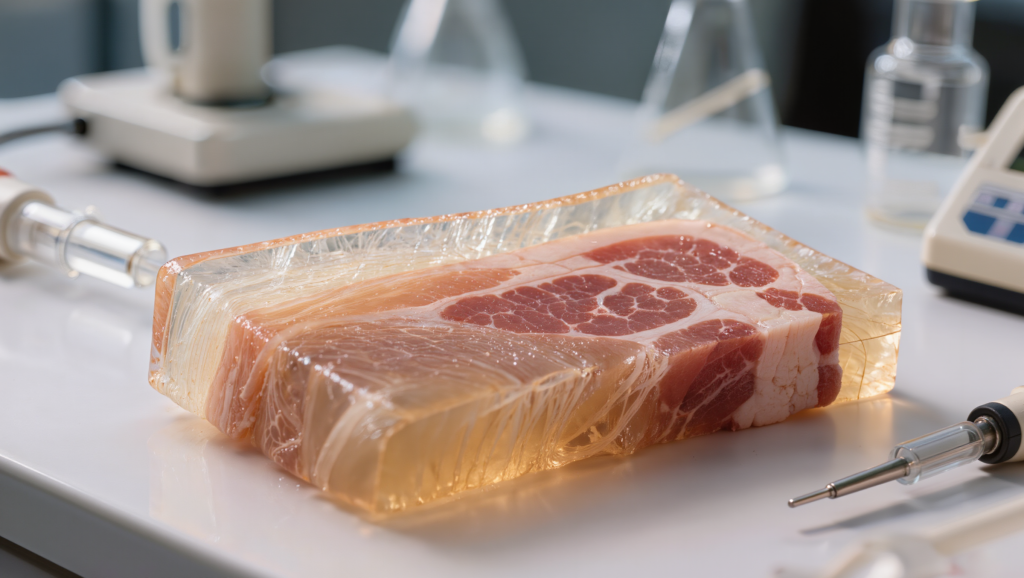
The “muscle” side of the story usually refers to cultivated meat, also called cell-based or lab-grown meat. In this process, animal cells are taken from tissue, grown in nutrient-rich media, and encouraged to become muscle, fat, or connective tissue.
That is why cultivated meat is so interesting. It aims to reproduce the good parts of meat without requiring full animal agriculture. According to coverage of the “meaty rice” hybrid food created by researchers at Yonsei University, the cells can even be cultivated on edible plant material like rice grains, creating a hybrid food with more protein and less carbon intensity than conventional beef.
So when people say “half plant, half animal,” they are usually talking about products where plant ingredients provide the structure and cultivated cells provide the meat identity.
Why the Industry Wants Hybrid Proteins
Pure plant-based meat has made huge progress, but it still has weaknesses. Many plant proteins are affordable and scalable, but they can fall short on flavor, texture, and the sensory experience people expect from meat.
Pure cultivated meat has the opposite problem. It can more closely mimic real meat, but it is still expensive and difficult to scale. Hybrid foods try to split the difference.
The pitch is simple:
- Plants keep costs down and improve scalability.
- Cultivated cells improve meat-like quality.
- The final product may taste better than plant-only analogs.
- Sustainability may improve compared with conventional meat.
That is why hybrids are attracting so much attention. They are less “all or nothing” and more “what mix works best?”
The Meaty Rice Example
One of the clearest examples of this new protein world is the “meaty rice” hybrid food reported by the BBC. Researchers grew beef muscle and fat cells on porous rice grains treated with fish gelatin so the cells could attach and develop. The result reportedly had 8% more protein and 7% more fat than regular rice, while also carrying a much smaller carbon footprint than conventional beef.
That is a perfect example of where the category is heading. It is not about replacing one food with another in a pure form. It is about combining them to create something new, potentially better, and more efficient.
Why This Could Be Better Than Fake Meat Wars
For years, food debates have been stuck in a binary: real meat versus plant-based substitutes. Hybrid protein may be the way out of that argument. A recent review argues that blending protein sources can overcome the limitations of any single source and create foods that are more than the sum of their parts.
That is a big deal because consumer acceptance often depends on familiarity. If a product tastes and feels closer to meat, people may be more willing to try it. If the plant content keeps it affordable and scalable, it has a better shot at becoming a mass-market food rather than a niche science project.
Sustainability Without the Fantasy
Sustainability is a major part of the hybrid story, but it needs to be handled carefully. No protein system is impact-free. Conventional livestock has high emissions and land use costs, but plant agriculture can also carry water, soil, and fertilizer burdens.
Hybrid systems may lower some of those pressures by reducing the amount of animal input needed while still improving texture and taste. In the case of the meaty rice example, the team estimated a much lower carbon footprint than beef production.
Still, the true sustainability of these foods will depend on:
- Production energy.
- Ingredient sourcing.
- Scale.
- Processing intensity.
- Waste management.
That means “better than beef” is not the same as “perfect.” It just may be a meaningful step in the right direction.
Texture Is the Real Battlefield
If you want to know why hybrids matter so much, look at texture. Humans do not eat protein just for amino acids. We also care deeply about chew, juiciness, firmness, and mouthfeel.
Plant proteins often struggle here because they can be dry, crumbly, or too uniform. Cultivated muscle tissue can help add realism. Mycelium, on the other hand, adds fibrous bite. The point is not to fool people forever. It is to make foods that are satisfying enough that people actually want to eat them again.
Nutrition Could Get Smarter Too
Hybrid foods are not only about taste. They can also improve nutrition. Plant ingredients can bring fiber and lower saturated fat, while cultivated animal cells can bring complete protein and meat-like nutrients.
That combination may help solve a common nutritional problem in alternative proteins: products that are eco-friendly but not very filling, or nutritionally incomplete compared with the foods they are replacing. A well-designed hybrid could potentially improve protein quality while maintaining a better environmental profile than conventional meat.
Why Scaling Still Matters
The biggest obstacle is scale. Cultivated meat is still expensive, and bioreactor-based systems are difficult to expand efficiently. That is why many researchers think the near-term future belongs to plant-dominant hybrids, while plant-cultivated hybrids may become more attractive later as costs fall.
In other words, the future may arrive in stages:
- Plant-based foods continue improving.
- Small amounts of cultivated cells are added for flavor and realism.
- Better plant scaffolds and production systems reduce cost.
- Hybrid foods move from novelty to normal.
That progression makes a lot more sense than waiting for a perfect single technology to replace everything overnight.
Why Consumer Acceptance Of Hybrid Protein Will Decide a Lot
No matter how advanced the science gets, people still have to want to eat the result. That means branding, trust, price, and cultural expectations will matter just as much as the biology.
Some consumers will love the sustainability story. Others will be weirded out by the idea of muscle cells grown on plant material. Both reactions are predictable. Food tech tends to sound bizarre right up until it starts showing up in sandwiches, bowls, and frozen meals where nobody thinks about the lab behind it.
The Big Picture
The future of protein is probably not one thing. It is likely to be a mixed system where conventional meat, plant proteins, cultivated cells, mycelium, and fermentation-based ingredients all play different roles.
That is actually good news. It means the future protein landscape can be flexible instead of tribal. In that landscape, lettuce might help produce protein ingredients, cultivated muscle might bring meat-like quality, and hybrid products might offer the best balance of taste, price, and sustainability.
Bottom Line
The “half plant, half animal” protein future is not science fiction anymore. Hybrid foods are already being developed, cultivated meat is moving forward, and plant platforms like lettuce are being explored for protein production.
It may sound bizarre today, but hybrid protein could end up being one of the most practical ways to make food more sustainable without asking people to give up the sensory experience of meat. That’s the real promise here: not replacing everything with a weird lab product, but building better protein by combining the strengths of plants and animal cells.