











Modern food is often designed to be more palatable, convenient, and impossible to stop eating than truly satisfying. That does not mean every packaged food is a conspiracy, but it does mean the food environment has been engineered in ways that can keep appetite switched on longer than your body actually needs.
Why Modern Food Is So Hard to Stop Eating
The biggest reason modern food keeps people hungry is that it is often built around hyper-palatable combinations: sugar, refined starch, salt, fat, flavor enhancers, and textures that are easy to chew and swallow quickly. Those combinations hit reward circuits in the brain hard, while offering relatively little satiety compared with whole foods. The result is simple: you can eat a lot without feeling fully fed.
In the real world, this means many foods are optimized for:
- Fast eating.
- Easy overconsumption.
- High repeat purchase.
- Strong sensory reward.
- Low effort between craving and eating.
That is a very different goal from “nutrition.” It is a business model.
The Role of Texture and Speed
One of the most overlooked tricks in engineered food is texture. Soft, crisp, creamy, airy, and melt-in-your-mouth foods tend to be easier to eat quickly and in larger amounts. Whole foods often require more chewing, more time, and more sensory work. That extra effort helps your brain register fullness.
Modern food often removes that friction:
- Bread becomes softer and sweeter.
- Snacks become lighter and more dissolvable.
- Foods are pre-cut, pre-seasoned, and ready to eat.
- Meals are packaged to be consumed in minutes, not savored over time.
When food disappears fast, satiety lags behind. Your stomach may not have enough time to signal your brain that you’ve had enough. So you keep going.
Why Flavor Engineering In Modern Food Matters
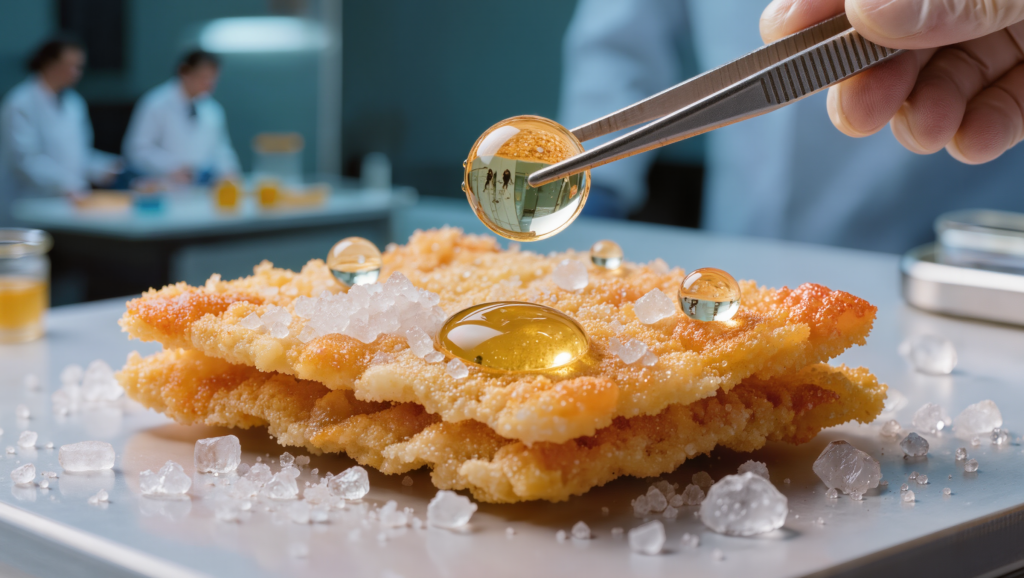
Food companies spend a lot of time perfecting the “bliss point,” the combination of sweetness, saltiness, fat, and flavor that makes food maximally appealing. This is not accidental. It is why one handful becomes three, why a single bowl becomes half the bag, and why certain snack foods feel weirdly impossible to stop eating.
Flavor engineering matters because it can override natural appetite regulation. A food may be calorie-dense but not filling enough to match those calories. That mismatch is one of the main reasons people can eat hundreds of calories and still feel mentally unsatisfied.
This creates a loop:
- You eat.
- The food tastes amazing.
- Your brain wants more.
- Your body may not feel fully nourished.
- You keep eating anyway.
That is how “just a snack” becomes a repeat event.
Why Ultra-Processed Foods Are a Special Problem
Ultra-processed foods are especially effective at keeping people hungry because they are often engineered for convenience, speed, and repeat consumption. They are not just food plus salt. They are often carefully assembled products containing refined starches, added sugars, industrial fats, flavor systems, emulsifiers, stabilizers, and colors.
The issue is not that every processed food is bad. The issue is that ultra-processed foods often:
- Deliver a lot of calories in a small volume.
- Lack fiber, protein, and chewing resistance.
- Move quickly through the mouth and stomach.
- Trigger reward without strong satiety.
Whole foods usually do the opposite. A bowl of beans, vegetables, eggs, or plain yogurt with fruit tends to satisfy more effectively than a packet of flavored crackers or a dessert snack. The body likes food that takes time to work through.
How Liquid Calories Keep You Hungry
One of the sneakiest forms of engineered appetite manipulation is liquid food. Sweetened drinks, milky coffees, smoothies, shakes, and even some “healthy” bottled beverages can deliver calories without giving your body much chewing time or fullness.
That matters because chewing is part of satiety. When you drink your calories, the body often registers less fullness than it would from solid food. So a drink that seems light can still leave you hungry an hour later.
This is one reason:
- Soda is easy to overconsume.
- Juice is less filling than fruit.
- Milkshakes do not satisfy like a meal.
- Fancy coffee drinks can behave like dessert.
If a product can be consumed in 30 seconds, your hunger hormones may not get the memo that enough food has arrived.
Salt, Sugar, and the Reward Loop
Sugar gets a lot of attention, but salt matters too. Together, sugar and salt create highly rewarding foods that are easy to keep eating. Add fat and refined starch, and you have the perfect storm. The problem is not simply that these ingredients exist. It is that they are blended in ways that often make food feel more irresistible than nourishing.
This reward loop can lead to:
- Cravings that appear soon after eating.
- Difficulty stopping at a normal portion.
- A desire for “just one more bite.”
- More snacking even when not physically hungry.
Your brain is not broken. It is responding normally to foods designed to be very hard to ignore.
The Fiber Problem
Fiber is one of the biggest reasons whole foods are more satisfying than engineered foods. It slows digestion, supports gut health, helps regulate blood sugar, and adds physical bulk. When food lacks fiber, it is usually easier to eat more without feeling full.
That is why a whole apple feels different from apple-flavored candy or juice. The fiber changes the experience completely. It makes the food slower, denser, and more satisfying.
Modern food often strips fiber away and replaces it with:
- Sweetness.
- Texture tricks.
- Synthetic flavor.
- Starches that break down quickly.
The result is a product that tastes like food but does not behave like the kind of food your body evolved to regulate well.
Why Distracted Eating Is Fueling Uncontrolled Eating
Another form of manipulation is not in the food itself, but in the way it is consumed. Modern eating is often done while:
- Watching screens.
- Driving.
- Scrolling.
- Working.
- Standing.
- Walking.
Distraction blunts awareness. When you are not paying attention, it is much easier to overshoot fullness. You may not even remember how much you ate. The more distracted the environment, the weaker the body’s satiety signals become.
This matters because appetite is not just chemistry. It is also attention. When the meal becomes background noise, the body loses part of its ability to self-correct.
How Modern Marketing Makes Hunger Feel Normal
Food marketing also plays a giant role. Modern food culture tells you to snack constantly, treat food as entertainment, and assume every emotional state needs an edible response. Ads normalize grazing. Social media normalizes indulgence. Convenience culture normalizes never being far from a calorie source.
That means some people are not actually hungry so much as trained to expect food all day long. The body can adapt to that pattern, but not always in a helpful way. You may feel “off” not because you need more food, but because your internal signals have been retrained by an environment that never really stops feeding you.
How Blood Sugar Swings Keep You Hungry
Many engineered foods are built from refined carbs that digest quickly and raise blood sugar fast. When blood sugar rises and then falls, hunger can come roaring back. That is one reason a sugary breakfast can lead to a mid-morning crash and a snack craving.
This creates a predictable cycle:
- Eat something quick and sweet.
- Feel energized for a short time.
- Crash.
- Feel hungry again.
- Eat another quick thing.
- Repeat.
The more often that cycle happens, the more you can feel like you are always chasing your next meal. It can feel like weak willpower, but it is often a meal-composition problem.
How the Modern Food Environment Overrides Personal Willpower
The food industry is not just competing for your taste buds. It is competing for your habits. If food is available everywhere, cheap, heavily marketed, and engineered to be rewarding, willpower becomes a weak defense. You can only resist so many times before the environment wins.
That’s why the solution is not just “try harder.” It is to make the environment less manipulative:
- Keep highly processed snacks out of sight.
- Make whole foods easy to reach.
- Buy foods that need actual preparation.
- Eat meals that contain protein, fiber, and volume.
- Avoid constant grazing.
You don’t need to become a purist. You just need to stop letting the most manipulative foods be the default.
What A Satisfying Food Actually Looks Like
Food that truly satisfies usually has at least a few of these qualities:
- Enough protein.
- Enough fiber.
- Some chewing resistance.
- A decent volume.
- A clear end point.
- Lower added sugar.
- Less artificial hyper-palatability.
Think of meals like:
- Eggs, vegetables, and toast.
- Beans, rice, and greens.
- Yogurt with fruit and nuts.
- Chicken or tofu with potatoes and vegetables.
- Oatmeal with seeds and berries.
These meals are not flashy, but they give your body time to register fullness and your brain time to feel satisfied.
Why “Always Eating” Can Backfire
Constant eating can seem harmless, even healthy, if the snacks are small. But if you are always eating, your body rarely gets a break from digesting, your hunger cues can become blurred, and you may never fully notice what true appetite feels like.
Some people do need more frequent meals. But for many, endless nibbling just keeps hunger alive in the background. It never lets the body settle. It also makes it easier to underestimate calories because “little bites” add up quickly.
Why Eating More Real Food Is The Best Defense
The most effective counter to manipulated food is not obsession. It is restoring the qualities that make food naturally satisfying:
- Protein.
- Fiber.
- Water content.
- Real chewing.
- Clear meals.
- Fewer additives.
- Less marketing-driven snacking.
If you base your diet around whole foods, you naturally reduce the power of food engineering. Not because whole foods are magical, but because they are harder to overeat and easier for your body to recognize as real nourishment.
The Bottom Line
Modern food is often engineered to keep you hungry because hunger is profitable. The combination of hyper-palatable ingredients, soft textures, liquid calories, low fiber, fast eating, and constant marketing can override natural satiety and keep people stuck in a loop of craving and snacking.
The good news is that your body is not the problem. The environment is. Once you understand how food is being engineered to keep you eating, you can start choosing meals that do the opposite: slower, denser, higher-protein, higher-fiber, and actually satisfying.
That is how you stop being played by the plate and start eating like someone whose hunger signals still mean something.