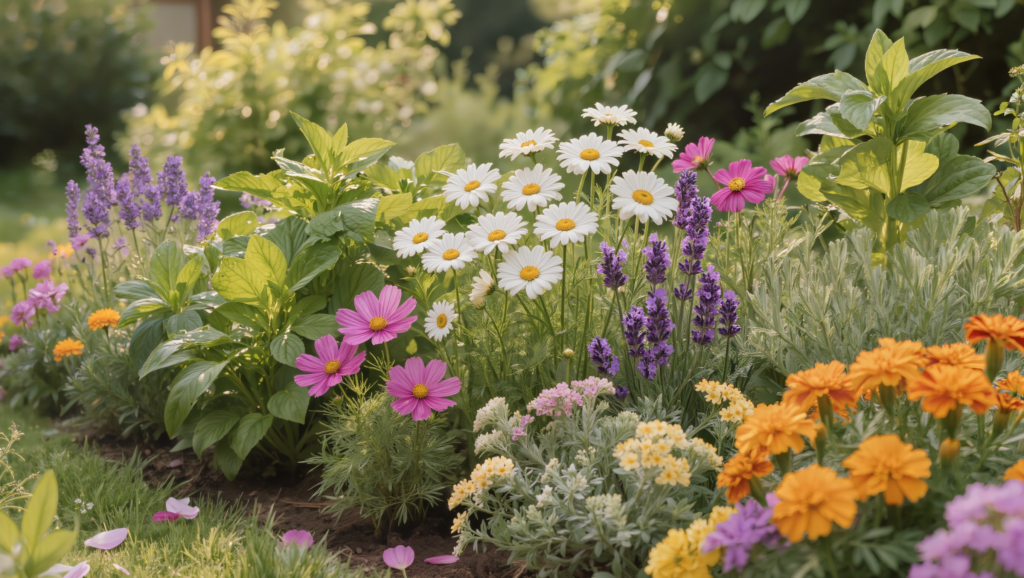












A garden can have beautiful trees, elegant shrubs, and a perfectly clipped lawn, yet still feel strangely flat. The missing ingredient is often herbaceous planting: the colorful, flexible, seasonal layer of flowers, grasses, herbs, bulbs, and foliage plants that fills the spaces between the permanent structure of a landscape.
Herbaceous plantings make gardens feel alive because they change constantly. They emerge, flower, sway, attract pollinators, soften hard edges, and disappear or retreat with the seasons before returning in fresh form. Unlike woody plants, many herbaceous species do not maintain permanent woody stems above ground, which gives them a more dynamic and expressive role in garden design.
What Does “Herbaceous” Mean?
In botanical terms, an herbaceous plant is a vascular plant without persistent woody tissue above ground. Its stems are generally soft, green, and flexible rather than hard and lignified like those of trees and shrubs.
The category includes:
- Annuals, which complete their life cycle in one growing season.
- Biennials, which usually grow foliage in the first year and flower or set seed in the second.
- Herbaceous perennials, which return year after year from roots, crowns, bulbs, rhizomes, or other underground structures.
- Many ornamental grasses, ferns, bulbs, wildflowers, culinary herbs, and flowering plants.
The word can be slightly confusing because “herbaceous” does not simply mean “small” or “herbal.” Some herbaceous perennials can become quite tall, including ornamental grasses, perennial sunflowers, delphiniums, and certain members of the daisy family. What unites them is their non-woody growth and life cycle, not necessarily their height or appearance.
Many herbaceous perennials die back to ground level in autumn or winter. It can look as though the plant has vanished completely, but its roots or crown may still be alive underground, waiting for suitable conditions to produce new shoots in spring.
That seasonal disappearing act is one of their greatest design strengths. A garden is never exactly the same from one month to the next.
Herbaceous Plantings Versus Woody Planting
The easiest way to understand herbaceous planting is to compare it with woody planting. Trees and shrubs provide the garden’s bones: trunks, branches, evergreen mass, height, shelter, and long-term structure. Herbaceous plants provide the softer, more changeable layer that moves around those bones.
A shrub may occupy the same outline for decades. A herbaceous perennial may emerge in spring, reach its full height by summer, flower spectacularly, produce seed heads in autumn, and retreat underground during winter. Annuals may offer an intense burst of color for just one season.
This contrast creates rhythm. Permanent planting gives a garden stability, while herbaceous planting supplies movement and surprise. Without the soft layer, a landscape can look overly rigid. Without the structural layer, it can become messy or lack definition. The most successful gardens usually use both.
Why Herbaceous Plantings Bring Energy
Herbaceous plants create visual energy in several ways. They add color, but color is only part of the story. Their leaves differ in size, shape, gloss, density, and texture, while their stems may arch, spire, mound, trail, or sway in the wind.
Extension guidance from North Carolina State University describes herbaceous ornamentals as plants that add interest and contrast, including depth, dimension, form, texture, color, and fragrance. That is a useful design summary because a lively garden needs more than a collection of bright flowers.
Consider the difference between:
- A low carpet of creeping thyme.
- The upright flower spikes of salvia.
- The feathery foliage of fennel.
- The broad leaves of hosta.
- The fine movement of ornamental grass.
- The flat flower heads of yarrow.
- The architectural leaves of ornamental alliums.
Each plant contributes a different visual note. Together, they create layers that encourage the eye to move through the garden.
Seasonal Change Is Part Of The Design
One of the biggest advantages of herbaceous planting is that it gives a garden a clear seasonal storyline. Spring bulbs can be followed by early perennials, summer flowering plants, grasses, and autumn seed heads.
A well-planned border might include:
- Spring: bulbs, hellebores, primroses, and emerging foliage.
- Early summer: peonies, lupins, salvias, and ornamental alliums.
- High summer: coneflowers, rudbeckias, lavender, phlox, and grasses.
- Autumn: asters, sedums, Japanese anemones, and seed heads.
- Winter: evergreen foliage, dried stems, and persistent ornamental forms.
The result is not a garden that peaks for two weeks and then goes quiet. It is a garden with changing highlights. One group begins to fade just as another comes into focus.
This is also why cutting everything down too early can reduce the garden’s character. Dried stems and seed heads may provide structure during winter, offer food for birds, and create shelter for overwintering insects.
Herbaceous Plants Support Pollinators
Herbaceous plantings are not merely decorative. They can provide nectar, pollen, seeds, and habitat for bees, butterflies, hoverflies, beetles, birds, and other wildlife.
Herbaceous plants dominate many ecosystems, including grasslands, bogs, marshes, prairies, alpine environments, and aquatic habitats. It also notes that they are critical habitat and form the foundation of food webs for many herbivores.
In a garden, this ecological role can be recreated on a smaller scale. A mixed border containing native wildflowers, grasses, and long-flowering perennials can offer food across several months rather than producing one short period of nectar availability.
For pollinator-friendly planting, look for:
- Open flowers that expose nectar and pollen.
- A succession of blooms from spring to autumn.
- Native or locally adapted species where appropriate.
- Plants with different flower shapes and heights.
- Some undisturbed stems and leaf litter for habitat.
The key is variety. A garden with one heavily planted species may look impressive, but a diverse combination is usually more useful to wildlife.
They Improve Garden Texture
Texture is one of the easiest design elements to overlook. Gardeners often focus on flower color, but flowers may last only a few days or weeks. Foliage creates the longer-lasting visual framework.
Herbaceous plants can provide:
- Fine texture through grasses and fern-like foliage.
- Bold texture through large leaves.
- Soft texture through silver, hairy, or felted foliage.
- Vertical texture through spikes and spires.
- Rounded texture through mounds and cushions.
Texture becomes especially important when flowers are not in bloom. A border built around contrasting foliage can still look attractive between flowering periods. This is one reason professional planting designs often combine plants with different leaf forms rather than relying on flower color alone.
A useful rule is to repeat a few key textures while adding occasional contrast. For example, several clumps of fine ornamental grass can create rhythm, while broad-leaved plants placed between them prevent the display from becoming visually monotonous.
They soften hard landscaping
Walls, paving, steps, fences, patios, and raised beds give a garden useful structure, but too much hardscape can make it feel severe. Herbaceous plants soften those edges by spilling over paths, filling joints, and creating a transition between architecture and soil.
Low-growing plants can edge pathways. Taller plants can blur a fence line. Trailing species can soften the sides of containers or retaining walls. Grasses can create movement beside a patio, where their leaves catch the wind and change the atmosphere of the space.
This softening effect is not just visual. Plants also help a garden feel more welcoming because they create a gradual transition rather than a sharp boundary between built surfaces and living ground.
Herbaceous Planting Can Improve Biodiversity And Soil
Perennial herbaceous plants spend at least part of their life cycle in the soil, and their roots can contribute to soil structure, organic matter, and habitat for soil organisms.
Herbaceous perennials can add organic matter, stabilize soil, and provide undisturbed habitat for worms, spiders, bacteria, fungi, and other soil life. Their roots help hold soil in place, while decaying leaves and stems return organic material to the ground.
This is particularly valuable in a garden designed around ecological principles. Instead of treating soil as an inert growing medium, a perennial planting recognizes that soil is a living system.
Plants also help slow rainfall, reduce erosion, and improve water infiltration. In larger landscapes, herbaceous vegetation is a major component of ecosystems that regulate water and nutrient cycling.
How To Design A Herbaceous Border In Your Garden
A successful herbaceous border is not simply a random collection of plants. It works best when you plan for height, spread, bloom time, color, texture, and growing conditions.
Start by studying the site:
- Is it full sun, partial shade, or deep shade?
- Is the soil sandy, clay-heavy, moist, or dry?
- Does water drain quickly or remain after rain?
- Is the site exposed to wind?
- How much maintenance can you realistically provide?
Then build the planting in layers. Place taller plants toward the back of a border or in the center of an island bed, medium-height plants in the middle, and low-growing or spreading plants near the front.
Repeat plants in groups rather than planting one of everything. Repetition creates visual rhythm and makes a border look intentional. Odd-numbered groups can work well in informal designs, while larger drifts can create a more naturalistic effect.
Finally, plan for succession. Choose plants that flower at different times so the bed does not have one short-lived peak followed by months of empty foliage.
Annuals, Biennials, and Perennials
Each type of herbaceous plant has a different role.
Annuals are useful when you want quick color. They complete their life cycle in one season and are ideal for containers, temporary gaps, or seasonal displays.
Biennials take two years to complete their life cycle. They can create a natural, slightly unpredictable look because they may self-seed and appear in different locations over time.
Perennials return year after year and form the backbone of many herbaceous borders. They generally require more patience at the beginning but can become increasingly impressive as clumps mature.
Using all three creates flexibility. Annuals provide immediate impact, biennials add spontaneity, and perennials offer long-term reliability.
Common Maintenance Mistakes With Herbaceous Plantings
Herbaceous plantings are often described as easy-care, but that does not mean no-care. The right maintenance approach helps plants remain vigorous and keeps the design attractive.
Common mistakes include:
- Planting species in unsuitable light or soil.
- Overwatering drought-tolerant plants.
- Cutting everything down before winter.
- Allowing aggressive plants to overwhelm slower neighbors.
- Failing to divide overcrowded perennials.
- Planting without considering mature size.
Many herbaceous plants benefit from deadheading, dividing, mulching, and selective cutting back. However, maintenance should match the style of the garden. A formal border may need frequent tidying, while a wildlife garden may retain seed heads and fallen leaves for habitat.
Why Herbaceous Plantings Make Gardens Feel Alive
The phrase “come alive” is not just poetic. Herbaceous plants create activity on several levels. Their flowers attract insects, their stems move in the wind, their foliage changes with weather and season, and their growth patterns continually alter the shape of the garden.
They also encourage people to interact with the space. A border full of fragrance, flowers, edible herbs, and wildlife feels different from a purely structural landscape. It invites you to pause, observe, touch, smell, and return to see what has changed.
That constant change is the magic. Trees may define a garden, but herbaceous plants give it a pulse.
Bottom line
Herbaceous plantings are collections of non-woody annuals, biennials, perennials, grasses, bulbs, herbs, and wildflowers that bring color, texture, movement, seasonal change, and ecological value to a garden.
They make gardens come alive by filling the gaps between trees and shrubs, supporting pollinators, softening hard landscaping, improving habitat, and creating a constantly changing display.
If your garden feels too bare, rigid, or predictable, the solution may not be another shrub. Try adding a thoughtful layer of herbaceous plants instead. A few clumps of grasses, some long-flowering perennials, seasonal bulbs, and pollinator-friendly flowers can transform a static outdoor space into a living, breathing garden.