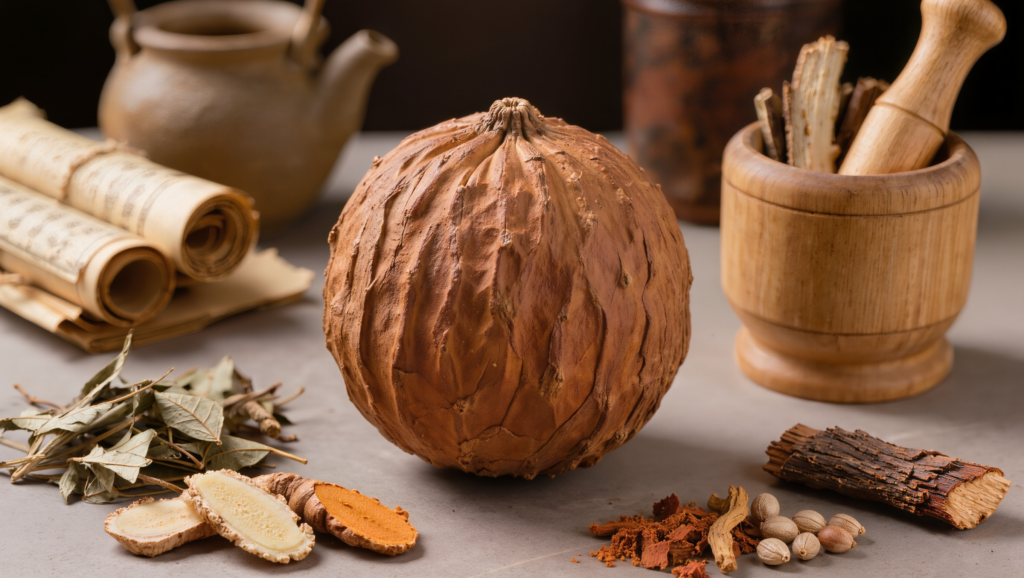












Bael fruit, also known as Aegle marmelos or wood apple, looks like a gnarly, hard-shelled grenade and smells like a mix of old socks and citrus perfume. And yet, for thousands of years, Ayurvedic healers and traditional medicine systems have used it as a go-to remedy for gut trouble, from chronic diarrhea to ulcers, inflammation, and overall digestive balance.
That disconnect, ugly and smelly on the outside, deeply healing on the inside, is exactly why bael is such a fascinating fruit. It is not designed to be Instagrammable. It is designed to be functional.
What Is Bael Fruit ?
Bael is a deciduous tree native to India and parts of Southeast Asia, and it has been used in the Indian subcontinent for over 5,000 years. Every part of the tree, including leaves, bark, roots, and fruit, is used in traditional medicine, but the fruit is the most famous for gut health.
The fruit itself is:
- Round, with a hard, woody shell.
- Greyish-green or yellow when ripe.
- Aromatic, sometimes described as pungent or “old sock”-like.
- Filled with sticky, fibrous pulp and many seeds.
Inside that tough exterior is a pulp rich in fiber, tannins, flavonoids, coumarins, and other compounds that have been linked to anti-inflammatory, antimicrobial, and gut-protective effects.
Why Ancient Healers Loved Bael Fruit For The Gut
In Ayurveda, bael is considered a tridoshic herb, meaning it can help balance Vata, Pitta, and Kapha, the three doshas that govern body function. It is specifically valued for:
- Supporting digestion.
- Calming inflammation in the gut.
- Helping with both diarrhea and constipation, depending on how it is used.
- Protecting the stomach lining.
Traditional texts describe bael as cooling when ripe and heating when raw, which is why ripe fruit is often used in summer to cool the body and raw fruit is used for different therapeutic purposes.
The Science Behind The Gut Benefits Of Bael Fruit
Modern research has started to catch up with what traditional healers have known for centuries. A concise review of bael’s phytochemistry notes that the fruit, leaves, bark, and roots have been used for a wide range of conditions, including digestive disorders, and that the plant contains tannins, flavonoids, coumarins, and other bioactive compounds.
Those compounds are not just decorative. They appear to:
- Reduce inflammation and swelling in the gut.
- Fight certain infections and pathogens.
- Support the integrity of the intestinal lining.
- Modulate gut motility and secretion.
That is why bael shows up in so many traditional formulas for diarrhea, dysentery, ulcers, and general “gut healing.”
Bael Fruit For Diarrhea And Dysentery
One of the most famous uses of bael is for diarrhea. Unripe or raw bael fruit is traditionally used to help stop loose motions and reduce frequency of stools.
Drying raw bael pulp and consuming it, helps to stop loose motion, and also using it in combinations with honey or other herbs can help with digestive upsets. Unripe bael fruit pulp may help people with diarrhea by providing a cool, easy-to-digest yet nutritious food option.
There is also research on specific infections. One study found that taking dried bael fruit powder for three days did not reduce the number of stools in people with diarrhea caused by Shigella infection, suggesting that bael is not a cure-all for infectious diarrhea. That is an important nuance: bael may help with functional or mild cases, but it is not a substitute for medical care in severe infections.
Bael Fruit For Constipation And IBS
Interestingly, bael is also used for constipation and irritable bowel syndrome, which sounds contradictory until you consider how it is used. Ripe bael fruit, especially the pulp, is often used to support regular bowel movements and improve overall digestive health.
Using bael fruit can help relieve constipation by promoting regular bowel movements and improving digestive health, and bael might ease stomach troubles for people with irritable bowel syndrome. That suggests bael has a modulating effect: it can help firm up loose stools in some contexts and soften or regulate hard stools in others, depending on the part of the fruit, ripeness, and preparation.
Ulcers, Gastritis, And Gut Lining Support
Bael is also traditionally used for stomach ulcers and gastritis. Bael can be a soothing food option for people at risk of stomach ulcers, and unripe bael fruit pulp might offer protection against alcohol-induced gastritis.
The proposed mechanisms include:
- Anti-inflammatory effects that reduce irritation.
- Tannins and flavonoids that may help protect the mucosal lining.
- Antimicrobial activity that may reduce certain gut pathogens.
That does not mean bael replaces ulcer medication, but it does suggest it can be a useful supportive food in a broader gut-healing plan.
How Bael Fruit Is Traditionally Prepared
Bael is versatile in how it is used. Traditional preparations include:
- Dried raw fruit pulp for diarrhea.
- Ripe fruit pulp mixed with sugar, milk, or butter for cooling and digestive support.
- Leaves ground with honey for respiratory and digestive complaints.
- Juices, squashes, and syrups made from ripe pulp for summer cooling and gut support.
One traditional recipe for bael squash involves collecting well-ripened fruit, extracting the pulp, adding lemon juice, boiling with water, straining, and mixing with sugar syrup and a small amount of preservative. Another simple method is to take ripe pulp with fresh cream or butter and sugar candy to support concentration and “cool” the system.
For gut-specific uses, people often:
- Take dried raw pulp in small amounts for loose stools.
- Use ripe pulp in smoothies or drinks for general digestion.
- Combine bael with honey, cumin, or other digestive herbs.
Nutritional and Bioactive Profile Of Bael Fruit
Bael is not just fiber and flavor. It contains a range of compounds that likely contribute to its effects:
- Tannins, which can have astringent and antimicrobial properties.
- Flavonoids and coumarins, which may reduce inflammation and support vascular and gut health.
- Fiber, which supports regularity and microbial balance.
- Vitamins and minerals, including vitamin C and various antioxidants.
The rind of bael contains about 20% tannin while the pulp has about 9%, and that tannins are believed to help with conditions like diabetes and digestive issues.
Safety, Side Effects And Cautions When Using Bael Fruit
Bael is generally considered safe when used as food, but medicinal doses are less clear. There is not enough reliable information to know if bael is safe to use as medicine in large amounts, and that large amounts may cause stomach upset and constipation.
Things to keep in mind:
- Unripe bael can be constipating if overused.
- Ripe bael in large amounts may cause digestive discomfort in some people.
- People with diabetes should be cautious because of sugar in traditional preparations.
- Pregnant or breastfeeding individuals should consult a clinician before using bael therapeutically.
As with any traditional remedy, it is smart to start with small amounts and see how your body responds.
How To Use Bael Fruit For Gut Support
If you want to try bael for gut health, here are practical ways to start:
- For general digestion: use ripe bael pulp in smoothies, juices, or eaten with a little honey or yogurt.
- For occasional loose stools: consider small amounts of dried raw pulp, ideally under guidance from someone familiar with traditional use.
- For cooling and soothing: try bael squash or a simple bael drink with lemon and a touch of sugar.
- For overall gut support: combine bael with other gentle digestive herbs like cumin, coriander, or fennel.
The key is consistency and moderation, not mega-dosing.
Why Bael Fruit Still Matters Today
In a world of probiotics, prebiotics, and expensive gut supplements, bael is a reminder that some of the most powerful gut healers are humble, local, and sometimes downright ugly. It is not flashy. It is not trendy. But it has thousands of years of traditional use and a growing body of research supporting its role in digestive health.
That is why ancient healers trusted it, and why it still deserves a place in modern gut-care toolkits.
Bottom line
Bael fruit is an ancient, ugly, smelly, hard-shelled fruit that traditional healers have used for millennia to support gut health, from diarrhea and constipation to ulcers and general digestive balance.
Modern science is beginning to confirm some of those benefits, showing anti-inflammatory, antimicrobial, and gut-protective effects linked to its tannins, flavonoids, fiber, and other compounds.