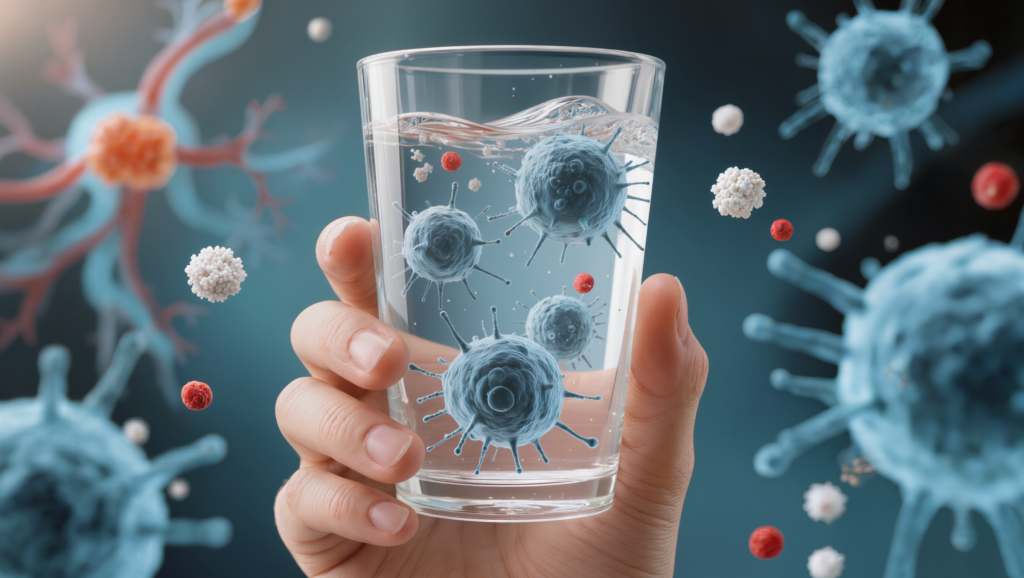












If you have heard that fasting can “boost your immune system,” you may have wondered whether that is just wellness marketing. The science is more interesting—and more nuanced. Fasting does not simply flood your bloodstream with immune cells. Instead, it can reshape where immune cells go and how they behave, including a type of immune cell called the natural killer (NK) cell.
NK cells are part of your innate immune system. They help detect and destroy virus-infected cells and abnormal cells, and they produce signaling molecules such as interferon-gamma (IFN-γ) that help coordinate immune responses. Research suggests that fasting may reduce the number of NK cells circulating in the blood while potentially increasing their functional readiness in certain immune niches, especially the bone marrow.
But before you start skipping meals, it is important to understand that the strongest evidence is still preclinical, and fasting is not appropriate or safe for everyone.
What Are Natural Killer Cells?
Natural killer cells are a type of white blood cell in the innate immune system. Unlike T cells, they do not need to be “trained” against a specific pathogen before responding.
They help with:
- Early defense against viruses.
- Recognition and destruction of abnormal cells.
- Production of cytokines such as IFN-γ.
- Communication with other immune cells.
NK cells are especially important in immune surveillance—the ongoing process of monitoring the body for infected or abnormal cells.
How Fasting Changes The Immune System
Fasting creates a temporary metabolic shift. Glucose becomes less available, fatty acids become more available, and the body activates pathways involved in energy conservation, repair, and adaptation.
This shift can affect immune cells in several ways:
- Redistribution of immune cells from the blood and peripheral tissues into the bone marrow.
- Changes in immune-cell metabolism, including reduced glycolysis and increased fatty-acid oxidation.
- Changes in cytokine signaling, including exposure to IL-12 in the bone marrow.
- Potential improvements in NK-cell function after refeeding.
This is why fasting does not always mean “more immune cells in the blood.” It may mean fewer circulating NK cells but more functionally primed NK cells in a specific tissue compartment.
The Natural Killer Cells Redistribution Effect
One of the most striking findings comes from research on cyclic fasting. During fasting, NK cells can move from peripheral tissues and the spleen into the bone marrow.
What happens in the bone marrow
The bone marrow is not just a factory for blood cells. It is also an immune niche where immune cells can be primed and educated.
During fasting:
- NK cells accumulate in the bone marrow.
- They encounter higher local concentrations of IL-12.
- IL-12 helps prime NK cells to produce more IFN-γ.
- After refeeding, NK cells may return to the spleen with enhanced function.
This is called a tissue-specific immune remodeling effect.
What this means in practice
It does not mean fasting “cures” cancer or prevents infections. It means that in animal models, fasting created conditions that appeared to improve NK-cell priming and antitumor activity.
Human studies have shown that fasting can reduce circulating NK-cell numbers, but the direct human evidence for improved NK-cell function in the bone marrow is still limited.
How Fasting Aids The Body’s Metabolic Switch From Glucose To Fatty acids
NK cells rely on different fuels depending on their environment. During fasting, glucose becomes scarce, and the body’s metabo;ism shifts toward using fatty acids for energy.
How this affects NK cells
- Glycolysis decreases because glucose is less available.
- Fatty-acid oxidation increases as the body uses stored fat for fuel.
- Mitochondrial function may improve in some settings.
- Autophagy—the cellular cleanup process—may be activated.
This metabolic reprogramming may help NK cells become more efficient in certain contexts, especially after refeeding.
What Scientific Studies On Human Show About Fasting
The human evidence is still limited, but some studies are promising.
Fasting-mimicking diets and cancer
A study in patients with triple-negative breast cancer undergoing chemotherapy found that a fasting-mimicking diet was associated with:
- Decreased levels of immunosuppressive myeloid cells.
- Increased levels of activated CD8+ T cells.
- Increased levels of cytolytic natural killer cells.
This suggests that fasting-mimicking diets may help shift the immune environment in a more favorable direction during cancer treatment. [1504]
Short-term intensive fasting
A study on short-term intensive fasting found:
- Changes in leukocyte gene expression.
- Increased innate immune function.
- NK cells and neutrophils were major contributors to cytokine responses.
This suggests that even short-term fasting can have measurable effects on immune function.
Ramadan fasting
A systematic review of Ramadan fasting found:
- Mixed effects on immune markers.
- Some studies showed changes in NK-cell activity.
- No severe immune suppression was observed in most studies.
However, Ramadan fasting is a specific type of intermittent fasting, and results may not apply to other fasting protocols.
The Caveats: What Fasting Does Not Do
It is easy to get carried away by headlines, so it is important to separate the hype from the science.
Fasting does not guarantee better immunity
- The evidence is mostly preclinical.
- Human studies are limited and mixed.
- Fasting can reduce circulating NK cells, which may not be beneficial in every context.
Fasting is not for everyone
- People with diabetes or blood sugar issues should be especially cautious.
- Pregnant or breastfeeding women should not fast without medical guidance.
- People with a history of eating disorders should avoid fasting.
- People on certain medications may need to adjust their fasting plan.
Fasting is not a cancer treatment
- Animal studies show promise, but human evidence is still limited.
- Fasting should never replace conventional cancer treatment.
How To Approach Fasting Safely
If you are interested in trying fasting for immune health, here are some tips:
1. Start with a gentle approach
- Consider a 12–14 hour overnight fast before attempting longer fasts.
- Do not jump into extended fasting without guidance.
2. Focus on nutrient quality during eating windows
- Eat a balanced diet with plenty of vegetables, protein, and healthy fats.
- Avoid breaking a fast with highly processed foods.
3. Monitor how you feel
- If you feel dizzy, weak, or unwell, break the fast.
- Do not push through symptoms.
4. Talk to your doctor if you have health conditions
- Especially if you have diabetes, take medications, or are pregnant.
- Fasting may need to be adjusted or avoided.
5. Do not use fasting as a substitute for medical care
- If you have a serious illness, work with your healthcare team.
- Fasting should complement, not replace, treatment.
Bottom line
Can fasting boost natural killer cells? It may—but not in the simple way many people imagine. Fasting can reduce circulating NK-cell numbers while potentially increasing their functional readiness in the bone marrow, especially after refeeding.
Key takeaways:
- NK cells are important for immune surveillance and antiviral defense.
- Fasting can redistribute NK cells to the bone marrow.
- Body’s Metabolic shifts during fasting may prime NK cells for better function.
- Human evidence is still limited, and results are mixed.
- Fasting is not for everyone and should be approached carefully.
If you are curious about fasting for immune health, start with a gentle approach and talk to your doctor if you have any health conditions. Fasting is a powerful tool, but it works best when used wisely.
Sources:
- https://pmc.ncbi.nlm.nih.gov/articles/PMC10011094/
- https://pmc.ncbi.nlm.nih.gov/articles/PMC11102308/