











You have just come in from the garden with a basket full of tomatoes, greens, and berries. The natural instinct is to rinse everything off right away so it is clean and ready to eat. But is that actually the best move for keeping your produce fresh
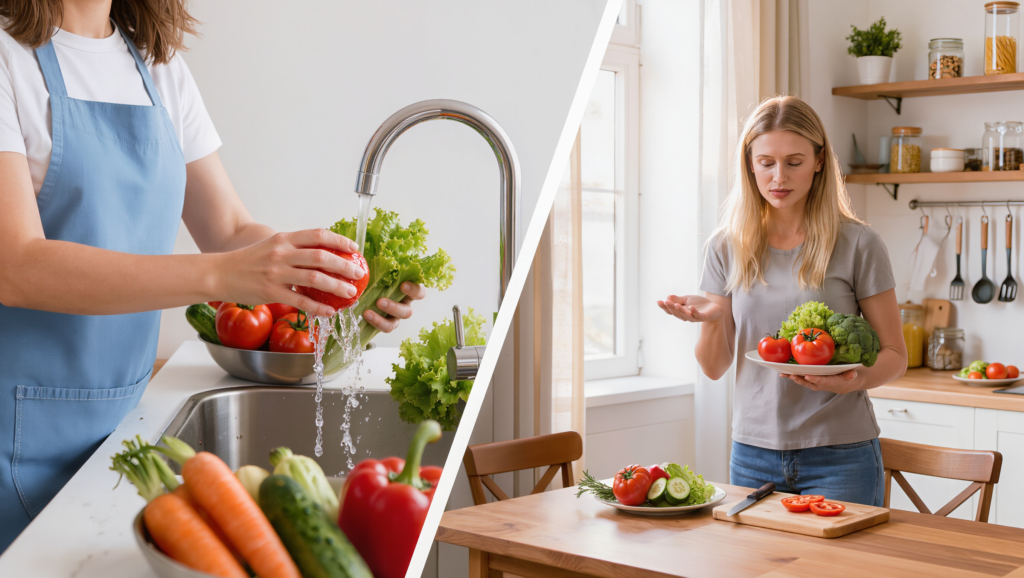
The short answer: for most produce, it is better to wait and wash just before you eat or cook it. Washing too early—especially if you then store the produce wet—can trap moisture, encourage bacteria and mold, and speed up spoilage.
But there are exceptions, and the details matter. In this post, we’ll break down the science of washing produce, when to wash right away, when to wait, and how to store your garden haul for maximum freshness.
Why Washing Garden Produce Before Storage Can Speed Up Spoilage
The main reason to avoid washing produce before storing it is moisture. Water left on the surface of fruits and vegetables creates a humid environment that encourages the growth of bacteria and mold.
Here is how it works:
- You wash the produce and leave it wet.
- You store it in a bag or container (especially an airtight one).
- Moisture gets trapped, creating a humid microclimate.
- Bacteria and mold thrive in this environment.
- Spoilage accelerates, especially for delicate items like leafy greens and berries.
This is why the USDA’s National Institute of Food and Agriculture specifically advises: “Washing produce before storing may promote bacterial growth and speed up spoilage, so it is often recommended to wait and wash fruits and vegetables just before use.”
The Science Of Spoilage: What Is Actually Happening?
Spoilage is driven by microorganisms—mainly bacteria, yeasts, and molds—that break down plant tissue. These microbes need:
- Moisture to grow.
- Nutrients from the produce itself.
- Oxygen (for many molds and aerobic bacteria).
- The right temperature (usually warmer is faster, but some microbes grow even in the fridge).
When you wash produce and store it wet, you are essentially giving these microbes a head start.
Leafy greens: the most vulnerable
Leafy greens like lettuce, spinach, and herbs are especially prone to spoilage when washed and stored wet:
- Excess moisture causes leaves to become slimy.
- Bacteria and mold grow rapidly on wet leaves.
- Cell breakdown accelerates, leading to wilting and decay.
This is why experts recommend washing greens only right before use, or if you must wash them ahead, drying them thoroughly first.
Berries: another high-risk category
Berries like strawberries, blueberries, and raspberries are also very sensitive to moisture:
- They absorb water easily, which can dilute their flavor and texture.
- Wet berries mold quickly, especially if stored in a sealed container.
This is why many experts advise against pre-washing berries at all—wait until you are ready to eat them.
When Washing Garden Produce Right Away Makes Sense
While the general rule is to wait, there are some situations where washing before storage is actually a good idea:
1. Produce covered in visible dirt
If your garden produce is caked in soil—like carrots, potatoes, or beets—it is a good idea to rinse or brush off the dirt before storing:
- Visible dirt can carry bacteria and reduce quality.
- Brush off dry soil with a vegetable brush or paper towel.
- Save the full washing for right before use.
2. Produce you plan to prep in advance
If you are meal prepping and want to cut or peel produce ahead of time:
- Wash it first to remove surface dirt and bacteria.
- Store it in a clean, covered container in the fridge.
- Refrigerate within two hours of cutting to prevent bacterial growth.
3. Produce that is already wet or damaged
If produce is already wet from rain or has damaged areas:
- Dry it thoroughly before storing.
- Cut away any bruised or damaged spots where bacteria can thrive. [
The Exceptions: When Washing Garden Produce Later is Not Always Best
While the general rule is to wait, there are some nuances:
Leafy greens: a possible exception
Some experts note that leafy greens may be an exception and can be washed before storage—as long as they are dried very well first.
- Use a salad spinner to remove excess moisture.
- Pat dry with paper towels or a clean cloth.
- Store in a breathable container or bag with a paper towel to absorb residual moisture.
Root vegetables: brush, don’t soak
For root vegetables like carrots, potatoes, and beets:
- Brush off dry soil before storing.
- Do not wash them until ready to use, as moisture can cause them to rot faster.
Pre-washed produce: do not rewash
If you buy bagged salads or packaged produce labeled “pre-washed,” “triple-washed,” or “ready-to-eat”:
- Do not wash it again.
- Rewashing can actually introduce new contaminants from your sink or utensils.
How To Wash garden Produce Properly
When you are ready to eat or cook your produce, follow these steps for safe and effective washing:
1. Wash your hands first
- Use warm water and soap for at least 20 seconds.
- This prevents transferring germs from your hands to the produce.
2. Remove damaged areas
- Cut away any bruised, damaged, or moldy spots.
- Bacteria can thrive in these areas.
3. Rinse under running water
- Use clean, cool running water.
- Gently rub the produce with your hands.
- For firm produce like melons or cucumbers, use a vegetable brush.
4. Do not use soap or detergents
- Never use soap, detergent, or bleach on produce.
- These can be absorbed by the produce and make you sick.
- Commercial produce washes are also not recommended, as their safety and effectiveness are not well-established.
5. Dry thoroughly
- Use a clean cloth or paper towel to dry the produce.
- This further reduces bacteria on the surface. [
How To Store Garden Produce For Maximum Freshness
Proper storage is just as important as proper washing. Here are some tips:
1. Keep perishables cold
- Store perishable produce like berries, lettuce, herbs, and mushrooms in the fridge at 40°F (4°C) or below.
- Use a refrigerator thermometer to check. [
2. Use breathable containers
- Avoid airtight bags or containers for most produce.
- Use perforated bags or containers lined with paper towels to absorb excess moisture. [
3. Separate ethylene producers from sensitive items
- Ethylene-producing foods (apples, avocados, bananas, melons, peaches, pears, tomatoes) can speed up ripening and spoilage of nearby produce.
- Ethylene-sensitive items (broccoli, cabbage, cauliflower, leafy greens, lettuce) should be stored separately.
4. Remove spoiled items promptly
- Check your produce regularly.
- Remove any spoiled, moldy, or crushed items immediately to prevent spread.
We have a full article on how to organically store your garden produces.
Finally: Wash Garden Produces Preferably Only When You Are Ready To Eat
For most garden produce, the best practice is:
- Brush off dry dirt before storing.
- Wait to wash until you are ready to eat or cook.
- If you must wash ahead, dry thoroughly and store in a breathable container.
- Never use soap or detergents—just clean, running water.
By following these simple steps, you can keep your garden produce fresh longer, reduce waste, and enjoy the full flavor and nutrition of your homegrown harvest.
Key takeaways
- Washing produce before storing can trap moisture and speed up spoilage.
- Leafy greens and berries are especially vulnerable to moisture-related spoilage.
- Brush off dry dirt on root vegetables before storing, but wait to wash.
- If you wash ahead, dry thoroughly and use breathable storage.
- Always wash before eating or cooking, using clean running water only.
Whether you are harvesting from your own garden or bringing home produce from the farmers’ market, a little planning can go a long way in keeping your fruits and vegetables fresh, safe, and delicious.