











Humans weren’t built for endless drywall, fluorescent light, and sealed windows. We evolved in landscapes of daylight, plants, airflow, texture, and seasonal change—and that mismatch is exactly why biophilic design matters so much now. It’s not just about making rooms prettier; it can change stress, sleep, appetite, and the way you eat at home, which makes it a real health lever rather than a décor trend.
Why Biophilic Design Works
Biophilic design is the idea that our homes and workplaces should reconnect us with nature through light, plants, natural materials, airflow, views, and organic shapes. The basic logic is simple: when the environment signals safety and abundance, the nervous system settles down. When the body feels less threatened, digestion, sleep, and appetite regulation tend to improve. That’s why biophilic design is often described as “medicine for modern life,” even though it’s delivered through architecture, not a pill.
The strongest effects usually come from a few core features:
- Natural light.
- Plants and greenery.
- Ventilation and fresh air.
- Natural textures like wood, stone, clay, and linen.
- Views of the outdoors or nature-like patterns.
Those elements reduce the sense of living in a sealed box. They also make a space feel more usable, calmer, and more human.
Your Home Changes Your Biology
A home is not just where you live; it is the environment that repeatedly trains your biology. If your space is harsh, dim, noisy, cluttered, and artificial, your body adapts to that stress. Over time, that can mean worse sleep, more snacking, more fatigue, and a lower threshold for anxiety or burnout. If your space is bright, calm, and alive with natural cues, the body has an easier time downshifting.
This matters because the nervous system influences practically everything:
- Stress hormones.
- Appetite and satiety.
- Sleep quality.
- Digestive comfort.
- Motivation to cook and eat well.
In other words, your house can quietly make healthy habits easier or harder. That’s where biophilic design becomes more than aesthetic—it becomes behavioral support.
Light Is the First Medicine
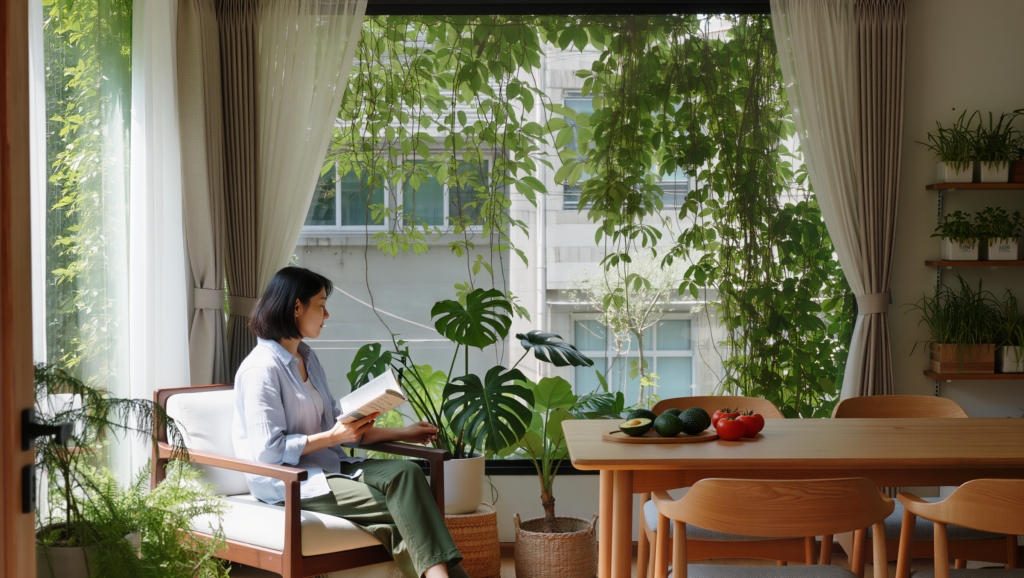
If you only change one thing, start with light. Morning daylight is one of the most powerful signals for the circadian system, and circadian alignment affects sleep, mood, energy, and hunger. A home that lets in natural light tends to support more stable wake times and better nighttime sleep. Poor light, especially in winter or in windowless rooms, can leave people groggy, snacky, and chronically “off.”
Good biophilic light design usually means:
- Keeping window areas clear.
- Using sheer curtains instead of heavy blackout fabric during the day.
- Letting sunlight reach the spaces where you eat and work.
- Using warmer, dimmer artificial light in the evening.
That’s not just about comfort. It affects how your brain interprets the day. Bright daytime light helps the body know when it is time to be alert, and lower light later helps it know when to wind down. Better timing often means better sleep, and better sleep usually means better food choices.
Plants Calm the Brain and Shape Behavior
Plants do more than “look nice.” They add a living signal to the room, and that can change how the room feels emotionally. Even simple indoor greenery can make a home feel less sterile and more restorative. The result is often subtle but important: people spend more time in rooms they like, and they behave differently in spaces that feel calming.
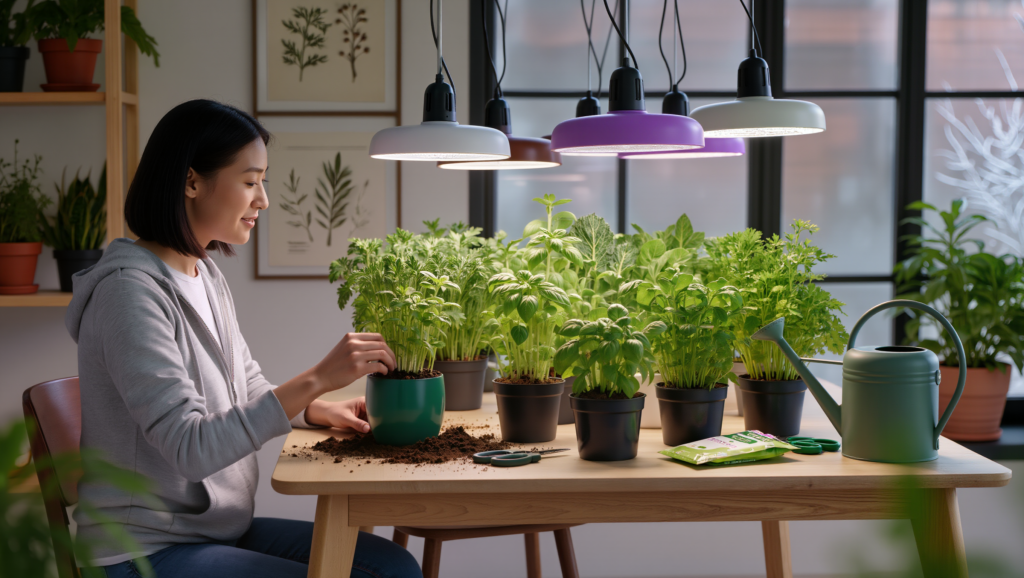
That behavioral shift matters for diet. A kitchen with herbs, a windowsill garden, or a few healthy potted plants is more likely to feel like a place where real food happens. A dead, empty, purely functional kitchen often feels more like a fuel station. And when cooking feels less inviting, people are more likely to default to processed convenience food.
A plant-rich kitchen or dining area can support:
- More home cooking.
- More time spent eating slowly.
- A stronger emotional cue that says “meal time,” not “grab and go.”
- Better connection to fresh ingredients.
This is one reason people who grow herbs indoors often start cooking differently. A handful of basil, mint, parsley, rosemary, or thyme changes the way a meal is assembled. Once fresh herbs are visible and easy to use, they get used. That nudges diet quality in the right direction without requiring willpower every time.
Natural Materials Reduce the “Industrial” Feeling
Concrete, steel, plastic, and glossy synthetic surfaces can make a home feel efficient but emotionally cold. Natural materials do the opposite. Wood, stone, clay, wool, cotton, and linen add softness, warmth, and tactile variety. They create a kind of sensory richness that the brain reads as more grounded and less hostile.
This has a dietary angle too. People tend to eat better in spaces that feel cared for. A wooden table, a ceramic bowl, a linen napkin, and good lighting don’t sound like nutrition advice, but they affect the whole eating experience. When meals feel more intentional, people are more likely to plate food properly, sit down to eat it, and stop when they’re satisfied.
That matters because a rushed or chaotic meal environment often leads to overeating or mindless snacking. A more natural, slower-feeling setting supports:
- Better meal timing.
- More mindful eating.
- Less background stress.
- More pleasure from simple, nutrient-dense food.
Biophilic design isn’t magic. It just makes the healthy choice feel more natural and the unhealthy choice feel slightly less automatic.
The Kitchen Is Where Biophilia Meets Diet
If you want biophilic design to improve your diet, the kitchen is the best place to start. This is the room where the environment most directly influences food behavior. A kitchen full of clutter, poor lighting, and sterile surfaces tends to discourage real cooking. A kitchen that includes daylight, plants, wood, open shelving, and fresh ingredients tends to encourage it.
Practical biophilic kitchen moves:
- Put herbs where you can see them.
- Keep a bowl of fruit in natural light.
- Use wooden cutting boards and ceramic storage.
- Display olive oil, spices, and grains in a visually calm way.
- Make the dining area inviting enough that you actually sit down.
When food is visible, beautiful, and accessible, people tend to eat more whole foods. When the environment is designed around convenience junk, the diet often follows. The room is shaping the habit, not just reflecting it.
A Better Home Can Change a Better Plate
A biophilic home can improve diet in two ways: directly and indirectly.
Direct effects
- You become more likely to cook.
- You are more likely to reach for fresh food when it is visible and convenient.
- Meals feel more satisfying when eaten in a calmer, more natural setting.
Indirect effects
- Better sleep can reduce cravings.
- Lower stress can reduce emotional eating.
- More daytime light and movement can improve appetite regulation.
- A more pleasant kitchen can increase home-prepared meals.
This is why diet advice often fails when it ignores the home environment. Telling someone to eat more vegetables is useful, but it’s incomplete if their kitchen makes vegetables annoying to prep, store, or see. Biophilic design removes some of those friction points.
Why Concrete Jungles Wear People Down
Living in heavily built, low-green urban environments has a specific psychological cost. You often get less daylight, fewer natural cues, less privacy, more noise, and more visual hard edges. Over time, that can increase mental fatigue and lower the sense of restoration you get from being at home.
That doesn’t mean cities are bad. It means cities need more intentional human design. In a high-density world, home has to do more work. It has to function as a recovery space, not just a sleeping pod. Biophilic design helps a home play that role.
Simple ways to fight the concrete-jungle effect:
- Open windows when weather allows.
- Add indoor plants in rooms you use daily.
- Use natural fiber textiles.
- Create a bright morning eating space.
- Put a few natural objects where you cook or work.
These aren’t expensive interventions. They are small environmental cues that can shift mood and behavior over time.
What This Means for Your Diet
If biophilic design sounds like a wellness buzzword, the diet connection is where it becomes concrete. A home that feels calm, alive, and visually pleasant tends to support:
- More regular meal patterns.
- Less grazing in front of screens.
- Better attention during meals.
- More interest in cooking.
- More connection to plant foods and fresh ingredients.
That doesn’t mean people suddenly become saints about nutrition because they bought a fiddle-leaf fig. But it does mean the food environment becomes a little friendlier to good habits. Over months, those small improvements can matter a lot more than people expect.
Think of it this way: biophilic design doesn’t force a healthy diet. It makes a healthy diet feel more normal.
The Most Useful Biophilic Upgrades
If you want the biggest return with the least effort, focus on these:
- Maximize daylight in the kitchen and dining area.
- Add real plants, especially herbs you actually use.
- Swap some synthetic surfaces for natural textures.
- Make the eating area calmer and less cluttered.
- Use warm, softer lighting at night.
- Keep fruit, nuts, and herbs visible and easy to reach.
Those changes help the home support your biology rather than fight it.
The Bigger Picture
Biophilic design is not a luxury trend for people with extra budget and spare shelf space. It is a practical response to a very modern problem: humans living inside environments that are too artificial, too sealed, and too disconnected from the natural cues our bodies evolved with. When the home becomes more natural, the body often becomes less stressed, and when stress drops, diet usually improves too.
That is why biophilic design is so powerful. It works on multiple levels at once:
- It calms the nervous system.
- It improves the mood of a space.
- It encourages cooking and better food choices.
- It supports sleep and circadian rhythm.
- It makes healthy habits feel easier to repeat.
In the end, the home is not separate from health. It is one of the main places health gets built or broken. A more biophilic home is not just prettier. It is often calmer, more nourishing, and more likely to support the way human beings are actually meant to live.