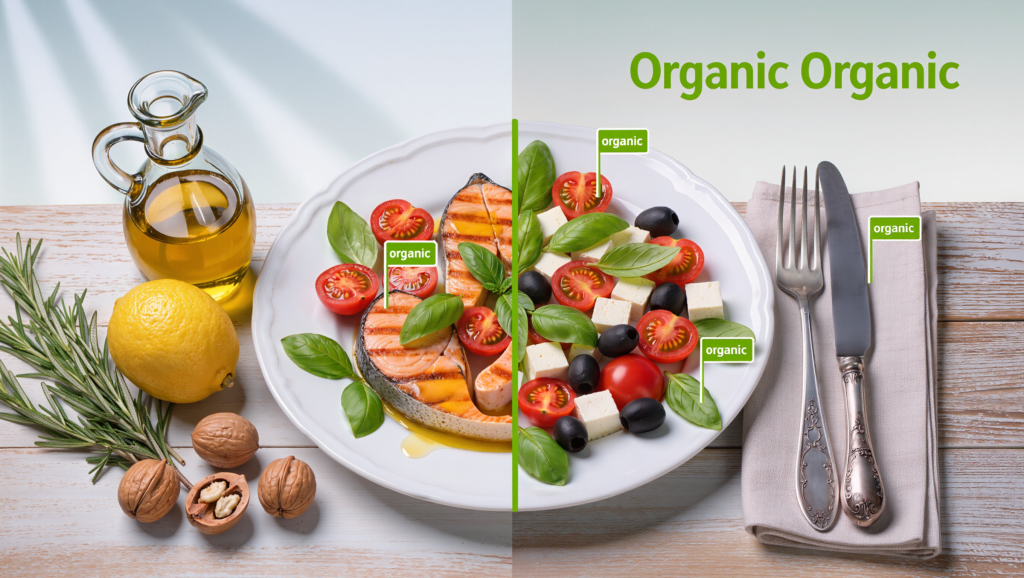












If you’ve ever tried to “eat Mediterranean” and then looked at the price tag on organic olive oil, organic tomatoes, organic everything… you’ve probably wondered: is an organic Mediterranean diet actually better, or is it just a more expensive version of an already great pattern?
The short answer: the classic Mediterranean diet (even with conventional produce) is one of the most proven, health‑protective ways of eating on the planet. An organic Mediterranean diet doesn’t change the core benefits of the pattern—but it can significantly cut pesticide exposure, may enhance gut microbiome and antioxidant effects, and looks slightly better for the environment. Think of “Mediterranean” as the foundation and “organic Mediterranean” as a potentially cleaner, more sustainable upgrade when you can afford it.
Let’s unpack the science in a practical way.
What We Mean by “Mediterranean Diet” vs “Organic Mediterranean Diet”
The Core Mediterranean Diet pattern
Most clinical trials and guidelines describe the Mediterranean diet as:
- High in: vegetables, fruits, legumes, whole grains, nuts, seeds, herbs, and olive oil.
- Moderate in: fish and seafood, fermented dairy (like yoghurt), and occasionally poultry and eggs.
- Low in: red and processed meats, refined grains, added sugars, and ultra‑processed foods.
- Social and lifestyle context: shared meals, slow eating, daily movement, good sleep.
Large trials like PREDIMED and Lyon Diet Heart have shown that this pattern:
- Cuts cardiovascular disease risk by about 30% and reduces all‑cause mortality.
- Lowers risk of type 2 diabetes, some cancers, and helps prevent cognitive decline.
Mechanisms include:
- Better blood lipids (lower LDL, higher HDL).
- Less oxidative stress and inflammation.
- Improved endothelial function and platelet aggregation.
- Beneficial shifts in gut microbiota and their metabolites.
Crucially: all of this evidence comes mostly from diets using conventional foods. You don’t need organic to access those benefits.
What turns it into an “organic Mediterranean diet”?
“Organic Mediterranean diet” usually means:
- Same food pattern, but most or all plant foods (and sometimes animal products) are certified organic.
- Organic production methods: no synthetic pesticides, herbicides, or fertilisers; no GMOs; stricter rules on certain additives.
Two major bodies of work look at this upgrade:
- The IMOD (Italian Mediterranean Organic Diet) study, led by the University of Tor Vergata (MedBio vs MedD).
- A Mediterranean diet intervention in Crete comparing conventional vs fully organic versions of the same menu and measuring pesticide exposure.
These don’t test “Mediterranean vs no Mediterranean”; they test Mediterranean vs Mediterranean‑but‑organic.
What a Standard Mediterranean Diet Already Gives You
Before comparing, it’s worth emphasising how powerful the baseline pattern is.
A 2017 review on the Mediterranean diet’s metabolic and cardiovascular benefits summarised:
- Reduced risk of cardiovascular disease, type 2 diabetes, atrial fibrillation, and breast cancer.
- Improved longevity (lower premature death).
- Five key mechanisms:
- Lipid‑lowering effect.
- Protection against oxidative stress, inflammation, and platelet aggregation.
- Favourable changes in hormones and growth factors related to cancer.
- Modulation of nutrient‑sensing pathways.
- Gut microbiota‑mediated metabolite production that improves metabolic health.
Experts interviewed by Harvard note there is “no doubt whatsoever” that the Mediterranean diet lowers heart disease and diabetes, with robust evidence from large randomised trials like PREDIMED showing around a 30% reduction in cardiovascular events.
Guides from major medical centres now recommend a Mediterranean pattern as a default heart‑healthy, weight‑friendly, and longevity‑supporting way of eating.
So when people ask, “Does it have to be organic to work?” the evidence‑based answer is: absolutely not. A conventional Mediterranean diet is already a massive step up from a typical Western pattern.
What Happens When You Make Your Mediterranean Diet Organic?
1. Pesticide exposure: Mediterranean diet increases it—unless you go organic
Here’s the twist very few people see coming.
A cross‑over intervention in Crete looked at 27 postgraduate students over five weeks.
Design
- Before and after the trial, all participants ate their usual Western‑style diets, based on conventional foods.
- During the trial, one group ate a Mediterranean diet with conventional foods; another ate the same Mediterranean menu but 100% organic.
- Researchers measured pesticide residues in both food and urine.
Key results:
- Switching from a Western diet to a Mediterranean diet made entirely from conventional foods resulted in more than 3‑times higher total insecticide and organophosphate intake.
- Conventional fruits, vegetables, and wholegrain cereals were the main dietary sources of synthetic pesticides.
- When the Mediterranean diet was made from organic foods, total pesticide intake was about 10‑fold lower than on the conventional Mediterranean version.
In other words:
- Mediterranean eating = more plants = more pesticide exposure if those plants are conventional.
- An organic Mediterranean menu = same nutrient pattern, dramatically lower pesticide load.
Researchers highlight that many of the pesticides detected are confirmed or suspected endocrine‑disrupting chemicals (EDCs), and suggest that lower exposure may partly explain why epidemiological studies link high organic food intake with lower rates of obesity, metabolic syndrome, and certain cancers.
So on the pesticide question, “organic Mediterranean” clearly wins.
2. Gut microbiome and oxidative stress: early data favour organic
The IMOD (Italian Mediterranean Organic Diet) study gives a deeper look under the hood.
IMOD compares:
- MedD – conventional Mediterranean diet.
- MedBio – Mediterranean diet with organic foods.
In the first phase, Tor Vergata researchers used advanced DNA sequencing and oxidative stress biomarkers to assess effects on:
- Gut microbiota composition.
- Oxidative stress markers.
- Body composition and exposure to harmful substances.
Reported findings so far:
- An organic Mediterranean diet (MedBio) increased “good” gut bacteria by about 25% and reduced pro‑oxidant bacteria by up to 50% compared with conventional MedD.
- This shift is interpreted as having immunomodulatory and detoxifying effects, which may reduce risks of cardiovascular disease, diabetes, and cancer.
- The antioxidant capacity of a meal nearly quadrupled, from 5,870 to 20,573 ORAC units, when organic foods were used in the Mediterranean context.
- Indices of fat quality related to circulatory risk (atherogenicity and thrombogenicity indices) were more than halved.
The IMOD work is still evolving and uses a relatively small sample, but it suggests:
- Same diet pattern + organic quality = better gut‑microbiome profile and higher antioxidant potential than conventional version.
Combined with the pesticide data, there’s a consistent story: organic Mediterranean seems to enhance some of the microbiome‑ and oxidative stress‑related benefits of a standard Mediterranean diet.
Environmental Footprint: Mediterranean vs Organic Mediterranean
The Mediterranean diet is already considered one of the most sustainable major dietary patterns when you look at health and environment together.
A 2024 assessment on the environmental and health sustainability of various diets found:
- The Mediterranean diet scored high on nutritional quality and relatively favourable on environmental indicators compared with more meat‑heavy patterns.
- It offers a strong health score and a good nutrient‑rich food index while keeping environmental impacts moderate.
Adding organic intensifies the environmental angle:
- The IMOD study reported that, after just one month on an organic Mediterranean diet, the water footprint per person dropped from ~64,475 L to 44,705 L, a saving of about 20,000 litres (roughly 250 showers),
- The carbon footprint also decreased, from 40.25 to 38.13 kg CO₂‑equivalent per person.
Organic agriculture generally:
- Reduces synthetic pesticide and fertiliser use.
- Can improve soil health and biodiversity.
- Often performs better on certain ecosystem indicators, though yields and land use are more complex.
So from a planetary health angle:
- Mediterranean vs typical Western: huge win.
- Organic Mediterranean vs conventional Mediterranean: additional environmental gains, particularly for water use and pesticide pollution.
Does “Organic” Change The Core Health Benefits?
Here’s where we have to be careful.
What we know robustly:
- A standard Mediterranean diet, even with conventional foods, clearly reduces heart disease, diabetes, some cancers, and risk of premature death.
- Adding organic reduces pesticide exposure ~10‑fold in interventions, boosts gut‑friendly microbes, and improves certain antioxidant and fat‑quality markers.
What we don’t yet have (at the same level of evidence):
- Large, long‑term randomised trials showing that organic Mediterranean diets have dramatically greater clinical outcomes (e.g., lower heart attacks, cancer, mortality) than conventional Mediterranean diets.
Early observational work hints that high organic food consumers have lower rates of obesity, metabolic syndrome, and some cancers, but this is confounded by overall lifestyle differences.
Most nutrition scientists currently converge on a nuanced position, echoed by groups like Oldways and Mediterranean diet educators:
- The health benefits of a Mediterranean pattern do not depend on foods being organic.
- An organic Mediterranean diet is an added bonus when accessible: lower pesticide exposure, possibly better microbiome and antioxidant profile, and environmental benefits.
- For many people and budgets, “Mediterranean with mostly conventional foods” is still an enormous upgrade over a Western diet and should not be dismissed or delayed while waiting for everything to be organic.
Practical Takeaways: How to Decide What “Wins” for You
1. Pattern first, organic second
If you currently eat a Western pattern (lots of refined carbs, processed meat, fast food):
- Shifting to any Mediterranean pattern—even with conventional produce—will likely yield huge gains in cardiovascular and metabolic health.
- Waiting until you can afford 100% organic before changing the pattern is a missed opportunity.
Think of it as:
- Step 1: Get to Mediterranean basics (more plants, olive oil, fish, fewer ultra‑processed foods).
- Step 2: Layer in organic choices where they matter most and where your budget allows.
2. If budget is limited, prioritise organic where it counts
Based on pesticide‑exposure data:
- Conventional fruits, vegetables, and wholegrain cereals are the major pesticide sources in a Mediterranean diet.
- If you can’t go fully organic, consider prioritising:
- Leafy greens, berries, and thin‑skinned fruits.
- Frequently eaten staples like apples, grapes, and certain grains.
- Foods you or your kids consume daily.
You can still buy conventional olive oil, nuts, or canned tomatoes if that’s what’s realistic. The overall pattern does most of the heavy lifting.
3. Organic Mediterranean may be most helpful for certain groups
The lower pesticide load and microbiome benefits of an organic Mediterranean pattern may be especially relevant for:
- Women planning pregnancy or pregnant (due to endocrine and developmental concerns).
- Young children (more vulnerable to endocrine‑disrupting chemicals).
- People with autoimmune or hormone‑sensitive conditions who want to minimise EDC exposure.
- Those already committed to a Mediterranean pattern and looking for incremental upgrades.
For others, the marginal benefit is still likely positive but may be smaller compared to the initial leap from Western → Mediterranean.
So, Which One “Wins”?
If we frame “winning” simply as beating a typical Western diet on health and sustainability:
- Mediterranean diet (conventional) wins easily. It dramatically improves cardiometabolic outcomes, longevity, and environmental impact compared with standard Western eating.
If we compare Mediterranean vs organic Mediterranean:
- Both share the same core macro‑level benefits from the pattern itself.
- The organic Mediterranean diet adds:
- Roughly 10x lower pesticide exposure.
- More favourable gut microbiota shifts and higher antioxidant potential in early work.
- Lower water and carbon footprints in pilot analyses.
On that basis, if cost and access are not an issue, organic Mediterranean has the edge—particularly for reducing pesticide burden and potentially enhancing microbiome‑related benefits.
But in real life, the smarter hierarchy looks like this:
- Mediterranean > non‑Mediterranean Western – huge win, even with conventional foods.
- Organic Mediterranean > conventional Mediterranean – meaningful extra benefits, mainly for pesticide exposure, microbiome, and environment.
- “Mediterranean but not perfect, mixed organic/conventional” – still massively better than staying in a processed, Western pattern.
So don’t let “organic vs not” paralyse you. Let the Mediterranean diet be your operating system; upgrade to organic modules where and when it makes sense. For your heart, brain, gut, and the planet, the pattern itself is the main story—and organic is an important, but secondary, plot twist.