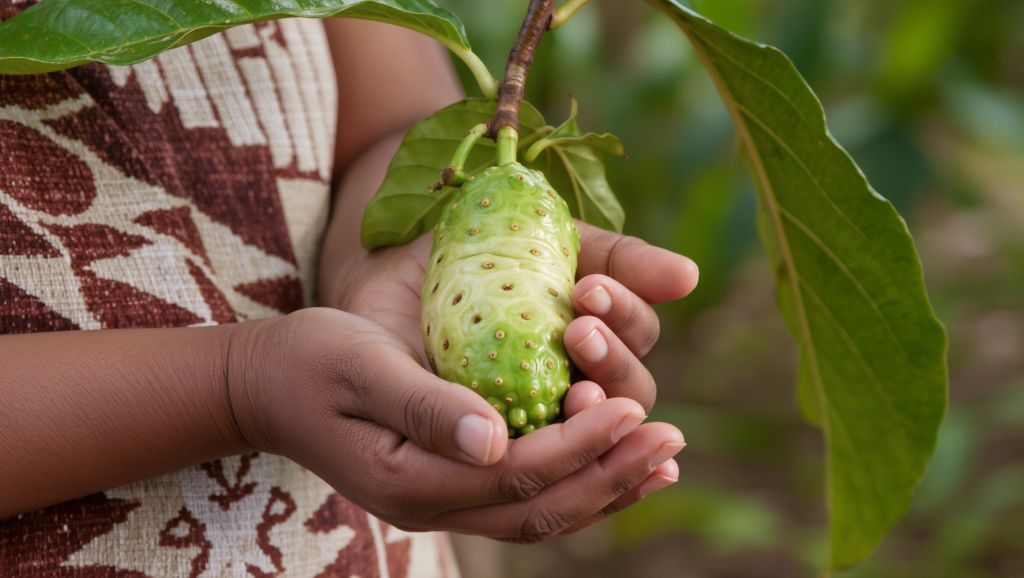












Long before noni juice shots showed up on wellness Instagram, Polynesian healers were already calling this knobbly, sharp‑smelling fruit a sacred remedy. In many island traditions, Morinda citrifolia—better known as noni—was considered so powerful and versatile that it earned nicknames like “nature’s pharmacy” and, in some modern retellings, the “queen of all fruits.” It wasn’t prized for sweetness (it’s famously pungent) but for how often it seemed to help: infections, wounds, pain, fatigue, joint problems, mysterious fevers—you name it, there was probably a noni recipe for it.
Today, scientists are starting to unpack why this humble fruit became so central in Polynesian medicine. Research on noni juice and extracts points to antioxidant, anti‑inflammatory, immune‑modulating, and even metabolic effects that line up eerily well with ancient claims. That doesn’t mean noni is a miracle cure—but it does help explain why healers treated it as a sacred, all‑purpose remedy worth protecting and passing on.
Let’s look at the story behind that reputation, what modern science actually says, and how to approach noni intelligently today.
Noni’s Deep Roots in Polynesian Healing
Noni grows wild across much of the tropical Pacific, from Tahiti and the Marquesas to Samoa and Hawaii. For at least 2,000–2,500 years, Polynesian communities have cultivated and used the plant as both food and medicine.
A few key points from historical and ethnobotanical records:
- A critical review of noni notes that it has been a central medicinal plant in traditional Polynesian medicine for over two millennia, used to prevent and treat infections, inflammation, and even tumors.
- A review of human studies points out that Tahitian healers considered noni the most important and widely used medicinal plant before Europeans arrived, using it in “many remedies” for issues ranging from inflammation and abscesses to angina, diabetes, ranula (mouth swellings), abdominal tumors, and even scorpionfish stings.
- Documentation from Hawaii and other islands describes noni as a remedy for wound healing, infections, diarrhea, respiratory ailments, digestive problems, and general tonic use, with almost every part of the plant used in some way.
In other words, noni wasn’t a niche herb. It was a first‑line plant—used across different islands, for diverse conditions, over many generations. That kind of cultural “vote of confidence” is a big part of why people talk about it in royal terms.
“Painkiller Tree” and Nature’s Pharmacy: What It Was Used For
If you flip through traditional use lists, noni almost looks like a mini formulary all by itself.
Wound, skin, and infection remedy
Polynesian and other tropical traditions have used noni topically for:
- Cuts, burns, and wounds.
- Boils, carbuncles, and abscesses.
- Skin allergies, warts, and ulcers.
- Deep bruises, sprains, and rheumatic areas.
A compilation from Hawaii’s agricultural extension service notes that crushed or chewed noni fruit and other plant parts were routinely applied as poultices for abscesses, inflammations, deep bruising, rheumatism, sprains, stonefish stings, and even bone fractures or dislocations.
Internal tonic and “all‑purpose” medicine
Internally, noni fruit and juice were used to address.
- Respiratory issues: coughs, colds, asthma, influenza, sinusitis, sore throat.
- Digestive complaints: diarrhea, constipation, indigestion, gastric ulcers, intestinal parasites.
- Metabolic and systemic conditions: diabetes, hypertension, abdominal swelling, hernias.
- Fevers and infections, sometimes framed as “blood purification.”
One source summarising Tahitian and Marquesan practice calls noni “truly a miraculous healing plant,” describing its use for diabetes, fish poisoning, reef‑fish stings, tonsillitis, burns, abdominal swellings, respiratory infections, gastrointestinal problems, and more.
Pain relief and joint support
Across multiple regions, noni picked up a reputation specifically for pain relief:
- In the Caribbean, the noni tree is nicknamed the “painkiller tree”, used for sprains, fractures, and fever.
- Polynesian and Pacific sources describe using noni internally and externally for back pain, osteoarthritis, rheumatism, joint issues, and hemorrhoids.
A modern clinical review notes that “topical treatment of pain and bruising is one of the most common uses of the noni plant in tropical alternative medicine,” with animal and early human studies supporting anti‑inflammatory and pain‑relieving (antinociceptive) activity.
When one plant shows up this often, across this many conditions, it’s easy to see why it was elevated beyond “just another fruit.”
Why Noni Is Called “Queen of All Fruits”? The Symbolism Behind the Hype
Not every source uses the exact phrase “queen of all fruits,” but between:
- Its central role in Polynesian healing,
- Its use as a universal remedy or tonic, and
- Its later marketing as a tropical superfruit,
it’s not a stretch that modern storytellers describe noni in regal language.
Several themes support that elevated status:
- Breadth of use – Healers used the fruit, leaves, roots, bark, and even seeds for everything from acute injuries to chronic disease, giving noni a “crown” as an all‑rounder.
- Cultural importance – Noni trees were cultivated near villages and included in inter‑island voyaging crops, signalling high value.
- Symbolic role as a protector – Its use in “ghost medicine” rituals and as a general tonic added spiritual weight to its physical uses.
- Modern rediscovery – As noni entered the global supplement market, marketers leaned into its legendary status as a “sacred fruit of Polynesia,” reinforcing the queen‑like aura.
So even if the exact phrase is modern, it accurately captures how central and revered noni was—and still is—in many traditional healing systems.
What Modern Science Has Found Inside Noni
Ancient healers worked from observation and experience. Today, researchers have started to reverse‑engineer what they were seeing.
Rich mix of bioactive compounds
Reviews of noni fruit and juice highlight a cocktail of:
- Antioxidants (including vitamin C and various polyphenols).
- Iridoids (like deacetylasperulosidic acid), believed to contribute to antioxidant and anti‑inflammatory effects.
- Scopoletin, a coumarin compound with potential vasorelaxant and anti‑inflammatory actions.
- Flavonoids like rutin, plus sterols and other phytochemicals.
These constituents are thought to underlie many of the traditional claims: antimicrobial, anti‑inflammatory, immune‑modulating, and possibly anti‑tumor.
Antioxidant and anti‑inflammatory actions
Both lab and animal studies show that noni extracts can:
- Reduce oxidative stress markers.
- Exhibit anti‑inflammatory activity in different models.
- Protect tissues in conditions driven by oxidative damage.
A 2020 study in high‑fat/high‑fructose‑fed mice found that noni fruit aqueous extract improved metabolic parameters and suggested antioxidant and anti‑inflammatory mechanisms in metabolic disease. Reviews also note anti‑ulcer, anti‑arthritic, and analgesic effects in animal models, which dovetail with traditional pain and gut uses.
Immune and potential anti‑cancer effects (very early evidence)
Preclinical work has suggested that noni juice or extracts may:
- Enhance certain aspects of cell‑mediated immunity.
- Act as an antioxidant that slows transformation of normal cells to cancer cells in vitro.
- Show anti‑angiogenic effects (inhibiting new blood‑vessel growth) in ex vivo assays.
Memorial Sloan Kettering Cancer Center summarises that noni constituents have shown antibacterial, antifungal, anti‑inflammatory, antidiabetic, hepatoprotective, antitumor, and immunomodulatory properties in preclinical studies, but emphasises that this is not proof of clinical anti‑cancer efficacy in humans yet.
Traditional Tahitian healers long used noni as an anticancer agent and tonic; modern science is still in the early stages of testing if and how those anecdotes might translate into evidence‑based treatments.
Human Studies: What Noni Juice Seems to Help With
So far, the best data in humans are small and focused, but they’re intriguing.
Pain and joint mobility
A review of human noni juice studies notes:
- Traditional use across the tropics strongly emphasises noni as a pain and bruise remedy, both topically and internally.
- Open‑label clinical trials reported reduced pain and improved range of motion in patients with cervical spondylosis after four weeks of taking Tahitian noni juice (15 mL twice daily).
This fits with noni’s Caribbean nickname, the “pain killer” tree, and its widespread use for sprains, fractures, rheumatic pain, backache, and joint problems.
Metabolic and cardiovascular markers
The same review and later work point out that noni juice may:
- Improve certain blood‑lipid profiles and reduce oxidative stress in smokers.
- Support better metabolic control in type 2 diabetes, with one human trial reporting improvements when noni juice was added alongside standard care.
These are early findings, not yet large-scale or definitive, but they resonate with traditional descriptions of noni as a tonic for “the blood,” diabetes, and hypertension.
General well‑being
In European consumers of Tahitian noni juice, survey‑based data (not placebo‑controlled) reported:
- Increased energy and subjective well‑being.
- Reduced pain and fewer infections.
- Improved sleep and digestion.
- Decreased allergy and asthma symptoms.
These aren’t gold‑standard trials, but they echo centuries of folk use describing noni as a general vitality booster rather than a single‑symptom fix.
The “Queen” with Thorns: Safety and Limitations
A sacred or royal status in tradition doesn’t automatically mean “safe for everyone in any amount.”
Major medical and nutrition sites highlight a few important caveats:
- Noni is generally well tolerated in moderate amounts, but there have been rare reports of liver toxicity, especially with high intake or in people with preexisting liver disease.
- The fruit is naturally high in potassium, which can be an issue if you have kidney problems or are on certain medications that affect potassium balance.
- Commercial noni products vary widely in purity, processing, and added sugars or ingredients, which may affect both benefits and risks.
Some scholars emphasise that:
- Noni should not be seen as a replacement for standard medical treatments, especially for serious conditions like cancer.
- People with liver or kidney disease, or those taking specific medications, should use noni only under medical supervision.
So even if you embrace noni’s traditional “queen” reputation, it’s worth treating it like a potent herbal ally, not a harmless smoothie booster you can chug without thought.
How to Approach And Use Noni Fruit Today
If you’re curious about working with noni in a way that honours its heritage and respects modern science, a few practical guidelines help.
1. Start with respect for the source
Noni’s “sacred” status isn’t just about health—it’s about its role in Polynesian culture and identity. If you can:
- Learn about the specific island traditions you’re drawing from.
- Choose products that source responsibly and, ideally, support local communities.
This is part of seeing noni not as a fad ingredient but as a cultural treasure.
2. Think “tonic,” not miracle cure
Most of the promising evidence—traditional and modern—frames noni as:
- A broad‑spectrum tonic for resilience and recovery.
- A complementary support for pain, inflammation, and metabolic stress.
It is not a stand‑alone cure for serious disease. Use it (if appropriate for you) as one piece of a larger lifestyle and treatment plan: nutrition, movement, stress care, and appropriate medical care.
3. Be mindful with dose and duration
Typical noni juice intakes in human studies are in the small‑shot range—for example, 15–30 mL once or twice daily—rather than large glasses. If you’re experimenting:
- Start low (e.g., 15–30 mL/day of a reputable product).
- Watch for any digestive upset, allergic reactions, or unusual fatigue.
- If you have liver, kidney, or serious chronic disease, talk to a clinician first.
4. Combine modern knowledge with traditional wisdom
Some of the most interesting work on noni isn’t about isolating one compound; it’s about keeping the whole‑fruit or whole‑plant synergy intact, just as traditional healers used it.
Modern integrative use might look like:
- Small daily amounts of noni juice or preparations for general vitality.
- Topical use of noni‑based oils or salves on bruises or minor aches, echoing traditional poultices.
- Contextualising it within a broader pattern of anti‑inflammatory, antioxidant‑rich diet and lifestyle.
That’s a lot closer to how ancient Polynesian healers thought about their “queen fruit”: not in isolation, but as a constant ally in a larger healing ecosystem.
Why Noni Still Deserves Its Legendary Status
When you put everything together, it’s easier to understand why noni earned—and kept—its near‑mythic reputation:
- Historically, it was one of the most frequently used plants in Polynesian medicine, applied to an astonishing range of conditions over centuries.
- Culturally, it symbolised protection, resilience, and the ingenuity of island healers who learned to work with every part of the plant.
- Scientifically, early research supports many of the traditional themes: antioxidant and anti‑inflammatory effects, immune modulation, metabolic support, and pain‑relief potential.
Is noni literally the “queen of all fruits”? That’s poetic license. But as a bridge between ancient Polynesian wisdom and modern wellness science, it certainly behaves like royalty: versatile, potent, occasionally temperamental—and worthy of some reverence when you invite it into your health routine.
Sources
https://pmc.ncbi.nlm.nih.gov/articles/PMC4090441 https://pmc.ncbi.nlm.nih.gov/articles/PMC5920423/