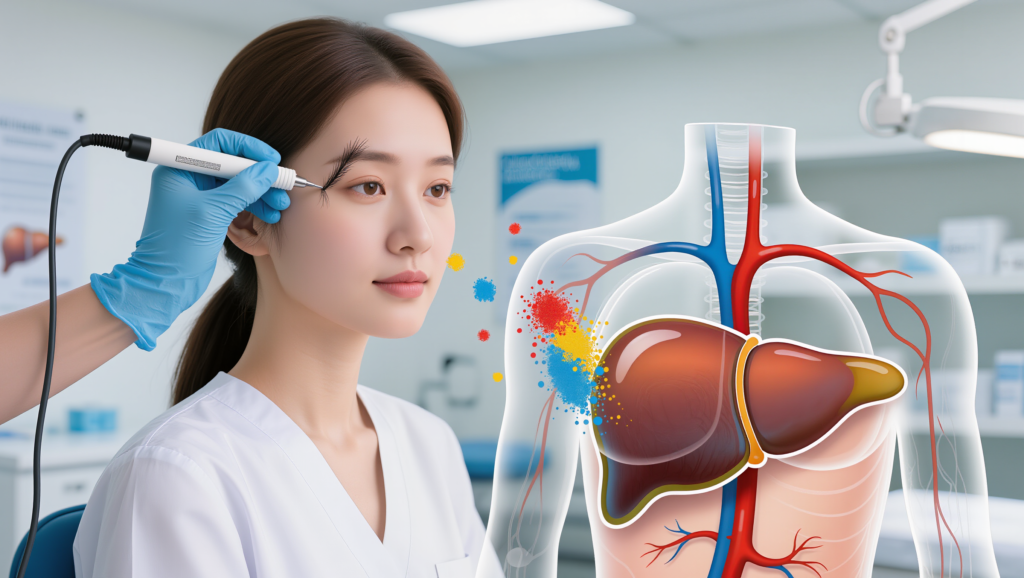












You’ve probably seen the glossy before-and-afters: perfect, hair-like brows that promise to save you 10 minutes every morning. Microblading sounds like a dream—semi-permanent tattoos mimicking real eyebrow strokes using fine blades and pigment. But what they don’t always tell you in the consultation is that those pigments aren’t just sitting pretty on your skin. They’re foreign chemicals that your body processes, transports, and eventually filters through your liver, which acts like the body’s detoxification powerhouse. While microblading is generally safe for healthy people, the pigments can pose a subtle burden on your liver’s detox pathways, especially if you have pre-existing sensitivities, multiple tattoos, or compromised liver function. The risk isn’t dramatic liver failure for most, but it’s a real physiological load that salons often gloss over.
This isn’t fear-mongering; it’s biology. Your skin is a living organ, and anything injected or implanted into it—pigments included—triggers systemic responses. Below, we’ll break down the science of what’s in those inks, how they travel to your liver, why it matters, and what you can do to minimise risks. (Note: Microblading contraindications often list liver conditions like cirrhosis explicitly due to heightened infection and healing risks, underscoring the liver’s central role.)
What’s Actually in Microblading Pigments?
Microblading inks aren’t FDA-regulated cosmetics like makeup; they’re closer to tattoo inks—classified as “color additives” exempt from full pre-market approval. They’re mixtures of pigments, binders, water, and sometimes preservatives. The pigments themselves are usually synthetic organic dyes, metal oxides, or carbon-based compounds designed to stay in the dermis (second skin layer) for 1–3 years before fading.
Common components:
- Organic pigments: Azo dyes (e.g., Yellow 74, Red 22) for vibrant colors. These can break down into aromatic amines, some linked to cancer risks in animal studies.
- Inorganic pigments: Iron oxides (red, yellow, black), titanium dioxide (white/opacity), and carbon black. These are more stable but can contain trace heavy metals like nickel, lead, or chromium from manufacturing impurities.
- Binders and vehicles: Glycerin, propylene glycol, or alcohol to suspend pigments and aid penetration. These can cause local irritation but metabolise systemically.
High-quality, cosmetic-grade inks (e.g., from PhiBrows or Tina Davies) claim lower heavy metals and EU REACH compliance, but independent tests show variability. A 2021 study on permanent makeup complications noted inks often contain unregulated impurities, with itching and swelling as top issues (8–13% of cases). While not directly liver-focused, this highlights that pigments aren’t inert—they interact with your biology.
How Pigments Enter and Travel Through Your Body
Microblading deposits pigment via a handheld blade (10–18 tiny needles) into the dermis, about 1mm deep. Unlike surface makeup, this is a controlled injury: your skin responds with inflammation, macrophages (immune cells) engulf the particles, and lymphatic drainage kicks in.
Here’s the pathway:
- Local uptake: Macrophages “eat” pigment particles (0.1–10 microns), trapping them in the skin. Some dissolve; larger chunks stay put.
- Lymphatic spread: Excess particles drain to nearby lymph nodes (e.g., neck for brows). This is why swollen nodes or “fading” can happen post-procedure.
- Bloodstream entry: Soluble pigments or breakdown products enter circulation via leaky capillaries during healing. Nanoparticles (<100nm) cross barriers more easily.
- Liver processing: Once systemic, pigments hit the liver via portal vein. Hepatocytes (liver cells) conjugate (tag) them for excretion, often via bile into the gut or urine via kidneys.
This mirrors traditional tattoo ink fate: studies show 80–90% of tattoo pigments accumulate in lymph nodes and liver within weeks. A 2017 review in Contact Dermatitis confirmed tattoo pigments reach regional lymph nodes and distant organs, including the liver, via macrophages. For microblading, the load is smaller (milligrams vs. grams for body tattoos), but the principle holds—your liver detoxes it.
The Liver’s Role In Microblading: Why It Bears the Brunt
Your liver handles 1.5 liters of blood per minute, filtering toxins via Phase I (cytochrome P450 enzymes break down chemicals) and Phase II (conjugation adds water-soluble groups for excretion). Pigment molecules—dyes, metals, solvents—trigger this detox cascade.
Specific burdens:
- Heavy metals: Traces of nickel, lead, chromium, or mercury in oxides stress Phase II glutathione pathways. Chronic low-level exposure taxes liver antioxidants, potentially raising oxidative stress.
- Azo dyes: Metabolise into anilines/amines via liver enzymes (e.g., NAT2 acetylation). Some metabolites are carcinogenic in rodents; human risk is low but cumulative.
- Titanium dioxide: Accumulates in liver Kupffer cells (macrophage-like). EU scrutiny flags nano-TiO2 as possibly genotoxic.
- Solvents/glycerin: Glycols metabolise to acids, mildly taxing kidneys/liver if overloaded.
In healthy livers, this is routine. But repeated procedures (touch-ups every 1–2 years) or multiple tattoos amplify the load. Microblading contraindications routinely exclude liver disease (cirrhosis, hepatitis) because impaired detox raises infection risk and poor healing—indirectly nodding to pigment burden.
A Reddit thread captured user concerns: “Could the ink harm the liver over time?” Forum wisdom: metals like nickel/lead trigger allergies, but long-term organ data is sparse. Salons echo this, listing liver issues as absolute no-gos.
Evidence: Does Microblading Really “Clog” the Liver?
“Clogging” implies overload/blockage, like gallstones. Reality: pigments impose a metabolic load, not physical plugs. No large human studies track microblading-specific liver damage—procedures are cosmetic, not medical trials. But tattoo ink research provides the blueprint.
Key studies:
- Autopsy data: A 2015 German study (Particle and Fibre Toxicology) found tattoo pigments (iron oxides, azo dyes) in 100% of liver samples from tattooed cadavers. Particles persisted decades, engulfed by macrophages.
- Animal models: Rats injected with tattoo inks showed liver pigment uptake within days, mild inflammation in 20–30% at high doses. Human extrapolation: low risk unless massive/multiple tattoos.
- Nano-tracking: Fluorescence microscopy traces TiO2 nanoparticles to liver/spleen in mice post-skin application.
For microblading: A 2021 Japanese survey (PMC8104296) of 1,352 clients reported 12.1% complications (itching, swelling), but no systemic follow-up. Infection rate: 0.2%. Liver-specific? Absent, but exclusions for liver disease imply caution.
Cumulative risk: Annual touch-ups (common for fading) mean repeated dosing. If you’ve got tattoos elsewhere, it adds up. Poor-quality inks (imported, unregulated) spike heavy metals—US/EU bans some, but enforcement lags.
Bottom line: No epidemic of microblading-induced liver failure, but pigments do reach and burden the liver. Healthy people clear them; compromised livers struggle.
Who’s at Higher Risk Of Liver Issues After Microblading? Red Flags To Know
Salons list contraindications, often burying liver warnings. Absolute no-gos:
- Cirrhosis/hepatitis: Healing fails; infection risk soars.
- Heavy metals sensitivity: Allergies signal poor detox.
- Multiple tattoos: Cumulative pigment load.
- Pregnancy/nursing: Hormones alter skin/liver metabolism.
- Autoimmune/immune suppression: Macrophages falter.
Relative risks:
- Fatty liver/NAFLD: 25% of adults; subtle detox strain.
- Alcohol excess/meds: Competes with pigment processing.
- Age 40+: Liver efficiency dips.
Patch tests miss systemic risks—liver impact is downstream.
Aftercare: Minimise the Liver Load
Post-procedure, your liver works overtime. Optimise:
- Hydrate: 3L water/day flushes via kidneys.
- Antioxidants: Liver-loves berries, cruciferous veg, milk thistle (silymarin protects hepatocytes).
- Avoid alcohol/NSAIDs: 2–4 weeks; burdens Phase I/II.
- No saunas/hot yoga: Sweating mobilises stored toxins.
Long-term: Liver-supportive habits (bitter greens, turmeric, exercise) aid clearance.
Fading and Removal: Pigments Don’t Vanish Magically
“Semi-permanent” is marketing—pigments fade via macrophage turnover, not full excretion. 20–50% linger years. Laser removal (Q-switched) fragments particles, worsening lymphatic/liver load temporarily.
Alternatives: Organic inks (plant-based, fewer metals) fade faster but may yellow.
The Bigger Picture: Regulation Gaps and Informed Consent
Microblading’s booming ($100M+ US market), but oversight lags. FDA warns tattoo inks can cause reactions; pigments migrate. EU’s REACH tightens metals; US relies on voluntary compliance.
Salons should disclose: “Pigments process via liver/lymphatics; avoid if liver-compromised.” Many don’t. Research one: certifications (OSHA, bloodborne pathogens), ink MSDS.
Balanced Verdict: Worth It, With Caveats
Microblading rarely “clogs” healthy livers—load is tiny vs. daily exposures (fish, air pollution). Benefits: Confidence boost, time savings. Risks: Local reactions (12%), rare systemic strain.
Do it if: Healthy liver, vetted artist, quality inks.
Skip if: Liver history, heavy tattoos, sensitivities.
Empower yourself: Ask “What pigments? Liver contraindications?” Get bloodwork pre-procedure if concerned.
Microblading enhances brows, not miracles. Your liver detoxes quietly—support it, and it’ll handle the ink.