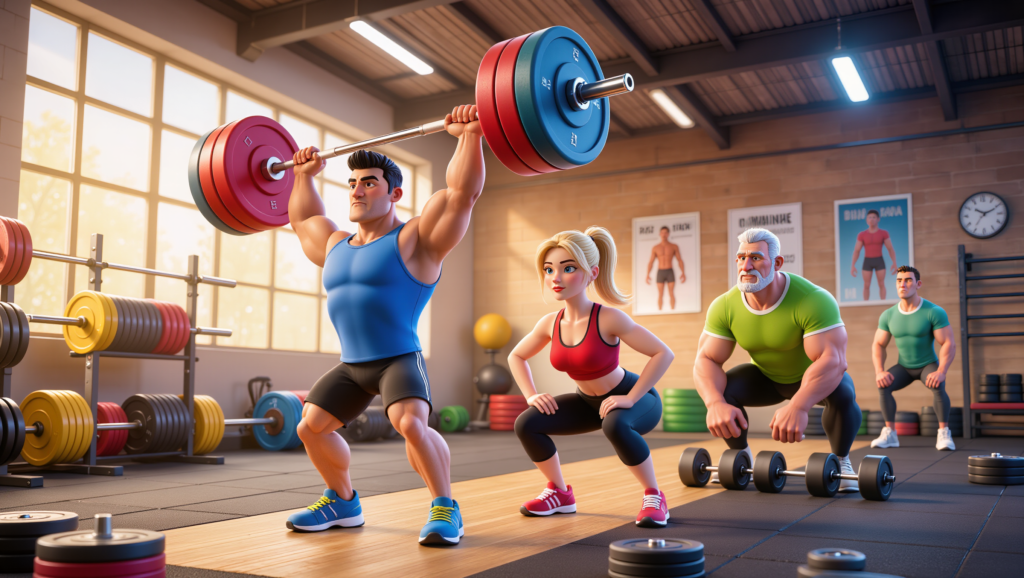












Some people seem to pull heavy deadlifts into their 60s and 70s with the same calm ease they had in their 30s—while others blow out a back after a few months of “getting serious” in the gym. That gap is not genetics alone and it’s definitely not luck. In almost every long‑term, injury‑free lifter, there’s a quiet, boring “secret habit” underneath the big numbers: they train heavy within a system, not on impulse.
They treat load, technique, and recovery like a budget that has to balance every week. They progress slowly, respect pain, and build capacity in unsexy ways long before chasing PRs. Research shows that when strength work is planned and progressed this way, it doesn’t wreck your body—it cuts injury risk by up to two‑thirds and keeps you strong for decades.
Let’s break down what the science says these injury‑free lifters do differently, and how you can quietly copy their habits so you can lift heavy for life—not just for a season.
Why Strength Isn’t the Enemy of Longevity – But Sloppy Strength Is
It’s easy to assume heavy lifting is inherently dangerous, especially as you age. But large reviews say the opposite when it’s programmed well.
Strength training is one of the best injury shields we have
A systematic review found that strength training was the single most effective intervention to prevent sports injuries, reducing injury risk by about 66% on average. Even more interesting:
- For every 10% increase in well‑designed training volume, injury risk dropped by about 13%—a dose–response effect.
In other words, progressive strength training doesn’t just not injure you; it literally makes your tissues more resilient.
Heavy lifting is safe even for older and clinical populations—if done right
A 2025 narrative review on heavy–very heavy strength training in older adults concluded that:
- Healthy and diseased older adults can and should train with heavy loads.
- Protocols using loads around 4RM (a weight you can lift 4 times) with few reps have been shown safe and feasible even in frail populations—women with osteoporosis, patients after hip fracture surgery, people undergoing cancer treatment, and stroke survivors.
- Key safety point: if effort is focused on the concentric phase (lifting up) and impact is controlled, injury risk stays low.
Some echoe this: recent evidence builds “a case for heavy lifting” in older adults, noting that training up to a one‑rep max, under proper guidance, is safe for both healthy people and those with chronic illness.
So the issue isn’t “heavy versus light.” It’s how you get to heavy, how you move under load, and how you manage that load over time.
Why The Real “Secret” Of Injury Free Workout Ruthless Load Management
If you boil down what keeps athletes injury‑free for decades, you get one core behavior:
They manage training load on purpose.
A 2025 review on load management in elite athletes highlights a few key ideas you can steal as a non‑pro:
- Total workload (sets, reps, weight, frequency) has a “sweet spot.” Too little = weak and fragile; too much, too fast = overuse injuries.
- Sudden spikes in load—big jumps in volume or intensity—are strongly linked to higher injury risk.
- Good programs use periodization: planned variations in intensity and volume plus built‑in recovery blocks, not constant maxing out.
In practice, long‑term lifters have quiet rules like:
- “Never add more than 5–10% weight or volume week to week.”
- “If my joints are barking, I back off before they blow.”
- “I rotate heavy, moderate, and light weeks instead of going hard every session.”
They treat weekly and monthly training as something to be measured and progressed, not guessed. That’s the habit.
Habit 1: They Progress Slowly (On Purpose)
Long‑term lifters almost always follow some form of structured progression:
- Start with loads you can lift for 8–12 controlled reps pain‑free to groove technique.
- Slowly move toward heavier loads (5–6 reps, then 3–4) while keeping form tight.
- Only increase weight when they hit the top of their target rep range without grinding.
The heavy‑training review offers a simple rule: if a load that was your 4RM becomes easy enough that you can do 5 reps, increase the load next time to keep intensity in the same relative range. This keeps you progressing without guessing.
Compare that with the “ego plan” many people follow:
- Feel good → pile plates on the bar → chase a random PR → tweak a shoulder or back.
One approach respects connective tissue adaptation times; the other blows through them.
Habit 2: Their Technique Is Boringly Consistent
Biomechanics research is clear: poor movement mechanics amplify tissue stress, especially under fatigue and load.
The load‑management review notes that intrinsic factors like biomechanics, sex, age, and injury history shape how you tolerate load—and that poor mechanics under load increase injury risk. Think:
- Knee valgus (knees caving in) in squats and jumps → more ACL and patellofemoral stress.
- Lumbar flexion under heavy deadlifts → higher disc and ligament strain.
Injury‑free lifters have a couple of quiet form habits:
- They stay within ranges their mobility can actually support—no forcing depth or positions their joints can’t control.
- They treat every rep, including warm‑ups, as practice for the heavy sets—same setup, same bar path, same tempo.
They also respect the difference between maximum weight and maximum quality. The weight they hit regularly is the heaviest they can lift with stable, repeatable form—not the ugliest thing they can grind up once.
Habit 3: They Train for Capacity, Not Just PRs
Decade‑strong lifters build a base of capacity around their big lifts:
- They hit single‑leg and unilateral work (lunges, split squats, single‑leg RDLs) to shore up asymmetries and joint stability.
- They train tendons and connective tissue with controlled eccentrics (slow lowering), pauses, and mid‑range holds.
- They sprinkle in power work—fast, crisp concentric efforts with light‑moderate loads—to keep neuromuscular function sharp without over‑loading joints.
The heavy‑load review emphasizes that very heavy training with few reps and maximal concentric intent is not only safe but excellent for mitigating age‑related strength loss. But you can’t live there alone. The people who last combine:
- Heavy, low‑rep work for strength.
- Moderate‑load, higher‑rep work for muscle and tissue conditioning.
- Easy sessions for circulation, technique, and recovery.
They’re building a system that can handle heavy, not just chasing numbers.
Habit 4: They Respect Recovery Like It’s Training
Longevity in lifting is as much about how you rest as how you grind.
The load‑management literature makes it clear: balancing high‑load periods with adequate recovery is central to injury prevention. Long‑term lifters typically:
- Use deload weeks every 4–8 weeks where volume and/or intensity drop 20–40%.
- Arrange hard and easy days, not five hard sessions in a row.
- Sleep enough and eat enough protein and calories to support adaptation.
Strength‑and‑longevity papers note that resistance exercise is one of the best tools for healthy aging—but the dose that works for most people is surprisingly modest: about 2–3 sessions per week, 8–12 hard sets per muscle group, is enough to drive big benefits.
Injury‑free lifters embrace that “enough” and don’t treat every workout like a test.
Habit 5: They Lift Heavy “Smart,” Not Reckless
When people picture heavy lifting, they often imagine maximal singles with sloppy form. The research–backed version looks different:
- Heavy sets are usually in the 3–5 rep range, not daily one‑rep‑max attempts.
- The concentric is fast and explosive, but the overall execution is controlled.
- Max‑effort singles are used sparingly (e.g., once every 8–12 weeks) as performance checks, not weekly entertainment.
The heavy‑training review explicitly recommends very heavy loads, few reps, and maximal intended velocity in the concentric phase, while controlling impact and landing phases to reduce injury risk. That’s exactly what smart older lifters and high‑level powerlifters do.
Meanwhile, many casual lifters:
- Test 1RMs every other week.
- Grind through form breakdown.
- Ignore nagging pain until it becomes a tear.
Different habits, different outcomes.
Habit 6: They Train for Life, Not for Instagram
Long‑term lifters view strength as a lifetime skill:
- They periodise around life stress—work crunches, travel, illness—rather than forcing peak phases at bad times.
- They accept backing off when injured or under‑recovered, instead of plowing ahead and compounding damage.
- They prefer boring consistency over dramatic peaks.
The literature on resistance training for healthy aging emphasises that even modest, consistent strength work reduces mortality, protects bone density, improves insulin sensitivity, and cuts injury risk dramatically. The people who get those benefits aren’t necessarily the strongest—they’re the ones still doing it in 10, 20, 30 years.nsca+3
Putting It All Together: How to Copy the Injury‑Free Habit
If you want to be the person still lifting heavy decades from now, here’s how to bring these habits into your training:
- Get assessed and learn fundamentals
- If possible, have a coach or physio look at your squat, hinge, press and pull. Fix glaring mobility/stability issues early.
- Start lighter than you think
- Build 4–8 weeks of technique‑first training in the 8–12 rep range before pushing heavy. Let joints and connective tissue catch up.
- Increase load gradually
- Add no more than 5–10% per week in volume or intensity on any given lift. If you can’t progress without form breakdown, you’re going too fast.
- Anchor heavy work in a plan
- Use 1–2 heavy days per week per lift or muscle group; keep others moderate or light.
- Consider a simple linear or undulating periodisation (e.g., heavy / medium / light weeks).
- Build support around your big lifts
- Include single‑leg work, carries, and core stability in each week.
- Use controlled eccentrics and pauses to strengthen tendons and improve position control.
- Listen to early warning signs
- Persistent joint pain, sharp discomfort under load, or sudden drops in performance are yellow lights, not badges of honor.
- Adjust load, volume, or exercise choice before they become red lights.
- Respect recovery as a skill
- Aim for 7–9 hours of sleep, enough protein (roughly 1.6–2.2 g/kg/day if you’re actively lifting), and at least 1–2 true rest or easy‑movement days weekly.
- Think in years, not weeks
- PRs are fun; pain‑free training years are better. If a decision risks the latter for the former, skip it.
Why They Can Lift Heavy for Decades (And You Can, Too)
The long‑running lifters you envy aren’t indestructible—they just behave differently:
- They view heavy lifting as a structured practice, not an emotional outlet.
- They manage load with the same seriousness most people reserve for money.
- They cultivate technique, capacity, and recovery as non‑negotiables.
The science is on their side: well‑programmed strength training can cut injury risk by ~66%, extend your functional lifespan, and remain safe with heavy loads even into old age and chronic illness—if you adopt the same quiet habits.
You don’t need their genetics to get their results. You need their approach: slow, planned, technically precise, and relentlessly consistent. That’s the real “secret workout habit” of injury‑free athletes—and it’s completely available to you.
Sources