











You have done everything “right.” Your lettuce seeds germinated beautifully. The plants are lush, green, and growing fast. Then, just as you are about to harvest, you notice it: the inner leaves have brown, crispy edges that look like they were singed by fire. This is tip burn, the most common physiological disorder in lettuce, and it can turn a promising crop into compost overnight.
For many gardeners, the frustrating part is that tip burn is not caused by a pest or disease you can spray away. It is a calcium deficiency disorder—but not necessarily because your soil lacks calcium. More often, it is a problem of calcium delivery during periods of rapid growth. And that is where calcium nitrate comes in. Used correctly, calcium nitrate can be the difference between a head of lettuce with perfect, crisp leaves and one that is half-ruined by necrotic margins.
Here is what tip burn really is, why calcium nitrate helps, and how to use it effectively without wasting time, money, or effort.
What Does Tip Burn In Lettuce Mean?
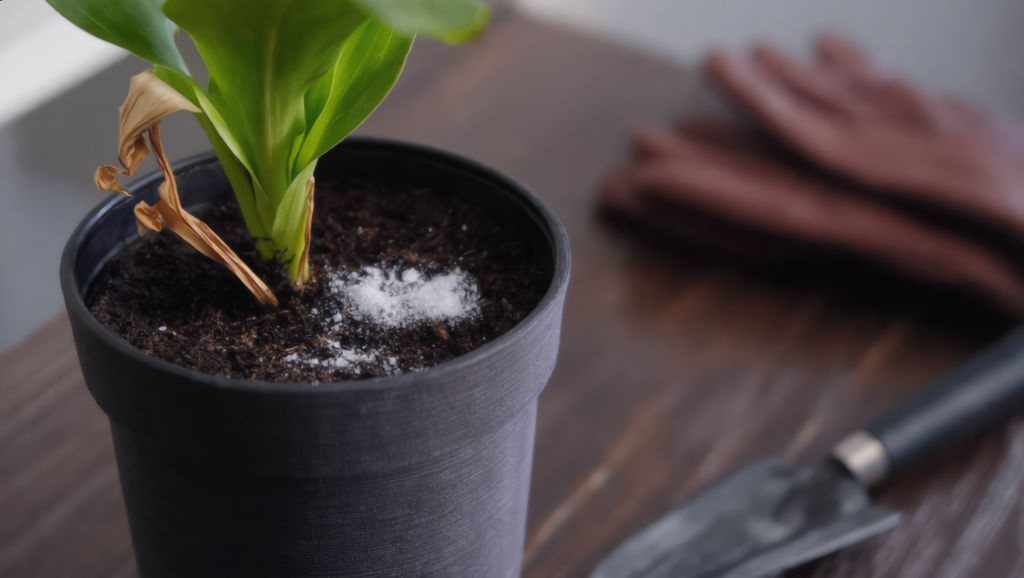
Tip burn is a non-infectious, physiological condition in which the margins of young, rapidly expanding lettuce leaves turn brown, curl, and eventually die back. The damage often starts on the inner “heart” leaves, close to harvest, and may not be obvious until you cut the head open. Outer leaves can also be affected, but inner leaf tip burn is the classic form that ruins marketable quality.
- Necrosis (dead tissue) along leaf margins and tips.
- Most severe on young, fast-growing leaves with low transpiration.
- Not caused by a pathogen; you cannot “spread” it like a disease.
- Strongly influenced by environment, growth rate, and calcium distribution within the plant.
Although tip burn looks like a simple “lack of calcium” problem, the reality is more nuanced.
The Calcium Connection In Lettuce Tip Burn: Deficiency vs. Distribution
Calcium is essential for plant cell wall structure and membrane stability. It forms cross-links in the middle lamella (the “glue” between cells), helping tissues stay firm and intact as they expand. When calcium levels in young, rapidly growing tissues are too low, cell walls weaken, cells collapse, and the tissue dies—producing the characteristic brown, crispy edges of tip burn.
However, tip burn is usually a localized calcium deficiency. The plant as a whole may have adequate or even high calcium, but the inner leaves do not get enough. This happens because:
- Calcium moves with water in the xylem. Unlike nitrogen or potassium, calcium is relatively immobile in the phloem and does not readily move from old leaves to new ones. It travels primarily with the transpirational stream—water pulled up from the roots as leaves lose moisture to the air.
- Outer leaves transpire more. Mature, outer leaves lose more water and therefore draw more calcium-rich xylem flow. Young, inner leaves—especially in tight heads—transpire less and receive less calcium, even if the soil or nutrient solution is rich in it.
- Rapid growth outpaces supply. During periods of fast growth (high light, warm temperatures, ample nitrogen), the demand for calcium in expanding tissues can exceed what mass flow can deliver, especially if transpiration is limited by high humidity or poor air movement.
The result: the heart leaves end up with calcium concentrations well below the threshold needed to maintain cell integrity, leading to tip burn. Research suggests that young lettuce leaves need about 200 mmol kg⁻¹ dry matter (roughly 0.8% Ca) to avoid tip burn; many tip burn-susceptible leaves fall far below this.
Why Calcium Nitrate Is Specifically Important For Lettuce?
Not all calcium sources are equal when it comes to preventing tip burn. Calcium nitrate (Ca(NO₃)₂) is particularly effective for several reasons:
1. Highly soluble and plant-available
Calcium nitrate dissolves readily in water, making calcium immediately available in the root zone or as a foliar spray. This is crucial for fast-growing lettuce, which can outgrow slower-release calcium sources like gypsum or lime.
2. Provides nitrate nitrogen, not ammonium
Calcium nitrate supplies nitrogen in the nitrate (NO₃⁻) form, which:
- Promotes steady, balanced growth without excessive succulence.
- Enhances calcium uptake and translocation compared to ammonium-based nitrogen sources.
- Helps maintain a favorable cation balance in the root zone, reducing antagonism with other nutrients.
Ammonium-heavy fertilizers can actually depress calcium uptake and worsen tip burn, even if total calcium is adequate. Using nitrate-dominant nutrition (including calcium nitrate) is a recommended strategy to improve calcium availability.
3. Dual benefit: calcium plus nitrogen
With about 19% calcium and 15.5% nitrogen (typical formulation), calcium nitrate delivers both structural support (Ca) and growth fuel (N) in one product. This is especially useful during the rapid vegetative phase when lettuce needs both to avoid deficiency disorders while maintaining good growth.
4. Compatible with many systems
Calcium nitrate works in:
- Soil gardens (as a side dress or through fertigation).
- Hydroponic and greenhouse systems (as part of the nutrient solution).
- Foliar sprays (though formulation and timing matter).
This versatility makes it a go-to tool for both field growers and controlled-environment producers.
Does Adding Calcium To The Soil Always Help?
Here is where things get counterintuitive. Many gardeners assume that if tip burn is a calcium deficiency, they should just add more calcium to the soil. But research shows that under typical field conditions, tip burn severity is often unrelated to soil calcium availability.
Key findings from field studies:
- In California romaine production, soil solution calcium was generally high, and tip burn severity was unrelated to either leaf calcium concentration or soil calcium availability. The most severe tip burn occurred in fields where transpiration was reduced by foggy weather during the final two weeks of growth.
- Calcium fertilizers (including calcium nitrate, calcium thiosulfate, and calcium chloride) applied through drip irrigation during the final weeks of growth were ineffective in increasing leaf calcium or reducing tip burn in several field trials.
- Supplementary calcium applications using foliar sprays do not always effectively increase calcium levels or reduce tip burn, especially if not applied directly to the young, susceptible leaves.
The conclusion: under many field conditions, tip burn is primarily a function of environmental factors that limit transpiration and calcium transport, not a simple lack of calcium in the soil. Adding more calcium to the root zone alone often does not solve the problem.
That said, in controlled environments (greenhouses, hydroponics) and some soil situations, ensuring adequate calcium in the nutrient program does help, especially when combined with environmental management.
How Calcium Nitrate Actually Prevents Tip Burn
Calcium nitrate can reduce tip burn through several mechanisms, depending on how and when it is used:
1. Raising calcium levels in susceptible tissues
When applied as a foliar spray directly to young leaves, calcium nitrate can increase calcium concentrations in the very tissues most prone to tip burn. Studies show that foliar calcium sprays prevent tip burn provided they are applied directly to the young leaves before symptoms appear. Once the head closes and inner leaves are no longer accessible, sprays become much less effective.
One classic study found that only foliar spray treatments (not soil or nutrient solution calcium alone) prevented tip burn, and only when applied directly to young tissues. This confirmed that tip burn is associated with low calcium in young tissue, not necessarily low calcium in the whole plant.
2. Supporting balanced nutrition and growth
In hydroponic and fertigated systems, including calcium nitrate in the nutrient solution helps maintain adequate calcium levels (often 40–50 ppm Ca, or around 100–150 ppm nitrogen from Ca(NO₃)₂) during the rapid growth phase. This prevents the situation where growth outstrips calcium supply.
Using nitrate nitrogen sources rather than ammonium increases calcium availability and reduces the risk of tip burn and other calcium-related disorders like black heart in leafy vegetables.
3. Complementing environmental management
In greenhouses and high tunnels, calcium nitrate is most effective when combined with climate adjustments that promote steady transpiration and avoid explosive growth spurts:
- Moderate light and temperature to avoid excessively rapid growth.
- Good air movement (fans, ventilation) to increase leaf transpiration.
- Avoiding very high humidity, especially during the day, which suppresses transpiration.
- Slightly higher night-time humidity in some systems to promote root pressure and xylem flow.
Under these conditions, calcium nitrate helps ensure that the calcium being moved by transpiration is sufficient to meet the plant’s demand.
Practical Ways To Use Calcium Nitrate For Tip Burn Prevention
The best approach depends on your growing system.
For soil gardeners
- Ensure a balanced base fertility. Start with a soil test. If calcium is very low, amend with lime or gypsum before planting. But understand that this alone may not prevent tip burn if environmental conditions favor it.
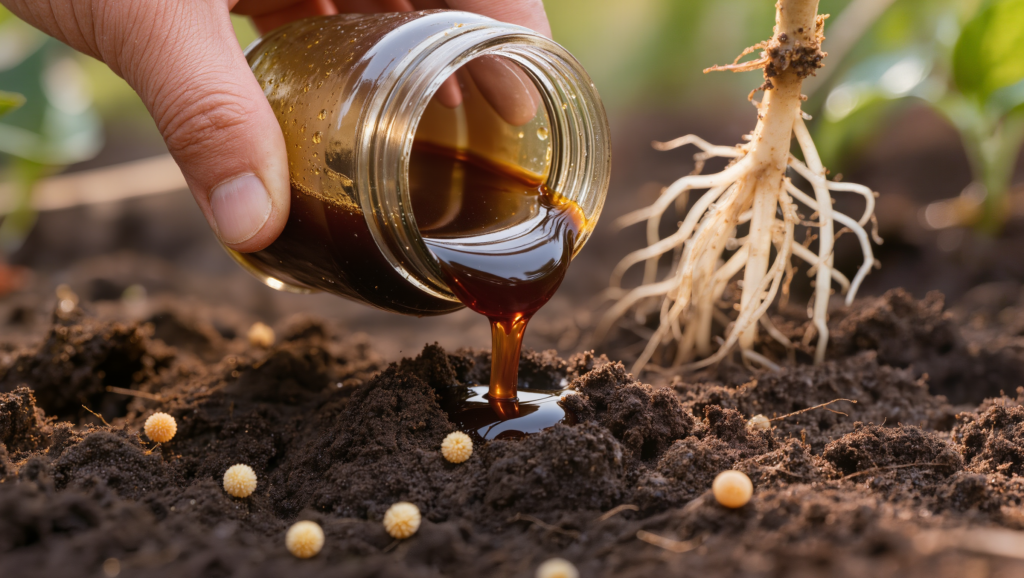
- Use calcium nitrate as a side dress or fertigation during rapid growth. Apply 1–2 times during the head formation stage, especially in periods of fast growth or when weather is humid and calm. Follow label rates (often around 1–2 lb per 100 ft of row, or as directed for your product).
- Consider foliar sprays early. If you notice early signs of tip burn or are growing susceptible varieties, a foliar spray of calcium nitrate (e.g., 0.2–0.4% solution) applied directly to young leaves can help. Always test on a few plants first to check for leaf burn, and spray in cooler parts of the day.
- Water Soil consistently. Fluctuating soil moisture disrupts calcium uptake. Mulch and regular watering help maintain steady transpiration and nutrient flow.
For hydroponic and greenhouse growers
- Include calcium nitrate in your nutrient formula. A typical target is 40–50 ppm calcium in the feed solution, often achieved by adding calcium nitrate to provide around 100–150 ppm nitrogen during the growth phase. Adjust based on your overall EC and nutrient balance.
- Avoid excessive EC and overly rich solutions. Very high nutrient levels can drive excessively rapid growth and worsen tip burn. Keep EC appropriate for lettuce (often 1.2–1.8 mS/cm, depending on stage and system).
- Manage climate for steady transpiration. Use fans for air movement, avoid extreme humidity swings, and moderate light/temperature to prevent growth spurts that outpace calcium delivery.
- Foliar calcium as a backup. In protected culture, weekly foliar sprays with calcium (often calcium chloride rather than nitrate to avoid leaf burn) at around 400 ppm Ca can increase tissue calcium in young leaves. Always trial first and avoid spraying in hot, bright conditions.
For all growers
- Choose resistant varieties. Some lettuce types (especially certain romaines and loose-leaf varieties) are less prone to tip burn than tightly headed crispheads. If tip burn is a recurring problem, variety selection can be as important as fertility.
- Shorten the production cycle if possible. Tip burn risk peaks in the final fast-growing phase before harvest. In some systems, harvesting slightly earlier or avoiding overly long production cycles can reduce incidence.
- Monitor, don’t overreact. Occasional minor tip burn on outer leaves may not significantly affect yield or quality. Focus prevention efforts on high-value crops and susceptible stages.
Common Mistakes To Avoid When Using Calcium Nitrate In Your Garden
- Relying solely on soil calcium. Adding lime or gypsum to already adequate soils will not necessarily prevent tip burn if transpiration and growth dynamics are the real issue.
- Spraying too late or on closed heads. Foliar calcium must reach the young, susceptible leaves. Once the head closes, sprays cannot penetrate to the inner tissue where tip burn starts.
- Using ammonium-heavy fertilizers. High ammonium can depress calcium uptake and worsen tip burn, even with adequate calcium in the soil or solution. Favor nitrate-dominant nutrition, including calcium nitrate.
- Ignoring environment. No amount of calcium will fully compensate for very high humidity, poor air movement, and extreme growth rates. Integrate fertility with climate and irrigation management.
Bottom line
Tip burn in lettuce is a classic case of “it is not just how much calcium you have, but where and when the plant gets it.” The disorder arises when rapidly growing inner leaves do not receive enough calcium to maintain cell wall integrity, usually because transpiration-driven transport cannot keep up with demand.
Calcium nitrate is one of the most effective tools to prevent tip burn because it:
- Supplies highly soluble, plant-available calcium.
- Provides nitrate nitrogen that supports balanced growth and enhances calcium uptake.
- Can be used in soil, hydroponic, and foliar applications to target calcium where it is needed.
But calcium nitrate is not a magic bullet. It works best as part of an integrated strategy that includes:
- Adequate (but not excessive) calcium in the root zone or nutrient solution.
- Consistent watering and good air movement to promote steady transpiration.
- Moderate growth rates through balanced nutrition and climate control.
- Early foliar applications to young leaves when risk is high.
- Selection of less susceptible varieties.
Used this way, calcium nitrate can be the gardener’s secret to picture-perfect lettuce: crisp, green, and free of those frustrating brown edges that turn a great crop into a disappointment.
Sources::