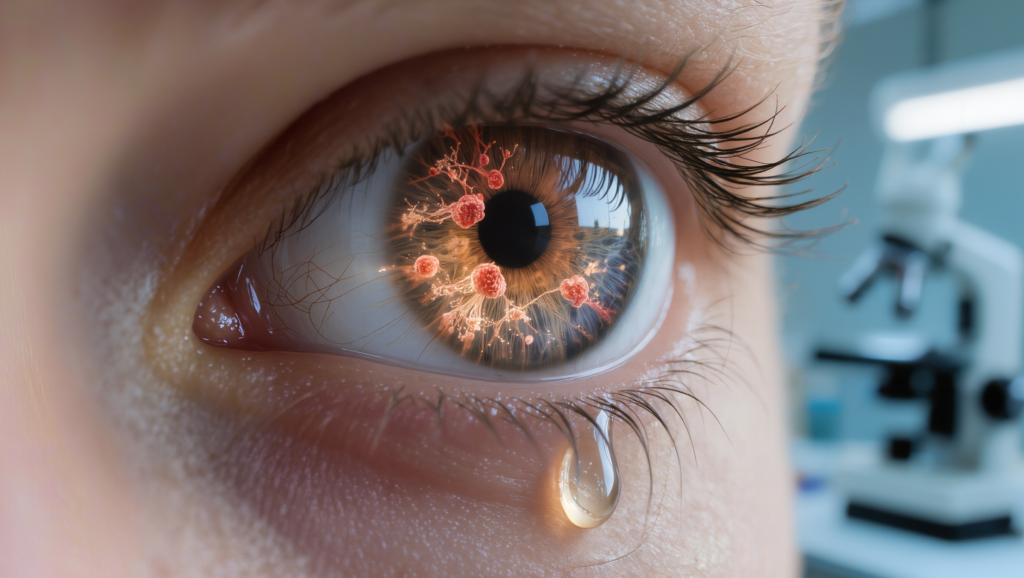












You have probably been told not to cry, or at least not to cry in public. But what if those tears are doing more than just expressing emotion? What if they are actually part of your body’s immune defense system? Recent research suggests that emotional crying may have a surprising connection to mucosal immunity—the first line of defense at your body’s surfaces, including your eyes, mouth, nose, and gut.
Tears are not just salty water. They are a complex fluid packed with antimicrobial proteins, antibodies, and other immune factors that protect your eyes and contribute to overall mucosal health. And while the direct link between crying and systemic immunity is still being explored, the evidence points to an intriguing relationship between emotional tears, stress regulation, and immune function.
Let’s dive into the science of tears, mucosal immunity, and how crying might be doing more for your defenses than you realize.
Biologically Speaking – What Are Tears?
Tears are not just water with a little salt. They are a sophisticated biological fluid produced by the lacrimal glands, designed to:
- Lubricate and protect the surface of the eye.
- Wash away dust, debris, and pathogens.
- Deliver antimicrobial and immune-modulating molecules to the ocular surface.
There are three main types of tears:
- Basal tears: Constantly produced to keep the eye moist and protected.
- Reflex tears: Triggered by irritants like onions, smoke, or wind.
- Emotional tears: Produced in response to strong emotions like sadness, joy, or stress.
All three types contain antimicrobial compounds, but emotional tears may have a slightly different composition, including higher levels of certain stress-related hormones and proteins.
The Immune Arsenal In Your Tears
Your tear film is a frontline defense system for your eyes—and by extension, part of your broader mucosal immunity. It contains a remarkable array of antimicrobial and immune-modulating factors:
1. Lysozyme
Lysozyme is an enzyme that breaks down bacterial cell walls, directly killing or inhibiting many types of bacteria. It is one of the most abundant proteins in tears and is found in higher concentrations there than in almost any other body fluid.
2. Lactoferrin
Lactoferrin is an iron-binding protein that:
- Sequesters iron from bacteria, starving them of a nutrient they need to grow.
- Has direct antimicrobial and antiviral properties.
- Can disrupt the membranes of some bacteria, fungi, and viruses.
Lactoferrin makes up about 20–30% of the total protein in basal and reflex tears, making it a major player in ocular defense.
3. Secretory IgA (sIgA)
Secretory immunoglobulin A is an antibody that:
- Prevents microbes from adhering to epithelial surfaces.
- Enhances phagocytosis (engulfing of pathogens) by immune cells.
- Helps neutralize toxins and viruses.
sIgA is a key component of mucosal immunity throughout the body, including in tears, saliva, and gut secretions.
4. Other antimicrobial molecules
Tears also contain:
- Complement proteins: Part of the innate immune system that helps destroy pathogens.
- Defensins: Small antimicrobial peptides that can target bacteria, fungi, and viruses.
- Lipocalin: A protein that binds microbial siderophores (iron-scavenging molecules used by bacteria).
- Secretory phospholipase A2: An enzyme with antimicrobial activity.
Together, these factors create a multi-layered defense system that is highly effective at keeping the ocular surface free of infection.
The Mucosal Immunity Connection Of Crying
Mucosal immunity refers to the immune defenses at the body’s mucosal surfaces—where the inside of your body meets the outside world. These include:
- The eyes (conjunctiva).
- The mouth and throat.
- The nose and respiratory tract.
- The gastrointestinal tract.
The tear film is a key part of ocular mucosal immunity, but it is also connected to broader mucosal immune networks. For example:
- IgA produced in the gut can be transported to other mucosal sites, including the eyes.
- Common mucosal immune system: Immune cells activated in one mucosal site (like the gut) can home to other mucosal sites (like the eyes or respiratory tract), providing coordinated protection.
This means that the health of your gut and other mucosal surfaces can influence the quality of your tear film and ocular defenses—and vice versa.
How Crying Might Influence Immunity
The direct link between emotional crying and systemic immunity is still an active area of research, but several lines of evidence suggest a connection.
1. Stress reduction and cortisol
Chronic stress and elevated cortisol can suppress immune function, including:
- Reduced T-cell and natural killer (NK) cell activity.
- Lower immunoglobulin production.
- Increased susceptibility to infections.
Some studies suggest that crying may help reduce stress and, in some cases, lower cortisol levels:
- A study of women watching sad films found that those who cried had more stable respiration and heart rate compared to non-criers, suggesting a role in maintaining biological homeostasis.
- Another study found that women who reported more intense crying had greater decreases in cortisol levels.
However, results are mixed. A study of breast cancer survivors undergoing a structured crying therapy program found no significant change in cortisol, possibly because baseline levels were already normal.
2. Immunoglobulin G (IgG) and immune activity
A 2020 study on crying therapy in breast cancer survivors found:
- Significant increases in serum IgG levels after the intervention.
- Improved mood and reduced distress.
- No significant change in cortisol, but a clear increase in immune activity as measured by IgG.
IgG is important for:
- Defense against bacteria, viruses, and toxins.
- Secondary immune responses (memory immunity).
- Overall immune competence.
This suggests that crying, when part of a structured emotional release, may support immune function—though the exact mechanism is not fully understood.
3. Tears as a route for stress hormone excretion
One hypothesis is that emotional tears help excrete stress hormones like cortisol and adrenocorticotropic hormone (ACTH) from the body.
- Tears contain higher concentrations of stress-related hormones compared to other body fluids.
- Crying may help reduce circulating levels of these hormones, indirectly supporting immune function.
However, direct evidence for this in humans is limited, and results are inconsistent.
4. Parasympathetic activation and relaxation
After crying, many people report feeling calmer and more relaxed. This may be due to:
- Activation of the parasympathetic nervous system (“rest and digest” mode).
- Release of endorphins and other feel-good neurotransmitters.
- Reduction in sympathetic (“fight or flight”) activity.
A calmer nervous system can support better immune function over time, as chronic stress is known to suppress immunity.
What Science And Research Says About Crying And Immune Markers
Here is a summary of key findings from studies on crying and immunity:
| Study | Population | Intervention | Key Findings |
|---|---|---|---|
| Byun et al. (2020) | 27 breast cancer survivors | 3-week crying therapy program | Significant increase in IgG; improved mood and reduced distress; no significant change in cortisol. |
| Gračanin et al. (2014) | Women watching emotional films | Self-reported crying intensity | More intense crying associated with greater cortisol reduction. |
| Vingerhoets et al. (1997) | Women watching emotional movies | Crying vs. non-crying | Moderate correlation between crying intensity and cortisol reduction; no difference between criers and non-criers overall. |
| Bylsma et al. (2019) | Women watching sad films | Crying vs. non-crying | Criers had more stable respiration and heart rate; no difference in cortisol or stress tolerance. |
The overall picture is mixed but intriguing:
- Crying may support immune function through stress reduction and possible IgG increases.
- Cortisol effects are inconsistent, possibly depending on baseline stress levels and study design.
- Tears themselves contain immune factors that directly protect the eyes and contribute to mucosal defense.
Tears And Mucosal Immunity: The Direct Connection
Even if the link between crying and systemic immunity is still unclear, the direct role of tears in mucosal immunity is well established.
How tears protect the eyes
- Washing action: Blinking and reflex tearing physically flush out pathogens and debris.
- Antimicrobial proteins: Lysozyme, lactoferrin, and defensins directly kill or inhibit microbes.
- Immune exclusion: sIgA prevents pathogens from adhering to the ocular surface.
- Immune modulation: Tear components can enhance epithelial resistance to bacterial invasion and modulate innate immune responses.
The gut-eye axis
Emerging research suggests a connection between gut health and ocular surface immunity:
- Gut-derived IgA can be transported to the eyes.
- Gut microbiota may influence systemic and mucosal immune tone, including at the ocular surface.
- Dysbiosis (imbalance in gut bacteria) has been linked to dry eye and other ocular surface diseases.
This means that supporting gut health (through diet, probiotics, etc.) may indirectly support tear quality and ocular immunity.
How To Support Your Mucosal Immunity
While you cannot (and should not) force yourself to cry for health benefits, you can support your mucosal immune system in other ways:
1. Protect your eyes
- Avoid rubbing your eyes, which can introduce pathogens.
- Use artificial tears if your eyes are dry.
- Wear protective eyewear in dusty or windy environments.
2. Support gut health
- Eat a diverse, fiber-rich diet to support beneficial gut bacteria.
- Consider probiotic or fermented foods.
- Manage stress, as chronic stress can disrupt gut microbiota and mucosal immunity.
3. Manage stress in healthy ways
- Practice relaxation techniques (deep breathing, meditation, yoga).
- Get adequate sleep.
- Engage in regular physical activity.
- Allow yourself to cry when you need to—emotional release may support stress regulation.
4. Stay hydrated
- Adequate hydration supports tear production and overall mucosal moisture.
- Dry eyes can be a sign of dehydration or other underlying issues.
The Bigger Picture: Tears As Part Of Whole-Body Immunity
Tears are often overlooked in discussions of immunity, but they are a vital part of the body’s defense system. They:
- Protect the eyes directly with antimicrobial and immune-modulating factors.
- Reflect broader mucosal immune health.
- May be influenced by emotional state and stress levels.
And while the direct link between crying and systemic immunity is still being explored, the evidence suggests that emotional expression—including crying—may play a role in stress regulation and, by extension, immune function.
Bottom line
Your tears are more than just a response to emotion—they are a sophisticated part of your mucosal immune system. Packed with antimicrobial proteins, antibodies, and other defense factors, tears protect your eyes and contribute to broader mucosal immunity.
While the direct link between crying and systemic immunity is still being studied, research suggests that emotional crying may support stress regulation and, in some cases, immune function (as measured by IgG levels).
So the next time you feel the urge to cry, remember: it is not just an emotional release. It is part of your body’s complex, interconnected defense system—and allowing yourself to cry may be one small way to support your overall health and resilience.