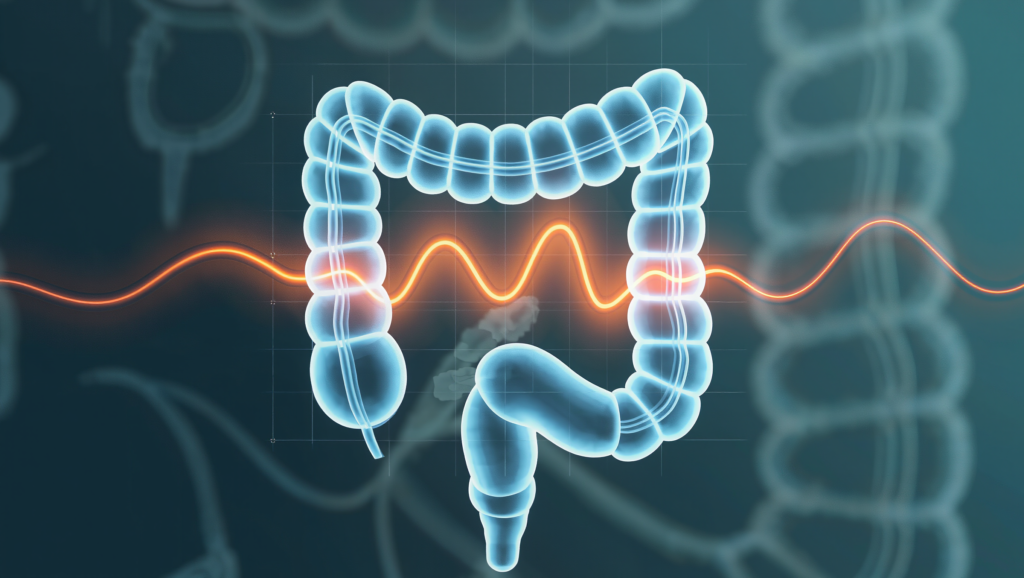












That unmistakable rumble can arrive during a quiet meeting, in the middle of the night, or right after lunch—when you are definitely not hungry. The sound, called borborygmi, is usually ordinary digestive activity: gas and fluid moving as the muscles of your stomach and intestines contract. Hunger can make the noise more noticeable, but it is only one possible explanation.
One important source is the migrating motor complex, a recurring pattern of contractions that sweeps through the stomach and small intestine between meals. Think of it less as a simple “empty-stomach alarm” and more as part of the gut’s between-meal housekeeping. It can rumble whether or not you feel hungry.
What Makes A Person’s Stomach Growl?
Your digestive tract is muscular. It keeps moving food, liquid, digestive secretions and gas through the gut with coordinated contractions called motility. The sounds happen when those contents shift through hollow sections of the stomach and intestines—rather like liquid and air moving through a flexible tube.
The medical word borborygmi describes these rumbling or gurgling sounds. Despite the familiar phrase “stomach growl,” the noise may come from the small intestine or other parts of the digestive tract, not just the stomach.
Growls can happen:
- Between meals, as fasting motility resumes.
- During digestion, as food and fluid move along.
- After drinking, when fluid and air shift.
- When there is extra gas in the gut.
- During stress, which can affect gut movement and how strongly you notice bodily sensations.
The volume is not a reliable measure of how hungry you are or how well your digestion is working. Empty spaces can make movement louder because there is less food to muffle the sound; a full gut can still make noise, too.
The Migrating Motor Complex: Your Gut’s Between Meal Pattern
After you eat, the digestive tract switches into a pattern suited to processing a meal: mixing, moving food onward and coordinating gastric emptying. Once digestion and absorption progress and the gut is in a fasting interval, a different pattern becomes more prominent: the migrating motor complex, or MMC. Eating interrupts the MMC’s fasting pattern.
The MMC is cyclical. Reviews describe phases of relative quiet, irregular contractions, and a brief period of stronger, more regular contractions—often called phase III—that travels through the stomach or small intestine. A typical cycle is commonly reported at roughly 90–120 minutes, though timing varies.
That active phase can move gas and residual material along, producing audible rumbling. It is sometimes nicknamed the gut’s “housekeeper,” but the scientific picture is more nuanced: researchers continue to study its functions and regulation, including the role of gut nerves and hormones such as motilin.
The MMC may overlap with hunger signals. Motilin levels rise and fall in step with MMC activity, and gastric phase III contractions have been associated with peak hunger and food intake in healthy people. But the association does not mean every growl signals a need to eat.
Why You Can Growl When You Are Not Hungry
1. Digestion is still happening
A meal does not make your digestive tract go silent. The stomach mixes food and sends it onward; the intestines continue moving material and gas. Those ordinary movements can create sounds after eating, too.
Meal size and composition affect how digestion proceeds, and gastric emptying is regulated rather than being a simple “stomach full or empty” switch. So a rumble after a meal does not automatically mean that food has already passed through—or that you need another meal.
2. Gas and liquid are moving
Borborygmi are often produced by gas and fluid moving through the gut. Swallowed air, fizzy drinks, and gas produced as gut microbes ferment certain carbohydrates can make movement noisier. The sound alone cannot tell you which source is responsible.
Some people notice more sounds after particular foods. That does not necessarily mean those foods are harmful; it may simply reflect differences in fermentation, gas, or gut movement. If a food repeatedly causes discomfort or other symptoms, tracking meals and symptoms can be more informative than reacting to a sound in isolation.
3. You have gone a while without food—but may not feel hungry
During fasting intervals, MMC activity can resume and become audible. The contractions are part of a recurring motility pattern, not a direct measurement of your appetite. You may feel hungry at the same time, but the growl itself does not prove that your body needs calories right now.
4. Stress may change gut activity or attention
The brain and digestive tract communicate through nerves, hormones and other signals. Stress can affect gut sensations and motility, and it can also make you more attentive to bodily sounds. A rumble during a tense presentation may feel especially conspicuous, even if the underlying activity is routine.
5. Sometimes the sound is coming from the intestines
The phrase “stomach growling” can be misleading. The digestive tract is long, and sounds can travel. A rumble that seems to come from your stomach may actually be generated farther along the small intestine. [1007][1010]
Hunger – Rumbling And The Gut–Brain Connection
Hunger is not controlled by one sound or one organ. It reflects signals from the brain, stomach, intestines, hormones, recent meals, sleep, habits and emotional state. MMC activity can be associated with hunger, but appetite is a broader experience than gut contractions alone.
A useful distinction:
- A growl is a sound made by movement in the digestive tract.
- Hunger is a sensation and motivation to eat, shaped by several body and brain signals.
- The MMC is a motility pattern that is more prominent between meals and interrupted by feeding.
That is why you can have a growling gut while comfortably full, or feel hungry without a dramatic rumble. Neither experience is unusual by itself.
Does A Noisy Stomach Mean Something Is Wrong?
Usually, no. Occasional rumbling without pain or other symptoms is commonly part of normal digestion. Sounds vary from person to person and from day to day. They can be more noticeable when you are hungry, after a meal, or when gas is moving.
The sound becomes more worth discussing with a healthcare professional when it is persistent or occurs alongside concerning symptoms, such as:
- Severe or worsening abdominal pain.
- Repeated vomiting.
- A swollen or distended abdomen.
- Inability to pass stool or gas.
- Blood in the stool or black, tarry stool.
- Persistent diarrhea, constipation, or unexplained weight loss.
- Fever or signs of dehydration.
A growl by itself cannot diagnose a digestive condition. Clinicians interpret bowel sounds alongside symptoms, medical history and, when appropriate, an examination or tests. If symptoms are severe or sudden, seek urgent medical care rather than trying to interpret the sound at home.
What You Can Do To Ease Ordinary Rumbling
If the sound is harmless but inconvenient, these simple steps may help:
- Eat at a steady pace. Eating quickly can lead to swallowing more air and may make digestive sensations more noticeable.
- Notice carbonated drinks and personal triggers. Fizzy drinks can add gas; if a food consistently brings discomfort, keep a brief food-and-symptom record.
- Drink normally. Water is part of ordinary digestion, but there is no need to drink extra water just to silence a rumble.
- Avoid treating every sound as a hunger cue. Check in with your overall appetite and the timing of your last meal.
- Manage stress where possible. Relaxation, a brief walk or slow breathing may help if you notice that stress makes gut sensations more prominent.
These are comfort measures, not treatments for a diagnosed gastrointestinal disorder. If symptoms are frequent, painful or disruptive, a clinician can help identify the cause.
The Takeaway
A strange stomach growl does not always mean you are hungry. It may reflect the migrating motor complex’s between-meal contractions, ordinary digestion, or gas and fluid moving through the stomach and intestines. The MMC follows a recurring fasting pattern, and its most active contractions can be noisy; eating interrupts that pattern.
For most people, occasional borborygmi are normal. The sound alone is not a reliable measure of hunger or a sign that something is wrong. Pay attention instead to the full picture: whether you have pain, persistent bowel changes, vomiting or other symptoms. When rumbling comes with significant or continuing symptoms, get medical advice rather than assuming it is just hunger.