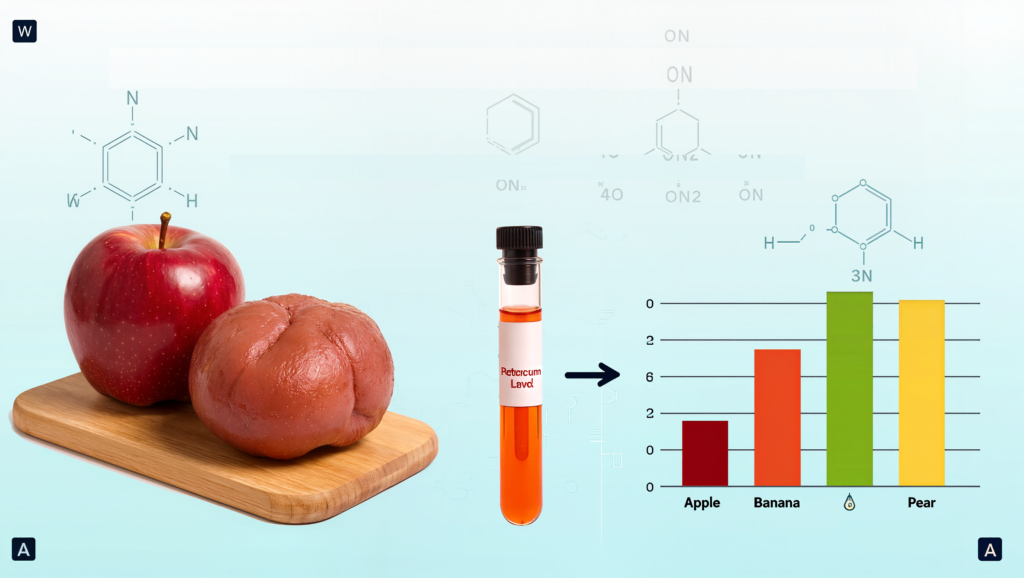












You have probably noticed it at the grocery store: some apples are crisp and snappy, while others feel soft and mealy. Some peaches are firm and juicy, while others are almost mushy. The difference is not just about ripeness or variety—it is also about what is happening inside the fruit at the cellular level, including the role of minerals like potassium.
Fruit firmness is a complex trait influenced by many factors: genetics, ripening stage, water content, and especially the balance of minerals like calcium, potassium, and magnesium in the fruit tissue. While calcium is often the star player in firmness, potassium plays a surprisingly important supporting role—sometimes enhancing firmness, sometimes contributing to softening, depending on the context.
In this post, we’ll unpack the science of fruit texture, how potassium fits into the picture, and why the balance between potassium and calcium matters so much for that perfect bite.
What Makes Fruit Firm Or Mushy?
Fruit texture is determined by the structure of plant cells and how they hold together. The key players are:
- Cell walls: Made of cellulose, hemicellulose, and pectin.
- Middle lamella: The “glue” between cells, rich in pectin.
- Turgor pressure: Water pressure inside cells that keeps them plump and firm.
- Cell-to-cell adhesion: How strongly cells stick together.
When fruit is firm, these structures are intact and strong. When fruit softens (like during ripening), enzymes break down pectin and other cell wall components, cells separate, and the tissue becomes mushy.
The Role Of Calcium In Fruit Firmness
Before we get to potassium, it is important to understand calcium’s role, because it is the primary mineral associated with fruit firmness.
Calcium works by:
- Cross-linking pectin molecules. Calcium ions bind to negatively charged pectin chains, forming an “egg-box” structure that strengthens the cell wall.
- Maintaining cell membrane integrity. Calcium stabilizes membranes, preventing leakage and cell damage.
- Reducing cell wall-degrading enzymes. Calcium can inhibit enzymes like pectinase and polygalacturonase that break down cell walls.
Studies show that higher calcium levels in fruit tissue are strongly correlated with:
- Greater firmness.
- Slower softening during ripening.
- Longer shelf life.
- Reduced susceptibility to diseases and disorders.
For example, in papaya, fruit with calcium concentrations above 130 µg/g fresh weight showed slower softening rates than fruit with lower calcium.
So Where Does Potassium Fit In?
Potassium is the most abundant cation in fruit tissue and plays several roles that can influence texture—both directly and indirectly.
1. Potassium and turgor pressure
Potassium is a major osmolyte, meaning it helps regulate water balance inside cells. Adequate potassium:
- Maintains turgor pressure, keeping cells plump and firm.
- Supports water uptake and retention in fruit tissue.
In apples, potassium silicate applications increased fruit firmness, likely due to:
- Higher potassium content in the fruit.
- Increased osmolyte accumulation.
- Higher pressure potential in the mesocarp (flesh) tissue. [
2. Potassium and sugar accumulation
Potassium enhances phloem loading and assimilate transport, which:
- Increases sugar accumulation in fruit.
- Raises total soluble solids (TSS).
- Can indirectly support firmness by increasing osmotic pressure.
In muskmelons, foliar potassium applications increased both firmness and soluble solids, suggesting a link between sugar content and texture.
3. Potassium and enzyme activity
Potassium may modulate the activity of enzymes involved in cell wall breakdown:
- By influencing calcium transport and availability.
- By affecting the balance between pectin methylesterase (PME) and polygalacturonase
However, the exact mechanisms are still being studied, and results can vary by fruit type and potassium form.
The Potassium-Calcium Balance: Why It Matters In Fruit Firmess
Here is where things get interesting. Potassium and calcium can interact in ways that affect fruit firmness—sometimes positively, sometimes negatively.
Potassium can reduce calcium uptake
In some cases, high potassium levels can interfere with calcium uptake by the roots, leading to:
- Lower calcium concentrations in fruit.
- Reduced firmness.
- Increased susceptibility to softening and disorders.
For example, in papaya, potassium fertilization decreased mesocarp calcium concentration, which was associated with faster softening.
In apples, 50% potassium fertilizer applied at post-anthesis plus 50% at the expansion stage significantly decreased calcium content in Fuji apples, which was detrimental to postharvest storage.
The K:Ca ratio matters
Studies show that fruit firmness is often:
- Positively correlated with calcium content.
- Negatively correlated with the K:Ca ratio.
This means that simply increasing potassium does not always improve firmness. If potassium levels get too high relative to calcium, it can actually hurt firmness.
In cherries, for example, fruit firmness was positively correlated with calcium content but negatively correlated with K:Ca and N:Ca ratios.
Potassium Deficiency: The Other Side Of The Coin
While too much potassium can sometimes hurt firmness, too little potassium is also a problem.
Potassium deficiency leads to:
- Small, poorly colored fruit.
- Fruit that may not ripen properly.
- Hard, inedible fruit in some cases.
This is because potassium is essential for:
- Proper fruit development.
- Sugar transport and accumulation.
- Enzyme activity involved in ripening.
So the goal is not to maximize potassium at all costs, but to maintain an optimal balance with calcium and other nutrients.
What The Studies Show About Potassium And Firmness Based on Fruit Type
The effect of potassium on firmness varies by fruit:
Apples
- Potassium silicate and sulfate applications increased firmness.
- Potassium nitrate sometimes reduced firmness.
- Excessive potassium reduced calcium content, hurting storage quality.
Melons
- Foliar potassium (especially sulfate and complexed forms) increased firmness and soluble solids.
- Potassium nitrate tended to result in less firm fruit.
Papaya
- Potassium fertilization decreased calcium in fruit, associated with faster softening.
- Potassium alone had no significant effect on firmness.
Cherries
- Fruit firmness positively correlated with calcium but negatively with K:Ca ratio.
- Excessive potassium reduced calcium and magnesium, affecting firmness retention.
Practical Implications For Growers And Consumers
For growers
- Balance potassium and calcium. Avoid excessive potassium that reduces calcium uptake.
- Choose the right potassium form. Sulfate and silicate forms may be better for firmness than nitrate.
- Monitor leaf and fruit nutrient levels. Regular testing can help maintain optimal ratios.
For consumers
- Firmness is not just about potassium. It is influenced by many factors, including ripeness and storage.
- Choose fruit based on intended use. Firm fruit for slicing, softer fruit for eating fresh.
- Store fruit properly. Temperature and humidity affect texture more than potassium levels in the short term.
Other Factors That Influence Fruit Texture
Fruit firmness is a polygenic trait influenced by many factors:
- Genetics: Variety and cultivar.
- Environment: Temperature, water, light.
- Nutrition: Calcium, potassium, magnesium, nitrogen.
- Ripening stage: Ethylene production, enzyme activity.
- Postharvest handling: Storage temperature, humidity, packaging.
Potassium is one piece of this puzzle, but it does not act alone. Its effect on firmness depends on its interaction with calcium and other nutrients.
Bottom line
Why are some fruits mushy and others firm? The answer involves a complex interplay of cell wall structure, enzyme activity, water balance, and mineral nutrition. While calcium is the primary driver of firmness, potassium plays an important supporting role.
Key takeaways:
- Potassium supports turgor pressure and sugar accumulation, which can enhance firmness.
- Too much potassium can reduce calcium uptake, hurting firmness. [
- The K:Ca ratio matters. Fruit firmness is often negatively correlated with this ratio.
- Potassium deficiency can also cause texture problems, including hard, unripe fruit. [
For growers, the goal is to maintain an optimal balance of potassium and calcium, not to maximize one at the expense of the other. For consumers, understanding that firmness is influenced by many factors can help you choose and store fruit for the best texture.
Whether you prefer a crisp apple or a soft, juicy peach, the science of fruit texture is a reminder that what happens at the cellular level has a big impact on what you experience with every bite.