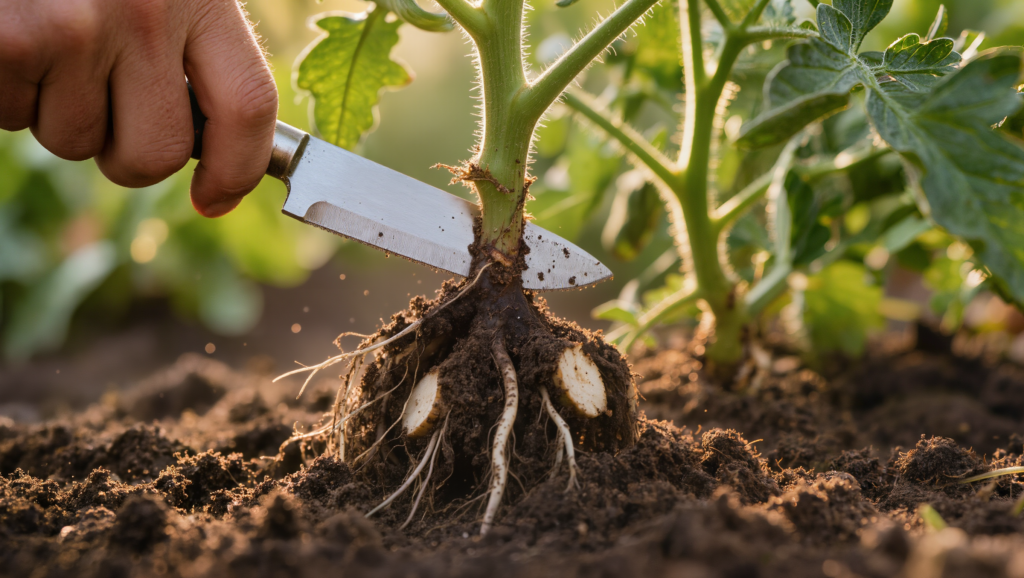












If you grow your own vegetables, you have probably wondered whether you should trim the roots (and leafy tops) before putting your harvest into storage. The answer is not always obvious, but the science of postharvest handling offers some clear guidance. For most root vegetables, trimming the leafy tops—but not necessarily cutting off the root tip—can significantly extend shelf life by reducing water loss.
Water loss is one of the biggest enemies of fresh produce. Once a vegetable is harvested, it can no longer pull water from the soil, so every bit of moisture it loses is gone for good. This is why proper trimming, handling, and storage can make the difference between a crisp carrot and a limp, shriveled one.
In this post, we’ll explore the science behind root trimming, how it affects water retention, and what you can do to keep your homegrown produce fresh for as long as possible.
Why Crop Water Loss Matters After Harvest
Fresh produce is mostly water—often 65–95% by weight. Once harvested, this water starts to evaporate through a process called transpiration.
Key facts:
- Transpiration is the loss of water vapor from plant tissues.
- Water loss leads to wilting, shriveling, softening, and loss of crispness.
- A 5% loss of fresh weight is enough to make many vegetables wilt and become unmarketable.
- A 10% loss can make some produce unusable.
This is why controlling water loss is critical for extending shelf life.
The Role Of Leafy Tops In Water Loss
For root vegetables like carrots, beets, radishes, and turnips, the leafy tops are a major source of water loss.
Why tops increase water loss
- Leafy tops have a high surface-to-volume ratio, meaning they lose water faster than the root itself.
- Leaves continue to transpire even after harvest, pulling moisture from the root.
- Keeping the tops on can reduce shelf life by increasing water losses from the roots.
This is why many growers trim the tops before storage..
What the research says
Studies and extension guidelines consistently recommend removing or trimming leafy tops from root vegetables before storage:
- Carrots: Removing tops reduces water loss and extends storage life.
- Beets, radishes, and turnips: Trimming tops is standard practice for long-term storage.
- Cabbage and lettuce: Trimming outer leaves reduces deterioration.
Should You Trim The Crop’s Root Tip Too To Prevent Water Loss After Harvest?
This is where it gets a bit more nuanced. The answer depends on the type of root vegetable and how you plan to store it.
When to trim the root tip
- If the root tip is damaged or diseased: Cut it off to prevent rot from spreading.
- If you are storing for a long time: A clean cut can reduce the risk of decay.
- If the root is very long or unwieldy: Trimming can make handling easier.
When not to trim the root tip
- If the root is healthy and intact: Leave it alone.
- If you are storing short-term: No need to trim.
- If the root is delicate: Cutting can introduce wounds that increase water loss and decay risk.
The general rule
- Trim the tops, not the roots, unless there is a specific reason to do so.
- Use a sharp knife to make a clean cut if you do trim.
The Science Of Trimming Crop Roots And Water Retention
Trimming affects water retention in several ways:
1. Reduces surface area
By removing leafy tops, you reduce the total surface area exposed to air:
- Less surface area = less transpiration.
- Less water loss = longer shelf life.
2. Removes high-transpiration tissues
Leaves and stems are the main sites of transpiration:
- They have stomata (tiny pores) that release water vapor.
- Removing them reduces overall water loss.
3. Reduces respiration
Trimming can also reduce the rate of respiration:
- Less respiration = less water and energy used.
- This slows down deterioration.
The Role Of Curing In Root Vegetables
For some root vegetables, curing is an important postharvest treatment that can further reduce water loss and decay.
What is curing?
Curing is a process where:
- The produce is held at a specific temperature and humidity for a period of time.
- This allows the skin to toughen and wounds to heal.
Which crops benefit from curing?
- Garlic, onions, potatoes, and sweet potatoes.
- Curing can significantly extend storage life.
How curing works
- It reduces water loss by toughening the skin.
- It reduces decay by healing wounds.
How To Store Root Vegetables For Maximum Freshness
Proper storage is just as important as proper trimming. Here are some tips:
1. Keep it cool
- Most root vegetables store best at 0–5°C (32–41°F).
- Lower temperatures slow down respiration and water loss.
2. Keep it humid
- Aim for 90–95% relative humidity for most root vegetables.
- This helps prevent water loss.
3. Use breathable containers
- Avoid airtight containers that can trap moisture and promote rot.
- Use perforated bags or containers lined with damp paper towels.
4. Avoid washing before storage
- Do not wash root vegetables before storing unless absolutely necessary.
- Moisture on the surface can promote rot.
5. Check regularly
- Remove any spoiled or damaged produce promptly.
- This prevents spread of rot.
The Exceptions: When Not To Trim Crop Roots
While trimming is generally beneficial, there are some exceptions:
1. If you plan to eat soon
- If you will eat the produce within a few days, trimming may not be necessary.
- The risk of water loss is lower over a short period.
2. If the root is very small
- Small roots have a higher surface-to-volume ratio and lose water faster.
- They should be sold or eaten without delay.
3. If the root is damaged
- Damaged roots should be used quickly, not stored.
- Trimming will not save them.
General Postharvest Handling
Postharvest handling is a critical part of the food supply chain. It affects:
- Food security: Reducing losses means more food available.
- Economics: Less waste means more profit for growers.
- Nutrition: Better handling preserves nutrients.
Key principles
- Minimize handling.
- Cool quickly.
- Maintain proper humidity.
- Avoid damage.
Bottom line
Trimming roots before harvest—specifically the leafy tops—can significantly extend the shelf life of root vegetables by reducing water loss. However, the root tip itself should generally be left intact unless it is damaged or diseased.
Key takeaways:
- Water loss is the main enemy of fresh produce.
- Leafy tops increase water loss from root vegetables.
- Trim the tops, not the roots, for best results.
- Curing can further extend storage life for some crops.
- Proper storage (cool, humid, breathable) is essential.
By following these simple steps, you can keep your homegrown produce fresh for weeks or even months, reducing waste and enjoying the full flavor and nutrition of your harvest.