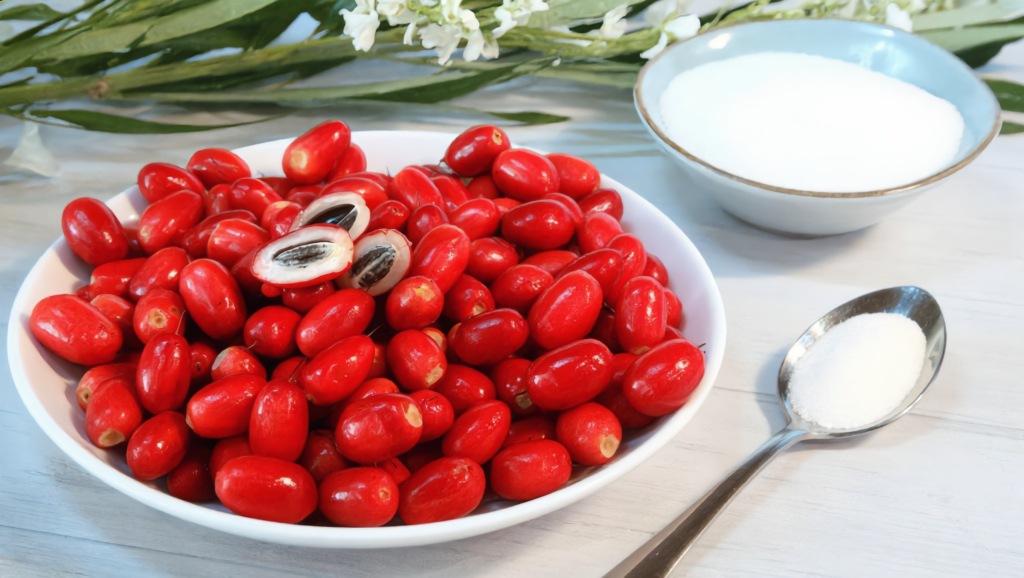












Imagine biting into a lemon and tasting candy. Or sipping unsweetened lime juice and getting a dessert-like sweetness instead of a face-puckering sour shock. That is the strange, delightful trick of the miracle berry (Synsepalum dulcificum), a small red fruit from West Africa that can temporarily flip your perception of sour flavors into sweetness.
The secret is a natural glycoprotein called miraculin. It does not add sugar, calories, or artificial sweeteners to your food. Instead, it binds to sweet-taste receptors on your tongue and waits for acid to switch on a sweet signal—turning lemons, limes, vinegar, and tart fruit into surprisingly sweet-tasting treats.
But miracle berries are more than a party trick. Researchers are exploring them as a potential tool to help people enjoy less-sweet foods, reduce added sugar, and even manage taste changes during cancer treatment. Let’s unpack how this “taste illusionist” works, what it can and cannot do, and how to try it safely.
What Is Miracle Berry?
Miracle berry is the fruit of Synsepalum dulcificum, a shrub native to West Africa. It is also called miracle fruit, miraculous berry, or sweet berry.
The berries themselves are:
- Small, red, and oval-shaped.
- Mildly sweet rather than intensely sweet.
- Rich in a glycoprotein called miraculin, concentrated in the pulp.
Miraculin is a taste-modifying protein—not a conventional sweetener. On its own, it does not taste especially sweet. Its magic appears only after you eat something acidic.
How Miraculin Tricks Your Tongue
Your tongue detects five basic tastes: sweet, sour, salty, bitter, and umami. Sweetness is detected largely by a receptor complex called T1R2-T1R3.
Miraculin works through a clever, pH-dependent mechanism:
- You chew the berry. Miraculin coats the surface of taste cells and binds to the sweet receptor.
- At neutral pH, it stays quiet. It may even block other sweeteners from activating the receptor.
- You eat something sour. The acid lowers the pH around the receptor.
- The acidic environment changes miraculin’s shape. This activates the sweet receptor rather than the sour receptor pathway.
- Your brain receives a “sweet” signal. The sour food is still acidic, but it now tastes sweet.
In other words, miraculin does not neutralize the acid or make the food chemically sweet. It changes how your taste receptors interpret that acidity.
Why Miracle Berry Makes Sourness To Become Sweetness
The key trigger is acidity. Miraculin is most active in acidic conditions, with the strongest effect around pH 3.0, and receptor activation generally occurring between roughly pH 4.8 and 6.5.
That means:
- Lemons, limes, and grapefruit become dramatically sweeter.
- Vinegar-based foods may taste less harsh and more pleasant.
- Unsweetened yogurt, goat cheese, and green apples can take on a sweeter character.
The effect is not limited to one acid. Research indicates that miraculin can modify the perception of various acids, including citric acid and acetic acid.
How Long Does The Sweetness Effect From Miracle Berry Last?
The taste shift is temporary. Most sources report that it lasts about 30 minutes to two hours, with intensity gradually fading over time.
A few practical points:
- The effect begins quickly—often within minutes of chewing the berry.
- It fades gradually rather than switching off abruptly.
- It does not appear to cause long-term desensitization of taste receptors.
One study found that taste-modifying effects began and disappeared rapidly, with no desensitization effect.
What Miracle Berries Can And Cannot Do
It is easy to get carried away by the “sour becomes sweet” claim, so it helps to separate the hype from the science.
What it can do
- Make sour foods taste sweet. This is the core, well-supported effect.
- Reduce perceived sourness. In a review of 16 human studies, miracle fruit reduced sourness, increased sweetness, or improved food liking in 13 of 15 studies.
- Alter sweet, bitter, and salty perception—but only at low pH. The effect on these tastes is pH-dependent.
- Make acidic foods more palatable. This is especially relevant for people who struggle with sour or metallic tastes.
What it cannot do
- It does not make non-sour foods sweet. If a food is not acidic, miraculin has little to no effect.
- It does not remove all bitterness. Some bitter notes may remain, especially in very bitter foods.
- It does not replace sugar in all recipes. It changes perception, not the actual sugar content or texture of food.
- It does not work equally well in every format. A 2024 study found that freeze-dried miracle fruit powder at low levels (50–80 ppm) had minimal taste-modifying effect in a model beverage.
The “No Sugar Added” Angle: What It Means For Health
One of the most exciting potential uses of miracle berry is as a tool to reduce added sugar without making food taste bland or unpleasant.
How it could help
- Make unsweetened foods more enjoyable. If sour foods taste sweet, you may be less likely to reach for sugary alternatives.
- Support lower-sugar diets. For people trying to cut back on sugar, miracle berries could make the transition easier.
- Improve food acceptance. In some studies, miracle fruit improved liking of sour or otherwise unpalatable foods.
What it cannot do
- It does not remove sugar already in food. If a food is already sweet, miraculin will not make it less sweet.
- It does not lower blood sugar. It changes taste perception, not glucose metabolism.
- It is not a treatment for diabetes. More research is needed before making any health claims.
Potential Uses Of Miracle Berry Beyond It’s Sour To Sweetness Trick
Researchers are exploring several practical applications for miracle berries:
1. Reducing added sugar in foods and drinks
By making sour or tart foods taste sweeter, miracle berries could help:
- Reduce the need for added sugar in beverages, sauces, and desserts.
- Make healthier options more appealing.
2. Managing taste changes during cancer treatment
Some people undergoing chemotherapy experience altered taste, including a metallic or bitter taste. Preliminary research suggests that miracle berry may help change taste perception from sour to sweet in these patients, though it has not been shown to prevent weight loss.
3. Supporting dietary adherence
For people trying to eat more whole foods and less processed sugar, miracle berries could make the transition easier by:
- Making unsweetened foods more palatable.
- Reducing cravings for overly sweet options.
Safety And Side Effects Of Miracle Berry
Miracle berries are generally considered safe for most people, but there are some caveats.
General safety
- No adverse effects have been reported in the FDA’s Adverse Event Reporting System (FAERS) or the Center for Food Safety and Applied Nutrition’s Adverse Event Reporting System (CAERS).
- Acute toxicity studies in rats found no lethal effects at doses up to 5,000 mg/kg.
- Allergenicity and toxigenicity risks appear low based on current evidence.
Potential cautions
- Allergic reactions: Some people may be allergic to miracle berries or miraculin. If you have a known berry or fruit allergy, proceed with caution.
- Medication interactions: Miracle berries may interact with certain medications, including blood thinners and diabetes medications. Consult your doctor if you are on medication.
- Sensory processing issues: People with sensory processing disorders or taste-related medical conditions may find the altered taste unpleasant or distressing.
- Limited regulation: Miracle berry products are not always well-regulated, so quality and purity can vary.
How To Start Consuming Miracle Berries
If you are curious to experience the effect yourself, here are some tips:
1. Start with a small amount
- Try one berry or a small dose of powder first.
- See how your body reacts before consuming more.
2. Choose acidic foods to test
- Lemons and limes: Classic choices.
- Vinegar-based foods: Salads, pickles, or dressings.
- Unsweetened yogurt or goat cheese: For a creamy, tangy experience.
3. Avoid very bitter foods
- While some bitterness may be reduced, very bitter foods (like dark chocolate or coffee) may still taste unpleasant.
4. Do not rely on it for medical purposes
- Miracle berries are not a substitute for medical treatment.
- If you have a health condition, consult your doctor before using them regularly.
The bigger picture: taste modification as a tool
Miracle berries are part of a broader category of taste-modifying compounds that can alter how we perceive flavor. This has implications for:
- Food industry: Creating lower-sugar products that still taste good.
- Health and nutrition: Helping people adhere to healthier diets.
- Medical care: Managing taste changes in patients undergoing treatment.
As research continues, we may see more practical applications for this natural taste illusionist.
Bottom line
Miracle berry (Synsepalum dulcificum) is a fascinating fruit that can temporarily turn sour flavors into sweet ones—without adding sugar. Its active compound, miraculin, works by binding to sweet taste receptors and activating them in the presence of acid.
Key takeaways:
- Miraculin is a glycoprotein that modifies taste perception.
- It works only in acidic conditions, making sour foods taste sweet.
- The effect lasts about 30 minutes to two hours.
- It may help reduce added sugar and improve food palatability.
- Safety appears good for most people, but caution is advised for allergies and medication interactions.
Whether you are looking to cut back on sugar, manage taste changes during treatment, or simply experience a fun sensory illusion, miracle berries offer a unique and natural way to play with your perception of flavor.