











If your garden turns into a soggy mess after every rainstorm, you are not alone. Waterlogged soil can suffocate roots, stunt growth, and turn a thriving bed into a muddy disappointment. But the solution is not always as simple as piling up soil into mounds. In fact, mounds can sometimes make waterlogging worse—especially if they are not designed with proper drainage in mind.
The key is understanding how water moves through your soil and using the right planting configuration—whether that is trench planting, raised beds, or a combination—to keep roots from sitting in saturated conditions. In this post, we’ll break down the science of waterlogging, how trench planting works, why mounds can backfire, and what you can do to fix a soggy garden for good.
What Is Waterlogging And Why Does It Matter?
Waterlogging happens when soil becomes saturated with water for extended periods, leaving little room for air in the root zone. This is a problem because plant roots need oxygen to function.
Key facts:
- Roots need oxygen to respire and absorb nutrients.
- Waterlogged soil displaces air in the soil pores.
- Prolonged saturation leads to root rot, nutrient lockout, and stunted growth.
This is why waterlogging is such a serious issue for gardeners and farmers alike.
How To Tell If Your Garden Is Waterlogged
Before you can fix the problem, you need to identify it. Here are some signs:
- Standing water that persists for hours or days after rain.
- Yellowing or wilting leaves despite moist soil.
- Foul or sour smell from the soil (a sign of anaerobic conditions).
- Slow growth or stunted plants.
- Root rot or blackened roots when you dig up a plant.
A simple test is to dig a hole 12 inches deep, fill it with water, and see how long it takes to drain. If it takes more than 30 minutes, you likely have a drainage problem.
The Role Of Soil Type And Compaction
Soil type plays a big role in how well water drains:
- Clay soils: Hold water tightly and drain slowly.
- Sandy soils: Drain quickly but may not retain enough moisture.
- Compacted soils: Have small pore spaces that restrict water movement.
Compaction is often caused by foot traffic, heavy machinery, or repeated tilling. It creates a hardpan layer that water cannot easily penetrate.
How Trench Planting Prevents Waterlogging
Trench planting is a technique where you dig shallow trenches or channels to direct water away from plant roots. This is especially useful in low-lying or poorly drained areas.
How it works
- Dig trenches around the perimeter of your beds or along the contour of the land.
- Fill them with gravel or coarse material to create a drainage channel.
- Direct water away from the root zone toward a lower point or drainage outlet.
This is often called a French drain or swale.
Benefits of trench planting
- Prevents water from pooling around plant roots.
- Improves soil aeration.
- Reduces the risk of root rot.
- Can be combined with raised beds for even better results.
Why Mounds Can Make Waterlogging Worse
It may seem counterintuitive, but mounding soil can sometimes worsen waterlogging—especially if not done correctly.
The problem with mounds
- Mounds can create a perched water table. If the mound is not connected to a drainage system, water can pool at the base.
- Mounds can compact the soil beneath them, creating a barrier that prevents drainage.
- Mounds can channel water toward low spots, making the problem worse.
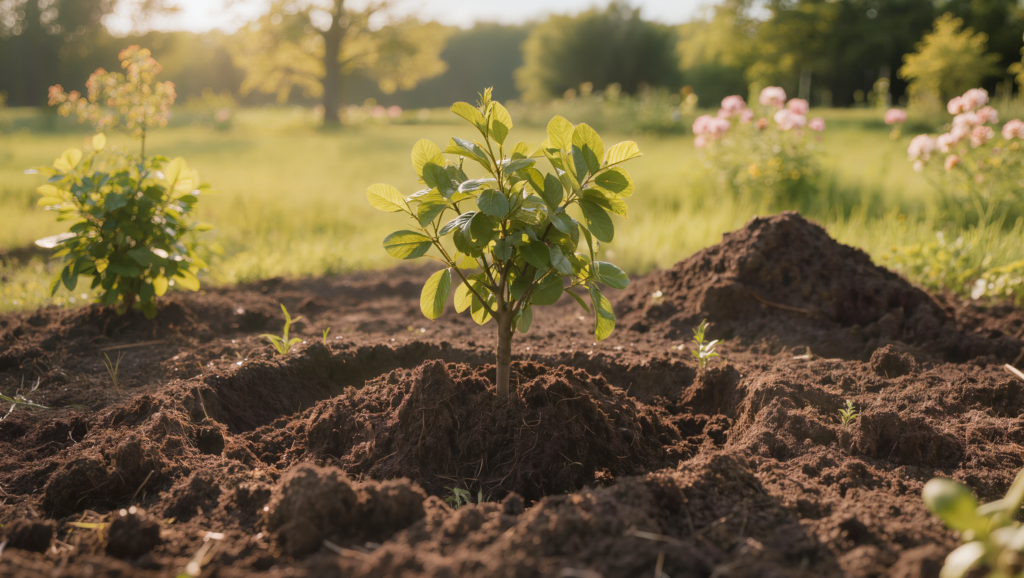
This is why the Royal Horticultural Society (RHS) advises planting trees on a slight mound only if drainage is adequate. [
When mounds do work
- If combined with proper drainage (like trenches or raised beds).
- If the mound is not too high (which can cause the soil to dry out too quickly).
- If the soil is well-amended with organic matter.
Is Using Raised Beds A Better Alternative?
Raised beds are often recommended for waterlogged gardens because they:
- Lift the root zone above the saturated soil.
- Improve drainage by creating a deeper, less compacted seedbed.
- Allow for better soil amendment with compost and organic matter.
However, raised beds still need proper drainage:
- They must have an outlet for excess water.
- They should not be too tall (which can cause the soil to dry out too quickly).
- They should be combined with trenches or swales for best results.
How To Fix A Waterlogged Garden: A Step-By-Step Fuide
If you are dealing with waterlogging, here is a practical plan:
1. Assess the problem
- Identify low spots and areas where water pools.
- Test soil drainage with a simple hole test.
2. Improve soil structure
- Add organic matter like compost or well-rotted manure.
- Avoid over-tilling, which can compact the soil.
3. Install drainage
- Dig trenches or swales to direct water away.
- Consider a French drain or perforated pipe system for severe cases.
4. Use raised beds or mounds wisely
- Raise beds only if you have proper drainage.
- Avoid mounds that are too high or not connected to a drainage system.
5. Choose the right plants
- Plant water-loving species in low areas.
- Avoid planting moisture-sensitive plants in soggy spots.
The Issue Of Water Management In The Garden
Waterlogging is just one part of the broader challenge of managing water in the garden. Other factors include:
- Rainfall patterns.
- Soil type and compaction.
- Slope and topography.
- Plant selection.
Why this matters
- Healthy soil supports healthy plants.
- Proper drainage prevents root rot and disease.
- Water management is key to sustainable gardening.
Bottom line
Waterlogging is a common problem that can be fixed with the right approach. Trench planting is a simple, effective way to direct water away from plant roots, while mounds can sometimes make the problem worse if not designed properly.
Key takeaways:
- Waterlogging suffocates roots and stunts growth.
- Trench planting directs water away from the root zone.
- Mounds can backfire if not combined with proper drainage.
- Raised beds are often a better solution for waterlogged gardens.
- Soil health (organic matter, aeration) is key to long-term drainage.
If you are dealing with a soggy garden, start by assessing your soil and drainage. Then consider trench planting, raised beds, or a combination of both. With the right approach, you can keep your garden healthy and productive—even in wet conditions.