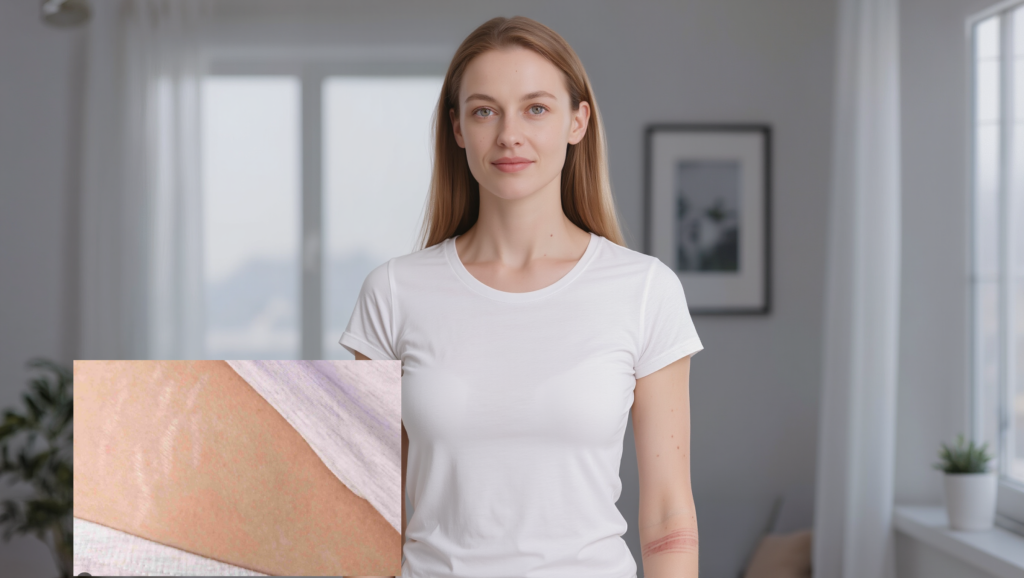












If you have ever noticed new stretch marks after a stressful period, rapid weight change, or intense training, you may have wondered: can stress really cause stretch marks? The short answer is that stress itself does not usually create stretch marks directly, but the cortisol your body releases during prolonged stress can make your skin less resilient—especially when it is also being stretched quickly.
Stretch marks, medically called striae distensae, form when the deeper layer of skin—the dermis—has to stretch faster than its collagen and elastin network can adapt. Cortisol can add to that vulnerability by weakening elastic fibers and interfering with collagen production.
So while everyday stress is unlikely to be the sole reason for stretch marks, chronic stress, high cortisol exposure, rapid growth, pregnancy, weight changes, and certain medical conditions can work together to raise the risk.
What Are Stretch Marks ?
Stretch marks are not simply “torn skin.” They are a form of dermal scarring that develops when connective tissue in the middle layer of the skin is disrupted.
They commonly appear as:
- Red, purple, or dark streaks when new—called striae rubrae.
- White, silver, or faded lines as they mature—called striae albae.
- Indented or slightly raised streaks on the abdomen, breasts, hips, thighs, buttocks, arms, or back.
Under the microscope, stretch marks show changes in collagen, elastin, and fibrillin—the structural proteins that give skin its strength and flexibility.
The Main Driver Of Stretch Marks: Rapid Dkin Stretching
The most important cause of stretch marks is mechanical stretching—when skin expands faster than it can remodel.
Common triggers include:
- Pregnancy
- Puberty growth spurts
- Rapid weight gain or loss
- Muscle gain from bodybuilding or intense training
- Certain medical treatments and conditions
When the dermis is stretched rapidly, collagen and elastin fibers can become disorganized, damaged, or reduced. The result is a thin, scar-like line in the skin.
Where Cortisol Levels Comes In
Cortisol is a steroid hormone produced by the adrenal glands. It is essential for regulating metabolism, inflammation, blood pressure, and the body’s response to stress. But when cortisol is elevated for a long time, it can affect the skin.
How cortisol affects skin structure
Cortisol can:
- Reduce collagen synthesis by impairing fibroblast function.
- Increase protein breakdown in the dermis.
- Weaken elastic fibers in the skin.
- Promote collagen degradation through inflammatory and enzymatic pathways.
In simple terms: cortisol can make the skin’s “scaffolding” less robust. If that skin is then stretched quickly, it may be more likely to develop striae.
Stress – Cortisol And Stretch Marks: What Is The Connection?
Here is where the distinction matters: stress does not directly stretch your skin. But stress can raise cortisol, and chronically high cortisol can reduce the skin’s ability to withstand stretching.
The stress pathway
- You experience stress—physical, emotional, or psychological.
- Your hypothalamic-pituitary-adrenal (HPA) axis activates.
- Cortisol is released from the adrenal glands.
- If cortisol stays elevated, it can affect collagen and elastin balance.
- If the skin is also stretched rapidly, the risk of striae may increase.
This is why stress is best understood as a contributing factor, not a standalone cause.
When Cortisol Is clearly The Reason For Stretch Marks
There are situations where cortisol is a much more direct player in stretch-mark formation.
Cushing syndrome
Cushing syndrome is a condition in which the body has too much cortisol. It is strongly associated with stretch marks, often wider and more extensive than typical striae.
Corticosteroid medicines
Prolonged use of corticosteroids—whether oral, injected, or strong topical creams—can cause skin thinning and stretch marks.
This is why dermatologists caution against overusing potent steroid creams, especially on thin skin areas.
What Science Research Says About Cortisol Levels And Stretch Marks
The evidence supports a multi-factor model rather than one single cause.
Mechanical stretching is central
A mechanochemical model of striae distensae found that:
- Mechanical stretching is the primary driver.
- Hormonal factors can modify risk by changing skin extensibility and collagen remodeling.
- Either factor alone can sometimes trigger striae, but they often act together.
Cortisol and collagen
A study in male gymnasts found a significant correlation between serum cortisol levels and stretch marks. The authors proposed that higher cortisol may increase collagen degradation and disrupt the dermal extracellular matrix.
However, this was a small, specific population, so it does not prove that everyday stress causes stretch marks in everyone.
Genetics matter too
Genome-wide association research suggests that variation in elastic microfibrils may influence who develops stretch marks.
This helps explain why two people can gain the same amount of weight or go through pregnancy, yet only one develops prominent striae.
Who Is Most At Risk Of Having Stretch Marks Due To Cortisol Levels?
You may be more likely to develop stretch marks if you have:
- A family history of striae
- Rapid growth during puberty
- Pregnancy
- Rapid weight gain or loss
- High cortisol exposure
- Certain connective-tissue disorders
- A younger age, when skin may be less able to adapt to rapid stretching
Can One Prevent Stress-Related Stretch marks?
You cannot always prevent stretch marks, especially if they are driven by genetics, puberty, or pregnancy. But you can reduce the conditions that make them more likely.
1. Manage stress
- Prioritize sleep.
- Use relaxation practices like breathing exercises, meditation, or gentle movement.
- Seek support if stress feels unmanageable.
2. Avoid rapid weight changes
- Aim for gradual, sustainable changes in weight or muscle mass.
- This gives your skin more time to adapt.
3. Support skin health
- Keep skin moisturized, especially during pregnancy or rapid growth.
- There is no strong evidence that creams prevent stretch marks, but moisturizing can reduce dryness and itching.
4. Be cautious with steroid creams
- Use topical corticosteroids only as directed.
- Do not apply potent steroids for long periods without medical guidance.
5. See a clinician if needed
- If you have sudden, widespread, or unusual stretch marks, ask a clinician whether hormonal causes such as Cushing syndrome could be involved.
Can You Treat Stretch Marks?
Stretch marks are harmless and often fade over time, but they may not disappear completely.
Options include:
- Topical retinoids: May help rebuild collagen and improve appearance, though they are not suitable during pregnancy.
- Laser or light-based treatments: May improve color and texture in some cases.
- Microneedling and other procedures: Can stimulate collagen remodeling, though results vary.
The best time to treat stretch marks is often when they are still red or purple, before they become pale and mature.
Stretch Marks And Self Confidence
Stretch marks are common, but they can still affect confidence and quality of life. Research in pregnant women found that striae were associated with embarrassment, reduced self-esteem, anxiety, and depression in some people.
This matters because stress and stretch marks can create a cycle:
- Stress may contribute to skin vulnerability.
- Stretch marks may increase emotional distress.
- That distress can add to stress.
Bottom line
Can stress cause stretch marks? Not usually by itself. But chronic stress can raise cortisol, and elevated cortisol can weaken the skin’s collagen and elastin network—making stretch marks more likely when the skin is also stretched rapidly.
Key takeaways:
- Rapid stretching is the main cause of stretch marks.
- Cortisol can reduce skin resilience by affecting collagen and elastin.
- Stress is a contributing factor, not usually a direct cause.
- Genetics, hormones, and mechanical stretch all interact.
- Stretch marks are common and harmless, though treatments can improve their appearance.
If you are noticing new or unusual stretch marks, especially alongside other symptoms like rapid weight gain, fatigue, or easy bruising, it is worth speaking with a healthcare professional to rule out hormonal causes.
Your skin is resilient—but giving it time, support, and a little less stress can help it stay that way.
Sources: