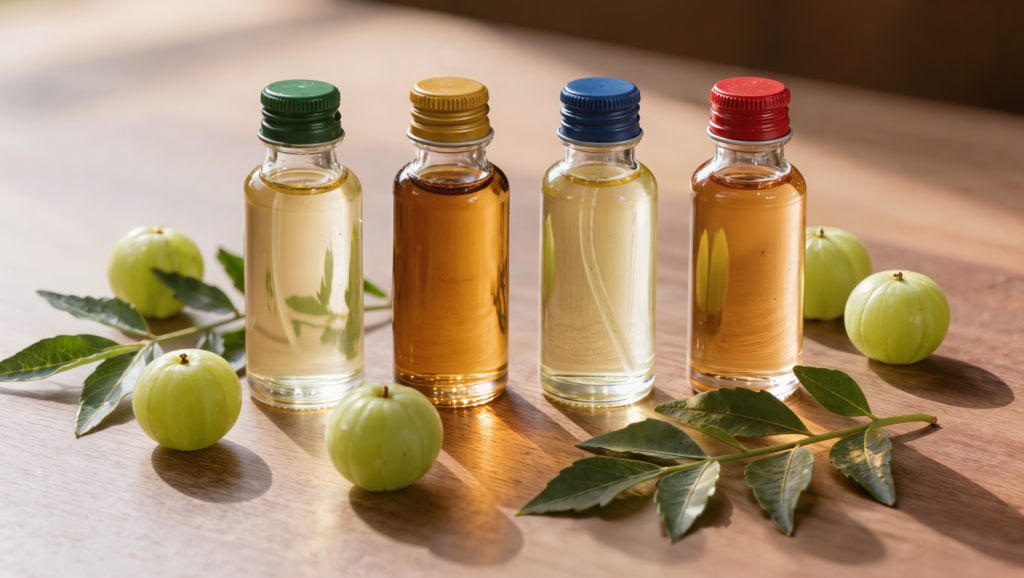












If your bathroom shelf is crowded with serums, sprays, and shampoos promising thicker, stronger hair—but all you see is more hair in the drain and flakes on your shoulders—you are not alone. Hair fall and dandruff are among the most common scalp concerns worldwide, and many people are now turning back to traditional remedies in search of gentler, more natural solutions.
Enter Ayurveda, the ancient Indian system of medicine that has been using herbal oils for hair care for centuries. Modern research is beginning to catch up, with studies showing that certain Ayurvedic herbs and oils can reduce hair fall, improve hair density, and combat dandruff—often with fewer side effects than harsh chemical treatments.
In this post, we will dive deep into four powerful Ayurvedic hair oils that target hair fall and dandruff naturally, backed by both traditional wisdom and emerging scientific evidence.
Why Use Ayurvedic Hair Oils?
In Ayurveda, hair health is closely linked to overall balance in the body, particularly the health of the scalp, blood, and nervous system. Common causes of hair fall and dandruff include:
- Imbalanced doshas (especially excess Pitta and Vata).
- Poor nutrition and digestion.
- Stress and hormonal imbalances.
- Scalp infections and inflammation.
- Harsh chemical treatments and environmental damage.
Ayurvedic hair oils work by:
- Nourishing the scalp and hair follicles.
- Improving blood circulation to the roots.
- Providing antimicrobial and anti-inflammatory action.
- Strengthening hair shafts and reducing breakage.
- Calming the nervous system and reducing stress-related hair loss.
Unlike many commercial products loaded with sulfates, silicones, and synthetic fragrances, traditional Ayurvedic oils rely on botanical extracts infused in carrier oils like coconut, sesame, or almond.
1. Bhringraj Oil: The “King of Hair”
What is Bhringraj?
Bhringraj (Eclipta alba or Eclipta prostrata) is one of the most revered herbs in Ayurveda for hair care. Its name literally means “king of hair” (Kesharaja), and it has been used for centuries to promote hair growth, prevent premature greying, and reduce hair fall.
How it helps with hair fall
Research suggests Bhringraj may support hair growth through several mechanisms:
- Stimulates hair follicles: Bhringraj upregulates growth factors and downregulates follicular apoptosis (programmed cell death), encouraging hairs to stay in the growth (anagen) phase longer.
- Improves scalp circulation: Massaging Bhringraj oil into the scalp increases blood flow, delivering more nutrients and oxygen to hair roots.
- Reduces hair fall: Clinical studies on polyherbal oils containing Bhringraj show significant reductions in hair fall and improvements in hair density within weeks of use.
One study on an Ayurvedic leave-on treatment containing Bhringraj reported hair fall reduction in 100% of participants over three months, along with noticeable improvements in hair density and overall scalp health.
How it helps with dandruff
While Bhringraj is best known for hair growth, it also supports scalp health:
- It has mild antimicrobial and anti-inflammatory properties that can help soothe an irritated scalp.
- By improving overall scalp condition and reducing inflammation, it indirectly helps manage dandruff, even if its direct antifungal action against Malassezia (the yeast linked to dandruff) is less consistent than some other herbs.
How to use it
- Choose a cold-pressed coconut or sesame oil infused with Bhringraj extract.
- Warm a small amount and massage into the scalp for 5–10 minutes.
- Leave on for at least 30 minutes (or overnight) before washing.
- Use 2–3 times per week for best results.[
2. Amla Oil: The Vitamin C Powerhouse
What is Amla?
Amla (Phyllanthus emblica or Emblica officinalis), also known as Indian gooseberry, is a cornerstone of Ayurvedic rasayana (rejuvenation) therapies. It is exceptionally rich in vitamin C, antioxidants, and tannins, making it a potent protector against oxidative stress and inflammation.
How it helps with hair fall
Amla supports hair strength and growth through multiple pathways:
- Antioxidant protection: High levels of vitamin C and polyphenols neutralize free radicals that can damage hair follicles and accelerate aging.
- Strengthens hair shafts: Studies on Amla-based hair oils show reduced hair fall and increased tensile strength, meaning hairs are less likely to break during combing or styling.]
- Promotes anagen phase: Clinical trials using topical Amla formulations report an increased percentage of hairs in the growth phase and decreased hair loss on comb tests.[
A randomized placebo-controlled study on women with androgenic alopecia found that an Amla-containing formulation improved hair parameters over 12 weeks compared to placebo.
How it helps with dandruff
Amla is also effective against dandruff:
- Antifungal activity: In-vitro studies show Amla extracts inhibit Malassezia species, the yeast commonly associated with dandruff.
- Scalp conditioning: Amla nourishes the scalp, reduces irritation, and improves resilience, addressing secondary symptoms of dandruff (Darunaka in Ayurveda).
- Anti-inflammatory action: By calming scalp inflammation, Amla reduces flaking and itching.
How to use it
- Look for Amla-infused coconut or sesame oil, or make your own by simmering dried Amla pieces in oil.
- Massage into the scalp and leave on for 30 minutes to overnight.
- Use 2–3 times weekly, especially if you have dry, flaky scalp or brittle hair.
3. Neem Oil: The Scalp’s Natural Antiseptic
What is Neem?
Neem (Azadirachta indica) is often called the “village pharmacy” in India due to its wide-ranging medicinal properties. In hair care, it is prized for its potent antimicrobial, antifungal, and anti-inflammatory actions.
How it helps with hair fall
While Neem is not primarily a hair growth stimulant like Bhringraj or Amla, it supports hair retention indirectly:
- Scalp hygiene: By reducing microbial load and inflammation, Neem creates a healthier environment for hair follicles to thrive.
- Reduces folliculitis: Scalp infections and inflamed follicles can lead to increased shedding; Neem’s antimicrobial action helps prevent this.
How it helps with dandruff
Neem is one of the most effective natural anti-dandruff agents:
- Antifungal action: Studies confirm that Neem extracts have strong activity against Malassezia, comparable in some cases to synthetic antifungal agents.
- Anti-inflammatory and antipruritic: Neem soothes itching, redness, and irritation associated with dandruff and seborrheic dermatitis.
- Reduces flaking: Regular use of Neem-containing oils or shampoos can significantly decrease scalp flaking and improve scalp hygiene.
A review of herbal anti-dandruff agents highlighted Neem (along with Fenugreek) as having potent anti-Malassezia activity, making it a strong natural alternative to ketoconazole and other chemical antifungals.
How to use it
- Pure Neem oil is very strong; dilute it in a carrier oil like coconut or almond (e.g., 1 part Neem to 3–5 parts carrier).
- Massage into the scalp, leave on for 30–60 minutes, then wash thoroughly.
- Use 1–2 times per week, especially during dandruff flare-ups.
4. Ashwagandha-Infused Oil: The Stress-Busting Scalp Soother
What is Ashwagandha?
Ashwagandha (Withania somnifera) is best known as an adaptogen—a herb that helps the body cope with stress. In Ayurveda, it is also used to support hair health, particularly when hair fall is linked to stress, hormonal imbalances, or poor sleep.
How it helps with hair fall
Emerging research supports Ashwagandha’s role in hair growth:
- Clinical evidence: A prospective, double-blind, randomized, placebo-controlled study found that topical application of an Ashwagandha root extract serum for 75 days significantly improved hair growth and related metrics compared to placebo.
- Stress reduction: By modulating cortisol and supporting the stress response, Ashwagandha may reduce stress-related telogen effluvium (excessive shedding).
- Hormonal balance: Ashwagandha’s influence on thyroid and sex hormones can indirectly support healthier hair cycles.
Case reports on Ayurvedic management of alopecia totalis and alopecia areata include formulations with Ashwagandha that resulted in visible regrowth and reduced hair fall over several months.
How it helps with dandruff
Ashwagandha is not a primary anti-dandruff herb, but it can still help:
- Anti-inflammatory action: It calms scalp inflammation, which can exacerbate flaking and sensitivity.
- Supports overall scalp health: By improving circulation and reducing stress-related scalp issues, it creates a better environment for managing dandruff alongside other herbs like Neem and Amla.
How to use it
- Choose hair oils or serums that include Ashwagandha root extract, often combined with Bhringraj, Amla, and Brahmi.
- Massage into the scalp 2–3 times per week, ideally in the evening to leverage its calming effects.
- For best results, pair with stress management practices like yoga, meditation, and adequate sleep.
How To Choose And Use Ayurvedic Hair Oils
Not all “herbal” or “Ayurvedic” oils are created equal. To get real benefits:
- Check the ingredient list: Look for oils infused with standardized extracts of Bhringraj, Amla, Neem, and/or Ashwagandha, not just fragrance or “natural flavors.”
- Prefer cold-pressed carrier oils: Coconut, sesame, and almond oils are traditional and effective bases that penetrate the hair shaft and scalp well.
- Avoid harsh additives: Steer clear of sulfates, silicones, mineral oil, and synthetic fragrances if you want a truly natural approach.
- Be consistent: Ayurvedic remedies work gradually. Expect visible improvements in 6–12 weeks with regular use.
- Combine with lifestyle changes: Nutrition, stress management, gentle hair care, and adequate sleep amplify the benefits of herbal oils.
What Does Science Say Overall About Ayurvedic Care For Hairloss And Dandruff?
While large-scale, long-term randomized trials on Ayurvedic hair oils are still limited, the existing evidence is promising:
- A 2025 narrative review highlighted positive clinical outcomes for Ayurvedic treatments in hair disorders, including hair fall and dandruff, with herbs like Bhringraj, Amla, and Triphala showing measurable benefits.
- Clinical studies on polyherbal Ayurvedic oils report significant reductions in hair fall (up to 40–45% in some trials) and improvements in hair density and texture within 6–12 weeks.
- In-vitro and clinical data support the antifungal and anti-dandruff effects of Neem and Amla, with efficacy comparable in some cases to synthetic agents.
- Placebo-controlled trials on Ashwagandha and Amla formulations show improvements in hair growth parameters and reduced shedding.
At the same time, researchers note that more high-quality, long-term studies are needed to fully establish dosing, standardization, and comparative effectiveness versus conventional treatments.
Bottom line
If you are ready to ditch harsh chemicals and give your scalp a more natural reset, Ayurvedic hair oils offer a time-tested, increasingly evidence-backed approach to tackling hair fall and dandruff. Bhringraj, Amla, Neem, and Ashwagandha each bring unique strengths—from follicle stimulation and antioxidant protection to antifungal action and stress support.
Used consistently and paired with healthy lifestyle habits, these four Ayurvedic powerhouses can help you build stronger, healthier hair from the root up—without relying on a shelf full of synthetic serums and solutions.
Sources:
- https://pmc.ncbi.nlm.nih.gov/articles/PMC12705144/
- https://pmc.ncbi.nlm.nih.gov/articles/PMC10709127/
- https://pmc.ncbi.nlm.nih.gov/articles/PMC9307686/