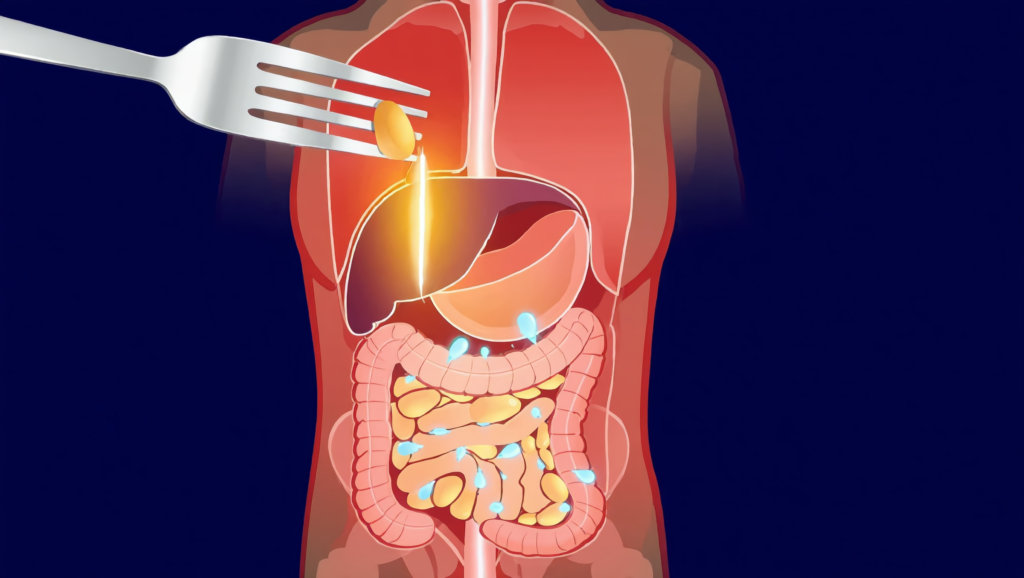












You have probably heard that eating very cold or very hot food can “shock” your digestion. The idea sounds intuitive: your stomach is warm, so maybe ice-cold salads or boiling soups throw your system off balance. But what does the science actually say, especially about fat digestion and the enzyme lipase?
The short answer is: yes, temperature does affect how digestive enzymes work, and lipase is particularly temperature-sensitive. However, your body is also very good at bringing food to a workable temperature once it reaches your stomach. The real impact depends on how extreme the temperature is, how much you eat, and your individual sensitivity.
The Basics: Enzymes And Temperature
Digestive enzymes are proteins that speed up chemical reactions, breaking down carbohydrates, proteins, and fats into smaller molecules your body can absorb. Like all enzymes, they have an optimal temperature range where they work best.
For most human digestive enzymes, that optimal range is close to core body temperature, around 37°C (98.6°F).
General rules for enzyme activity and temperature:
- Below optimal temperature: Enzyme activity slows because molecules move more slowly and collide less often.
- At optimal temperature: Enzyme activity is highest; reactions proceed efficiently.
- Above optimal temperature: Enzymes can denature, meaning their three-dimensional structure unfolds and they lose function.
This is why cooking food at high temperatures can deactivate naturally occurring enzymes in the food itself, even though your body still produces its own digestive enzymes.
Lipase: The Fat-Digesting Enzyme
Lipase is the enzyme responsible for breaking down dietary fats (triglycerides) into fatty acids and glycerol. Most fat digestion happens in the small intestine, where pancreatic lipase works in the presence of bile.
Research on lipase from various sources (human, animal, plant) consistently shows:
- Lipase activity increases with temperature up to an optimum, usually around 35–40°C.
- Above about 45–50°C, lipase begins to denature and lose activity.
- At very low temperatures (near 4°C), lipase activity is much slower but not completely stopped.
For example:
- In one study, lipase activity in the alimentary tract of a bird species peaked at 37°C
- Avocado lipase was active from 5 to 65°C, with an optimum around 37°C.
- Lipase purified from nuts showed optimum activity at 32°C, with activity at 32°C being many times higher than at 4°C or 100°C.
- Lab experiments with milk and lipase showed fastest fat breakdown around 35–45°C, with activity declining above 45°C due to denaturation.
This means lipase is quite sensitive to temperature changes, especially at the extremes.
What Happens When You Eat Cold Food?
When you eat cold food, several things occur:
- Initial temperature drop: Cold food temporarily lowers the temperature in the mouth, esophagus, and upper stomach.
- Warming by the body: Blood flow and muscular activity in the stomach quickly warm the food toward body temperature.
- Transient enzyme slowdown: During the brief period when the food is still cold, enzyme activity (including lipase) may be slower than at 37°C.
A University of Michigan study found that foods served at low temperatures can reduce digestive enzyme activity by up to 30% in some individuals, particularly affecting gut motility and enzyme efficiency.
However, it’s important to note that while cold food may slow initial digestion slightly, the effect is usually brief and not clinically significant for most healthy people. Solid cold food has minimal long-term impact on digestive efficiency compared to cold liquids, which can cause transient gastric discomfort in sensitive individuals.
In practical terms:
- A cold salad or chilled fruit is unlikely to cause major digestive problems in most people.
- Large quantities of very cold food or drink might cause temporary discomfort, bloating, or slower gastric emptying in some individuals.
- People with sensitive guts, Irritable Bowel Symdrome (IBS), or functional dyspepsia may notice more pronounced effects.
What Happens When You Eat Hot Food?
Hot food presents a different set of considerations:
- Enzyme denaturation in the food: High cooking temperatures (above about 47–50°C / 117–122°F) can deactivate naturally occurring enzymes in the food itself. This means cooked food may provide fewer “digestive aids” from the food’s own enzymes compared to raw food.
- Body’s own enzymes are protected: Your body produces its own digestive enzymes in the pancreas, stomach, and small intestine. These are protected until they reach the appropriate environment, so eating hot food does not denature your own enzymes as long as the food cools to a safe temperature before reaching the small intestine.
- Risk of mucosal injury: Very hot food and drinks (above about 50–60°C) can burn the mouth, esophagus, and stomach lining, which can indirectly affect digestion by causing inflammation or discomfort.
Studies show that most digestive enzymes have an optimum temperature between 30 and 50.7°C, with activity declining sharply above that due to denaturation.
So while warm food (close to body temperature) may support efficient enzyme activity, scalding-hot food can damage tissues and potentially impair digestion indirectly.
The Lipase Connection: Why Fat Digestion Is Temperature-Sensitive
Fat digestion is particularly dependent on lipase working efficiently. Lipase must:
- Bind to fat droplets.
- Interact with bile salts that emulsify the fat.
- Catalyze the breakdown of triglycerides into absorbable units.
If the temperature is too low:
- Molecular motion slows.
- Collisions between lipase and fat molecules decrease.
- The rate of fat breakdown drops.
If the temperature is too high:
- Lipase structure can unfold (denature).
- Active sites become distorted.
- Enzyme activity declines or stops.
Lipase is so sensitive that even small temperature drops can make it sluggish, potentially affecting how efficiently fats are digested, especially in people with already compromised fat digestion.
This may partly explain why some people feel heavier or more bloated after large, very cold, high-fat meals (think ice cream, cold creamy desserts, or iced fatty drinks) compared to similar meals served warm.
Does The Lipase Connection Matter In Real Life?
For most healthy people, the body’s ability to regulate internal temperature means that moderate variations in food temperature do not cause major digestive problems. Your stomach and intestines quickly bring food to a workable temperature, and your own enzymes are produced in conditions close to 37°C.
However, there are situations where temperature may matter more:
- Large volumes of very cold food or drink: Can transiently lower gastric temperature and slow motility, potentially causing discomfort or bloating in sensitive individuals.
- High-fat meals at extreme temperatures: Very cold, high-fat foods may slow lipase activity initially; very hot, high-fat foods may irritate the gut lining.
- Pre-existing digestive issues: People with Irritable Bowel Symdrome (IBS), functional dyspepsia, gallbladder disease, or pancreatic insufficiency may be more sensitive to temperature extremes.
- Elderly or frail individuals: May have reduced thermoregulatory capacity and slower digestion, making them more susceptible to temperature effects.
One review of enzyme activity across temperature ranges suggests:
- Below 20°C: Enzyme reaction rates can drop to about 25–50% of optimal.
- 20–35°C: Suboptimal but functional; slower kinetics for pepsin, amylase, and lipase.
- Around 37°C: Peak efficiency for most digestive enzymes.
- 40–45°C: May modestly increase reaction speed but can stress proteins if prolonged.
- Above 50°C: Denaturation risk increases; mucosal burn risk if ingested.
Hot vs. Cold Water And Morning Digestion
The temperature of liquids, especially first thing in the morning, may also influence digestion. Warm water tends to:
- Relax smooth muscle in the gut.
- Increase blood flow.
- Promote gastric motility and bowel movement.
- Ease morning bloating for some people.
Cold water can:
- Cause mild vasoconstriction.
- Temporarily slow gastric emptying in some individuals.
- Feel less soothing to the stomach, especially on an empty stomach.
This does not mean cold water is “bad,” but if you struggle with sluggish morning digestion or bloating, starting with lukewarm water may feel more comfortable.
Practical Tips For Temperature-Conscious Eating
You do not need to obsess over the exact temperature of every bite, but a few simple strategies can support comfortable digestion:
- Aim for moderate temperatures: Avoid extremes of scalding-hot or ice-cold foods, especially in large quantities.
- Warm up very cold foods slightly: Let refrigerated foods sit out for a few minutes, or add warm elements (e.g., warm dressing on a cold salad).
- Cool down very hot foods: Allow soups, teas, and cooked dishes to cool to a comfortable temperature before eating.
- Pay attention to your body: If you notice bloating, discomfort, or changes in bowel habits with very cold or very hot meals, adjust accordingly.
- Be cautious with high-fat extremes: Large, very cold, high-fat desserts or very hot, oily meals may be more likely to cause discomfort.
- Consider individual sensitivity: If you have Irritable Bowel Symdrome (IBS), reflux, or other digestive issues, you may benefit from favoring warm, cooked foods and avoiding ice-cold drinks with meals.
Bottom line
Yes, the temperature of your food does affect how your digestive enzymes, including lipase, function. Lipase and other enzymes work best near body temperature (around 37°C), slow down when food is very cold, and can denature when exposed to very high heat.
However, your body is remarkably good at compensating. For most people, moderate variations in food temperature do not cause significant digestive problems. The bigger issues arise with extreme temperatures, large volumes, high-fat meals, or pre-existing digestive sensitivity.
The practical takeaway is not to fear cold salads or hot soups, but to avoid extremes, listen to your body, and favor temperatures that feel comfortable and supportive for your own digestion.
Sources: