











Sexual vitality has always been one of those topics people talk about in whispers, exaggerations, or awkward half-jokes. Ayurveda, though, has never treated it that way. In the classical Ayurvedic model, libido, reproductive strength, stamina, and fertility are part of overall health — not some separate “performance problem” to be solved in isolation. That’s why Vajikarana, the branch of Ayurveda devoted to reproductive vitality, focuses on nourishment, resilience, restoration, and balance rather than quick fixes.
That perspective is surprisingly modern. Today, most sexual problems are rarely just about sex. Stress, poor sleep, inflammation, hormonal shifts, fatigue, relationship tension, medications, and metabolic issues all play a role. Ayurveda’s answer has historically been to support the whole system, then let sexual energy return as a natural consequence.
Of course, any conversation about aphrodisiacs needs a reality check. The modern sexual-enhancement market is packed with exaggerated claims, and regulators have repeatedly found hidden prescription drugs in products marketed as “herbal” or “Ayurvedic” potency aids. So the right way to approach this topic is not blind belief. It’s informed curiosity, careful sourcing, and a healthy amount of skepticism.
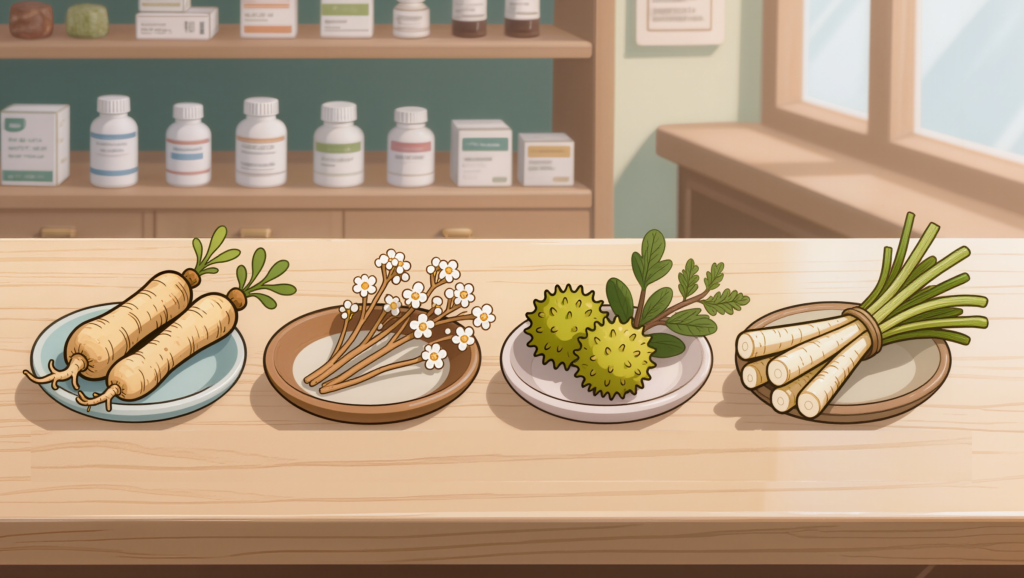
Let’s look at four Ayurvedic aphrodisiacs that have deep traditional roots, a plausible scientific basis, and a real place in the conversation about sexual wellness.
Why Ayurveda Treats Sexual Health as Whole-Body Health
Ayurveda doesn’t think of libido as a switch you simply flip on. It sees sexual vitality as something that depends on energy reserves, tissue quality, circulation, mental state, and the body’s capacity to recover. That’s why so many classical aphrodisiac formulas are also rejuvenating tonics.
A review of herbal sexual enhancers notes that plants may affect sexual health through multiple pathways, including nervous system signaling, hormone-related effects, blood flow, and stress reduction. That doesn’t mean every herb is equally effective, or that all supplements are safe. But it does explain why some traditional herbs continue to attract interest.
The best Ayurvedic aphrodisiacs are usually not “instant arousal” products. They’re better thought of as supportive tonics that help create the conditions in which desire and performance can improve. That is a much more grounded idea than the fantasy of a miracle pill.
1) Ashwagandha: The Stress-Relief Herb That Helps Desire Return
Ashwagandha (Withania somnifera), one of Ayurveda’s best-known adaptogens, is frequently used to support stamina, vitality, and resilience. It shows up in sexual-health discussions because stress is one of the most common libido killers. When the nervous system is overactivated, the body tends to prioritize survival over intimacy.
That matters more than many people realize. Chronic stress can lower desire, impair arousal, and make sexual performance feel effortful instead of natural. Ashwagandha is traditionally valued because it may help shift the body out of that overstimulated state and into something calmer and more receptive.
It’s especially relevant for people whose sexual problems are tangled up with:
- Chronic fatigue.
- Burnout.
- Poor sleep.
- Anxiety.
- General depletion.
In that sense, ashwagandha is less of a “sex herb” in the narrow sense and more of a foundational recovery herb. If your issue is that your body simply never feels rested enough to want sex, that distinction matters. The herb doesn’t need to force desire; it may help remove the barriers to it.
Modern interest in ashwagandha also fits this logic. It’s often used for better energy, stress management, and resilience, which can indirectly improve sexual wellbeing by supporting hormonal balance and mood. That makes it one of the most broadly useful herbs in the Ayurvedic aphrodisiac world.
2) Shatavari: The Nourishing Tonic for Reproductive Vitality
Shatavari (Asparagus racemosus) has a special place in Ayurveda, especially in women’s reproductive health. It is traditionally described as nourishing, cooling, and restorative, which makes it a natural fit for situations where depletion, dryness, or hormonal transitions are affecting sexual wellbeing.
Unlike stimulant-style products, shatavari is more about replenishment than intensity. In classical Ayurvedic thinking, libido often improves when tissues are nourished and the body feels less strained. That’s why shatavari is often recommended when a person’s sexual vitality is dulled by exhaustion, dryness, postpartum changes, or the hormonal shifts that can come with aging.
What makes shatavari compelling is that it matches a broader truth about sexual health: desire often goes down when the body feels under-resourced. The remedy, then, is not always to “turn up the volume.” Sometimes the body needs better support, better hydration, better recovery, and gentler nourishment.
Shatavari is frequently included in formulas aimed at:
- Supporting reproductive tissues.
- Improving vitality.
- Balancing the body during hormonal transitions.
- Reducing the feeling of depletion.
It’s worth noting that while shatavari has a long traditional history, modern clinical evidence is still mixed and not as expansive as enthusiastic marketing might suggest. That doesn’t make it uninteresting; it just means the strongest case for it comes from the combination of traditional use, plausible physiology, and broad tonic effects.
3) Safed Musli: The Classic Ayurvedic Male Tonic
If one herb consistently comes up in traditional male vitality formulas, it’s safed musli (Chlorophytum borivilianum). In Ayurveda, it is often regarded as a vrishya herb — a substance that supports virility, reproductive strength, and stamina.
That old-school framing is important. Safed musli is not traditionally presented as a flashy libido stimulant. It is more like a rebuilding herb for men who feel weak, depleted, or undernourished. That makes a lot of sense from a systems perspective, because sexual performance is often one of the first things to decline when energy reserves are low.
Why does safed musli keep showing up in male health discussions?
- It has a strong reputation in traditional Ayurvedic practice.
- It is often used in formulas for stamina and reproductive support.
- Some references mention interest in sperm quality and testosterone-related effects.
Even if the strongest modern evidence is still evolving, the herb’s popularity is not random. It reflects a long history of use in a context where vitality, fertility, and general strength are treated as connected.
The practical takeaway is simple: safed musli is best understood as a tonic. If someone is looking for a quick, dramatic sexual buzz, they may be looking in the wrong place. But if they want traditional support for male reproductive vitality, this herb is one of the classic names to know.
4) Shilajit: The Rejuvenating Mineral Resin With a Serious Reputation
Shilajit Resin is one of the most fascinating substances in the Ayurvedic toolkit. It is not a simple herb, but a mineral-rich resin used traditionally as a rejuvenator, strength-builder, and reproductive tonic. In the realm of sexual vitality, shilajit has long been associated with stamina, virility, and recovery.
That makes it especially interesting because it sits at the intersection of ancient tradition and modern supplement interest. Some sources cite studies suggesting benefits for sexual performance and sperm-related markers. Ayurveda’s logic around shilajit is that vitality is not just about desire; it is about the body’s ability to generate and sustain energy.
This makes shilajit appealing for people whose sexual concerns are linked to:
- Low energy.
- Poor recovery.
- Chronic depletion.
- General weakness.
It’s also one of the most commercially abused ingredients in the supplement world, which is why sourcing matters so much. A poorly tested shilajit product may contain contaminants or inconsistent active compounds, and that defeats the whole purpose.
The promise of shilajit is not that it performs magic. It’s that it reflects the Ayurvedic idea that sexual vitality is a sign of overall internal strength. If that strength is missing, shilajit is one of the traditional tools used to help restore it.
The Quality Problem Nobody Should Ignore
This is the part most supplement ads skip. The sexual enhancement market is a fraud magnet. Regulators have repeatedly found undeclared prescription drugs, including sildenafil, in products sold as herbal potency aids. That’s not a minor issue. It can be dangerous, especially for people taking nitrates, certain heart medications, or drugs that affect blood pressure.
So if you’re exploring Ayurvedic aphrodisiacs, a few rules matter:
- Buy from reputable brands with third-party testing.
- Avoid products promising instant or extreme results.
- Be cautious if a product seems to work suspiciously fast.
- Talk to a clinician if you have cardiovascular disease or take prescription medications.
“Natural” does not automatically mean “safe.” And “Ayurvedic” does not automatically mean “drug-free.” Good sourcing is part of the medicine.
Aphrodisiacs Work Best as Part of a Bigger Strategy
One of the most useful things Ayurveda can teach modern readers is that sexual health does not exist in isolation. If libido is low, it often reflects a larger issue: stress, poor sleep, low energy, undernourishment, emotional strain, or hormonal imbalance.
That’s why the smartest Ayurvedic approach usually combines herbs with lifestyle support. Classical practice often includes nourishing foods and tonics such as:
- Milk and ghee.
- Almonds and sesame.
- Black gram.
- Ginger, saffron, and clove.
- Herbal formulas built around ashwagandha, shatavari, safed musli, and related botanicals.
This isn’t just tradition for tradition’s sake. It reflects a simple truth: the body usually performs better sexually when it is well-rested, well-fed, and less stressed. Herbs can support that, but they work best when the rest of life is also helping, not sabotaging, the outcome.
How to Think About These Herbs Realistically
The biggest mistake people make with aphrodisiacs is expecting a dramatic, movie-style transformation. That’s not how most of these herbs work. Ashwagandha may help by lowering stress load. Shatavari may support nourishment and tissue balance. Safed musli may assist with vitality and reproductive strength. Shilajit may help restore energy and resilience.
Those are meaningful effects, but they’re not the same as an instant pharmaceutical response. In fact, the most authentic Ayurvedic use of aphrodisiacs is often gradual and restorative. The goal is not just performance; it is vitality.
That’s a subtle but important difference. When the body is healthier overall, sexual function often improves as part of the package. That is the Ayurvedic bet.
The Bottom Line
If you want to understand Ayurvedic aphrodisiacs seriously, these four herbs deserve the most attention:
- Ashwagandha for stress-related depletion and resilience.
- Shatavari for reproductive nourishment and hormonal transitions.
- Safed Musli for traditional male virility support.
- Shilajit for rejuvenation, stamina, and vitality.
They are not miracle cures. But they are also not random internet hype. They come from a tradition that views sexual health as a reflection of the body’s overall state, and that view still makes a lot of sense today. The real lesson is not that one herb can fix everything. It’s that sexual vitality usually returns when the whole system gets stronger.