











We have in multiple articles written about the impressive benefits of Microgreens and how you can successfully grow them indoors regardless of seasons. But then, microgreens are often sold as the ultimate “clean food” — tiny, nutrient‑dense greens harvested just days after sowing, usually grown indoors, close to kitchens, and marketed as safer and fresher than conventional produce. The problem is that improper microgreen farming practices can quietly introduce pesticide residues, and many growers are not fully aware of the risk.
That does not mean all microgreens are contaminated. It means the way the crop is produced — from seed choice and substrate to water management and nutrient inputs — can either keep the product as clean as it looks or turn it into a concentrated source of residues. For people who eat microgreens precisely because they think they are avoiding pesticides, this is a critical blind spot.
Why Microgreens Are So Sensitive
Microgreens are not just “small plants.” They are very young seedlings, usually grown in dense trays, harvested within 7–14 days of emergence, and often eaten with roots and hairs attached. That means they spend their entire edible life in direct contact with the growing medium, water, and any inputs that are applied.
Because they are harvested so early, they do not have time to dilute or break down contaminants the way a mature plant might. If the seed or the substrate carries pesticide residues, those residues can be carried straight into the salad bowl.
How Using Treated Seeds In Microgreen Farming Is A Hidden Residue Source
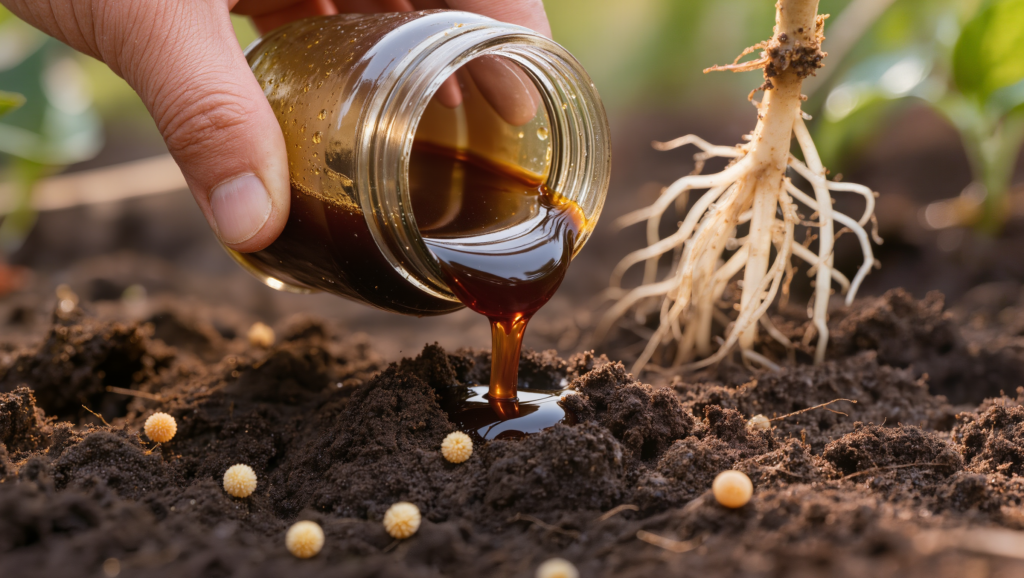
One of the most important mistakes highlighted by microgreen educators is using conventional, treated seed instead of seed labeled specifically for microgreens or sprouting. Treated seed is often coated with fungicides or other pesticides to protect it in the field, and those coatings are not meant to be eaten with the sprout.
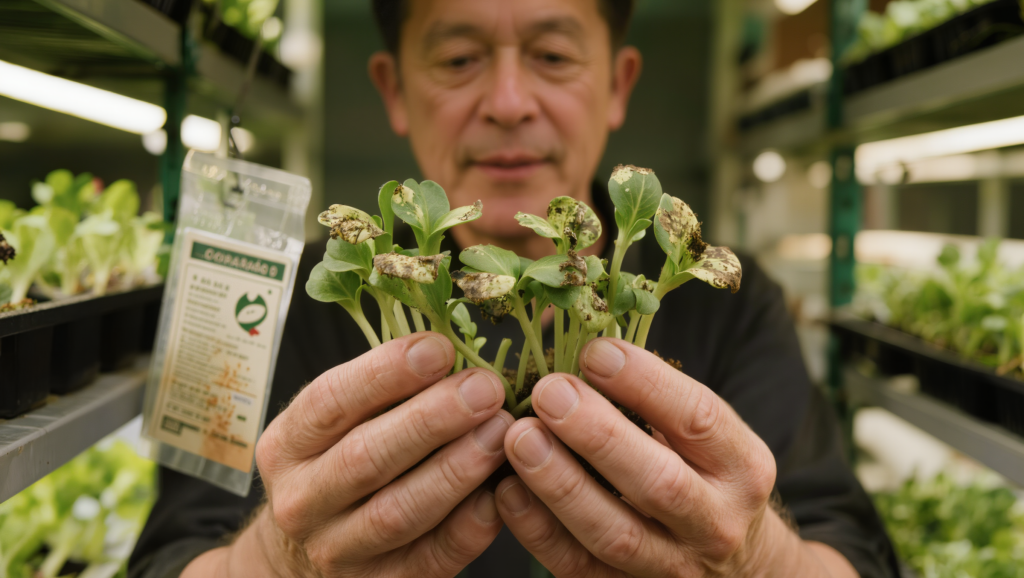
Eating sprouts grown from treated seed is not safe and it is explicitly recommended to use seeds labeled “for microgreens” or “for sprouting.” That warning is not just theoretical. If a grower buys a garden‑grade seed packet assuming it is “fine for microgreens,” they may be unknowingly adding untreated pesticide residues to every batch they sell.
This is a major information gap. Seed bags rarely advertise “do not eat with sprouts.” So growers who do not read documentation carefully, or who shop only by price, can easily make this mistake once and never realize it.
Poor Substrate Choice And Contaminated Soil
Microgreens are often grown on substrates such as coconut coir, hemp mats, jute mats, or other soilless media, but some growers try to cut corners by using garden soil, compost, or unknown potting mixes. That is risky because conventional soil and compost can contain pesticide residues, heavy metals, or other contaminants picked up from non‑organic parents or garden treatments.
A microgreen safety discussion notes that pathogenic microbes are a concern in microgreens production, but it also indirectly highlights that the environment and inputs matter a lot. If the substrate is not clean and controlled, you are not just inviting microbes. You are also potentially soaking tender seedlings in residues that then migrate into the edible tissue.1
This is why reputable microgreen guidance stresses using clean, dedicated substrates and avoiding random garden dirt. For “pesticide‑free” branding to mean anything, the substrate must be as vetted as the seed.
Over‑Reliance On Chemical Inputs Indoors
Indoor farming can create a false sense of security about food safety. A food‑safety article on microgreens production notes that indoor environments are often assumed to be cleaner, but pathogens and contaminants can still show up if practices are sloppy. That same environment‑dependence applies to pesticides.
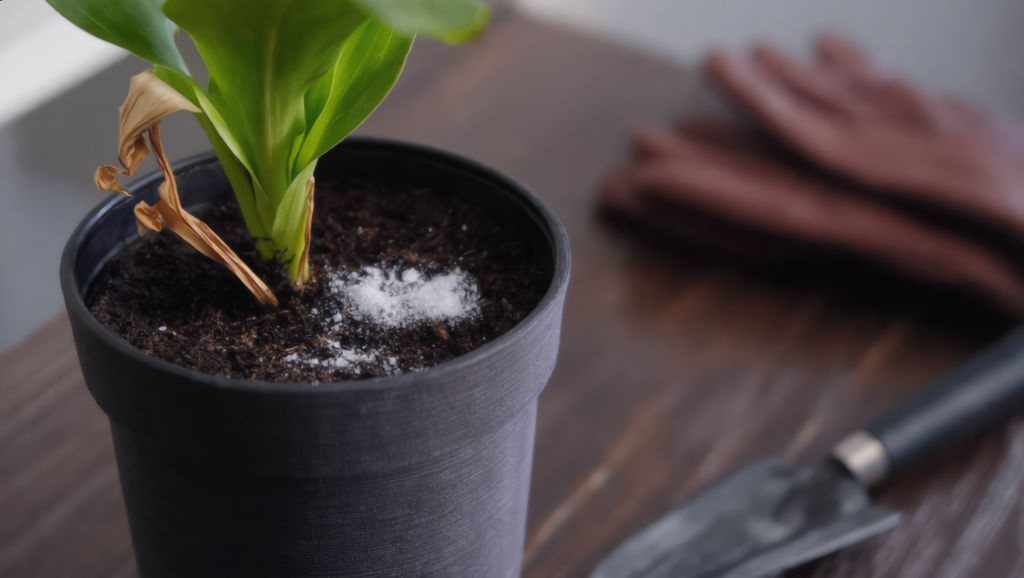
If a grower has repeated pest or disease problems — mould, algae, insects — and responds by spraying general‑purpose chemical biocides, growth regulators, or fungicides inside the facility, those compounds can linger in the air, on surfaces, and on the plants themselves. Microgreens, with their short life span and high surface area, can effectively “soak up” those residues before they are ever harvested.
Because microgreens are often consumed raw and unpeeled, there is no peeling, peeling, or cooking step to break down or remove the chemicals. That is very different from a mature tomato that might be cooked or washed more vigorously.
Downsides Of Treating Microgreens Like Sprouts Without The Same Controls
Microgreens are usually grown in cleaner, controlled environments than traditional sprouts, and unlike sprouts, they have not been widely linked to large‑scale foodborne outbreaks. But they are still moisture‑rich, warm‑grown crops, which makes them vulnerable to contamination if sanitation is poor.
A food‑safety study emphasizes that proper hygiene, responsible seed sourcing, and sanitation practices are essential for microgreens grown indoors. If those practices are weak and the grower responds by reaching for chemical sprays instead of fixing the root‑cause problems, you are again creating a setup where residues can easily end up in the final product.
How Sowing and Watering Mistakes In Microgreen Farming Add Indirect Risk
Common microgreen mistakes such as over‑watering, poor airflow, and over‑sowing create damp, crowded conditions that favour mould and algae. When those problems appear, an inexperienced grower may be tempted to spray or drench trays with mould‑control chemicals instead of adjusting moisture, spacing, and ventilation.
That is a classic “symptom‑treats‑the‑problem” pattern. By trying to eliminate the visible mould with a quick chemical fix, the grower may be layering residues onto seedlings that are harvested days later.
Why Pesticide Residues In Microgreens Matter
Pesticide residues are a broader issue in fruits and vegetables, and monitoring studies show that many conventional crops carry detectable levels of agrochemicals, sometimes above safe limits. Microgreens are not formally singled out in most residue‑monitoring programs, but the underlying logic is the same: anything grown in a contaminated environment or with contaminated inputs can transfer those residues into food.
For people who eat microgreens as a “clean, nutrient‑dense superfood,” the idea that they could be carrying concentrated pesticide residues from treated seed or contaminated substrate is a major contradiction. That is especially true if the grower is marketing the product as organic‑inspired or chemical‑free while still relying on conventional seed or inputs.
How Microgreen Growers Can Stay Clean
The good news is that the main fixes are procedural, not technological. A responsible microgreen operation can significantly reduce pesticide‑residue risk by doing several simple but disciplined things:food-
- Use only seed labeled for microgreens or sprouting, and avoid conventional treated seed.
- Choose clean, controlled substrates such as certified coir, hemp mats, or other dedicated media, and avoid random garden soil or compost.
- Focus on prevention over spraying: manage moisture, airflow, and sanitation so that chemical biocides are rarely, if ever, needed.
- Implement strict hygiene and cleaning protocols in the growing environment.
- If any pesticide or biocide is ever used, follow clear withdrawal periods and consider that batch as unsuitable for raw‑consume markets.
- Source inputs from reputable suppliers and ask for residue‑testing data where possible.
These are not exotic requirements. They are just basic food‑safety and organic‑paralleling habits applied to a crop that many people assume is “by default” safe because it looks so fresh.
What Microgreen Consumers Should Ask For
For people buying microgreens, the key insight is that the label “fresh” or “local” does not guarantee chemical‑free. If you care about pesticide residues, it is worth asking:
- What kind of seed is used?
- Is it treated or labeled for microgreens/sprouting?
- What substrate is used?
- Is there a defined no‑spray or low‑intervention policy?
Smaller growers may be more transparent than big brands because they can see the product from tray to plate. If they cannot explain their inputs clearly, that may be a red flag.
Bottom Line
Improper microgreen farming does not automatically mean every batch is full of toxins, but it can create a realistic risk of pesticide residues in a crop that people often trust most. Using treated seed, contaminated substrates, or reactive chemical sprays in a high‑density, short‑cycle system can easily concentrate those residues into the edible greens.
The antidote is simple but not automatic: disciplined seed sourcing, clean substrates, strong hygiene, and a preference for mechanical and environmental controls over chemical ones. If growers do that, microgreens can live up to their “clean‑food” promise instead of quietly undermining it.