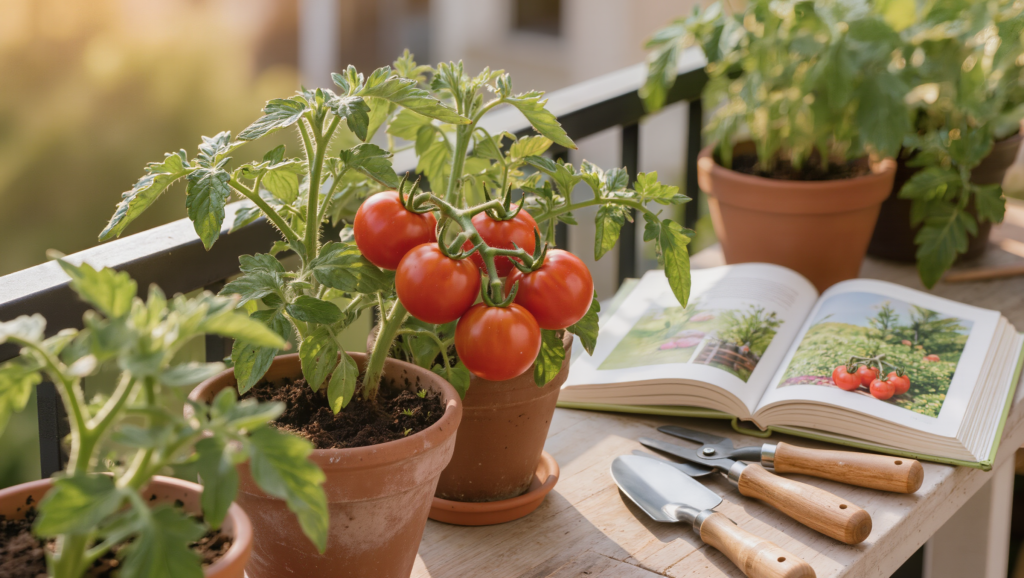












Balcony tomatoes fail for the same boring reasons over and over: pots are too small, the soil is wrong, watering is inconsistent, the variety is mismatched to the space, and the plants simply do not get enough sun. The good news is that almost every one of those problems is fixable once you know what experienced growers have learned the hard way.
If you are growing tomatoes in a small apartment, on a balcony, or in containers on a patio, the challenge is not really “can tomatoes grow here?” It is “can you give tomatoes the root space, light, water, and support they need without accidentally sabotaging them?”
The First Mistake: Tiny Pots
This is the big one, and it is the mistake that quietly ruins more balcony tomato dreams than any other. Tomatoes grow huge root systems, and when the container is too small, the roots run out of room fast, which means faster drying, faster nutrient depletion, slower growth, and fewer tomatoes.
A lot of beginners try to grow tomatoes in cute decorative pots because they look nice on a balcony. Unfortunately, tomatoes do not care how aesthetic the pot is. They care whether the pot can hold enough soil to buffer moisture and feed a hungry plant for months.
A common rule from container-growing advice is at least a 5-gallon pot for most tomato plants, with larger containers often performing better. For long-season or indeterminate tomatoes, experienced growers often recommend 7–10 gallons or more. In practical terms, if your tomato seems to dry out every afternoon and looks stunted, the pot may be the real problem, not the plant.
Bad Soil Is A Silent Killer
The second classic mistake is using the wrong soil. Garden soil in a container is usually a bad move because it compacts, drains poorly, and can bring pests or disease pressure into a small pot system. Container tomatoes need a light, fluffy, well-draining potting mix that still holds moisture and nutrients.
Tomatoes are heavy feeders, especially in pots. The soil volume is limited, so nutrients wash out faster and the plant has less access to reserves than it would in a garden bed. That is why balcony tomato growers often do much better when they use a high-quality potting mix amended with compost or other organic matter instead of just assuming any dirt will do.
Think of container soil as the plant’s pantry, not just its anchor. If the pantry is tiny and empty, the plant can survive for a while, but it will not thrive.
Not Enough Sun, Not Enough Fruit
Tomatoes are basically sun-hungry drama queens. They want a lot of direct light, and when balcony gardeners underestimate that, plants may grow leaves but set few flowers or fruit.
Most tomato guidance points to roughly 6 to 8 hours of direct sunlight a day for good production. A spot that gets bright ambient light but only a few hours of true sun is often enough for survival, but not enough for the kind of heavy fruiting people expect.
This is especially tricky on balconies because nearby buildings, railings, and overhangs create moving shadows. A balcony that looks sunny at 9 a.m. may be half-shaded by early afternoon. Experienced growers usually advise watching the light throughout the day before choosing the final spot. If your tomato is producing mostly leaves and almost no fruit, light is one of the first things to check.
Tomato Plant Watering Mistakes: Too Much Or Too Little
Container tomatoes are far less forgiving than in-ground plants when it comes to water. Pots dry out faster, but overwatering can be just as harmful because roots need oxygen as well as moisture.
One of the most common beginner errors is watering on a schedule instead of watering based on actual soil moisture. Hot weather, wind, pot size, plant size, and sun exposure all change how quickly a balcony pot dries out. That means a pot might need daily watering in midsummer and only occasional watering in cooler periods.
The other watering mistake is inconsistency. Letting a tomato wilt, then drenching it, then letting it wilt again can stress the plant and reduce flowering and fruiting. Inconsistent moisture is also one of the biggest contributors to cracked fruit and blossom-end rot-related problems in container systems.
A better routine is simple:
- Check the top inch or two of soil daily.
- Water deeply when the pot starts to dry.
- Let excess water drain freely.
- Avoid wetting the foliage if possible to reduce disease risk.
Why Crowding Tomato Plants Is A Trap
When people have limited space, they often try to squeeze in “just one more plant.” That almost always backfires. Overcrowding reduces airflow, increases disease pressure, and makes it harder for light to reach the lower parts of the plant.
This matters even more on balconies, where humidity can build up between walls, planters, and nearby surfaces. Tomato leaves that stay damp or plants that are packed tightly together are more vulnerable to fungal problems like early blight and powdery mildew.
A single healthy tomato in a properly sized container will usually outperform two cramped tomatoes fighting over the same space. The small-space instinct is to maximize count, but the smarter move is to maximize plant health.
Choosing The Wrong Type Of Tomato
Not all tomatoes behave the same way. One of the biggest beginner mistakes is choosing a variety that is not suited to the space or container size.
Determinate tomatoes grow to a fixed size and produce a more concentrated harvest, which can be convenient, but they stop producing sooner. Indeterminate tomatoes keep growing and fruiting over a longer season, which is often better for balcony growers who want continuous harvests. If your container is small and your season is short, determinate can make sense. If your pot is large enough and you want tomatoes for months, indeterminate usually makes more sense.
There is also the issue of plant size. Some varieties naturally stay more compact and do better in containers, while large beefsteak types can become a management headache unless you have serious pot volume and support.
The Importance Of Trunk And Branches Support and Training In Tomato Planting
A tomato without support on a balcony is basically a future disaster. As the plant grows and fruits develop, stems bend, branches spread, and the whole plant becomes more likely to snap, sprawl, or shade itself out.
Experienced growers stress cages, stakes, or trellises early, not after the plant has already flopped over. Once a tomato has fallen into the “jungle” phase, it is much harder to train cleanly. Support also improves airflow and keeps fruit off the soil surface, which helps with disease prevention.
A good support system is not optional decoration. It is part of the container.
Underfeeding or Overfeeding Your Tomato Plant?
Container tomatoes need regular feeding, but this is another place where beginners get into trouble. Heavy nitrogen fertilizer can cause lush leafy growth with little fruit, while no fertilizer at all leaves the plant starved in a pot with limited nutrients.
Tomatoes need balanced nutrition, especially once they start flowering and setting fruit. In practice, that means choosing a fertilizer designed for tomatoes or fruiting vegetables and using it according to the label, rather than dumping more on because the plant “looks hungry.”
A common balcony sequence goes like this: the plant starts out fine, then looks pale, then stops flowering, then the grower adds too much nitrogen, then the plant gets bushy but still barely fruits. The smarter play is steady feeding with a balanced tomato fertilizer and some compost-rich soil from the start.
Poor Tomato Plant Pruning Choices
Pruning can help container tomatoes, but beginners often go too far or not far enough. Some growers remove nothing and end up with a tangled, disease-prone plant. Others prune too aggressively and strip away the leaves the plant needs for photosynthesis.
The goal is not a bare stick. The goal is a well-structured plant with enough airflow, enough leaf surface, and enough manageable growth to keep fruiting. That is why many experienced growers recommend removing damaged or diseased leaves, keeping the plant trained to one or a few main stems, and maintaining the support structure as the plant grows.
In small spaces, smart pruning is about control, not punishment.
Effects Of Reusing Tired Soil Year After Year
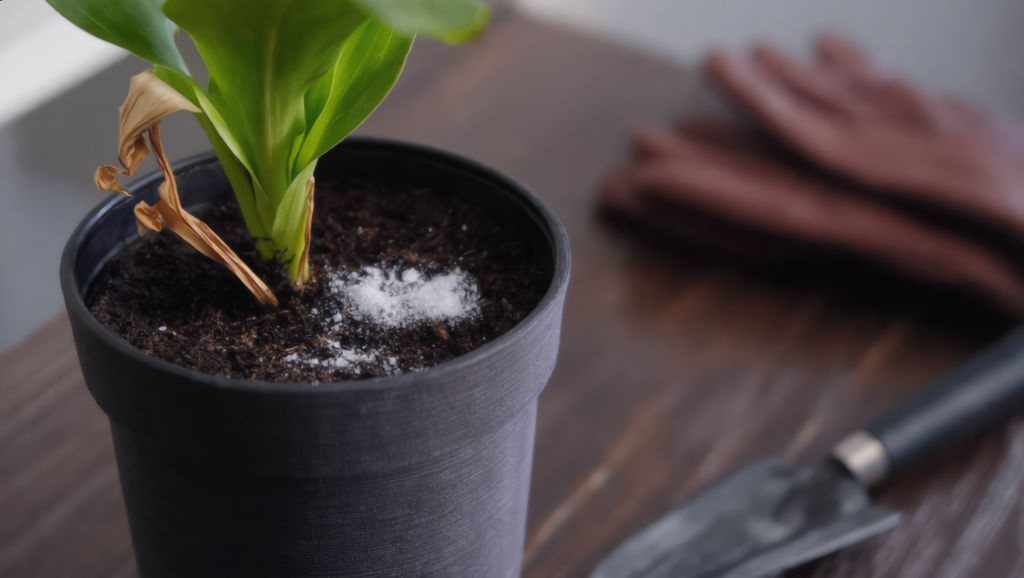
Another mistake people make on balconies is dumping new seedlings into old container mix without refreshing it. Potting soil depletes, compacts, and loses structure over time, especially after a full season of heavy-feeding tomatoes.
If you reuse container soil, it should be amended and refreshed rather than treated like a perpetual resource. Experienced growers often replace a portion of the mix, add compost, and improve drainage each season. That is especially important because container systems do not have the natural soil-building processes that garden beds do.
Ignoring Tomato Plant’s Growth Habit
A lot of balcony failure comes from not matching expectations to the plant’s biology. Some tomatoes are long-season vines that need bigger containers, stronger support, and more patience. Others are compact and better suited to small spaces but give a shorter harvest window.
If you treat every tomato like it should perform the same way, you set yourself up for disappointment. The right question is not just “Can I grow tomatoes on my balcony?” It is “What kind of tomato, pot, soil, sun, and care system does my balcony realistically support?”
That shift in thinking is what separates frustrated beginners from experienced small-space growers.
What Experienced Tomato Growers Wish Beginners Knew
If you boil all the advice down, the real lessons are surprisingly simple:
- Bigger pots almost always beat tiny pots.
- Container tomatoes need quality potting mix, not regular garden dirt.
- Tomatoes need a lot of direct sun to fruit well.
- Watering must be consistent, not random.
- Support systems should go in early.
- Varieties matter, and indeterminate vs determinate is not a minor detail.
- Small spaces reward discipline more than ambition.
The Short Version
Balcony tomatoes fail when growers underestimate root space, light, and consistency. They succeed when the container is large enough, the soil is rich and well-draining, the plant gets real sun, support is in place early, and watering and feeding are steady.
So if your balcony tomatoes keep disappointing you, the problem is usually not that you are “bad at gardening.” It is that container tomatoes are more demanding than they look, and experienced growers have already learned where the traps are. Once you avoid those traps, small-space tomato growing gets a lot more rewarding—and a lot more delicious.