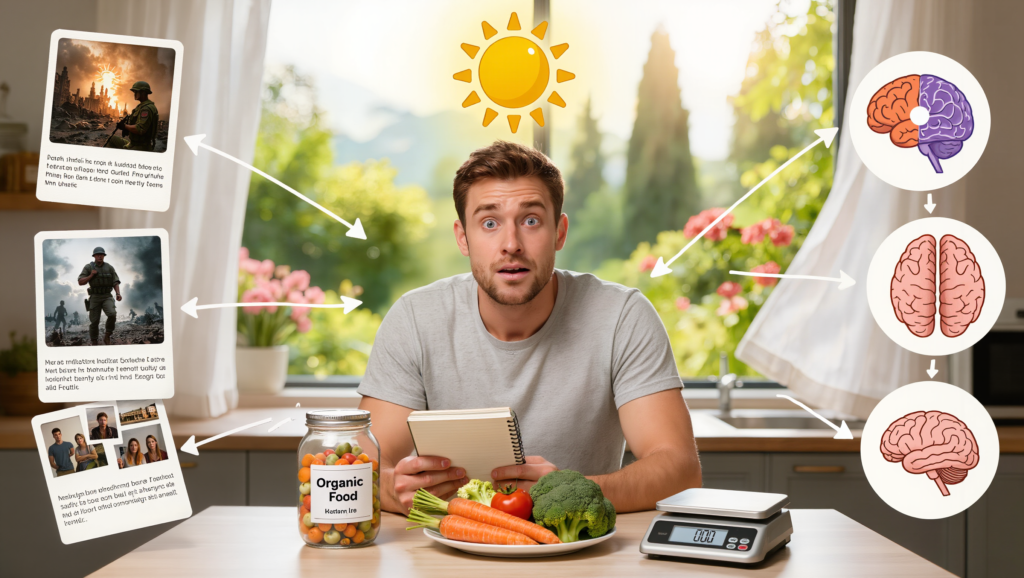












Diet is not a replacement for trauma therapy or medication, but it may be a meaningful support for people living with PTSD, especially when it comes to inflammation, sleep, gut health, and overall symptom stability. Recent research suggests that better diet quality is associated with fewer PTSD symptoms, and a Mediterranean-style pattern has even been linked to decreased PTSD symptoms in a Harvard-linked study of PTSD and the gut microbiome.
The idea that organic food alone can reduce flashbacks is too simplistic. But the broader idea — that higher-quality, less processed, more anti-inflammatory eating may help the brain and body regulate stress better — is worth taking seriously. That is especially true because PTSD affects not just thoughts and emotions, but also sleep, inflammation, physical health, and the gut-brain axis.
Why Diet Enters The PTSD Conversation
PTSD is a whole-body condition, not just a memory problem. Research on women over 20 years found that PTSD was associated with less healthy changes in overall diet quality over time, which suggests that trauma can push eating patterns in a worse direction rather than a better one.
That matters because poor diet quality may be one pathway linking PTSD with chronic disease risk. In other words, trauma can influence what you eat, and what you eat can influence how resilient your body feels. That does not mean food caused the PTSD, but it does mean food may influence the terrain PTSD has to operate in.
Can Diet Reduce Flashbacks?
There is no strong evidence that diet alone stops flashbacks in a direct, guaranteed way. What the evidence does suggest is more subtle: improving diet quality may reduce some of the biological and behavioral factors that intensify PTSD symptoms, such as inflammation, poor sleep, blood sugar swings, and gut dysregulation.
That is an important distinction. Flashbacks are trauma-memory phenomena, but the nervous system is strongly affected by body state. If a person is exhausted, inflamed, underfed, or eating a highly processed diet, the nervous system may have a harder time staying regulated. That can make symptom spikes feel more frequent or more severe.
The Gut-Brain Connection
One of the most interesting developments in PTSD research is the gut microbiome angle. Harvard’s School of Public Health reported that researchers found associations among PTSD, diet, and the gut microbiome, and that participants who followed a Mediterranean diet experienced decreased PTSD symptoms.
That does not prove causation, but it does reinforce a major theme in modern mental health science: the gut and brain are not separate silos. Diet affects the microbiome, the microbiome affects inflammatory signaling, and those signals can influence mood, stress tolerance, and cognitive function.
So when people ask whether changing diet can help PTSD, the most honest answer is yes, possibly — but probably by improving the body systems that support emotional regulation rather than by directly erasing traumatic memories.
The Anti-Inflammatory Diet Pattern
Several of the sources discussing PTSD and nutrition point toward an anti-inflammatory dietary approach. The Silver Sands article says an anti-inflammatory diet features fresh whole foods rich in antioxidants and restricts ultra-processed foods, sugar, and red meat. It also recommends foods like berries, beans, colorful vegetables, nuts, seeds, whole grains, spices, and wild-caught fish.
That general pattern makes sense because PTSD is associated with increased physical health risks and inflammation-related stress. A diet built around minimally processed foods may help reduce inflammatory burden and support steadier energy and mood.
A practical anti-inflammatory PTSD-supportive plate looks like this:
- Plenty of vegetables.
- Some fruit, especially berries.
- Adequate protein.
- Omega-3-rich fish or plant sources.
- Beans and whole grains if tolerated.
- Healthy fats from minimally processed foods.
That is not a cure, but it is a reasonable support strategy.
What Organic Food Might Add
Organic food is not a PTSD treatment by itself. But it may still matter in the broader strategy because it can reduce exposure to certain pesticide residues and encourage a more whole-food, lower-additive eating pattern.
Why does that matter? Because some PTSD-focused nutrition discussions emphasize reducing ultra-processed foods and supporting the gut microbiome. If a person swaps some ultra-processed foods for organic produce, whole grains, legumes, and clean proteins, the benefit may come from the whole dietary shift rather than from the “organic” label alone.
So the surprising role of organic food is not that it is a magic trauma treatment. It is that it can be part of a broader move away from inflammatory, additive-heavy eating patterns toward more nutrient-dense foods that support nervous-system stability.
What Science Says About The Impact Of Diet Quality On PTSD
The strongest human evidence here is not “organic food stops flashbacks.” It is “better overall diet quality correlates with better PTSD outcomes and better physical health trajectories.”nutritional-
The long-term women’s study found that women with prevalent or new-onset high PTSD symptoms had less improvement in diet quality over time than those without trauma. That tells us trauma and diet quality are linked, and not in a random way.
The Harvard report adds another useful layer: Mediterranean diet adherence was associated with decreased PTSD symptoms in a microbiome-related study. That is a promising clue that a high-quality, plant-forward, fiber-rich, fish-inclusive diet may help the brain-body system become less reactive.
What To Eat More Of To Support PTSD Recovery
If you are trying to support PTSD recovery through diet, the evidence-backed direction is not exotic. It is boring in the best way. More:
- Fresh fruits and vegetables.
- Omega-3-rich fish.
- Nuts and seeds.
- Beans and lentils.
- Whole grains.
- Olive oil and other minimally processed fats.
- Spices with anti-inflammatory potential like turmeric and cinnamon.r
These foods tend to support stable blood sugar, better nutrient intake, and more microbiome diversity. That can matter a lot when the nervous system is already under strain.
What To Stop Eating To Support PTSD Recovery
The most consistent nutrition advice for PTSD points toward reducing:
- Ultra-processed foods.
- Added sugars.
- High-sodium packaged foods.
- Excess saturated fat from heavily processed sources.
- Heavy alcohol use, which often worsens sleep and symptom regulation.
That does not mean every processed food is evil or that every treat is forbidden. It means the more your diet is dominated by highly refined, low-nutrient foods, the less support you are giving your nervous system.
How Organic Fits In
Organic food may help if it nudges you toward better ingredients and fewer pesticides, but the real value is in the food pattern, not the certification alone. An organic cookie is still a cookie. Organic sugar is still sugar. Organic potato chips are still chips.
The benefit comes when organic food replaces the more inflammatory, additive-heavy, highly processed parts of the diet with actual whole foods. In that context, organic can be a useful tool, especially for people who want to reduce chemical exposure while improving diet quality.
So the role of organic food in PTSD is best understood as supportive and indirect:
- It can help you choose fresher whole foods.
- It can reduce exposure to some agricultural chemicals.
- It may make a healthy eating pattern easier to sustain.
- It is not a standalone PTSD intervention.
Where Diet Stops And Treatment Begins In PTSD
This part matters a lot: PTSD is a serious condition, and nutrition should be considered complementary, not primary treatment. Therapy, medication when appropriate, sleep support, movement, and trauma-informed care remain the core treatments.
Diet can make those treatments work better by improving energy, reducing inflammation, and supporting the gut-brain connection. But it cannot replace trauma processing. A better lunch can support a better therapy session, but it cannot do the therapy for you.
Bottom Line
Can changing your diet reduce PTSD flashbacks? Maybe indirectly, yes — but mostly by reducing the biological strain that makes PTSD symptoms harder to manage, not by directly erasing trauma memories.
The surprising role of organic food in PTSD is that it may be one helpful piece of a broader anti-inflammatory, gut-supportive, whole-food pattern that helps stabilize mood and stress reactivity. That means the smart move is not to chase a miracle diet, but to build a nutritional environment that gives your brain and nervous system a better chance to stay regulated.
Sources: