











Organic food has a trust problem. Consumers want proof that their carrots, coffee, and quinoa are actually grown the way the label says they were, but old-school paper records and fragmented supply chains make that surprisingly hard to verify. Blockchain is emerging as a practical way to turn organic claims into traceable, checkable records instead of vague promises.
The big idea is straightforward: every step from farm to shelf can be recorded in a shared digital ledger that is hard to tamper with and easy to audit. That does not magically fix every problem in agriculture, but it does make fraud, mislabeling, and weak certification much harder to hide.
Why Organic Foods Needs Better Proofing Mechanism
Organic food depends on trust more than most categories. Buyers are paying extra because they believe the crop was grown without synthetic pesticides, with better ecological practices, and with stronger oversight. The problem is that traditional records are often siloed, easy to lose, and vulnerable to human error or manipulation.
Blockchain helps because it creates a permanent, shared record of events. In organic farming, that can mean logging seed origin, planting dates, certification documents, harvest batches, transport conditions, and retail handoffs. If the record is complete and the inputs are verified, the result is a much clearer chain of custody.
How Blockchain Actually Works in Agriculture
At its core, blockchain is a distributed ledger where data is added in blocks and linked in sequence. Once information is recorded, it is difficult to alter without leaving a trace. That matters in food systems because every handoff creates a chance for confusion, mix-ups, or deliberate fraud.
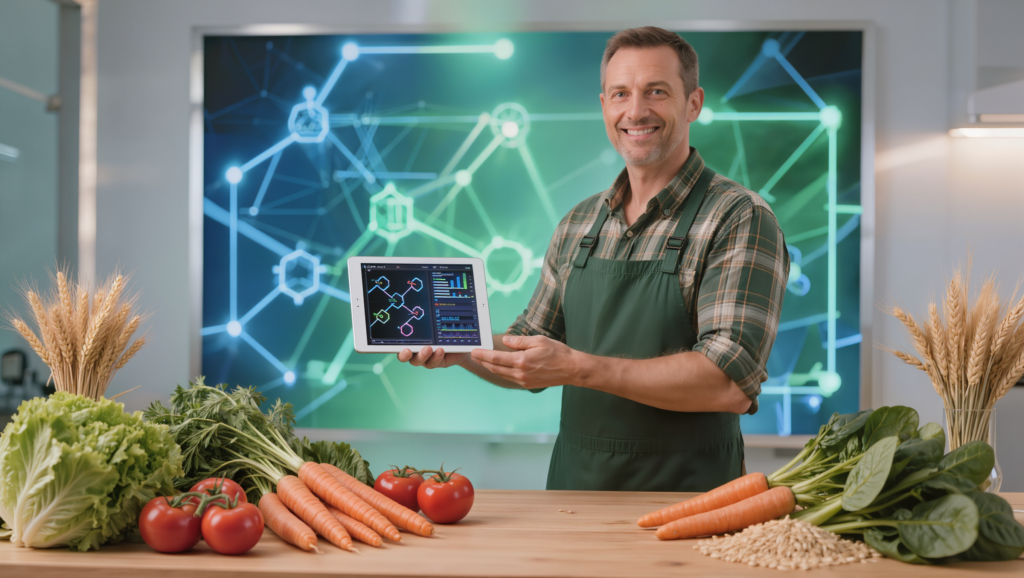
In a blockchain-enabled organic supply chain, farmers can upload records about cultivation methods and certifications, transport partners can add shipping information, and retailers can verify the product before selling it. Some systems also use QR codes so consumers can scan a package and view the product journey in plain language.
What Consumers Can Get Out of Blockchain in Agriculture
For shoppers, the biggest benefit is verification. Instead of reading “organic” and taking it on faith, they can see traceability details tied to a specific batch. That might include farm location, harvest date, processing steps, certification records, and transport information.
That kind of transparency changes the relationship between buyer and brand. It turns organic food from a claim into a documented history. And in markets where fake organic labels are a real concern, that shift matters a lot.
Why Farmers May Benefit From Blockchain in Agriculture
Blockchain is not just a consumer tool. It can also help honest farmers prove their value in a crowded market. Small and medium producers often struggle to show that their practices are genuinely organic, especially when they compete against larger brands with better marketing budgets.
If a farm can attach immutable records to its harvest, it has a stronger case for premium pricing and buyer trust. Some blockchain models also use smart contracts, which can automatically release payment when agreed conditions are met. That can reduce delays, improve cash flow, and cut down on intermediary friction.
Smart Contracts and Fairer Payments
Smart contracts are one of the more underrated parts of this story. They are self-executing rules stored on the blockchain that can trigger payment or approval once certain conditions are satisfied. In agriculture, that could mean a farmer gets paid automatically after delivery is verified, instead of waiting through a long chain of paperwork and middlemen.
This is important because transparency is not only about consumers. It is also about who gets paid, when, and under what verified conditions. Blockchain can help build a system where trust is distributed rather than concentrated in a few gatekeepers.
Food Fraud Gets Harder
Organic fraud is one of the strongest arguments for blockchain adoption. When a product is mislabeled or mixed with non-organic supply, the damage affects consumers, legitimate farmers, and the credibility of the whole category. Blockchain makes it harder to quietly swap, relabel, or backfill records after the fact.
A tamper-resistant ledger does not stop dishonesty at the source, but it does create a paper trail that is much harder to fake later. That makes audits faster and recalls more precise. If something goes wrong, the system can trace the issue back to a specific batch or stage rather than forcing everyone to guess.
IoT Makes It Even Stronger
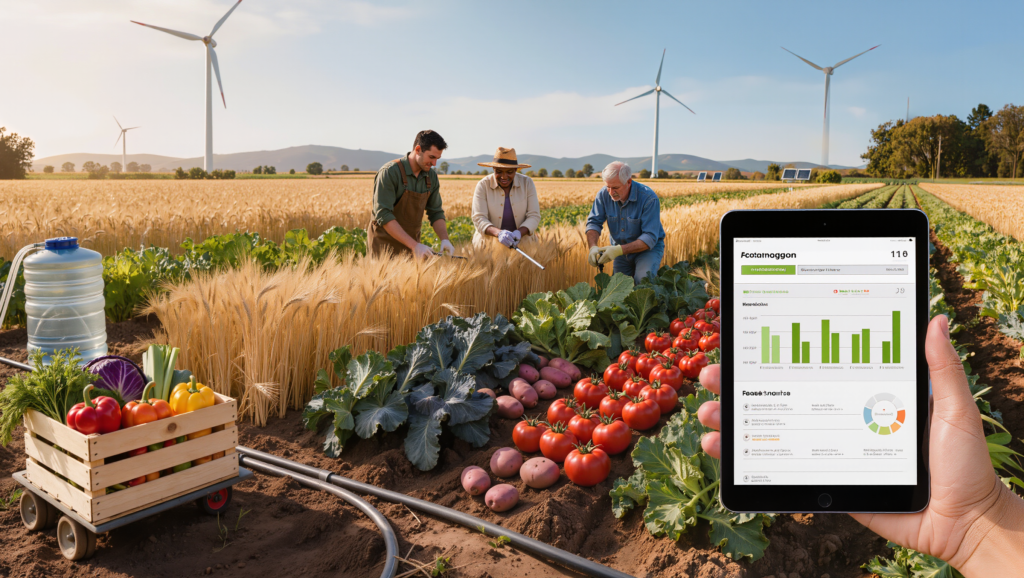
Blockchain becomes much more powerful when paired with IoT sensors. Temperature, humidity, location, and storage conditions can be tracked automatically during transport and storage, then written into the ledger.
That matters because organic integrity is not only about how food is grown. It is also about how it is handled after harvest. A perfect organic crop can still lose value if it is mishandled on the way to market. Sensor-backed records can help prove that the product stayed within acceptable conditions.
The Traceability Advantage
Traceability is the real superpower here. A good blockchain system allows the entire journey of an item to be reconstructed quickly and accurately. That is useful for certification, but it is also useful for food safety, logistics, and quality control.
One recent paper reports that blockchain-based digitalization can significantly improve traceability accuracy and reduce verification time, while also increasing consumer willingness to pay for certified organic products. Even if results vary by implementation, the direction is clear: transparency has measurable economic value.
Why Trust Is the Real Product
Organic brands are not just selling food. They are selling confidence. Blockchain helps convert confidence from something emotional into something auditable. That does not mean consumers will stop caring about taste, price, or freshness. It means trust becomes less abstract.
A QR code on a package can show the farm, certifications, processing steps, and shipping history in seconds. That experience is powerful because it makes transparency visible, not just promised.
What the Research About Blockchain in Agriculture Says So Far
The academic and industry discussion is consistently positive, though still developing. Multiple papers describe blockchain as a way to improve traceability, authenticity, transparency, pricing fairness, and certification validation in organic food chains. A recent study on blockchain-based agribusiness digitalization even reported strong improvements in traceability accuracy and verification speed.
At the same time, most sources still frame blockchain as a solution with potential rather than a fully solved industry standard. That is the honest read. The tech is promising, but adoption quality matters just as much as the tool itself.
The Hard Problems Still Left
Blockchain is not a magic fix. If bad data gets entered at the beginning, the ledger will preserve bad data very efficiently. That means the system still depends on honest input, certification standards, and good operational controls.
There are also real-world barriers:
- Small farmers may lack the tools or training to use the system.
- Different platforms may not work well together.
- Setup costs can be high.
- Users need simple interfaces, not developer-level dashboards.
So the biggest challenge is not just technical. It is social and organizational. Blockchain works best when everyone in the chain participates consistently.
Why Interoperability Matters
A fragmented blockchain landscape would undermine the whole point. If one company uses one system and another uses a different one, data becomes harder to share and verify. That is why open standards and interoperable platforms are repeatedly emphasized as the path to a stronger future.
In practical terms, the system has to be simple enough for farmers, transporters, certifiers, retailers, and consumers to use without friction. If it only works for tech-heavy supply chains, it will miss the broader organic market entirely.
A Better Future for Organic Food
The best version of blockchain in farming is not flashy. It is invisible infrastructure that quietly makes fraud harder, traceability easier, and payments fairer. It gives consumers a way to verify what they buy and gives honest producers a way to prove what they do.
That is especially important in organic food, where the premium price depends on trust. If blockchain can reduce the guesswork, the whole category gets stronger. And that could be a big deal for everyone involved, from small farmers to shoppers trying to make more informed choices.
Bottom Line
Blockchain is building a more transparent future for organic food by turning supply chain history into a verifiable digital record. It helps track origin, certification, transport, and handling, while also supporting smarter payments and faster fraud detection.
It is not perfect, and it will not solve bad farming practices by itself. But it does make it much harder to fake an organic story, which is exactly why it matters. In a food system where trust is expensive, blockchain offers something rare: proof.