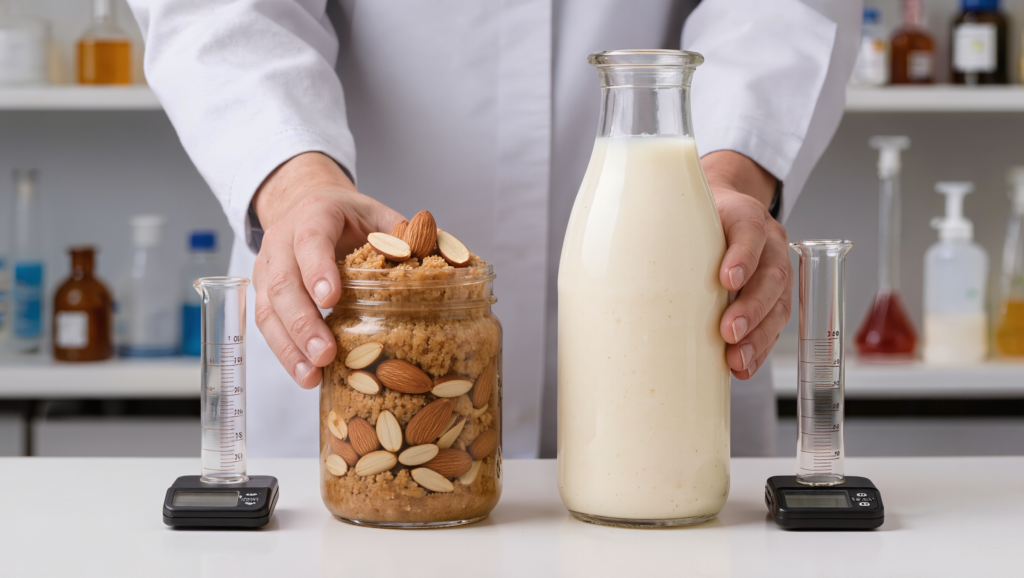












Almond milk has a wholesome reputation, but a closer look at the ingredient lists tells a less glamorous story: many cartons are mostly water, with a small amount of almonds plus stabilizers, gums, and added vitamins. In that sense, the “organic almond milk” label can sometimes function more like premium branding than a guarantee of nut-heavy nutrition.
That does not mean almond milk is fake or useless. It does mean the product is often very different from the mental image people have when they hear “almond milk,” and the gap between the image and the reality is where the marketing gets clever.
What’s In The Carton Of Organic Almond Milk?
A typical store-bought organic almond milk can list water first, followed by almonds, then sea salt, calcium phosphate, and ingredients like gellan gum or locust bean gum, along with added vitamins. That ingredient order matters because it tells you that water is doing most of the heavy lifting in the product.
Some brands are more transparent than others. Califia Farms, for example, markets an organic almond milk with just three ingredients: water, organic almonds, and sea salt. Other brands use a longer formula with gums and fortification minerals. Either way, almonds are usually not the dominant component by volume.
Why People Feel Misled Organic Almond Milk Labels?
The problem is not that almond milk contains water. Of course it does; milk-like beverages are mostly water. The issue is that the packaging and branding can make the drink seem much more almond-rich than it really is. One report cited in food coverage noted that some major almond milk brands contain only about 2% almonds, with the rest being water and other ingredients.
That creates a classic marketing illusion:
- The carton shows almonds.
- The name says almond milk.
- The label says organic.
- The flavor suggests something nut-based.
- The ingredient list reveals a much thinner reality.
This does not automatically equal fraud, but it absolutely explains why consumers can feel tricked by the premium price tag.
What “Organic” Actually Means
The word “organic” is powerful because it signals quality, purity, and health-consciousness. But organic does not mean dense in nuts, rich in protein, or free from processing aids. It means the product meets organic production standards for the ingredients
So an organic almond milk can still be:
- Mostly water.
- Low in almonds.
- Stabilized with gums.
- Fortified with added nutrients.
- Very low in protein.
In other words, organic tells you something about how the ingredients were produced. It does not tell you that the beverage is nutritionally substantial.
Why Gums Are Added in Organic Almond Milk?
Gums like gellan gum and locust bean gum are common in almond milk because they improve texture, stop separation, and help create a smoother mouthfeel. Without them, many almond milks would look watery, separate quickly, or feel thin and less appealing.
From a manufacturing standpoint, that makes sense. From a consumer standpoint, it means you are often drinking a carefully engineered suspension rather than something naturally creamy. That is not necessarily bad, but it is worth recognizing if you assume “organic” means minimally altered.
The Nutrition Reality
Almond milk is usually low in calories, which is one reason people buy it. But low calorie does not always mean nutrient-dense. Because almonds are used in relatively small amounts, the final drink often contains little protein and only modest amounts of fat unless it is heavily fortified or formulated differently.
That means almond milk can be useful if you want a light, dairy-free beverage for coffee or cereal. But if you think you are getting something nutritionally comparable to a handful of almonds, you are not. The nuts are too diluted for that.
Water Footprint vs. Nutritional Value Of Organic Almond Milk
Almond milk also gets pulled into sustainability debates. One article notes that almond milk can require significant water to produce, though it is still less water-intensive than dairy milk on a per-liter basis in some comparisons. That comparison is important because the environmental story is more complicated than “almonds are bad” or “dairy milk is worse.”
The real issue is that almond milk exists at the intersection of two tradeoffs:
- It uses a lot of water relative to the amount of nut matter in the final product.
- It is often marketed as a clean, healthy, eco-friendly choice.
If your mental picture is “a carton full of almond essence,” the reality can feel disappointing. But if your mental picture is “a mostly water-based beverage that uses a small amount of almonds for flavor and function,” the product makes much more sense.
How Much Almond Is Actually In Organic Almond Milk?
Different brands vary. Some products contain around 2% almonds, while others use more, such as 7% activated almonds in a specific organic product. That spread matters a lot.
A carton with 2% almonds is basically water with a little nut content and added structure. A carton with 7% almonds is still diluted, but it is noticeably less extreme. So the question is not just “Is almond milk mostly water?” The better question is “How much almond is in this specific almond milk?”
That is why reading the ingredient panel is more useful than trusting the front label.
Why The Label Works So Well
The organic almond milk label is effective because it activates a bunch of positive associations:
- Natural.
- Plant-based.
- Healthy.
- Ethical.
- Premium.
- Clean.
Those cues influence how people perceive the product before they ever look at the ingredients. That is smart branding. It is also why many consumers don’t realize they are buying a product that is nutritionally closer to a flavored, fortified beverage than to a food based on actual almonds.
When Almond Milk Makes Sense
To be fair, almond milk does have a real role. It is useful for people who want:
- A dairy-free drink.
- A lower-calorie coffee creamer alternative.
- Something light for cereal or smoothies.
- A beverage with added calcium and vitamins.
If you like the taste and you understand what you’re buying, it can fit perfectly well into a diet. The issue is not almond milk itself. The issue is the mismatch between consumer expectations and ingredient reality.
Better Ways To Judge Plant Milks
Instead of asking whether almond milk is “healthy” in the abstract, it helps to ask a few practical questions:
- How many almonds are actually in it?
- Does it contain gums or oils?
- Is it sweetened?
- Is it fortified?
- Am I buying it for nutrition, taste, or convenience?
Those answers matter more than the front-of-carton marketing. A simple, unsweetened version with fewer additives is generally a more honest product than one with heavy branding and a microscopic almond content.
The Bigger Marketing Lesson
Almond milk is a good example of how food marketing can turn a simple commodity into a wellness product. The carton may feel premium, but the actual drink is often a carefully diluted formula designed to be shelf-stable, smooth, and broadly appealing.
That doesn’t make it a scam every time. But it does mean the label can be more about perception than substance. If a product is made mostly of water and a small amount of nuts, you should know that going in.
Bottom Line
Yes, your almond milk may have more water and gums than nuts. In many brands, that is exactly the point, and the “organic almond milk” label can make the product seem more nutrient-dense or naturally almond-heavy than it really is.
The smartest move is not to panic or ban it. It is to read the ingredient list, check the almond percentage when available, and decide whether you are buying flavor, convenience, or nutrition. Once you do that, almond milk stops looking like magical wellness water and starts looking like what it often really is: a lightly nutty, mostly water-based beverage with a strong marketing budget.