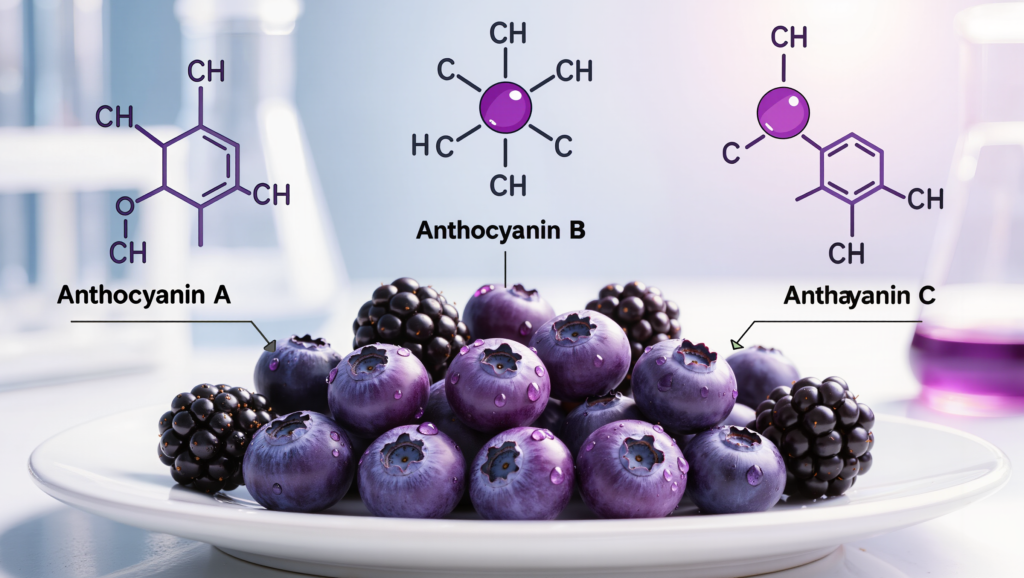












Anthocyanins are the deep red, purple, and blue pigments that make blueberries, blackberries, red cabbage, purple sweet potatoes, black rice, and dark grapes look so dramatic. But they are more than just pretty plant color; they are bioactive compounds linked to antioxidant, anti-inflammatory, and broader anti-aging effects in the body.
If you want the simple version, here it is: anthocyanins help protect cells from the kinds of damage that pile up with age. That does not make them a magic youth serum, but it does make them one of the more interesting compounds in whole foods for people who care about healthy aging, brain health, and cardiovascular protection.
What Are Anthocyanins?
Anthocyanins are water-soluble pigments belonging to the flavonoid family, which is part of the larger polyphenol group. They are responsible for many of the red, purple, and blue colors seen in fruits and vegetables.
Chemically, anthocyanins are glycosylated forms of anthocyanidins, which means they are attached to sugar molecules. That structure matters because it affects how they behave in food and in the body. The exact color they produce depends on pH, structure, and how they interact with the surrounding plant tissue.
Why Anthocyanins Matter for Aging
Aging is not just about time passing. At the cellular level, aging involves accumulated oxidative damage, inflammation, mitochondrial stress, and reduced resilience in tissues. Anthocyanins are interesting because they appear to influence many of those pathways at once.
Research reviews describe anthocyanins as compounds that can:
- Reduce oxidative stress.
- Lower inflammatory signaling.
- Neutralize free radicals.
- Support cardiovascular health.
- Offer neuroprotective effects.
- Potentially help with metabolic health and weight control.
That does not mean they stop aging. It means they may help reduce some of the cellular wear-and-tear that contributes to age-related decline.
The Antioxidant Story
The most familiar claim about anthocyanins is that they are antioxidants. That is true, but the deeper point is that they help reduce oxidative stress, which is the imbalance between free radicals and the body’s ability to neutralize them.
Oxidative stress is associated with many chronic diseases, including cardiovascular disease, neurodegeneration, diabetes, and some cancers. Anthocyanins help by scavenging reactive species and supporting antioxidant defenses in the body.
A lot of people hear “antioxidant” and think “health halo.” But the more useful way to think about it is this: oxidative stress damages proteins, fats, DNA, and cell membranes over time. Anthocyanins help slow that damage down a little, especially as part of an overall plant-rich diet.
How Anthocyanins Protect Cells
Anthocyanins do not work through a single magic switch. They seem to influence several biological processes at once. Reviews note that they can affect signaling pathways, reduce inflammatory markers, and help protect cells from oxidative damage.
That matters because aging cells often become less efficient at repairing damage and more likely to stay in a stressed or dysfunctional state. Anthocyanins may help support a healthier cellular environment by reducing that stress load. In some experimental work, anthocyanin extracts have even been linked to reduced cell senescence and improved mitochondrial renewal pathways.
So the “protect your cells” idea is not just marketing language. It reflects a real biological pattern: less oxidative burden, less inflammation, and better cellular housekeeping.
Brain Health and Aging
One of the most exciting areas of anthocyanin research is brain aging. Reviews suggest that anthocyanin-rich foods may help protect against age-related cognitive decline and neurodegenerative processes.
Why would that happen? The brain is highly vulnerable to oxidative stress because it uses a lot of oxygen and contains delicate lipid-rich tissue. Anthocyanins may help by reducing oxidative damage, supporting vascular health, and modulating inflammation.
That is not the same thing as saying berries prevent dementia. But it does mean that a diet rich in anthocyanin-containing foods is a very sensible part of a brain-health strategy, especially over decades.
Heart Health Benefits
Anthocyanins are also strongly discussed in relation to cardiovascular health. Reviews show links to reduced risk of cardiovascular pathology, partly because they can improve antioxidant status and reduce inflammatory signaling.
This makes intuitive sense. Blood vessels age too. They become less flexible, more prone to inflammation, and more affected by metabolic stress. Anthocyanins may help support healthier blood vessel function, which is one reason berry-rich diets are often associated with better heart health outcomes.
Think of anthocyanins as one piece of a larger heart-friendly pattern:
- More fruits and vegetables.
- More fiber.
- Better metabolic control.
- Less chronic inflammation.
- Less reliance on ultra-processed food.
Metabolic Health and Blood Sugar
Anthocyanins may also help with metabolic health, including insulin sensitivity and glucose regulation. Healthline notes that anthocyanin-rich foods are associated with a lower risk of type 2 diabetes, and even relatively small daily amounts may be beneficial.
That doesn’t mean a blueberry muffin or a purple candy counts the same as whole anthocyanin-rich foods. The whole food package matters. But if you swap out low-fiber, highly processed snacks for berries, purple cabbage, or black rice, you are doing more than adding color. You are changing the metabolic profile of your diet.
Eye and Skin Protection
Anthocyanins are also studied for visual and skin health. One review of plant compounds notes potential protection against UV-related eye damage and skin-cell oxidation. Another source highlights interest in anthocyanins for protecting against age-related skin damage and helping support skin structure.
That sounds impressive, but the practical takeaway is simple: foods rich in anthocyanins may help support tissues that are exposed to constant environmental stress, including light, oxygen, and pollution. Again, this is not a replacement for sunscreen or medical care. It is part of a broader resilience strategy.
Foods With High Anthocyanins Content
If you want more anthocyanins in real life, the easiest place to start is food. Common sources include:
- Blueberries.
- Blackberries.
- Raspberries.
- Currants.
- Black grapes.
- Cherries.
- Red cabbage.
- Purple cauliflower.
- Black rice.
- Purple sweet potatoes.
The more deeply colored the plant, the more likely it is to contain meaningful anthocyanin levels. That is not an absolute rule, but it is a good starting clue. A dark, richly pigmented fruit or vegetable is often carrying more than just visual flair.
Why You Get More Anthocyanins From Whole Foods Than Through Supplements
Anthocyanin supplements exist, but whole foods are usually the better bet. That is because foods provide anthocyanins alongside fiber, vitamins, minerals, and other polyphenols that may work together.
In other words, the plant package is often more valuable than the isolated compound. A handful of berries is not just anthocyanins; it is also water, fiber, micronutrients, and other plant compounds that help slow digestion and support gut health.
That gut connection matters because anthocyanins are absorbed and metabolized along the gastrointestinal tract, especially in the large intestine, where they interact with gut microbes. That means part of their benefit may come from how they affect the microbiome as well as how they act directly in the body.
Benefits Of Anthocyanins On Gut Health
The gut is becoming a major focus in aging research, and anthocyanins fit nicely into that conversation. BBC Good Food notes that anthocyanins interact with gut bacteria and may support gut health while being transformed into other bioactive compounds.
That means their effect is not just “eat pigment, get health.” It is more dynamic than that. Your gut microbes help process these compounds, and the resulting metabolites may contribute to some of the health benefits associated with anthocyanin-rich diets.
This is a good reminder that healthy aging is never about one ingredient doing all the work. It is about the whole system.
What The Research on Anthocyanins Can and Cannot Prove
The evidence for anthocyanins is promising, but it is still a mix of lab studies, animal models, human observational research, and some clinical data. Reviews consistently support anti-inflammatory and antioxidant effects, and some newer work suggests anti-aging potential.
But we should stay honest:
- Anthocyanins are not a fountain of youth.
- Their benefits are modest, not miraculous.
- The quality of the overall diet matters a lot.
- Bioavailability and dose vary by food and preparation.
That means anthocyanins are best seen as a strong supporting actor, not the entire story.
How To Eat More Anthocyanins Without Overthinking It
You do not need a supplement routine or a color-coded spreadsheet. The easiest method is to make darkly pigmented plant foods show up regularly in your meals.
A few easy moves:
- Add berries to oatmeal or yogurt.
- Use red cabbage in slaws and salads.
- Roast purple sweet potatoes.
- Swap white rice for black rice sometimes.
- Snack on cherries or grapes instead of candy.
That is the kind of dietary shift that actually sticks. It is simple, visually satisfying, and compatible with real life.
The Bottom Line
Anthocyanins are the pigments that give many red, purple, and blue plant foods their color, but their real superpower is what they may do for your cells. They are linked to antioxidant protection, lower inflammation, cardiovascular support, brain health, metabolic benefits, and potentially healthier aging overall.
The smartest way to use that information is not to chase a miracle compound. It is to eat more deeply colored whole plant foods consistently. Anthocyanins are one of those rare nutrition stories where the colorful part of the food is also one of the most interesting parts for long-term health.
Sources:
- https://pmc.ncbi.nlm.nih.gov/articles/PMC5613902/
- https://pmc.ncbi.nlm.nih.gov/articles/PMC8308553/
- https://pmc.ncbi.nlm.nih.gov/articles/PMC12231369/