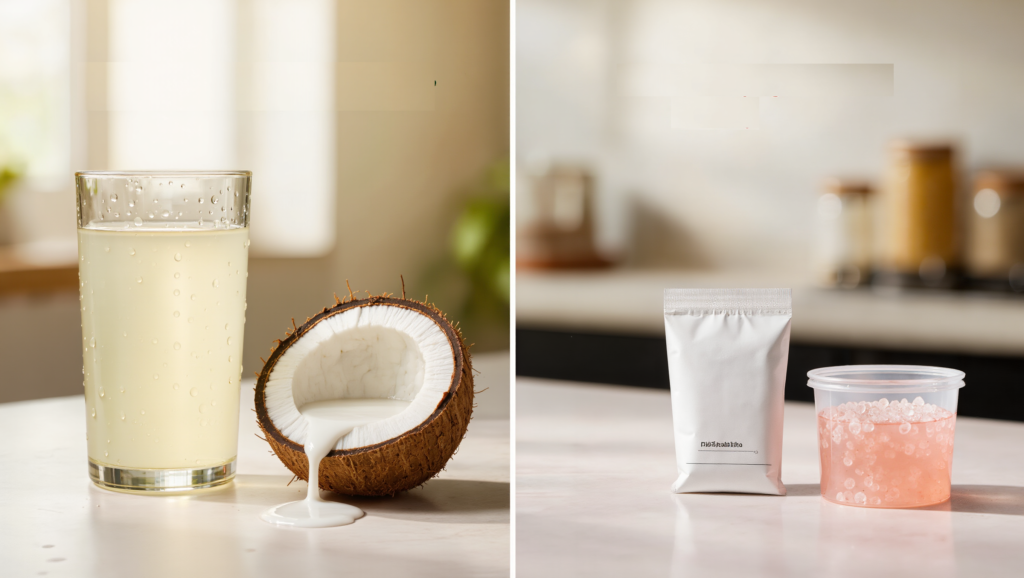












Coconut water is refreshing, naturally sweet, and rich in potassium, but oral rehydration salts—ORS—are the better choice when you need rapid, reliable rehydration after diarrhea, vomiting, heat illness, or significant fluid loss. Coconut water can be perfectly useful for everyday hydration or mild fluid loss, but it does not contain the carefully balanced sodium-and-glucose formula that makes ORS a medical rehydration tool.
That distinction matters because dehydration is not simply a shortage of water. It is often a shortage of water plus sodium and other electrolytes. The right drink depends on why you are dehydrated, how severe the fluid loss is, whether you can keep fluids down, and whether you are replacing sweat or treating illness.
What Does Rapid Rehydration Require?
When you lose fluid through sweating, diarrhea, vomiting, or fever, you lose more than water. You may also lose sodium, chloride, potassium, bicarbonate, and other electrolytes. The exact balance depends on the cause, but the body needs both fluid and minerals to restore blood volume and normal cell function.
This is where many popular hydration drinks fall short. A beverage may contain water and potassium yet still be poorly suited to rapidly restore the fluid compartment outside cells if it lacks enough sodium. Coconut water is a good example: research describes it as having adequate potassium and glucose but being relatively deficient in sodium, chloride, and bicarbonate compared with effective oral rehydration fluids.
ORS is designed around this problem. It combines clean water with a specific balance of glucose and salts that helps the intestine absorb sodium and water efficiently. ORS is an adequate glucose-electrolyte solution that can treat dehydration from diarrhea simply, effectively, and inexpensively in most cases.
That is why ORS is not just “salty water.” It is a formula built around human intestinal physiology.
How Oral Rehydration Salts Work
The small intestine contains transport systems that absorb glucose and sodium together. As sodium and glucose move across the intestinal lining, water follows. This allows the body to absorb fluid even when diarrhea is still occurring.
A correctly prepared ORS solution generally contains:
- Clean water.
- Sodium.
- Glucose.
- Potassium.
- Chloride.
- A base such as citrate or bicarbonate.
The combination matters. Too little sodium may fail to replace major sodium losses. Too much sugar can draw water into the intestine and worsen diarrhea. Too much salt can be dangerous. A commercial ORS sachet is therefore more dependable than improvising a homemade mixture.
One sachet should be diluted in the specified volume of clean water, often one liter, rather than mixed into a smaller or larger amount. Changing the water-to-powder ratio changes the concentration and can make the solution unsafe or ineffective.
Advantages Of Drinking Coconut Water
Coconut water is the clear liquid inside young coconuts. It contains water, natural sugars, potassium, and smaller amounts of sodium and other minerals.
Its strengths are obvious:
- It is widely available in many tropical regions.
- It usually tastes better than ORS.
- It supplies potassium.
- It provides some carbohydrate.
- It may be easier to drink after mild exercise or heat exposure.
For ordinary hydration, coconut water can be a pleasant alternative to sugary soda or highly sweetened sports drinks. It may also help replace some fluid after light sweating.
But its electrolyte profile is not the same as sweat or diarrhea losses, and it is not standardized in the way ORS is. Coconut varieties, maturity, processing, and added ingredients can all affect the final composition.
Coconut Water’s Lack Of Sodium Problem For Severe Dehydration
Sodium is the major reason coconut water cannot automatically replace ORS. Sweat contains sodium, and diarrhea can cause substantial sodium loss. Coconut water is naturally much richer in potassium than sodium.
That makes it nutritionally interesting but medically incomplete for significant dehydration. Green coconut water is listed among fluids to avoid when treating dehydration because it does not contain enough salt.
This does not mean coconut water is poisonous or useless. It means it is not a complete replacement fluid when the body needs substantial sodium restoration.
The problem becomes more serious if someone drinks large amounts of plain coconut water while losing sodium through diarrhea or sweating. In certain circumstances, replacing only water and potassium without enough sodium can fail to correct the underlying imbalance.
Drinking Coconut Water After Exercise
The answer is less dramatic when the situation is exercise-related dehydration. If you have finished a moderate workout, feel thirsty, and have lost only a small amount of fluid, coconut water may be perfectly reasonable. It provides fluid and carbohydrates and may taste more appealing than a clinical rehydration solution.
However, evidence does not show that coconut water is consistently superior to plain water for exercise rehydration. A 2025 systematic review found no differences in urine output, fluid balance, or other hydration outcomes when fresh coconut water was compared with water in several trials involving exercise-associated dehydration.
That finding is worth emphasizing because coconut water is often advertised as a superior natural sports drink. It may be a useful beverage, but “natural” does not automatically mean faster or more effective.
The same review found that commercial sports drinks could be effective for exercise-associated rehydration, but the evidence for coconut water was limited and did not show a clear advantage over water.
For short or moderate workouts, your normal meals and fluids are often enough. For prolonged exercise in heat, a drink containing adequate sodium may be more appropriate than coconut water alone.
Safe to Drink Coconut Water After Diarrhea Or Vomiting?
This is where ORS clearly wins.
Diarrhea and vomiting can rapidly deplete both fluid and electrolytes. ORS is the standard oral treatment because the glucose-and-salt combination improves absorption and helps prevent dehydration from becoming severe.
Coconut water may be tempting because it is gentle and natural, but it does not provide a balanced electrolyte replacement. Some older researches described coconut water as theoretically feasible where conventional fluids were unavailable, while specifically noting its deficiency in sodium, chloride, and bicarbonate.
A small pediatric study compared coconut water with ORS in children with acute diarrhea and found mixed results: coconut water was accepted well, but ORS performed better for treating established dehydration in the study group.
This is not strong enough evidence to replace ORS with coconut water, particularly in infants and young children. Children can become dehydrated quickly, and a drink that is “mostly water with potassium” is not equivalent to a carefully formulated therapeutic solution.
Can Adding Salt Turn Coconut Water Into Oral Rehydration Salts?
Some traditional and clinical discussions have suggested adding table salt to coconut water to address its low sodium and chloride content. There are also expert suggestions in the context of certain areas where coconuts are plentiful and conventional fluids are unavailable.
But homemade modification is risky because people may add too much or too little salt, use the wrong amount of water, or assume that salt alone corrects all the differences between coconut water and ORS.
If commercially prepared ORS is available, use it according to the instructions. Do not treat coconut water plus a pinch of salt as a medically equivalent formula, especially for children, severe diarrhea, kidney disease, or significant dehydration.
Are Sports Drinks Safe For Rehydration?
Sports drinks and ORS are not the same thing. A sports drink is generally designed to provide fluid, carbohydrate, and some electrolytes during exercise. ORS is designed to treat dehydration caused by illness, especially diarrhea.
Sports drinks may contain:
- More sugar than standard ORS.
- Less sodium than needed for clinical rehydration.
- Flavorings and coloring.
- A formula optimized for palatability and exercise rather than intestinal fluid replacement.
For a long endurance event, a sports drink may be practical. For gastroenteritis, ORS is usually the more appropriate choice. Drinking a sugary sports beverage during diarrhea can sometimes worsen gastrointestinal symptoms because excessive sugar may draw water into the intestine.
When Coconut Water Is A Sensible Choice For Rehydration
Coconut water can fit into a healthy hydration routine when:
- You are mildly thirsty.
- You have exercised lightly or moderately.
- You are in hot weather but not significantly dehydrated.
- You want a lower-sugar alternative to soda.
- You enjoy the taste and tolerate it well.
- You are replacing fluid alongside normal food.
It can also be useful in areas where safe drinking water and commercial ORS are not immediately available, but that is an emergency or resource-limited context, not proof that it is superior to ORS.
Choose unsweetened coconut water when possible. Some packaged versions contain added sugar, which increases calorie intake without improving electrolyte replacement.
When Oral Rehydration Salts Are A Better Option For Rehydration
Reach for ORS rather than coconut water when dehydration is related to:
- Frequent diarrhea.
- Repeated vomiting.
- Cholera or suspected severe gastrointestinal infection.
- Significant heat illness.
- Heavy sweating over many hours.
- Dehydration in babies or young children.
- Frailty or older age.
- Symptoms such as dizziness, weakness, dry mouth, very dark urine, or reduced urination.
ORS is also preferable when someone cannot replace fluid through food and ordinary drinks. It is specifically designed to restore the electrolyte and water balance that plain water and coconut water may not adequately address.
Warning Dehydration Signs That Require Medical Care
Severe dehydration can become dangerous quickly. Seek urgent medical care if there is:
- Confusion or unusual drowsiness.
- Fainting or inability to stand.
- Very little or no urine.
- Fast heartbeat or breathing.
- Sunken eyes in a child.
- Blood in the stool or vomit.
- Persistent vomiting that prevents drinking.
- Severe abdominal pain.
- Signs of heatstroke, including very high body temperature or altered mental status.
Do not rely on coconut water or home fluids alone in those circumstances. ORS can help while arranging care if the person is awake and able to swallow, but severe dehydration may require intravenous treatment.
People with kidney disease, heart failure, or conditions requiring restricted potassium or fluid intake should also seek individualized medical advice before consuming large quantities of coconut water or electrolyte drinks.
A Simple Rehydration Decision Guide
The choice becomes easier when you match the drink to the problem.
| Situation | Better choice |
|---|---|
| Normal daily hydration | Water |
| Mild thirst after a short workout | Water or coconut water |
| Long exercise session in heat | A drink with adequate sodium, depending on sweat loss |
| Diarrhea or vomiting | ORS |
| Dehydrated child | ORS and medical guidance |
| Severe dehydration or confusion | Urgent medical care |
| Kidney or heart disease | Clinician-guided fluid and electrolyte plan |
The biggest mistake is choosing based only on marketing. “Natural,” “electrolyte-rich,” and “sports drink” do not automatically tell you whether a beverage is appropriate for rapid rehydration.
Bottom line
Coconut water is a refreshing natural beverage with potassium, fluid, and some carbohydrate. It can be useful for everyday hydration and mild fluid loss, particularly after ordinary exercise. But it is relatively low in sodium and does not match the balanced glucose-electrolyte composition of oral rehydration salts.
For rapid rehydration after diarrhea, vomiting, cholera, significant heat illness, or major electrolyte loss, ORS is the better choice because it is specifically formulated to help the intestine absorb water and sodium efficiently.
So the verdict is not that coconut water is bad. It is that coconut water is a beverage, while ORS is a medical rehydration tool. Use the first for refreshment, and the second when dehydration is a health problem.
Sources: