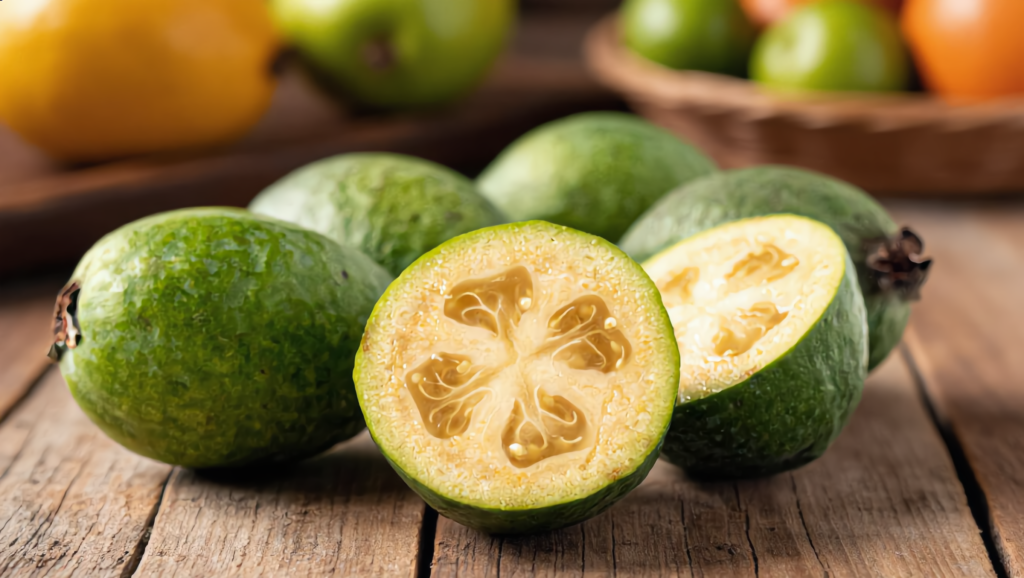












When people think of New Zealand superfruits, kiwi usually steals the spotlight. It is green, tangy, packed with vitamin C, and has global name recognition. But there is another fruit quietly growing in Kiwi orchards (and gardens around the world) that rivals—and in some ways surpasses—kiwi in antioxidant power: feijoa.
Also known as pineapple guava (Acca sellowiana), feijoa is an aromatic, green-skinned fruit with translucent, jelly-like flesh and a flavor that blends pineapple, guava, and mint. Beyond its unique taste, feijoa is loaded with vitamin C, polyphenols, flavonoids, and fiber—all of which contribute to strong free radical–scavenging activity and broad health benefits.
Yet outside of New Zealand, parts of Australia, and some Mediterranean and South American regions, feijoa remains underappreciated. Here is why this fragrant fruit deserves a much bigger spot in your diet, especially if you care about antioxidants, inflammation, and long-term cellular health.
What is feijoa?
Feijoa (Acca sellowiana, formerly Feijoa sellowiana) is an evergreen shrub in the Myrtaceae family (same family as guava, clove, and eucalyptus). Native to southern Brazil, Paraguay, Uruguay, and northern Argentina, it has been widely cultivated in:
- New Zealand (where it is a popular backyard and commercial fruit).
- Australia.
- Parts of the Mediterranean (Italy, France, Spain).
- The southeastern United States (California, Florida).
The fruit:
- Is oval, about 5–8 cm long, with dull green skin.
- Has creamy-white to translucent flesh with a central pulp containing seeds.
- Smells and tastes like a mix of pineapple, guava, and mint, with floral notes.
Unlike kiwi, you typically eat feijoa by cutting it in half and scooping out the inner flesh with a spoon, or by blending the whole fruit (including the thin, edible peel) into smoothies, jams, or desserts. The peel is especially rich in antioxidants, which is a key point we will come back to.
Nutritional Profile Of Feijoa
Per 100 g of fresh feijoa (including peel), typical values include:
- Calories: ~55–60 kcal.
- Carbohydrates: ~13–15 g.
- Fiber: ~6–7 g (very high for a fruit).
- Vitamin C: ~30–65 mg (some analyses report up to 113 mg/100 g in certain genotypes).
- Potassium: ~250–350 mg.
- Folate, B5 (pantothenic acid), magnesium, calcium: present in modest amounts.
One cup of ½-inch chunks (about 205 g) provides roughly:
- 125 calories.
- 13 g of fiber.
- 67 mg of vitamin C (over 100% of the RDI for adults).
- 353 mg of potassium.
Compared to kiwi (which has about 93 mg vitamin C per 100 g and ~3 g fiber), feijoa may have slightly less vitamin C on average but significantly more fiber per serving, plus a different polyphenol profile. Some feijoa genotypes even exceed citrus fruits in vitamin C content.
But where feijoa really shines is in its polyphenols and flavonoids—especially in the peel.
Antioxidant Power: polyphenols, flavonoids, and free radical scavenging
Antioxidants are compounds that neutralize free radicals—unstable molecules that can damage DNA, proteins, and lipids, contributing to aging, inflammation, and chronic diseases like cancer, cardiovascular disease, and neurodegeneration.
Feijoa contains several classes of antioxidants:
- Vitamin C (ascorbic acid): A water-soluble antioxidant that regenerates other antioxidants (like vitamin E) and supports immune function and collagen synthesis.
- Flavonoids: Including catechin, epicatechin, quercetin, and other flavones, which have strong anti-inflammatory and antioxidant properties.
- Phenolic acids: Such as gallic acid derivatives, contributing to overall antioxidant capacity.
- Essential oil components: Terpenes and aromatic compounds in the peel that also show antioxidant activity.
Feijoa vs. other fruits in antioxidant assays
Multiple studies have measured feijoa’s antioxidant capacity using standard in vitro tests like DPPH (free radical scavenging), FRAP (iron-reducing power), and ABTS.
Key findings:
- In a study of Brazilian fruits, feijoa had the highest amount of flavonoids among all fruits tested, and all fruit extracts (including feijoa) showed strong free radical scavenging activity with excellent correlation (R² = 0.966–0.998).
- Feijoa fruit peel extracts showed very low IC₅₀ values in DPPH assays (e.g., 13.45–20.25 µg/mL), indicating high antioxidant activity, comparable to or better than vitamin C in some tests.
- Feijoa pulp also demonstrated elevated antioxidant activity (e.g., 53.74 µmol Trolox/g fresh pulp by DPPH), though generally lower than the peel, underscoring that the peel is the antioxidant hotspot.
- In comparisons with other Myrtaceae fruits, feijoa pulp ranked among the highest in both total phenolics and antioxidant capacity, alongside fruits like cambuci.
One comprehensive analysis of Australian-grown feijoa found:
- High total phenolic content, especially in the peel.
- Vitamin C content of 63 mg/100 g fresh weight (with 100 g of whole fruit supplying about 140% of the adult RDI).
- Significant flavonoid content, including catechin and quercetin.
In short, feijoa—particularly when consumed with its peel—is a potent source of multiple antioxidant compounds, not just vitamin C.
How Feijoa Fights Free Radicals: Mechanisms And Evidence
Feijoa’s antioxidants work through several mechanisms to combat oxidative stress:
1. Direct free radical scavenging
In DPPH and ABTS assays, feijoa extracts (from fruit, peel, leaves, and flowers) consistently show strong radical-scavenging activity:
- Feijoa fruit peel aqueous extract had an IC₅₀ of 20.25 µg/mL in DPPH, while leaf extracts were even more potent (7.25 µg/mL), approaching the activity of vitamin C.
- Feijoa flower extracts (whole flower) showed high total phenolics (395 mg GAE/L) and superior antioxidant capacity compared to petals or juice alone, highlighting that different parts of the plant contribute to overall antioxidant potential.
This means feijoa compounds can directly donate electrons to neutralize reactive oxygen species (ROS) like superoxide, hydroxyl radicals, and peroxyl radicals.
2. Reducing oxidative stress in cells
Beyond test-tube assays, feijoa extracts have shown protective effects in cell models:
- In HT29 human intestinal cells, a hydroalcoholic feijoa pulp extract (20.88 mg/mL polyphenols) exhibited 91.4% DPPH scavenging and significantly reduced ROS production at 40 µg/mL compared to control.[
- This suggests feijoa polyphenols can penetrate cells and mitigate oxidative stress at biologically relevant concentrations, not just in chemical assays.
3. Anti-inflammatory and signaling effects
Oxidative stress and inflammation are tightly linked. Feijoa polyphenols:
- Exhibit anti-inflammatory activity in cell and animal models.
- May modulate signaling pathways involved in inflammation, cell survival, and proliferation (e.g., NF-κB, MAPK pathways), though more research is needed to fully map these effects.
By reducing both ROS and inflammatory mediators, feijoa compounds may help protect tissues from chronic damage that underlies many age-related diseases.
4. Supporting endogenous antioxidant defenses
Some evidence suggests feijoa may not only supply external antioxidants but also support the body’s own defense systems:
- In animal studies, feijoa leaf and fruit extracts have been associated with increased activity of antioxidant enzymes like catalase (CAT) and superoxide dismutase (SOD), alongside reduced lipid peroxidation (MDA levels).
- This dual action—scavenging free radicals directly and boosting endogenous enzymes—makes feijoa a particularly interesting functional food.
Health Implications Of Feijoa: Why It’s Antioxidant Capacity Matters
High antioxidant intake from fruits and vegetables is consistently associated with:
- Lower risk of cardiovascular disease (via reduced LDL oxidation, improved endothelial function).
- Reduced risk of certain cancers (through DNA protection and anti-proliferative effects).
- Better metabolic health (improved insulin sensitivity, reduced inflammation).
- Slower cellular aging and neuroprotection.
Feijoa’s specific profile suggests several potential benefits:
1. Gut health and inflammation
Feijoa is rich in prebiotic fiber (about 6–7 g/100 g), which:
- Feeds beneficial gut bacteria.
- Supports short-chain fatty acid production (e.g., butyrate), important for colon health and immune regulation.
Polyphenols from feijoa also show:
- Anti-inflammatory activity in intestinal cell models.
- Potential protective effects against inflammatory bowel diseases (IBD), based on lab studies and traditional use.
2. Cardiovascular support
Feijoa’s combination of fiber, potassium, and polyphenols may support heart health by:
- Helping lower blood pressure (potassium effect).
- Reducing oxidative modification of LDL cholesterol (polyphenols).
- Improving lipid profiles and endothelial function (based on animal and in vitro data).
3. Immune and skin health
High vitamin C content supports:
- Immune cell function and antiviral defenses.
- Collagen synthesis, wound healing, and skin elasticity.
Antioxidants like catechin and quercetin may also:
- Protect skin from UV-induced oxidative damage.
- Reduce inflammation in skin and other tissues.
4. Potential anticancer properties
In lab studies, feijoa extracts have shown:
- Antiproliferative effects on certain cancer cell lines (e.g., gastric cancer cells).
- Induction of apoptosis (programmed cell death) and cell cycle arrest in vitro.
These findings are preliminary and not a claim that feijoa “cures” cancer, but they align with broader evidence that polyphenol-rich fruits can contribute to cancer prevention as part of a healthy diet.
Feijoa Vs. Kiwi: Who Wins The Antioxidant Battle?
It is tempting to pit feijoa against kiwi, since both are green, vitamin C–rich fruits popular in New Zealand. But “winning” depends on what you measure.
- Vitamin C: Kiwi generally has higher vitamin C per 100 g (around 93 mg) compared to average feijoa (30–65 mg), though some feijoa genotypes reach or exceed citrus levels (up to 113 mg/100 g).
- Fiber: Feijoa often contains more fiber per serving (6–7 g/100 g) than kiwi (~3 g/100 g), which is significant for gut health and satiety.
- Polyphenols and flavonoids: Feijoa, especially the peel, appears to have a richer and more diverse polyphenol profile, with very high flavonoid content in some analyses.
- Antioxidant capacity: In DPPH and ABTS assays, feijoa peel and whole-fruit extracts often show equal or greater antioxidant activity than many other fruits, including some berries, though direct head-to-head comparisons with kiwi are limited.
Rather than declaring a winner, it is more accurate to say:
- Kiwi is an excellent, well-studied source of vitamin C and actinidin (a digestive enzyme).
- Feijoa offers a broader polyphenol package, more fiber, and a unique aromatic profile, especially when consumed with the peel.
For maximum antioxidant diversity, including both in your diet is ideal.
How To Eat Feijoa For Maximum Antioxidant Benefit
To get the most out of feijoa:
- Eat the peel. The peel contains significantly higher levels of flavonoids and vitamin C than the pulp. Wash the fruit well, then blend whole feijoas into smoothies, or finely chop them into salads, salsas, or desserts.
- Use the whole fruit. Juices and extracts made from whole fruit (not just pulp) retain more polyphenols.
- Combine with other antioxidant-rich foods. Pair feijoa with berries, citrus, nuts, and leafy greens to create a broad-spectrum antioxidant meal or snack.
- Avoid overcooking. Heat can degrade vitamin C and some polyphenols. Use feijoa raw or lightly cooked (e.g., quick compotes, gentle baking) to preserve nutrients.
Simple ideas:
- Scoop the flesh with a spoon as a quick snack.
- Blend whole feijoas with yogurt, spinach, and ginger for a green smoothie.
- Make a feijoa salsa with onion, chili, lime, and cilantro for fish or chicken.
- Prepare a raw feijoa jam by blending fruit with a bit of honey and chia seeds.
Limitations And What We Still Do Not Knpw About Feijoa
While the antioxidant profile of feijoa is impressive, important caveats remain:
- Most data are in vitro or from animal studies. Human clinical trials specifically on feijoa consumption and health outcomes (e.g., cardiovascular events, cancer incidence, aging biomarkers) are scarce.
- Variability by genotype and growing conditions. Antioxidant levels can differ widely between feijoa varieties, climates, and farming practices.
- Bioavailability. Not all polyphenols are equally absorbed; gut microbiota play a major role in metabolizing feijoa compounds, which may influence actual health effects.
Feijoa should be viewed as a valuable component of a diverse, plant-rich diet—not a standalone miracle food.
Bottom line
Move over, kiwi—feijoa deserves serious attention as New Zealand’s other antioxidant superfruit. With high vitamin C, exceptional flavonoid content (especially in the peel), strong free radical–scavenging activity, and substantial fiber, feijoa offers a powerful combination for fighting oxidative stress and supporting long-term health.
Lab and cell studies show that feijoa extracts can:
- Neutralize reactive oxygen species.
- Reduce oxidative stress in intestinal cells.
- Exhibit anti-inflammatory and potential anticancer properties.
While human trials are needed to confirm specific disease-prevention benefits, feijoa’s nutrient and polyphenol profile aligns well with what we know about diets that promote healthy aging, cardiovascular health, and metabolic resilience.
If you can find feijoas—whether in New Zealand, Australia, the Mediterranean, or specialty markets elsewhere—make room for them alongside your kiwis, berries, and citrus. Your taste buds will enjoy the tropical-pineapple-mint aroma, and your cells will appreciate the extra help in the ongoing fight against free radicals.
Sources: